Visual recognition skills Worksheets for 7-Year-Olds
3 filtered results
-
From - To
Boost your child's learning with our engaging Visual Recognition Skills Worksheets designed specifically for 7-year-olds! These worksheets help children enhance their attention to detail, improve problem-solving skills, and strengthen memory through fun, interactive activities. Each worksheet is thoughtfully crafted to challenge and intrigue young minds, fostering cognitive development and visual prowess. Perfect for home or classroom use, our resources offer a delightful way for kids to practice identifying patterns, matching objects, and distinguishing differences. Give your second-grader a head start with our top-quality educational materials at Kids Academy and watch their confidence soar!
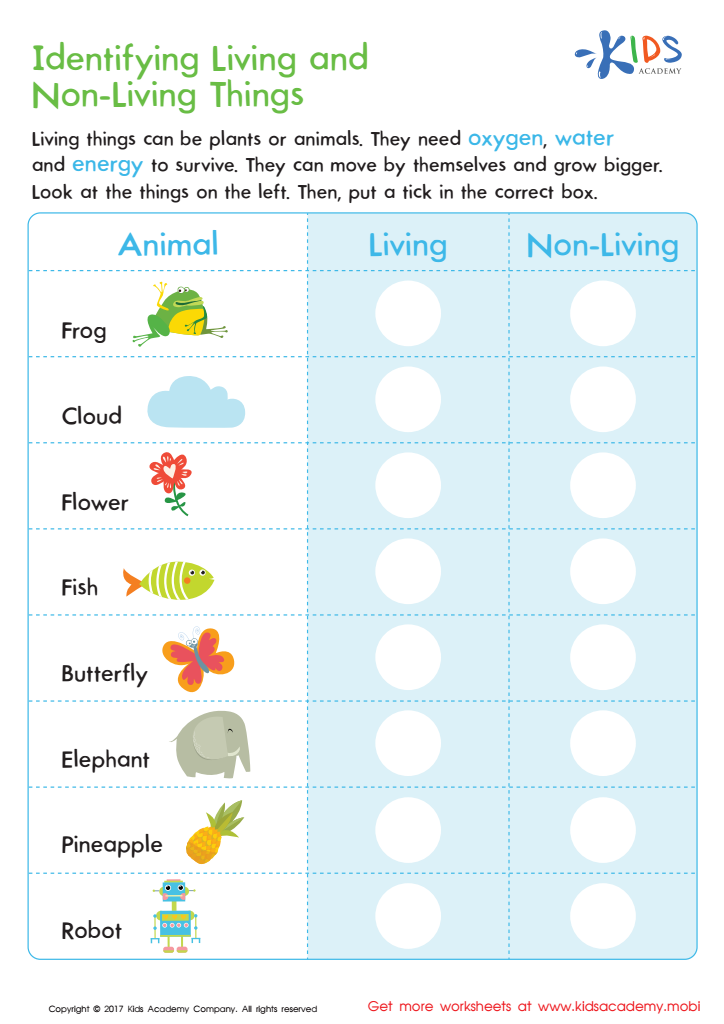
Identifying Living or Non–living Worksheet
 Assign to My Students
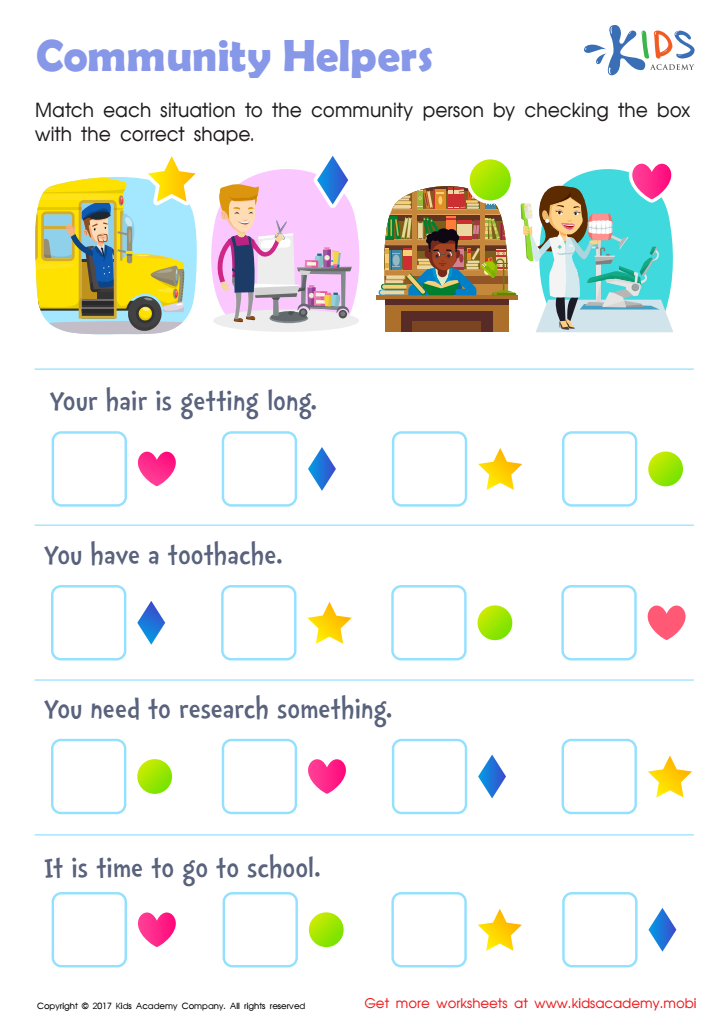







Visual recognition skills are crucial for 7-year-olds' overall development and learning process. At this age, children are rapidly developing their cognitive abilities, and visual recognition plays a significant role in this growth. For parents and teachers, fostering these skills can provide a solid foundation for academic and social success.
First, visual recognition is fundamental for reading and writing. Recognizing shapes, letters, words, and numbers accurately can significantly enhance a child's literacy skills. This recognition allows them to decode words quickly, improving reading fluency and comprehension and, ultimately, their love for reading.
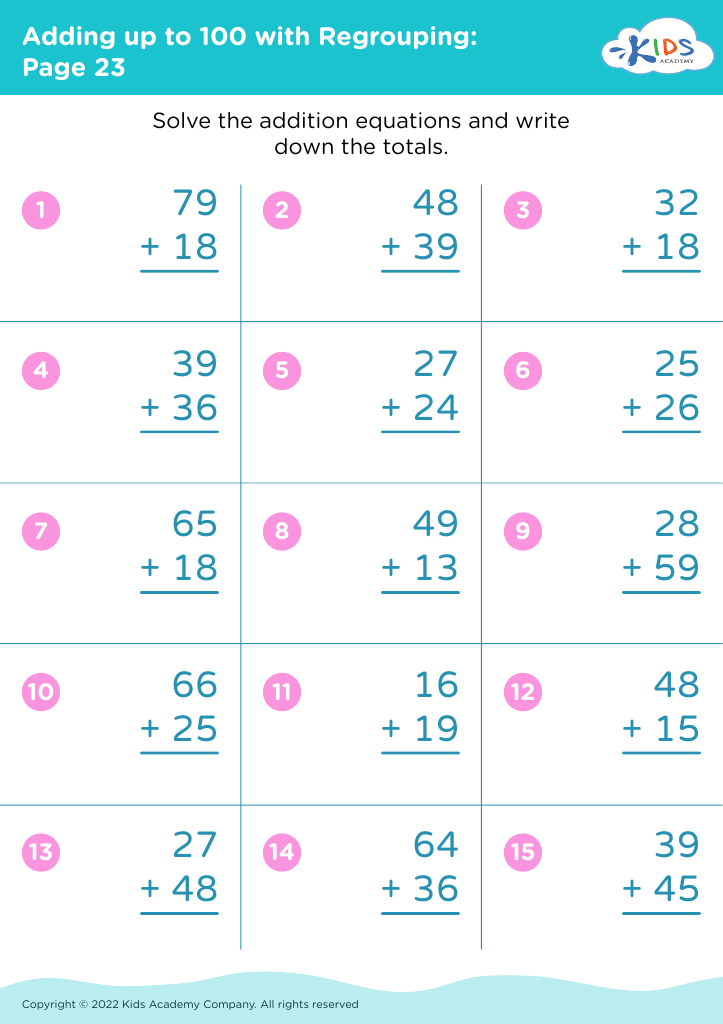
Second, visual recognition aids in mathematical understanding. Children often need to recognize patterns, numbers, and shapes to solve arithmetic problems. Improved visual skills lead to better problem-solving capabilities and a stronger grasp of mathematical concepts, which are essential in the early years of education.
Third, these skills enhance memory and attention to detail. By recognizing and remembering different visual inputs, children learn to concentrate better, boosting their observational skills, essential in everyday learning activities.
In summary, focusing on visual recognition skills equips 7-year-olds with essential tools for academic achievement and cognitive development. Parents and teachers should integrate activities that enhance visual recognition to support children in these pivotal developmental years.








