
Visual representation Worksheets for 7-Year-Olds
3 filtered results
Difficulty Level
Grade
Age
-
From - To
Subject
Activity
Standards
Discover our engaging Visual Representation Worksheets designed for 7-year-olds! These colorful and interactive worksheets help young learners develop essential skills in interpreting and creating visual information. Tailored to enhance comprehension and critical thinking, they cover a variety of topics, from reading charts to crafting illustrations. Perfect for supplementing classroom lessons or for home learning, these resources promote creativity and improve understanding of concepts through visual aids. Foster a love for learning while building confidence through fun activities that encourage exploration and expression. Enhance your child's educational journey with our thoughtfully designed worksheets and watch their skills grow!
Favorites
With answer key
Interactive
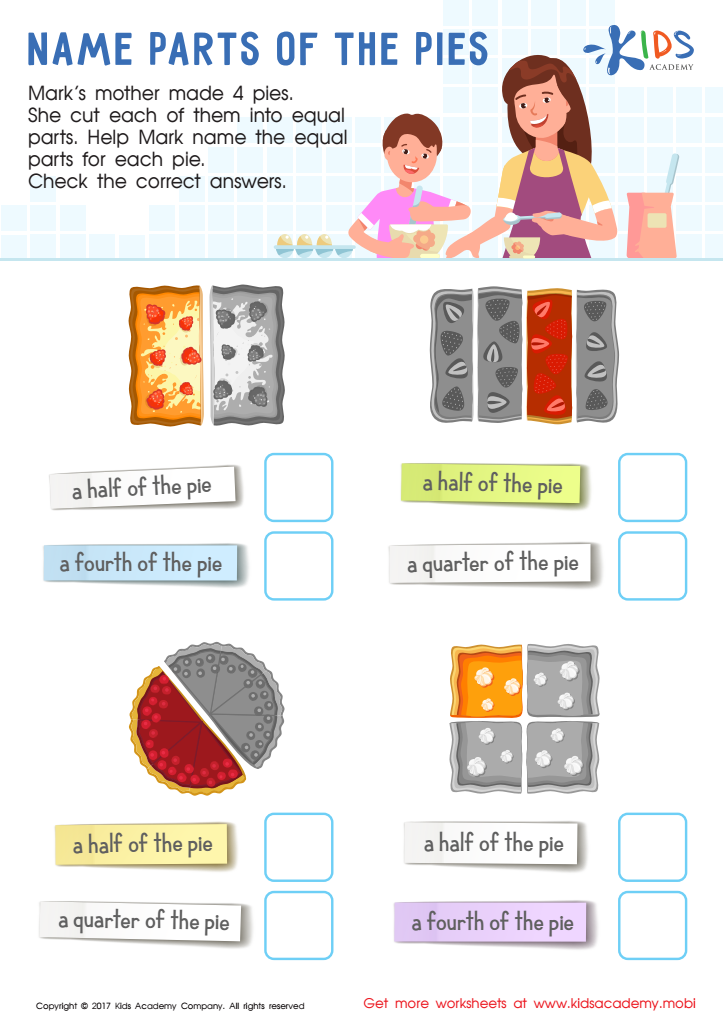
Name Parts of the Pies Worksheet
Mark and his mom are making pies. He's dividing them into equal parts and needs help to name them. Let your students aid him by checking the correct answer for each picture. Have them think of their own roles in the kitchen when they're done. How do they help their moms?
 Assign to My Students
Name Parts of the Pies Worksheet
Worksheet
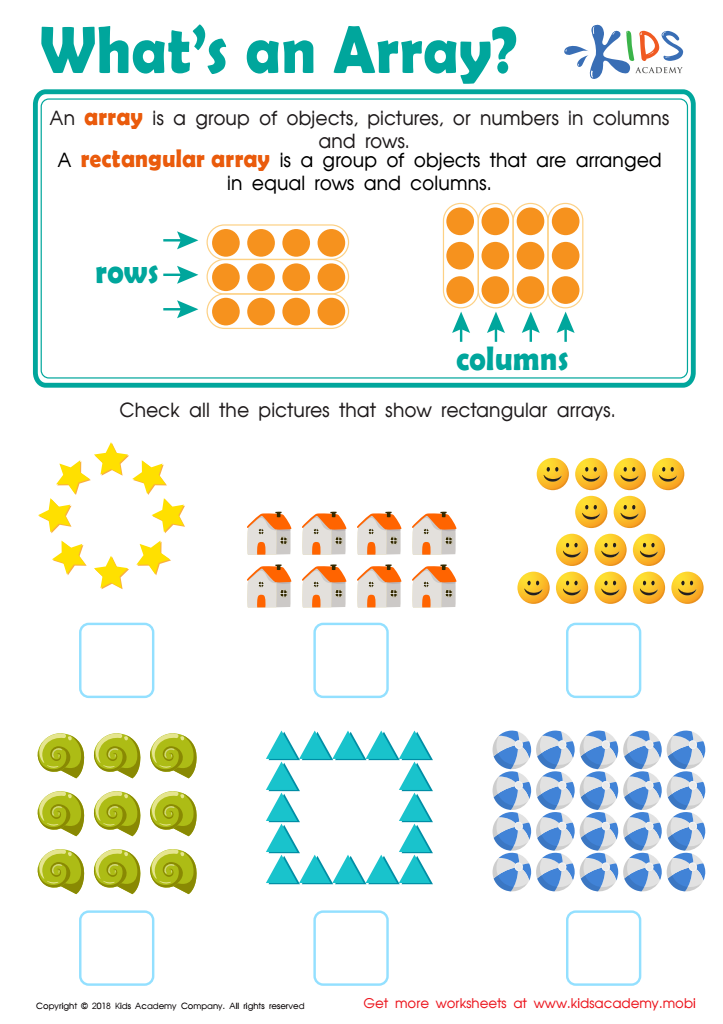
What's an Array? Worksheet
Explain to your child that an array is a group of objects, pictures, or numbers in columns and rows. Show them a rectangular array is a group of objects in equal rows and columns. Guide them to check the pictures in the worksheet to spot any rectangular arrays. Help them remember this concept.
What's an Array? Worksheet
Worksheet
Join Kids Academy for Free
Who is primarily going to use this learning content?








Visual representation is essential for 7-year-olds as it enhances their understanding and retention of complex concepts. At this age, children are often transitioning from concrete to more abstract thinking. Visual aids, such as diagrams, charts, and drawings, help bridge this gap by providing a tangible way to grasp ideas. They cater to diverse learning styles, allowing visual learners to thrive and making learning more inclusive.
Moreover, visual representation supports critical thinking and problem-solving skills. When students engage with visuals, they can see relationships and patterns more clearly, aiding in the comprehension of subjects like math and science. It encourages creativity, as students can express their understanding through illustrations and visual projects.
Using visuals also fosters communication skills; children learn to convey their ideas graphically, enhancing their ability to share information effectively. Additionally, these representations can boost motivation and engagement in lessons, transforming learning into a more interactive experience.
For parents and teachers, facilitating visual learning tools can lead to improved academic performance and greater enthusiasm for learning, making education a more enjoyable journey for children. Ultimately, visual representation serves as a crucial tool for developing foundational skills that support lifelong learning.








