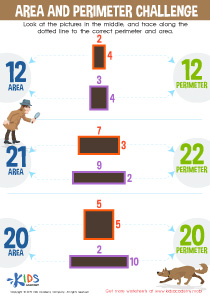
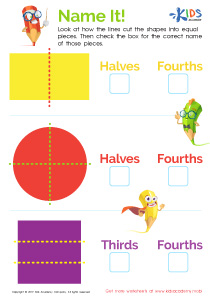
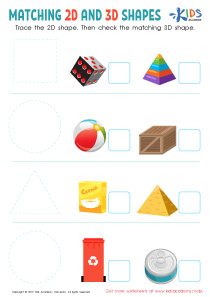
Vocabulary enhancement 2D Shapes Worksheets for 7-Year-Olds
4 filtered results
-
From - To
Elevate your child’s learning with our Vocabulary Enhancement 2D Shapes Worksheets for 7-Year-Olds! Specifically designed to blend fun and education, these worksheets help expand your child's shape vocabulary while reinforcing their understanding of geometry. Jam-packed with engaging exercises, each worksheet challenges young minds to identify, name, and describe a variety of 2D shapes, fostering their analytical and linguistic skills. Whether in the classroom or at home, these printable resources provide an interactive way for children to master essential math concepts seamlessly. Explore and enjoy a creative approach to boosting your child's geometrical know-how today!
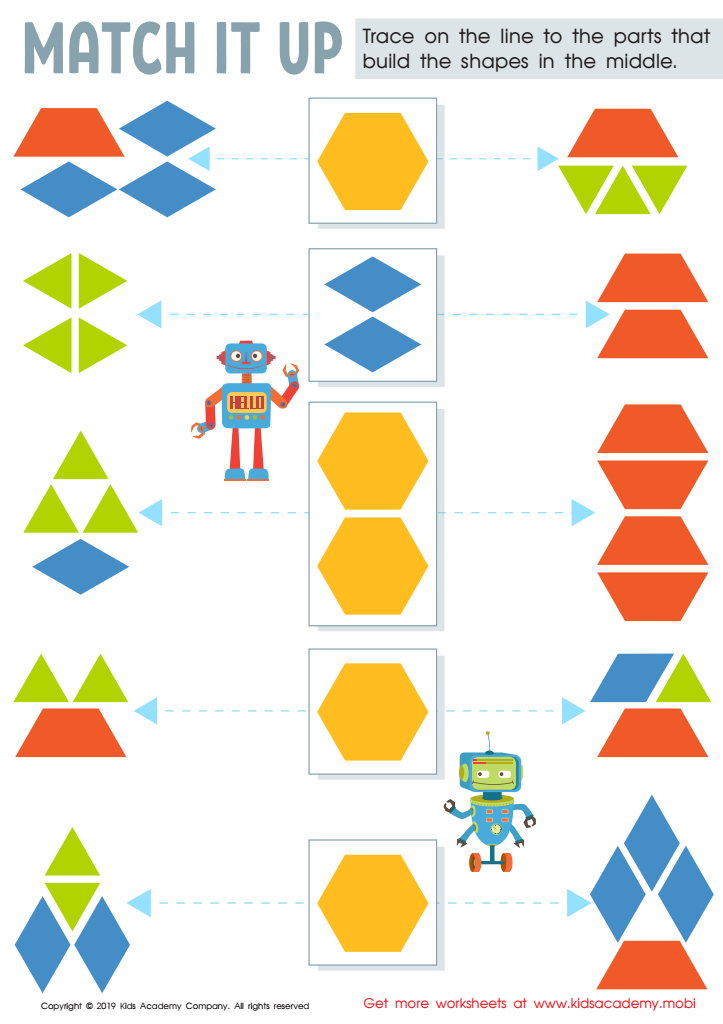
Match It up Worksheet
 Assign to My Students


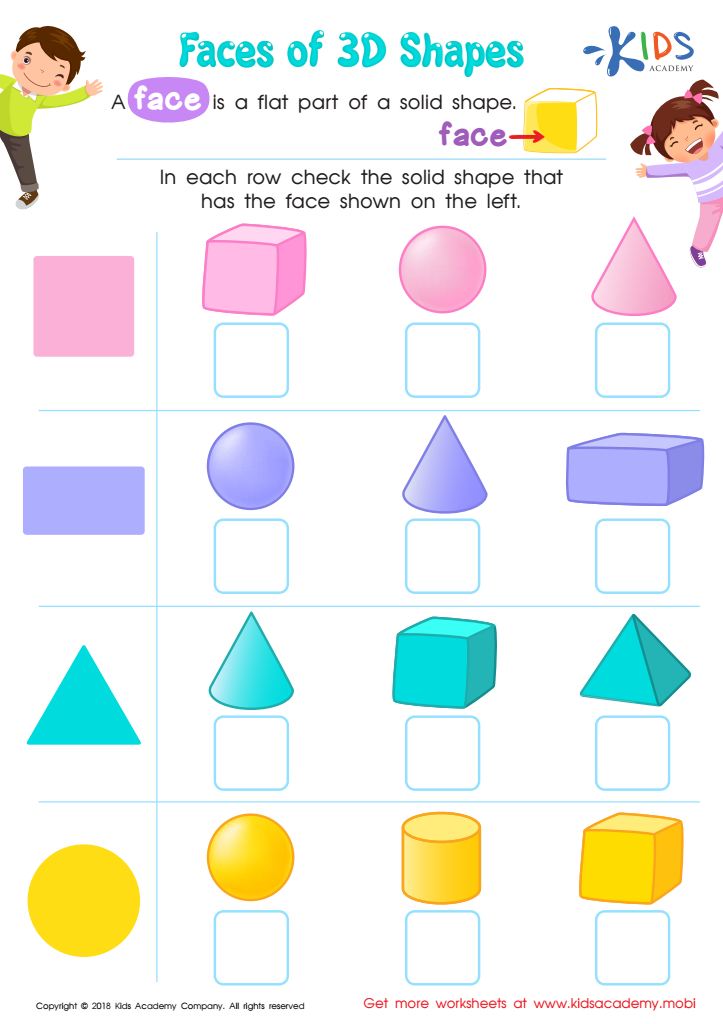
Faces of 3D Shapes Worksheet
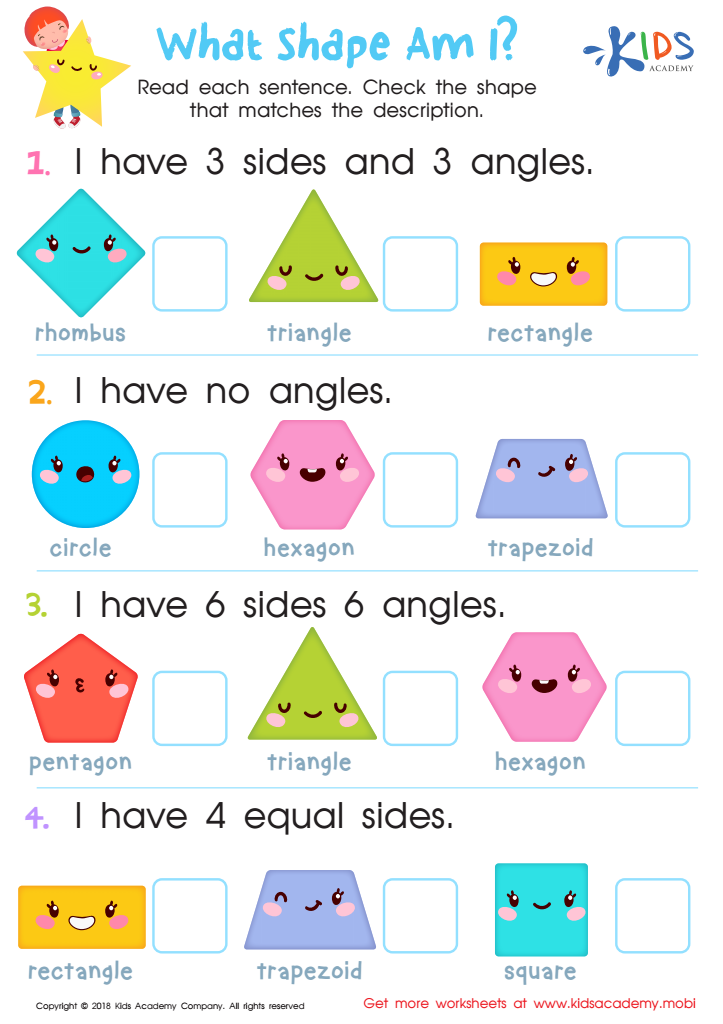
What Shape Am I? Worksheet
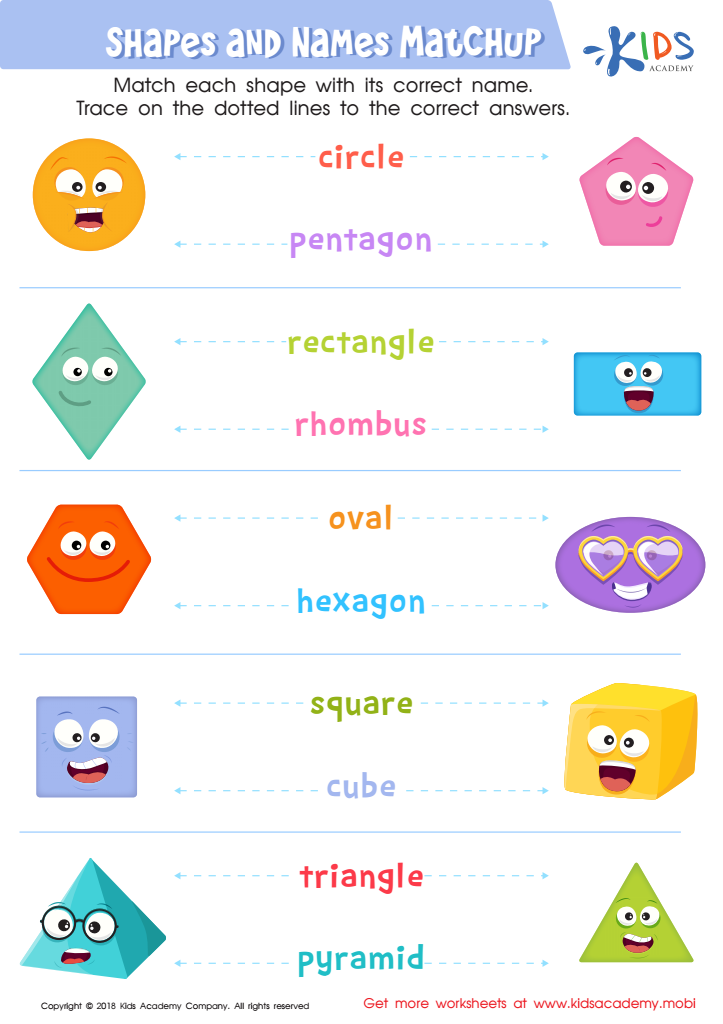
Shapes and Names Matchup Worksheet








Vocabulary enhancement related to 2D shapes for 7-year-olds is crucial for several reasons. Firstly, it aids in developmental milestones associated with mathematical literacy. Recognizing and naming shapes promotes spatial reasoning, which is foundational for understanding more complex math concepts. For instance, learning the properties of shapes also extends to comprehending geometry basics later on.
Secondly, enhancing vocabulary around 2D shapes supports language development. Describing shapes using terms like "sides," "angles," and "vertices" builds linguistic skills that are transferrable across subjects. Additionally, when children discuss shapes, they engage in critical thinking and communication, fostering cognitive skills.
Thirdly, understanding 2D shapes has practical real-world applications, helping children perceive and interact with their environment more effectively. Shapes are everywhere, from road signs to art and architecture. Recognizing them can improve navigation skills and aesthetic appreciation.
Parents and teachers should also note the role of shapes in fostering creativity and problem-solving. Activities like drawing, building, or assembling various shapes enable kids to think creatively while developing fine motor skills.
In summary, vocabulary enhancement of 2D shapes for 7-year-olds is an essential aspect of holistic education, strengthening math concepts, language, real-world application, and creativity. This foundational knowledge sets the stage for future academic success and day-to-day problem-solving.