Basic Math Skills Adding 2-digit Numbers Worksheets for 7-Year-Olds
3 filtered results
-
From - To
Boost your child's math skills with our engaging "Basic Math Skills: Adding 2-digit Numbers Worksheets" designed especially for 7-year-olds. These printable worksheets from Kids Academy are crafted to help young learners master the fundamental skill of adding two-digit numbers through fun and interactive exercises. Each worksheet presents a variety of problems that blend practice and play, ensuring children develop confidence in their math abilities while enjoying the learning process. Perfect for both classroom and home use, these worksheets provide a solid foundation for future math success. Encourage your child to explore, practice, and excel with our expertly designed resources.
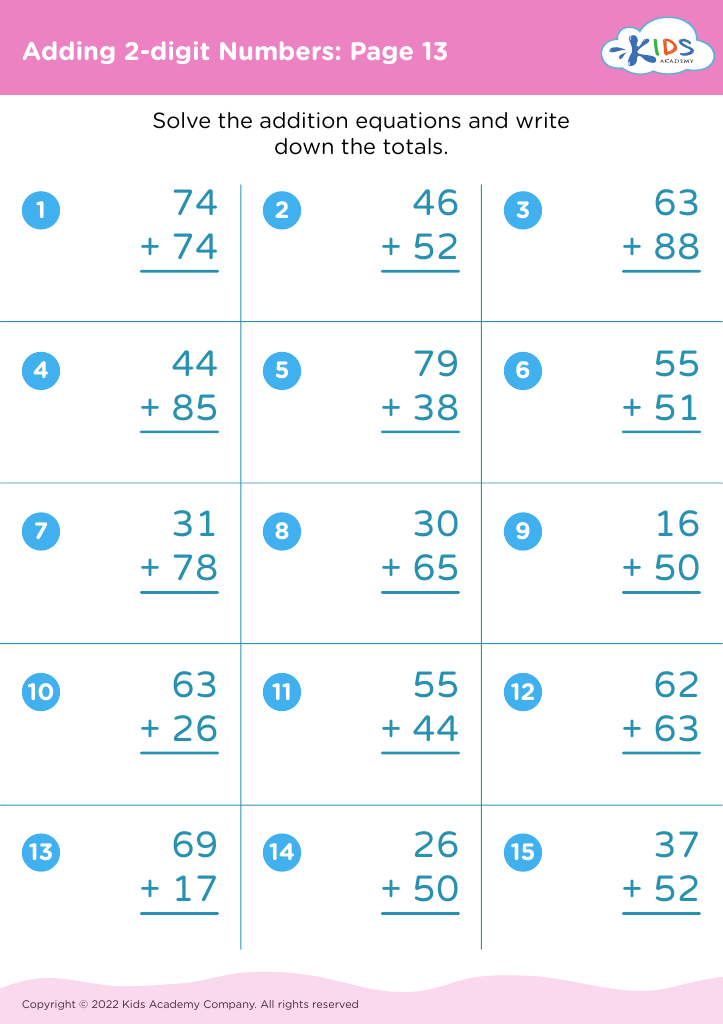
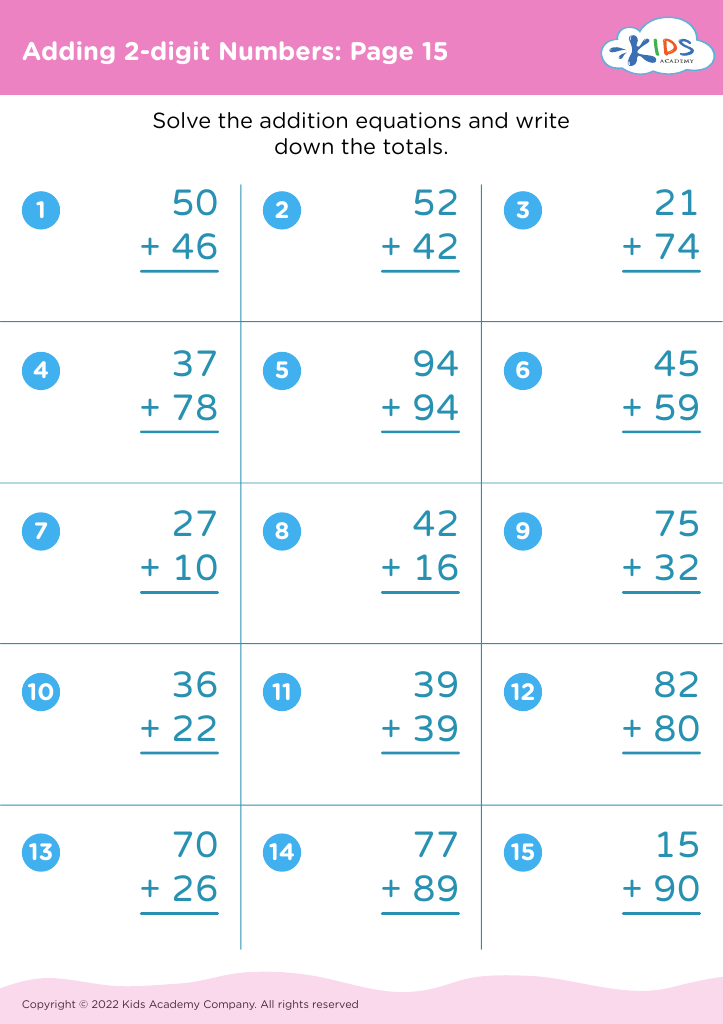
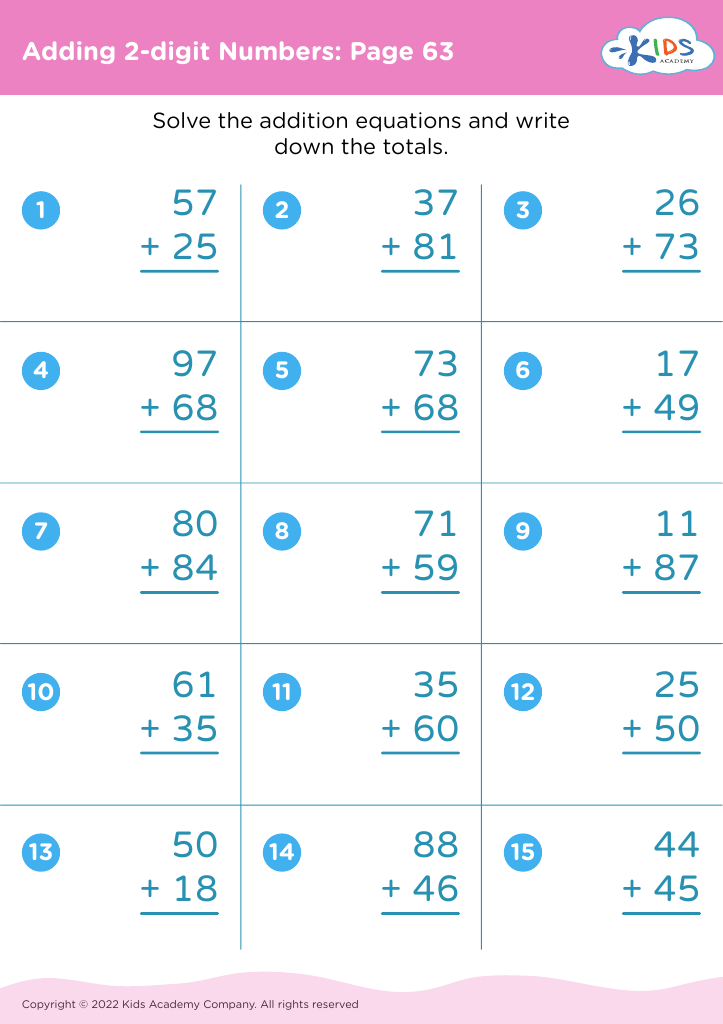








Basic math skills, such as adding 2-digit numbers, are foundational for 7-year-olds and warrant the focused attention of both parents and teachers. At this stage, children are transitioning from simple arithmetic to more complex mathematical concepts, and mastering 2-digit addition is a crucial building block. Understanding this enables them to tackle multi-step problems with confidence, which enhances their overall problem-solving skills.
Supporting 7-year-olds in learning to add 2-digit numbers also boosts their cognitive development. It helps improve their numerical fluency, mental arithmetic skills, and memory retention. These skills are not just vital for mathematical success but are also transferable to other areas of learning and everyday decision-making, such as time management and budgeting.
Moreover, proficiency in basic math fosters a positive attitude towards learning. When children feel competent in their math abilities, it builds their self-esteem, reduces anxiety surrounding the subject, and encourages a lifelong love for learning. Engaged parents and teachers who reinforce these skills through practice, encouragement, and supportive interactions further empower children to excel and remain curious learners.
Ultimately, caring about these basic math skills means valuing a child's long-term academic development and ensuring they have the essential tools to succeed in both schooling and life.








