Recognizing Patterns Adding 2-digit Numbers Worksheets for 7-Year-Olds
3 filtered results
-
From - To
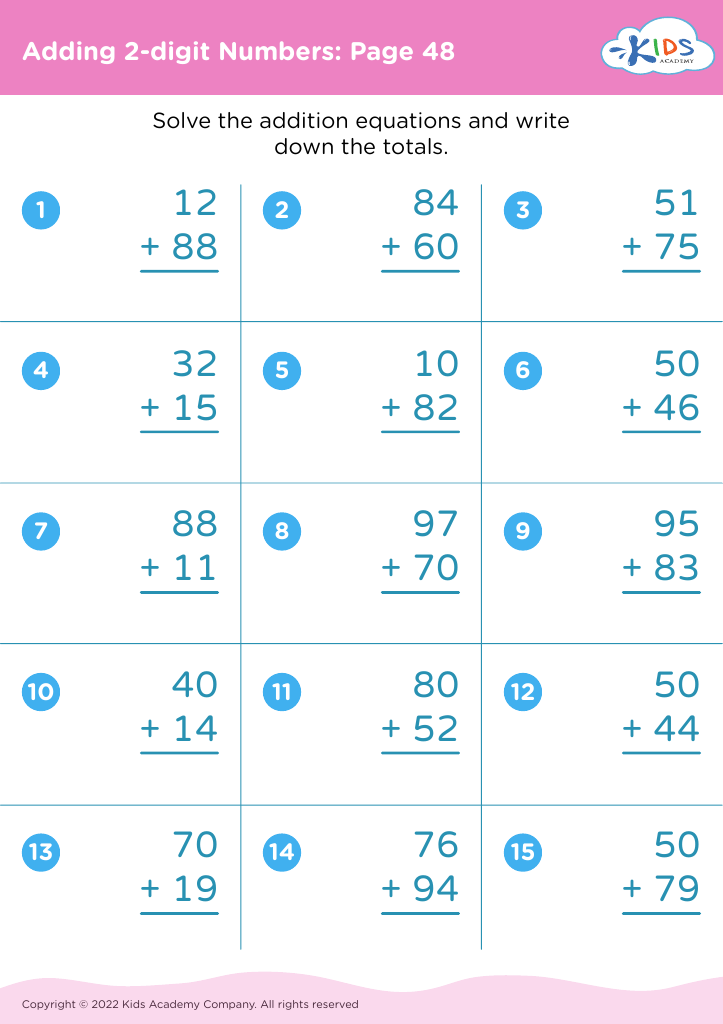
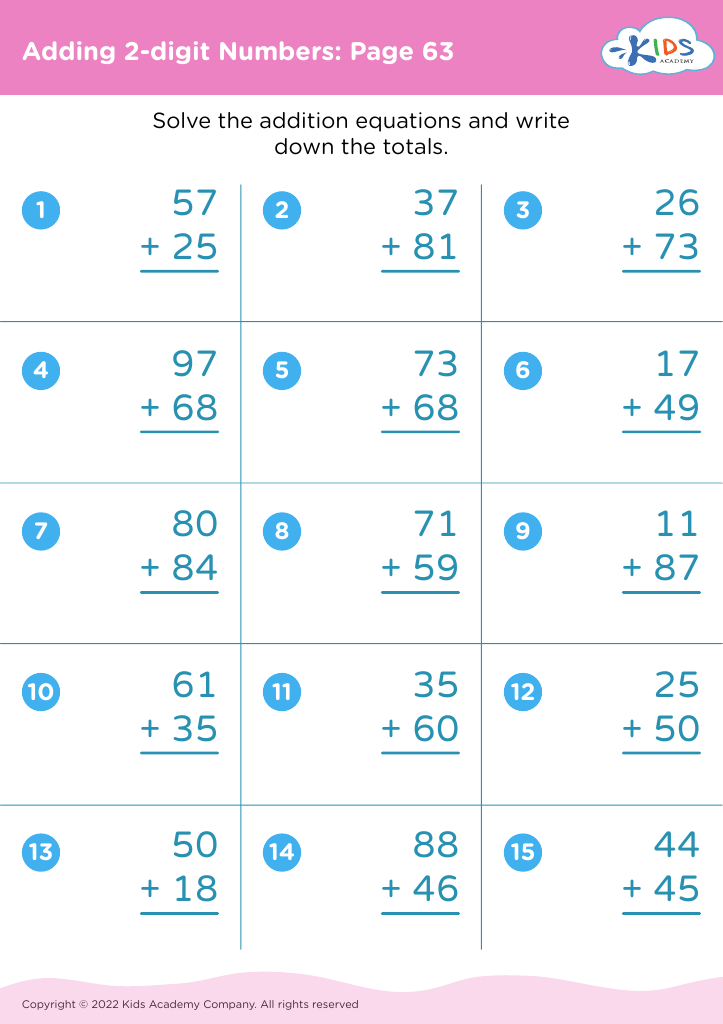
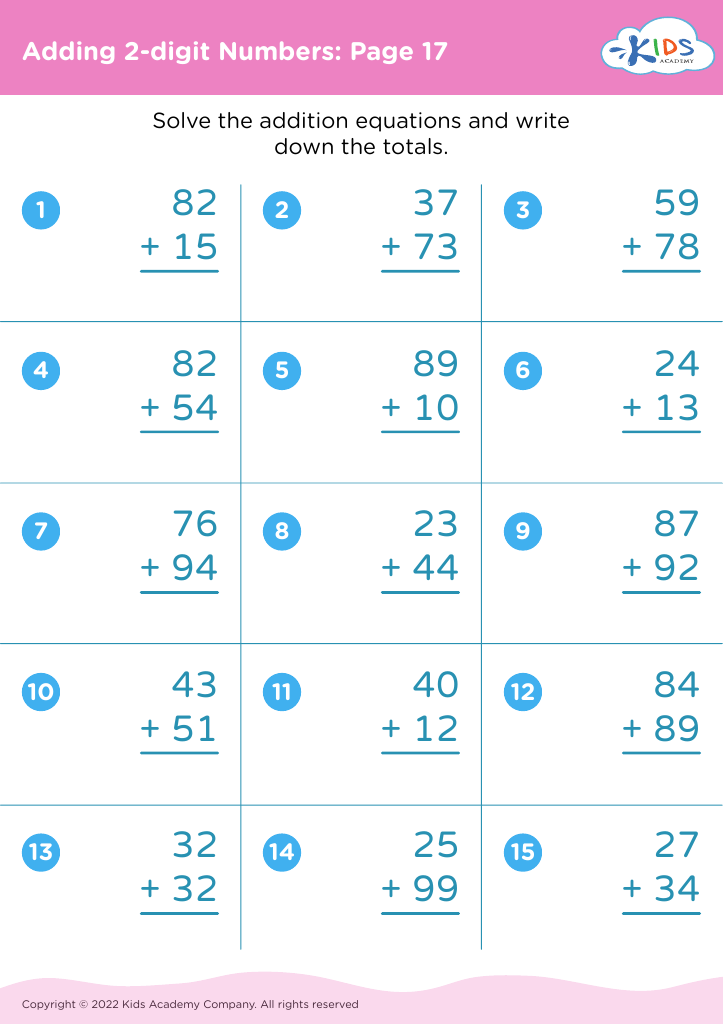
Help your 7-year-old unlock the power of pattern recognition with our "Recognizing Patterns Adding 2-digit Numbers" worksheets. Designed specifically for young math learners, these engaging activities focus on identifying and understanding numerical patterns while mastering addition of 2-digit numbers. Your child will enhance their problem-solving skills, boost their math confidence, and enjoy the learning process through fun, interactive exercises. Ideal for both classroom and home practice, these worksheets offer a structured approach to math learning, making it easier for students to grasp important concepts. Explore now and watch your child's math abilities flourish!








Recognizing patterns while adding 2-digit numbers is a foundational math skill crucial for 7-year-olds, and both parents and teachers need to be attentive to this. First, pattern recognition helps children develop number sense, which is an essential building block for all future math learning. When children recognize patterns in numbers, they can more easily predict outcomes and understand concepts like addition, subtraction, and even multiplication and division as they progress.
This skill also enhances problem-solving abilities. For instance, by recognizing that adding two similar numbers leads to a pattern, children can simplify more complex addition problems, saving time and reducing errors. This reinforces their confidence and encourages a positive attitude towards mathematics.
Moreover, recognizing patterns plays a crucial role in cognitive development. It helps improve logical thinking and enables children to make connections between different concepts, fostering a deeper understanding of the subject matter as a whole.
Lastly, early competence in recognizing numerical patterns can translate into better performance in standardized tests and academic evaluations. It sets a strong foundation for more advanced mathematical concepts that they will encounter in higher grades. Thus, prioritizing and nurturing this skill is significant for both parents and teachers aiming for the overall academic and cognitive growth of 7-year-olds.








