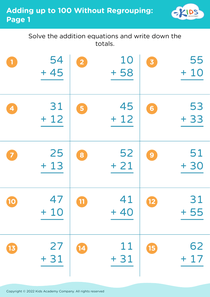
Basic Math Skills Adding up to 100 with Regrouping Worksheets for 7-Year-Olds
3 filtered results
-
From - To
Unlock your child's potential with our "Basic Math Skills: Adding Up to 100 with Regrouping Worksheets" designed specifically for 7-year-olds. These engaging worksheets focus on helping young learners master the essential skill of addition, particularly when regrouping is required. Through interactive exercises, children will gain confidence and improve their accuracy in adding numbers up to 100. Our worksheets not only align with educational standards but also make learning fun! Perfect for both classroom use and homeschooling, these resources will provide your child with a solid foundation in math. Start their math journey today and watch them excel!
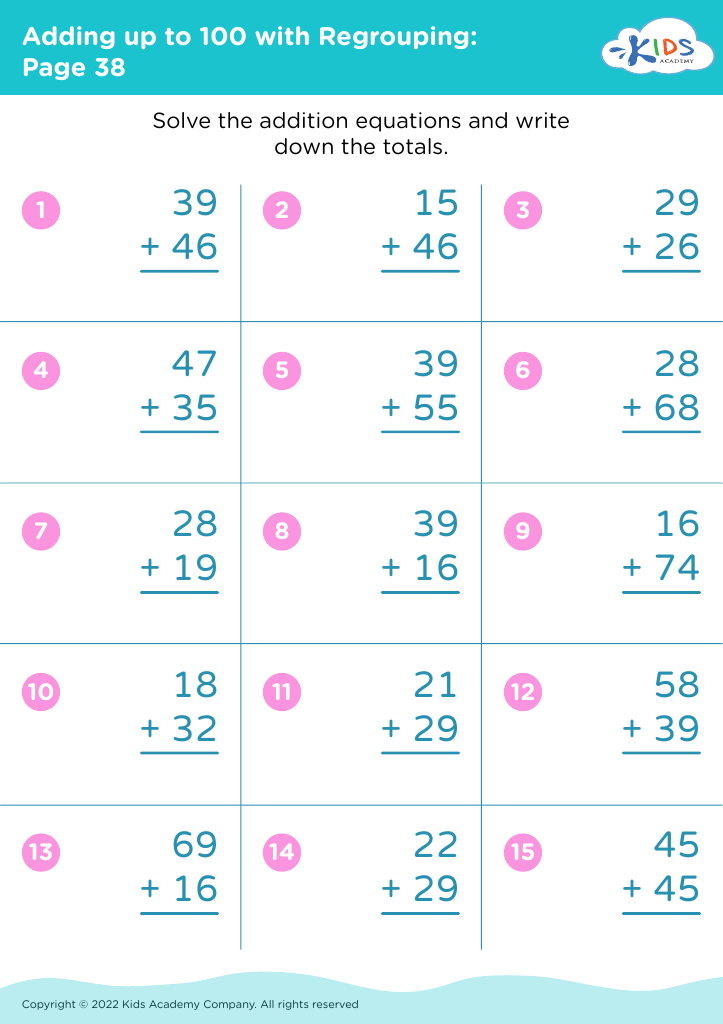
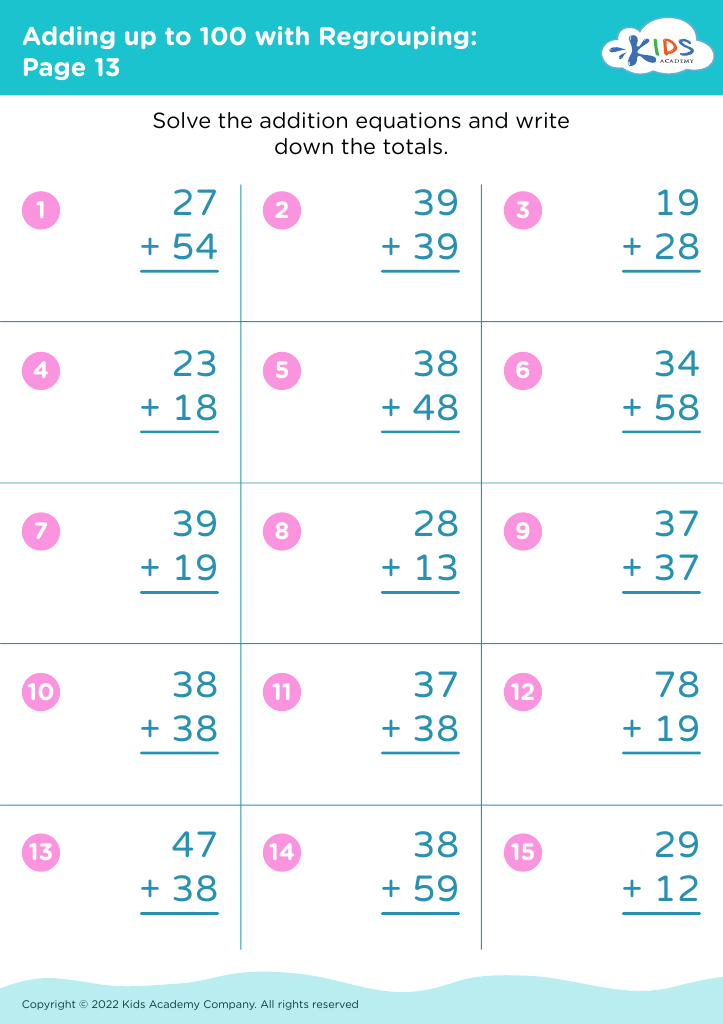
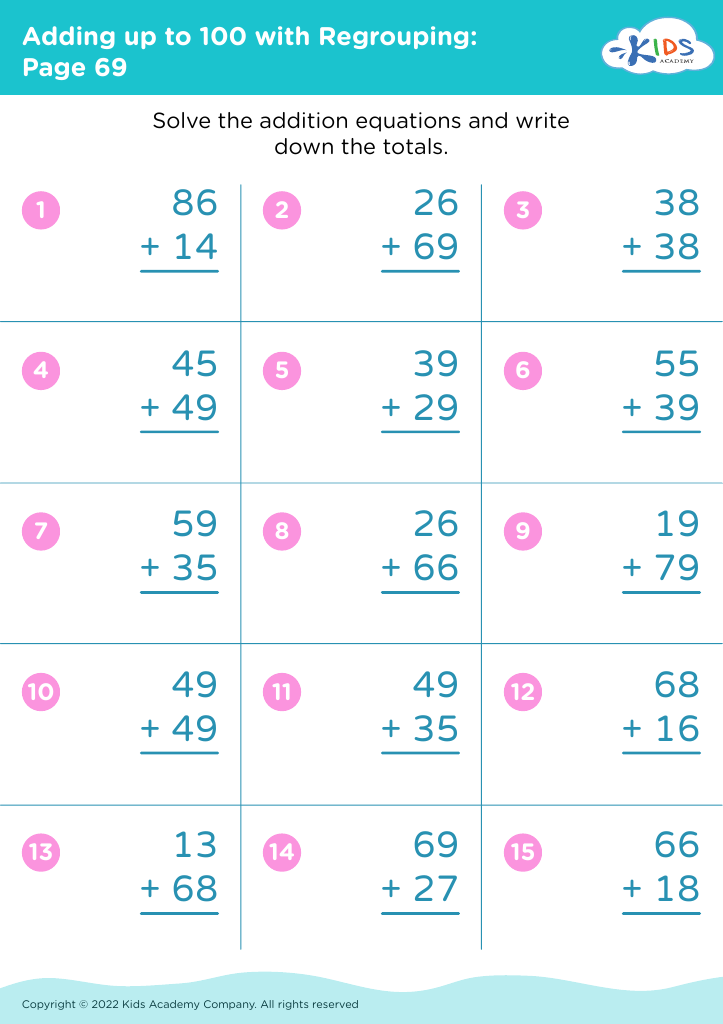




Basic math skills are foundational for a child's academic success and critical thinking development, particularly for 7-year-olds. Mastering the skill of adding up to 100 with regrouping enhances their understanding of number relationships and place value concepts. This ability helps children grasp more advanced mathematical concepts encountered in later grades, including subtraction, multiplication, and division.
When students learn to add numbers that require regrouping, they improve their problem-solving skills and build a robust framework for understanding math operations. This skill encourages logical reasoning and promotes persistence, as young learners encounter challenges and find solutions. Furthermore, developing basic math skills at an early age boosts children's confidence, which can positively impact their attitude toward mathematics in the future.
For parents and teachers, advocating for these foundational skills is crucial, as they lay the groundwork for lifelong learning and numeracy. By actively engaging children in activities that enhance their addition skills, they can cultivate a positive learning environment. This support not only helps children perform better academically but also ensures that they are prepared for real-world situations that require mathematical understanding, thus empowering them for future success.