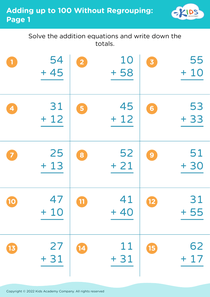
Enhance number recognition Adding up to 100 with Regrouping Worksheets for 7-Year-Olds
3 filtered results
-
From - To
Enhance number recognition for 7-year-olds with our engaging "Adding Up to 100 with Regrouping" worksheets! Designed specifically for young learners, these worksheets provide a fun and interactive way to master addition skills involving regrouping. Children will learn to break down numbers, simplifying complex problems, while building their confidence in math. Each worksheet encourages critical thinking and helps reinforce essential math concepts in a supportive environment. Whether at home or in the classroom, these resources are perfect for enhancing mindfulness and fluency in number recognition. Strengthen your child’s mathematical foundation and watch them excel with our comprehensive practice materials!
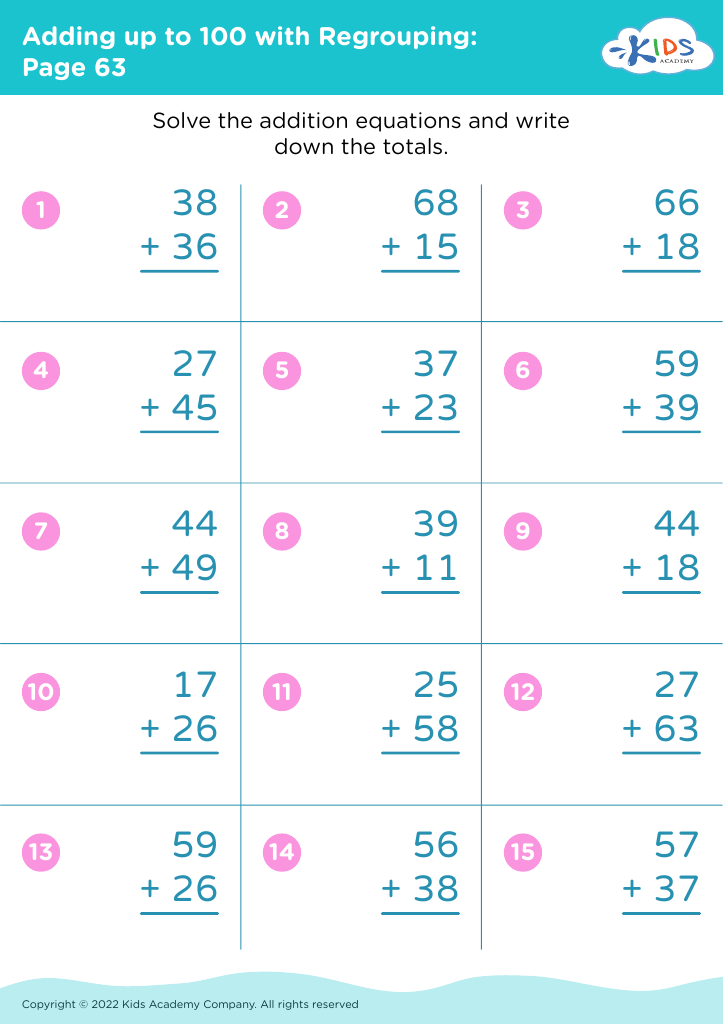
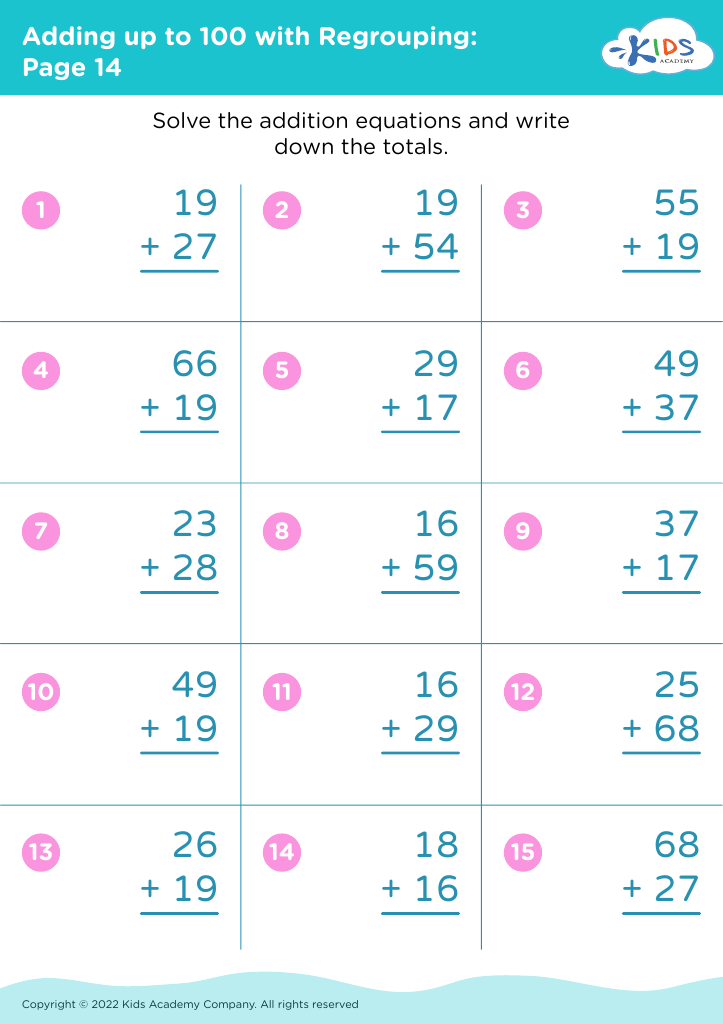
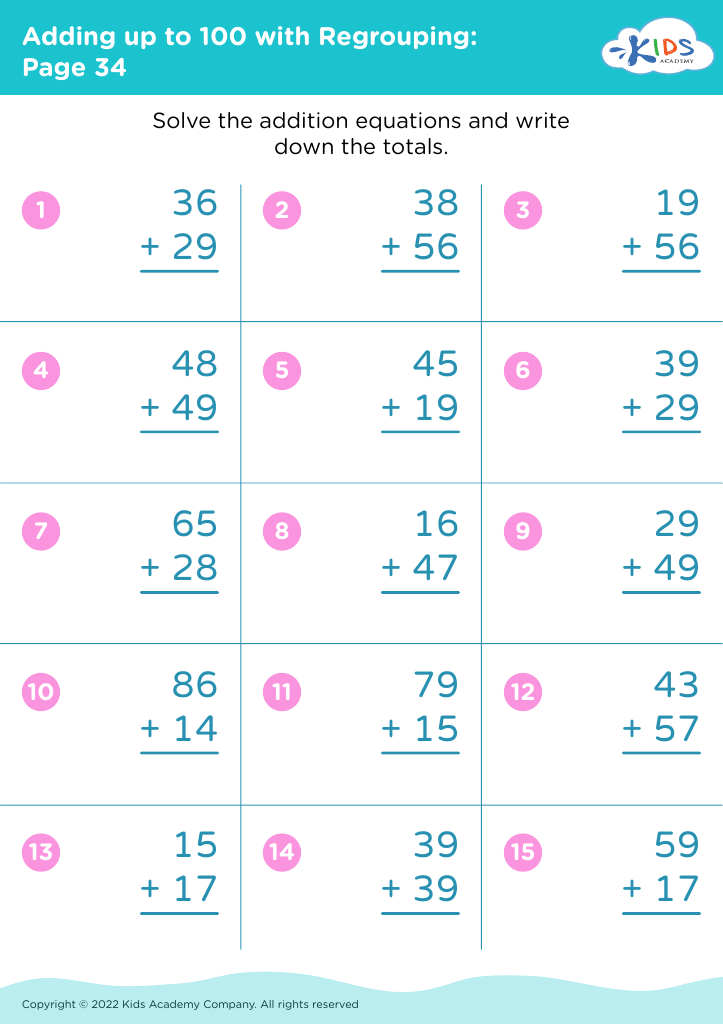




Parents and teachers should prioritize enhancing number recognition, particularly skills like adding up to 100 with regrouping, for 7-year-olds because these foundational math abilities set the stage for future learning. At this age, children are developing critical cognitive skills, including problem-solving, logical reasoning, and numerical fluency. Mastering addition, especially with regrouping, allows them to perform more complex operations as they progress in school.
Moreover, strong number recognition leads to increased confidence in math. When children can identify numbers quickly and accurately, they become more resilient in challenging mathematical tasks. This competency not only supports their self-esteem but also enhances classroom participation, as they feel equipped to contribute ideas and tackle problems.
Additionally, this skill is essential for real-life applications, enabling children to manage practical day-to-day scenarios such as budgeting or telling time.
By focusing on enhancing number recognition and addition skills, parents and teachers help children build the groundwork for academic success, fostering both a positive attitude toward math and the analytical skills necessary for their overall development. As a collaborative effort, instilling these skills reinforces the importance of math in everyday life, shaping young learners into confident problem-solvers for the future.