Improve math skills Adding up to 100 with Regrouping Worksheets for 7-Year-Olds
3 filtered results
-
From - To
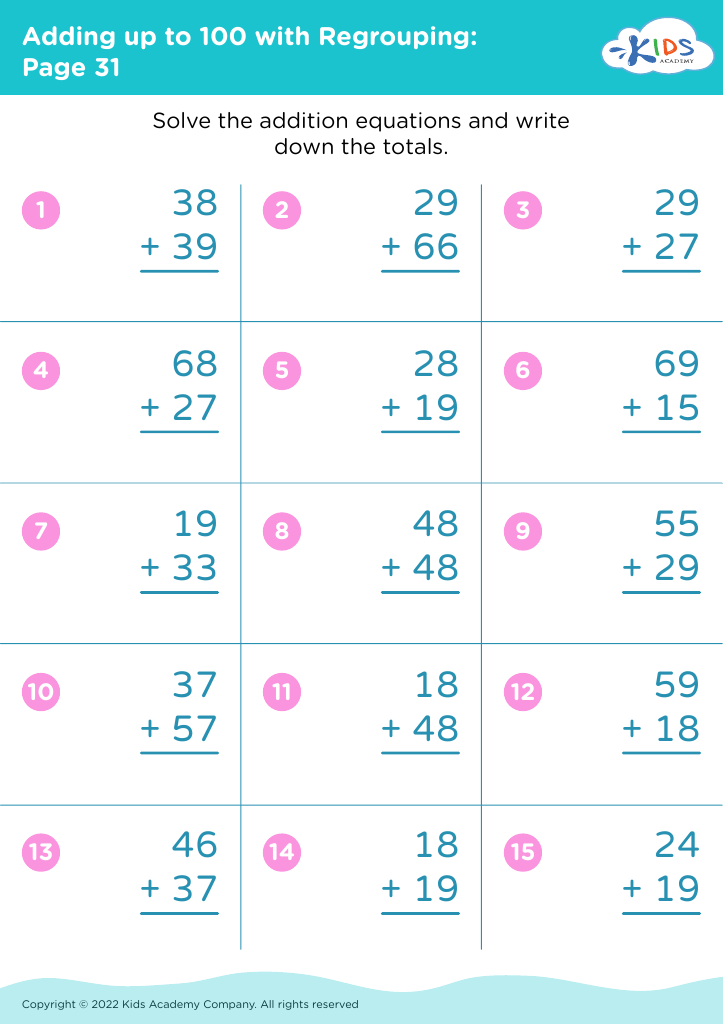
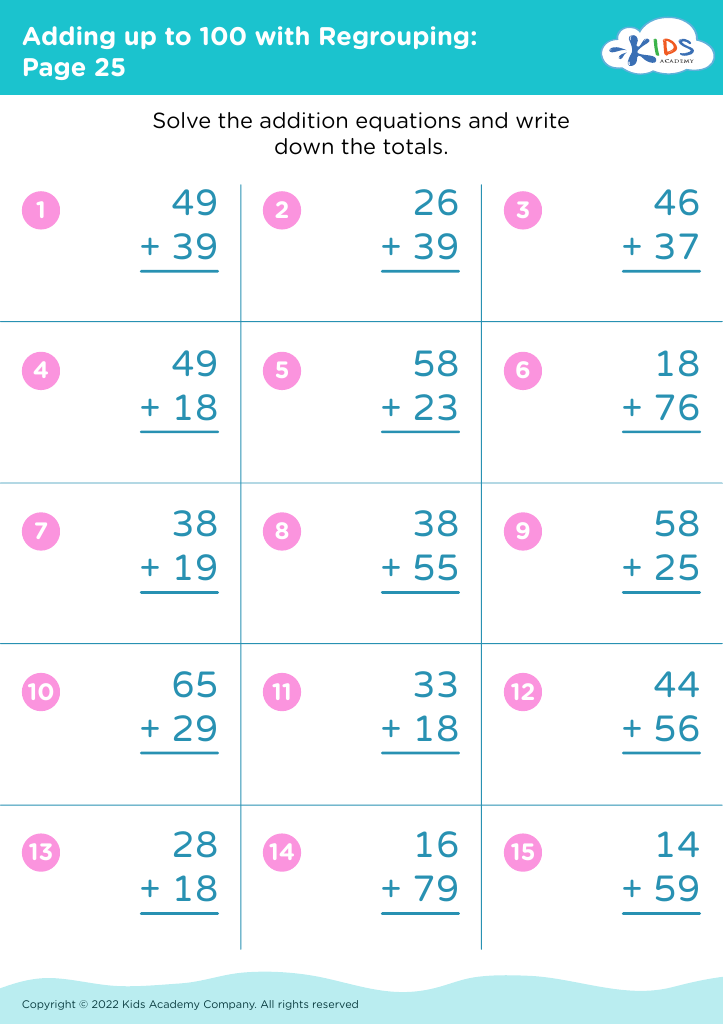
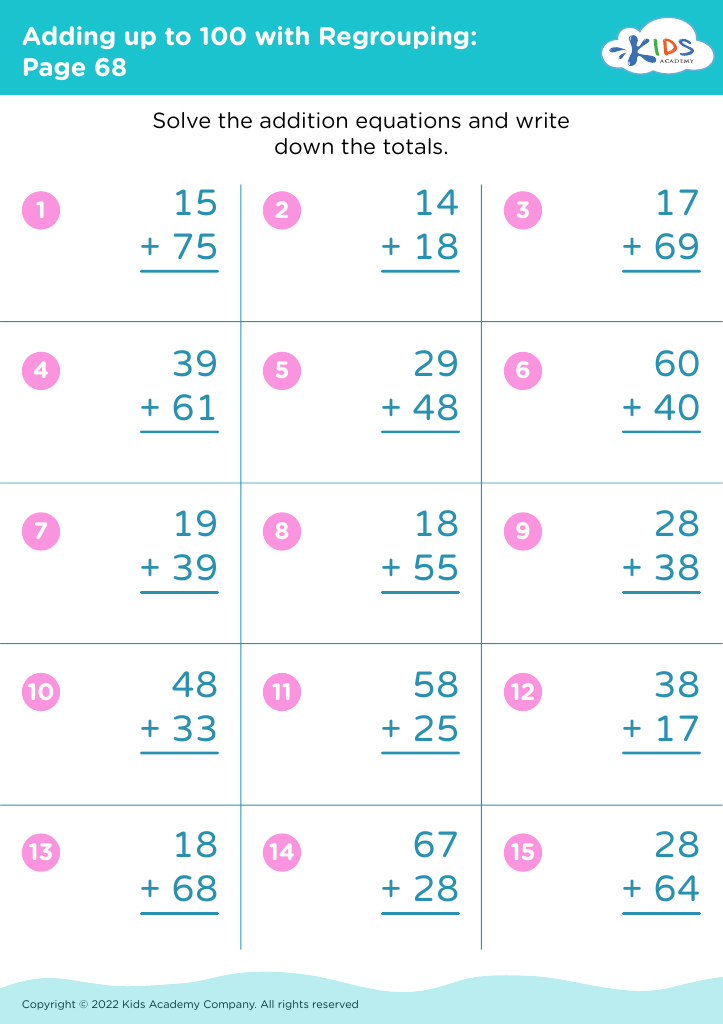
Boost your child's math abilities with our "Adding up to 100 with Regrouping Worksheets" designed for 7-year-olds. These printable worksheets specifically target the essential skill of adding numbers up to 100, while also introducing the important concept of regrouping. With engaging and carefully crafted exercises, children will not only enhance their arithmetic skills but also build a strong foundation in mathematics. Perfect for in-class activities or at-home practice, our resources transform learning into an enjoyable experience. Visit our page to access a variety of fun and educational worksheets that make mastering math a breeze for young learners.




Parents and teachers should prioritize improving math skills, especially adding up to 100 with regrouping, for 7-year-olds because early mastery of these concepts forms the bedrock of future mathematical understanding and critical thinking. At this age, children's brains are highly receptive to learning foundational skills that will support more complex problem-solving in later years. Regrouping, or carrying over numbers, is a fundamental skill in addition that helps children understand place value and the base-10 system, which are crucial for more advanced operations like subtraction, multiplication, and division.
Additionally, proficiency in adding up to 100 with regrouping ensures that children do not develop any "math anxiety" early on. When students encounter math problems they can’t solve, it can lead to frustration and a lack of confidence in their abilities. Early success in math can foster a positive attitude towards the subject, encouraging enthusiasm and a willingness to tackle challenges.
Furthermore, strong math skills enhance analytical and logical thinking, helping children in other academic areas and in everyday decision-making. They learn to approach problems methodically, break them down into manageable parts, and use systematic thinking—valuable skills beyond the classroom. Thus, investing time and effort into improving these foundational math skills at a young age is crucial for a child’s overall academic and personal development.