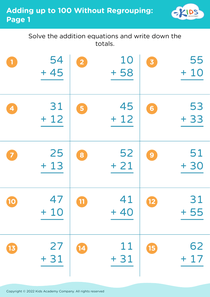
Shape Recognition Adding up to 100 with Regrouping Worksheets for 7-Year-Olds
5 filtered results
-
From - To
Unlock your child's potential in math with our "Shape Recognition Adding Up to 100 with Regrouping Worksheets" designed specifically for 7-year-olds. This engaging resource seamlessly blends shape recognition with essential addition skills, helping young learners practice regrouping in a fun and interactive way. Each worksheet encourages kids to identify various shapes while reinforcing their ability to add numbers up to 100. Ideal for classroom or home use, these worksheets promote critical thinking and boost confidence in math. Equip your child with the skills they need for academic success while enjoying the process of learning through shapes and numbers!
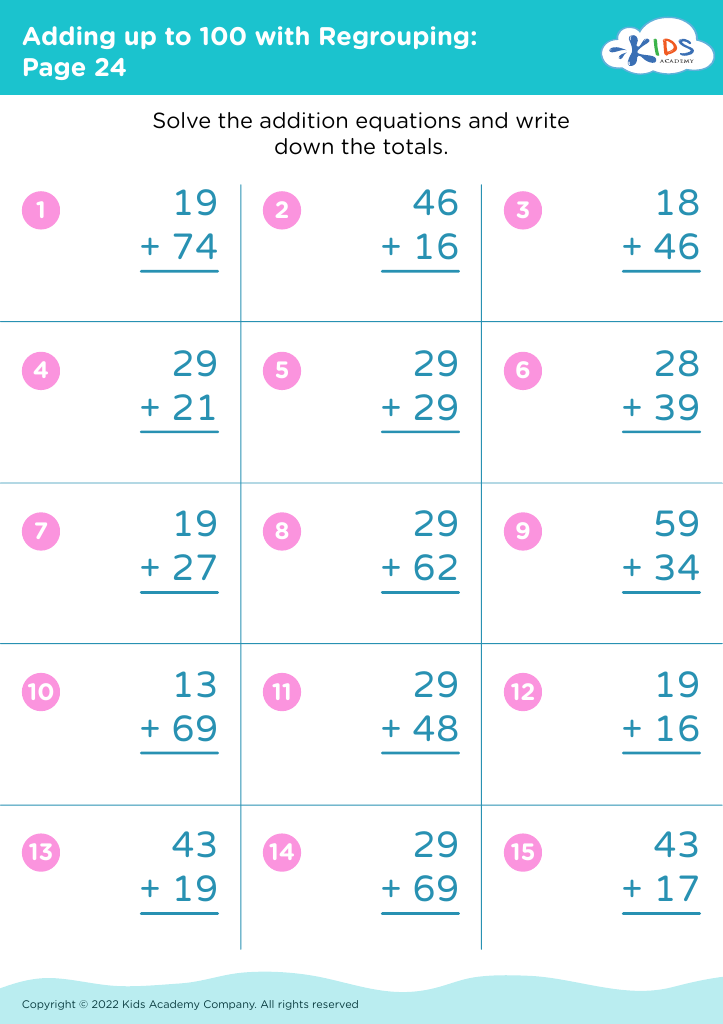
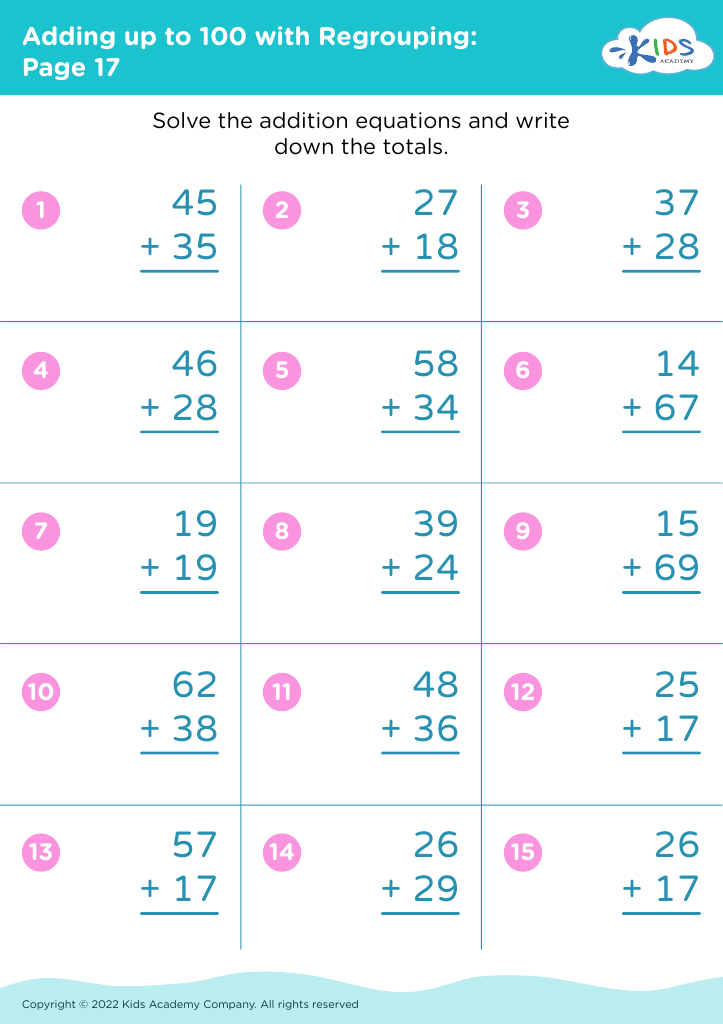
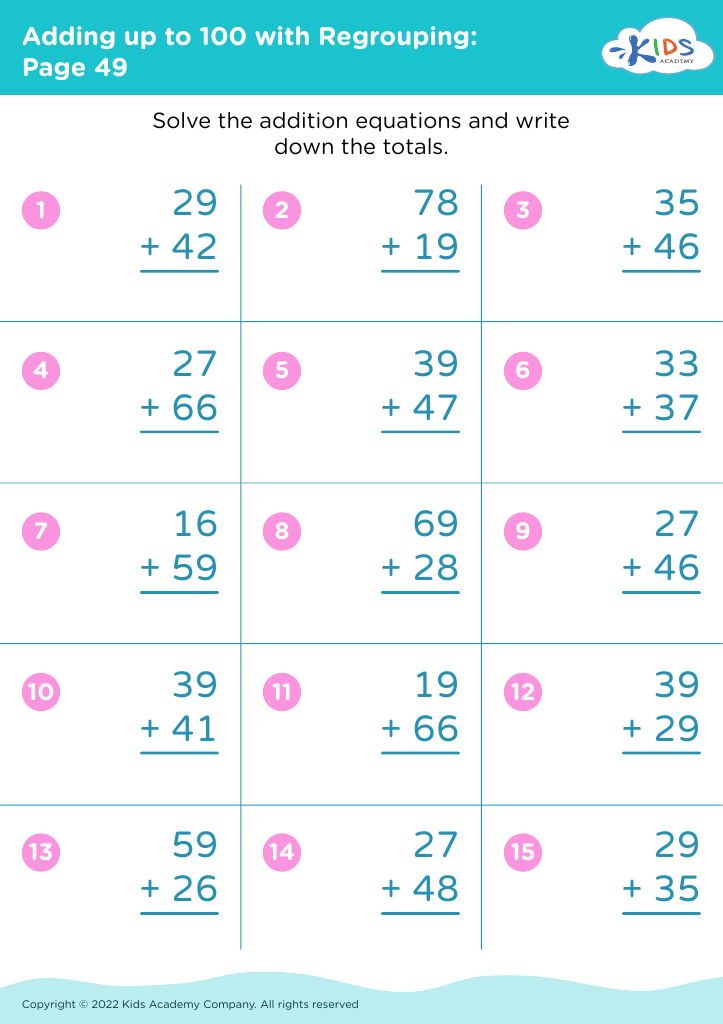
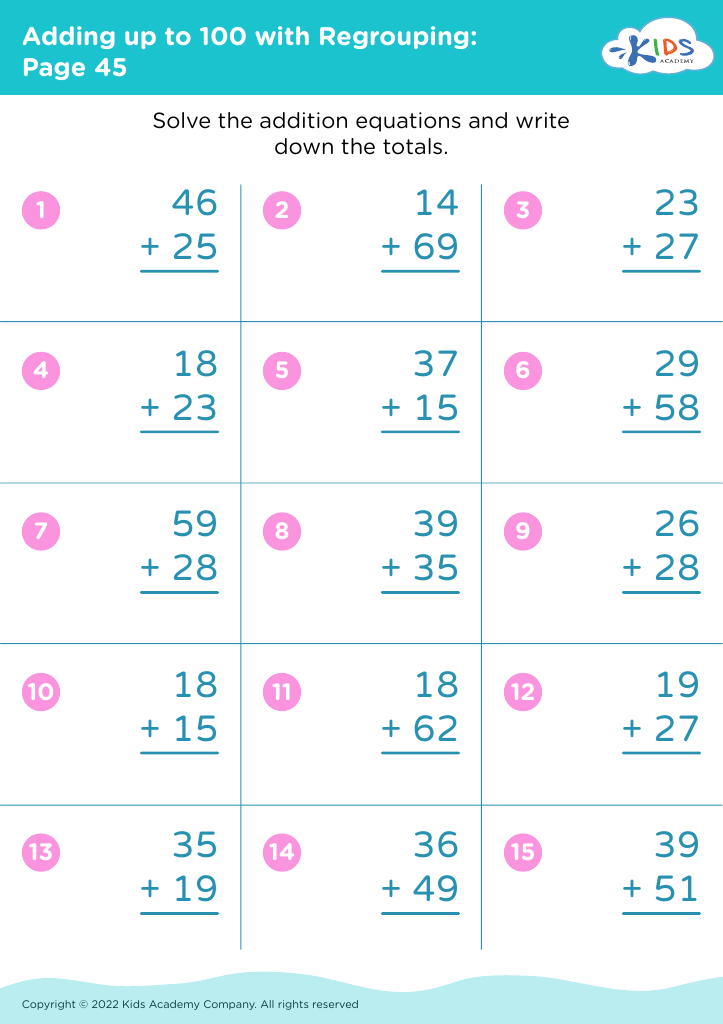
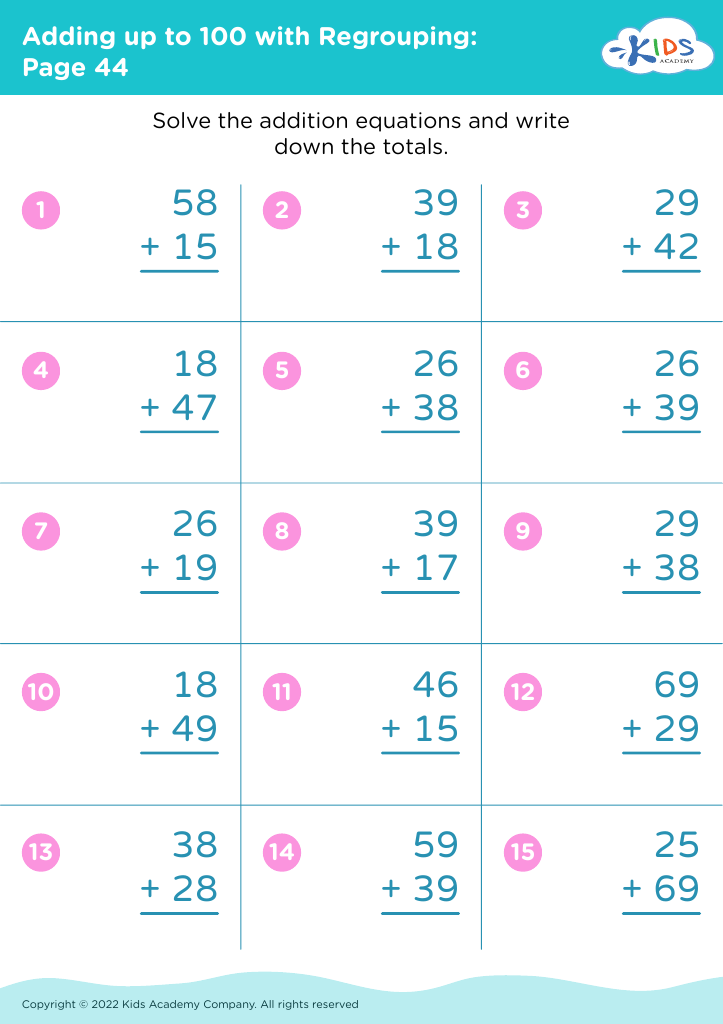




Shape recognition and adding up to 100 with regrouping are fundamental skills that significantly contribute to a 7-year-old's overall cognitive development and mathematical understanding. First, shape recognition enhances spatial awareness and critical thinking, laying the groundwork for geometry and real-world problem-solving. When children can identify and manipulate shapes, they develop skills vital for tasks such as constructing, drawing, and navigating their environments.
On the other hand, mastering addition with regrouping is crucial for building a strong foundation in arithmetic. At this age, children progress from basic counting to more complex mathematical operations. Learning to add numbers and regroup when sums exceed ten prepares them for future math success, including multiplication and division. This competence fosters confidence and resilience in mathematics, promoting a growth mindset.
By emphasizing these skills, parents and teachers not only prepare children for academic achievements but also help them develop logical reasoning and problem-solving skills. These fundamental abilities are essential for mastering more complex concepts as they progress through school. Ultimately, nurturing shape recognition and regrouping paves the way for a well-rounded education, equipping children with tools they will use throughout their lives.