Understanding fractions Adding up to 100 with Regrouping Worksheets for 7-Year-Olds

Filters

16 filtered results

Clear all filters
Favorites
With answer key
Interactive

16 filtered results

Difficulty Level

Grade


Unlock your child's math potential with our specialized "Understanding Fractions Adding up to 100 with Regrouping" worksheets, tailored exclusively for 7-year-olds. These engaging printables seamlessly combine the fundamentals of adding numbers up to 100 with essential regrouping techniques. Designed to enhance mathematical reasoning and problem-solving skills, each worksheet provides a fun and comprehensive approach to mastering fractions and addition. Perfect for both classroom and home use, these resources make learning enjoyable while solidifying a critical math foundation. Empower your child today with these expertly-crafted worksheets from Kids Academy!
Check out this FREE Trial Lesson on Adding up to 100 with Regrouping for age 7!

H

Favorites
With answer key
Interactive
  • 7
  • Understanding fractions
  • Adding up to 100 with Regrouping
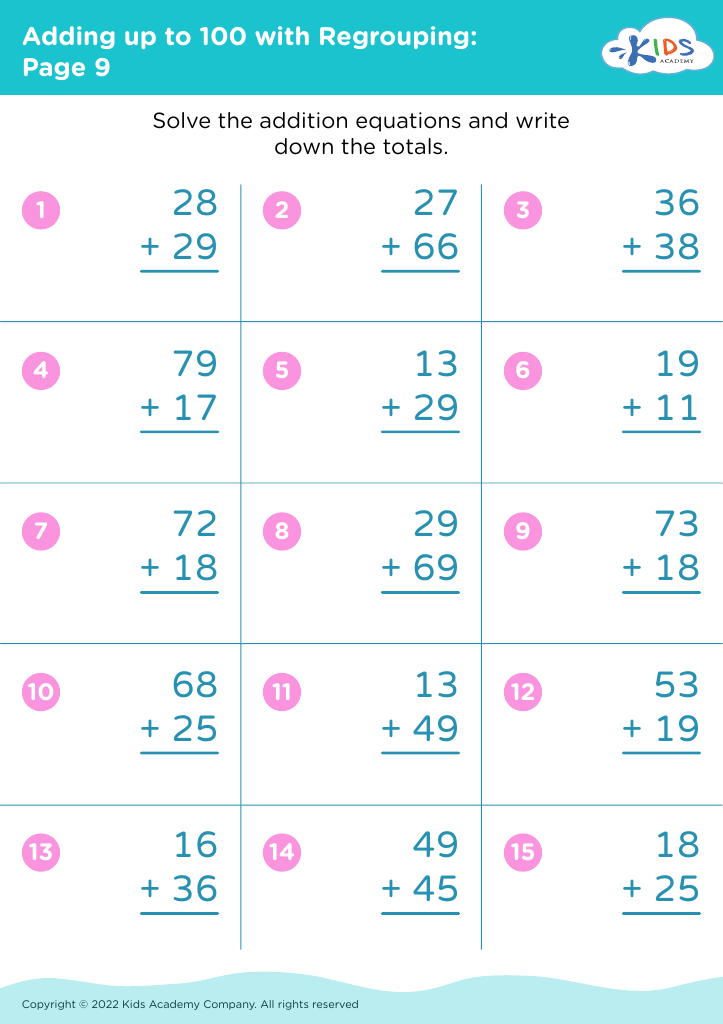
Adding up to 100 with Regrouping: Page 9
Worksheet
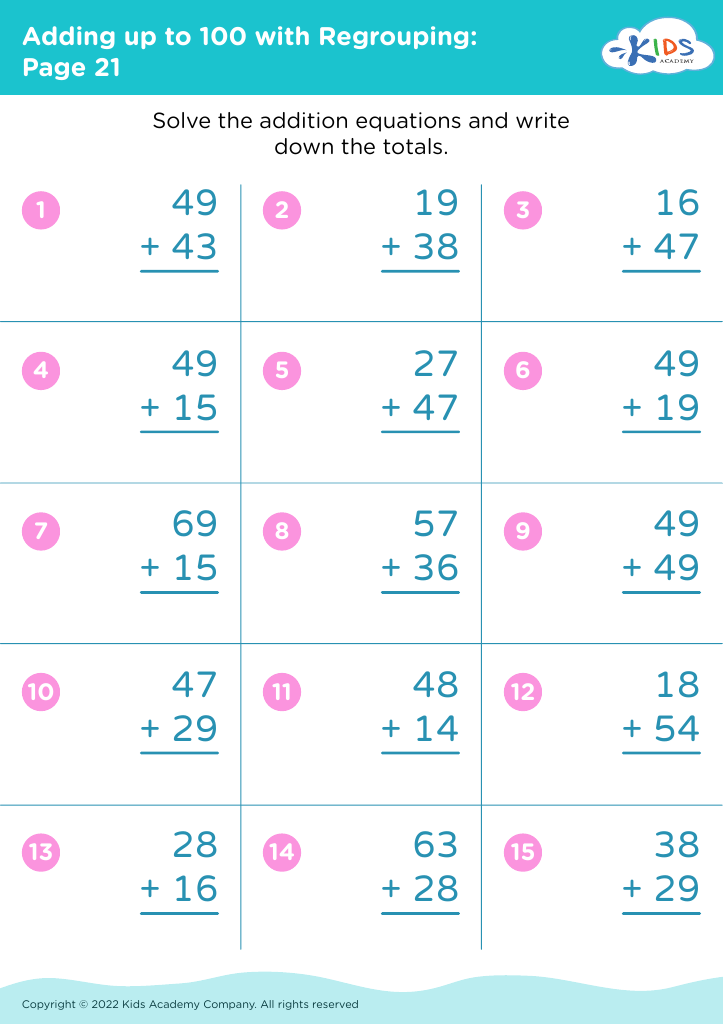
Adding up to 100 with Regrouping: Page 21
Worksheet
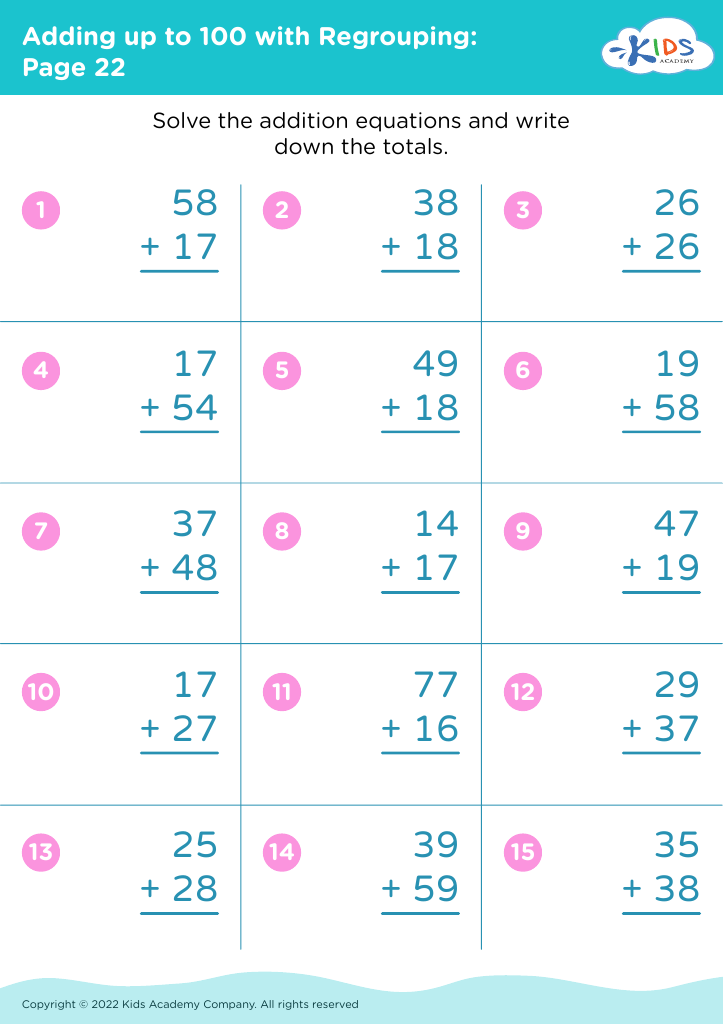
Adding up to 100 with Regrouping: Page 22
Worksheet
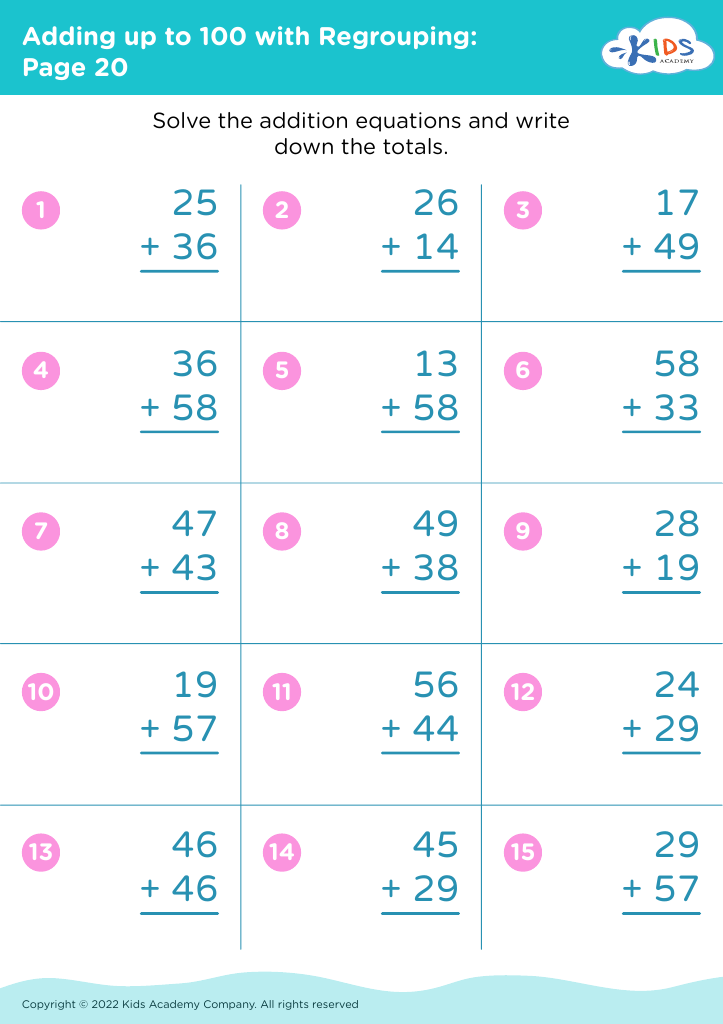
Adding up to 100 with Regrouping: Page 20
Worksheet
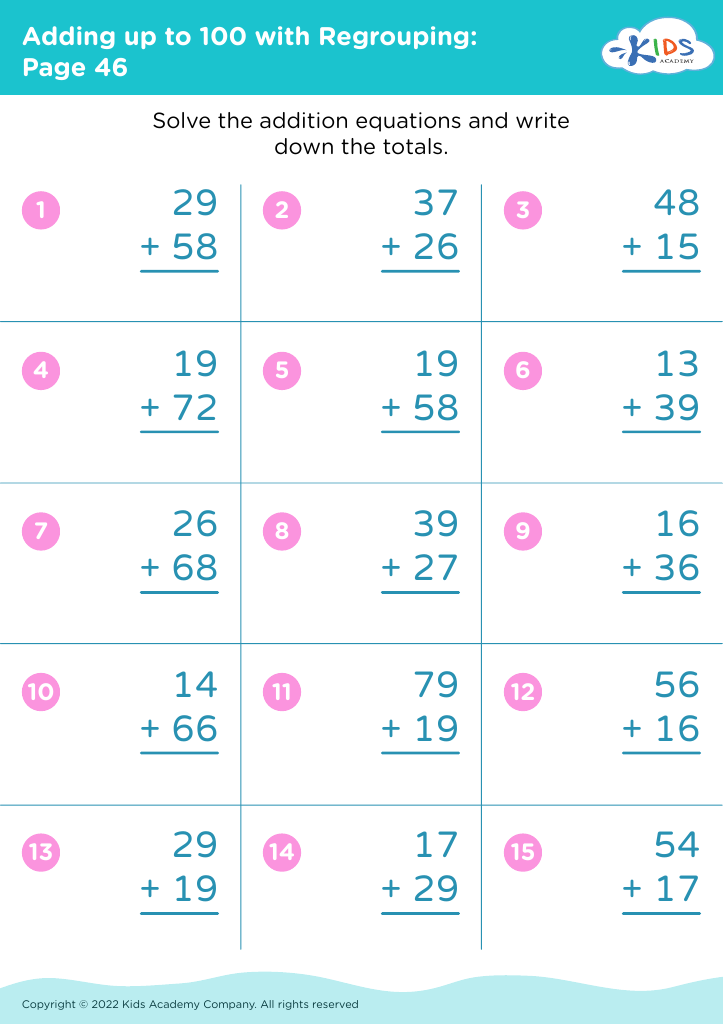
Adding up to 100 with Regrouping: Page 46
Worksheet
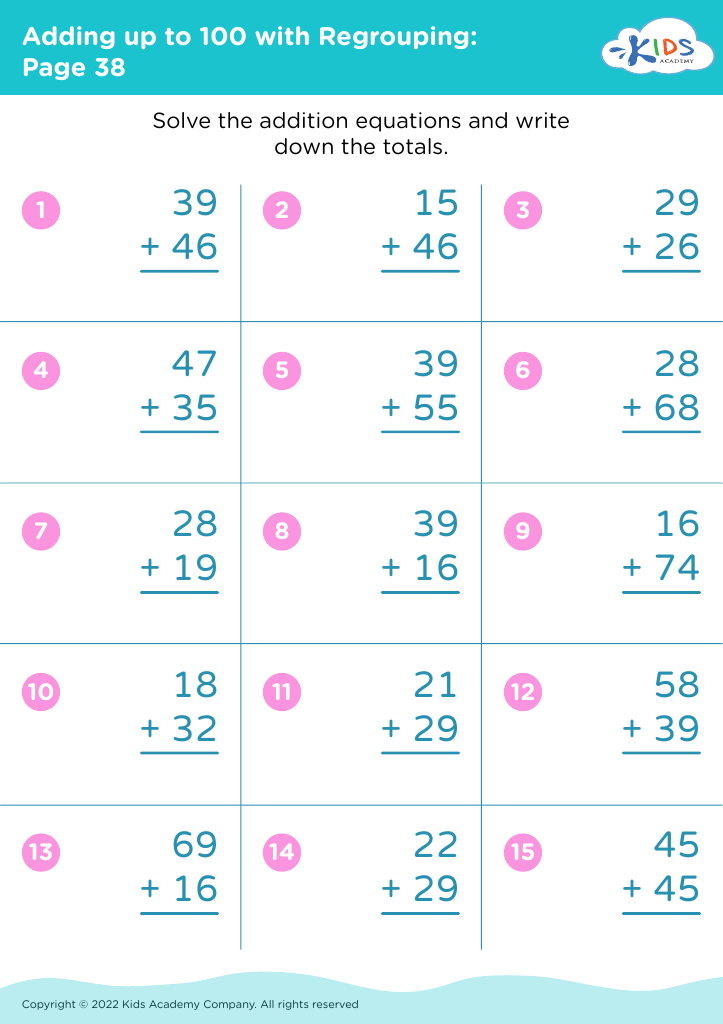
Adding up to 100 with Regrouping: Page 38
Worksheet
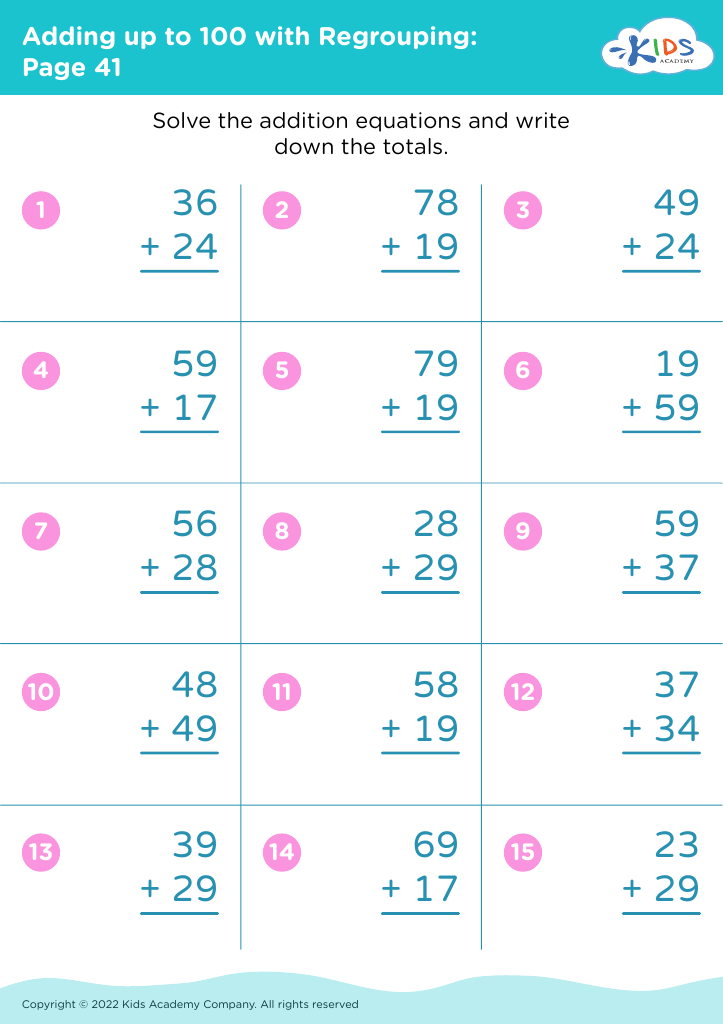
Adding up to 100 with Regrouping: Page 41
Worksheet
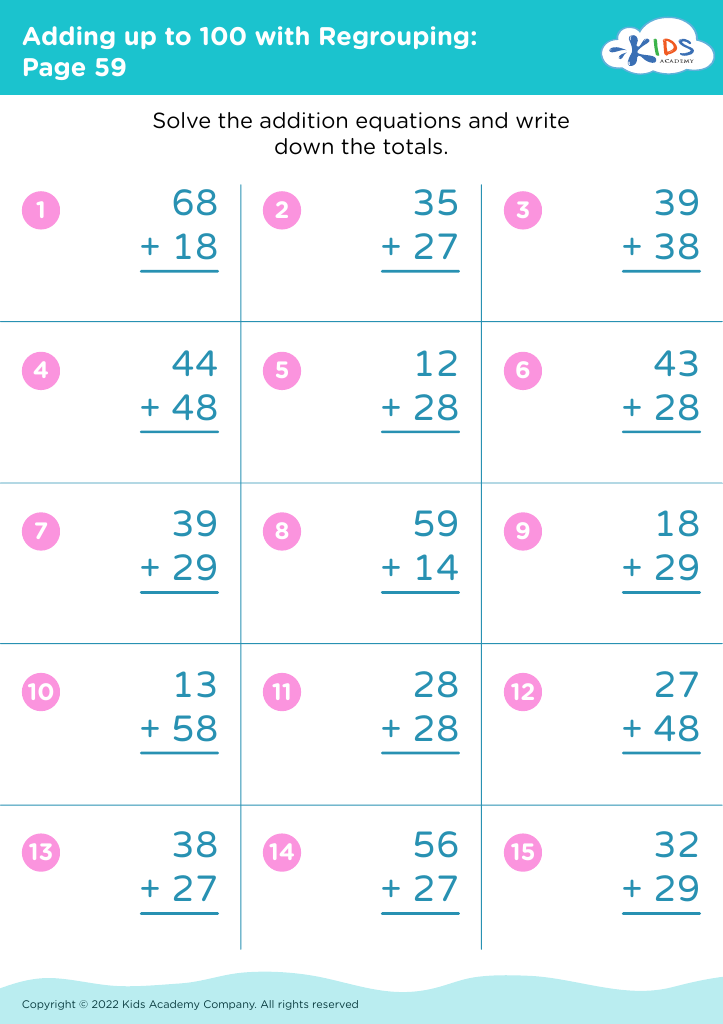
Adding up to 100 with Regrouping: Page 59
Worksheet
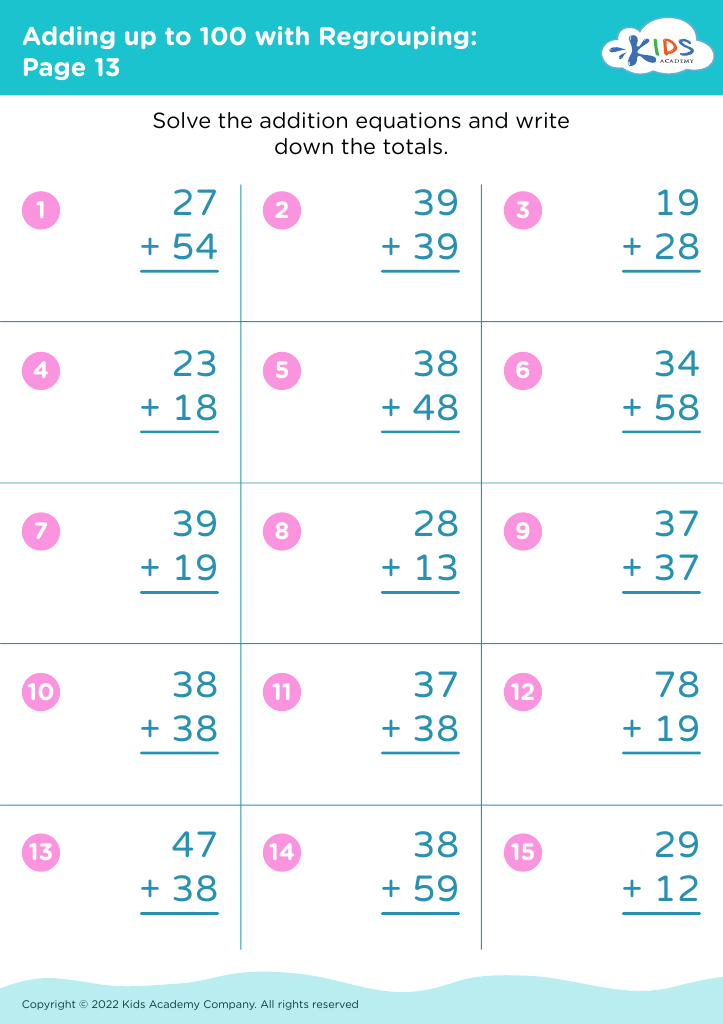
Adding up to 100 with Regrouping: Page 13
Worksheet
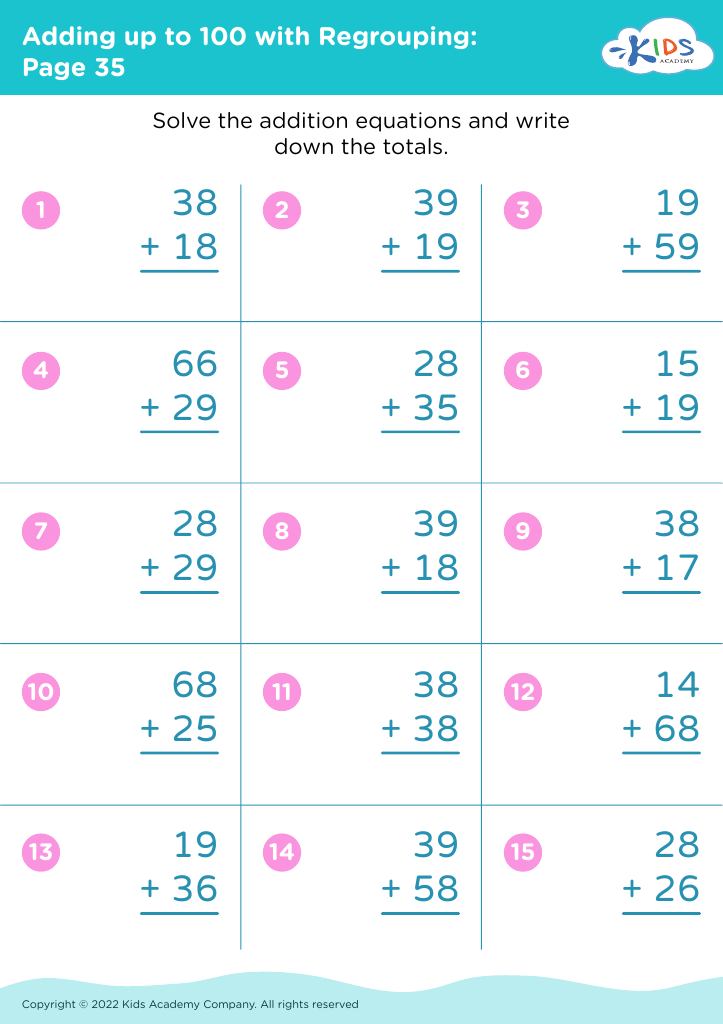
Adding up to 100 with Regrouping: Page 35
Worksheet
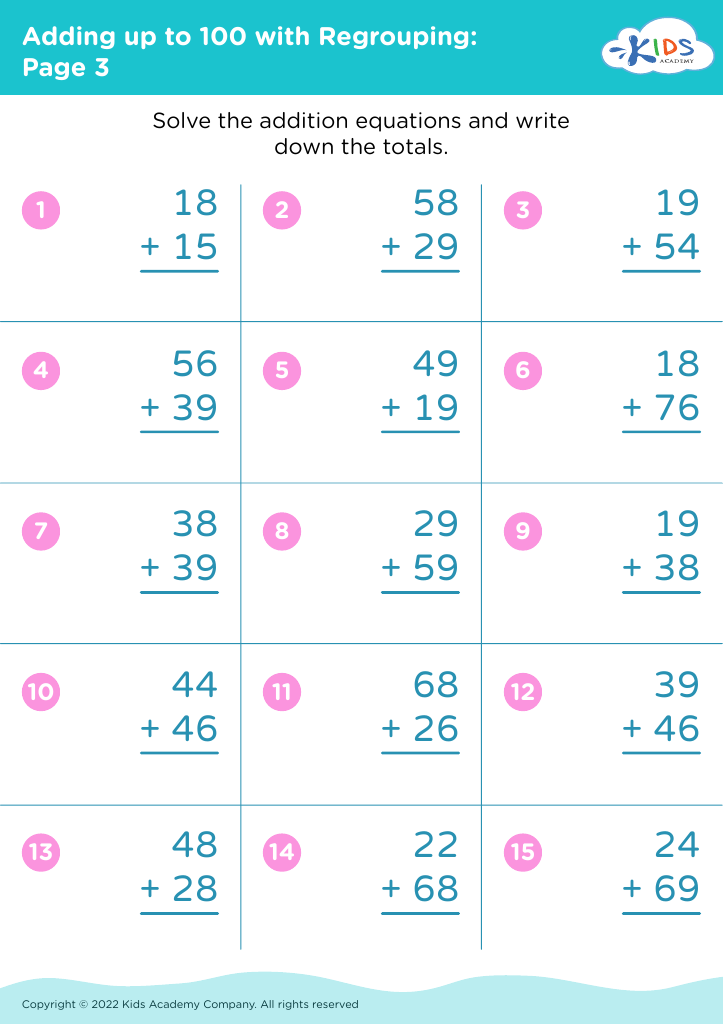
Adding up to 100 with Regrouping: Page 3
Worksheet
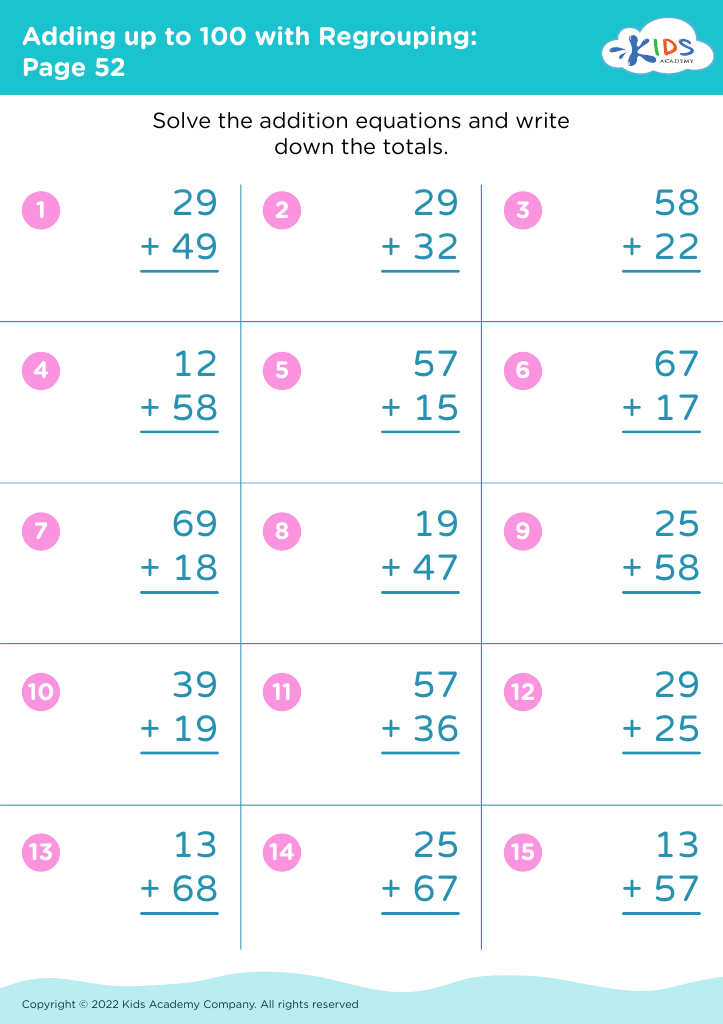
Adding up to 100 with Regrouping: Page 52
Worksheet
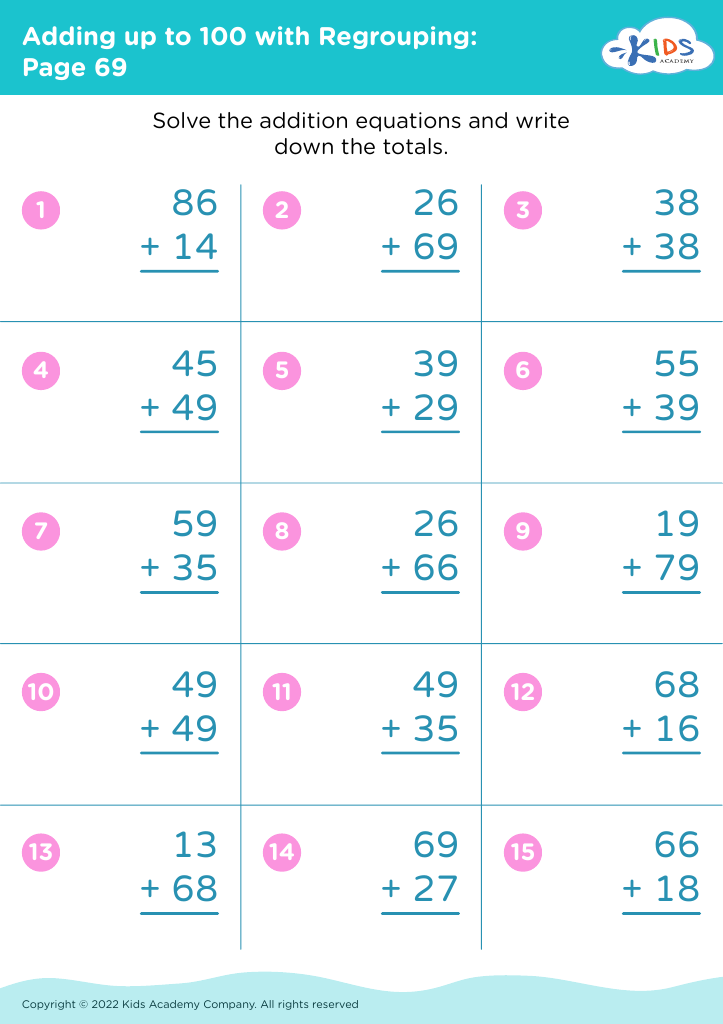
Adding up to 100 with Regrouping: Page 69
Worksheet
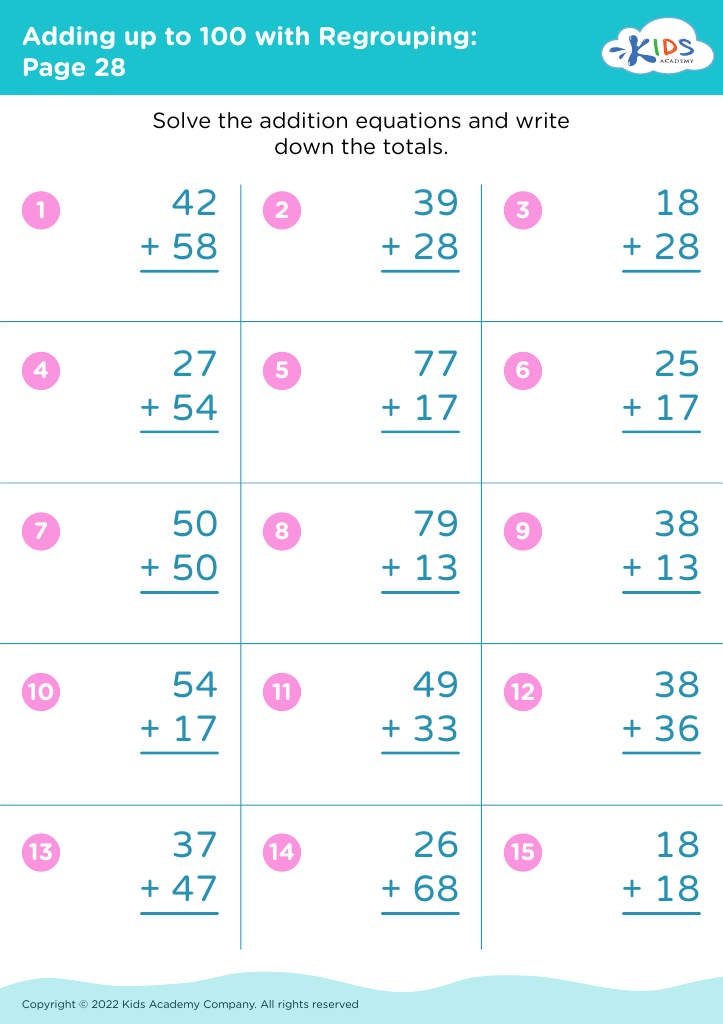
Adding up to 100 with Regrouping: Page 28
Worksheet
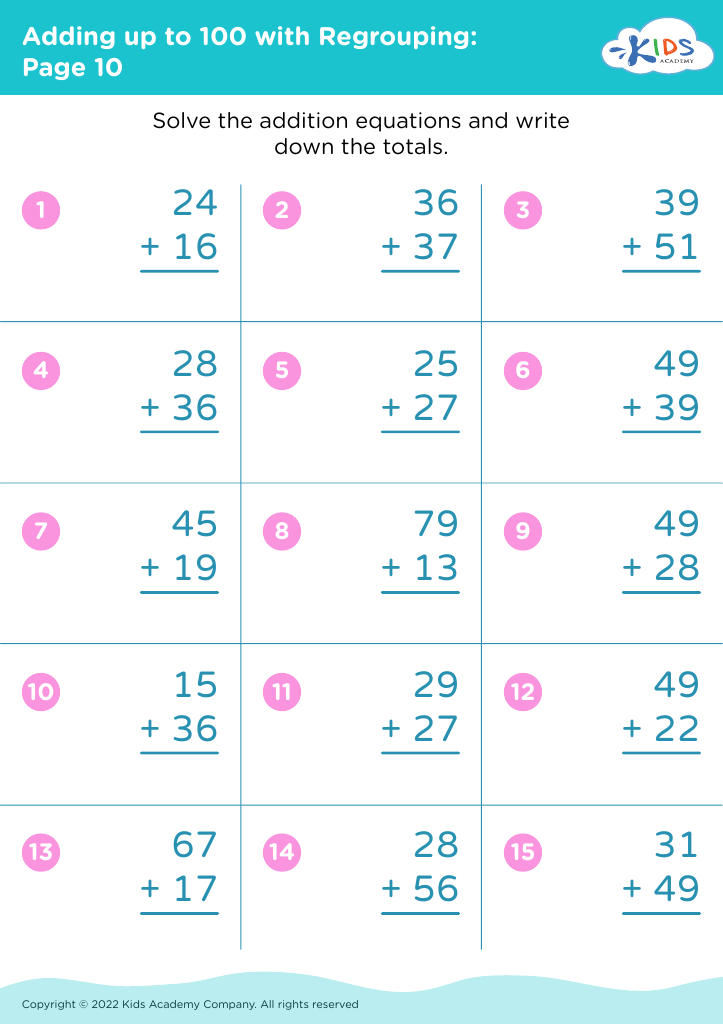
Adding up to 100 with Regrouping: Page 10
Worksheet
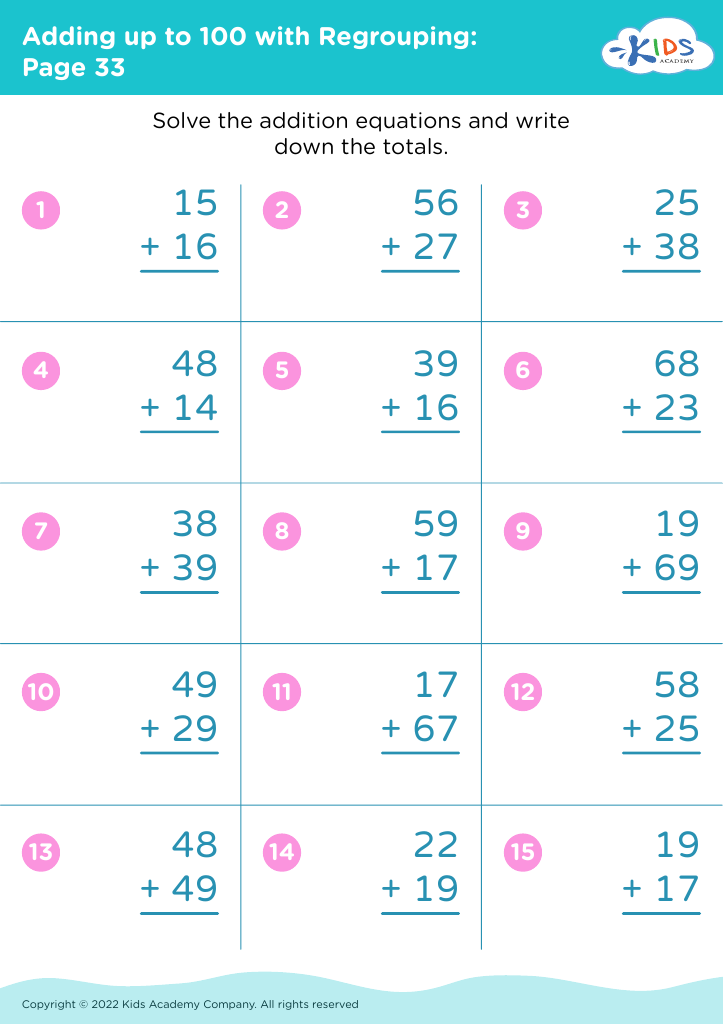
Adding up to 100 with Regrouping: Page 33
Worksheet


Understanding fractions and regrouping numbers when adding up to 100 are fundamental skills for 7-year-olds, setting the foundation for a lifetime of mathematical competence. Fractions are an essential component of math that appear in many aspects of daily life, from understanding time and money to cooking and sharing. Teaching fractions early helps children grasp the ideas of parts and wholes, proportionality, and division, enriching their overall number sense.

Adding up to 100 with regrouping involves carrying over numbers, requiring children to break down their thinking process, which enhances problem-solving skills and mental math abilities. This concept is critical in developing a solid understanding of place value and arithmetic, making future complex mathematical tasks more approachable.

For parents and teachers, dedicating time to these skills is an investment in a child’s educational journey. Early ease with fractions and regrouping fosters confidence, reduces math anxiety, and encourages a positive attitude toward future mathematical encounters. Additionally, mastering these skills supports other academic subjects requiring logical, analytical thinking. Therefore, by prioritizing these areas, parents and teachers are nurturing inquisitive, persistent learners ready to tackle more challenging concepts, thereby paving the way for academic and everyday success.