Develop critical thinking Adding up to 100 Without Regrouping Worksheets for 7-Year-Olds
3 filtered results
-
From - To
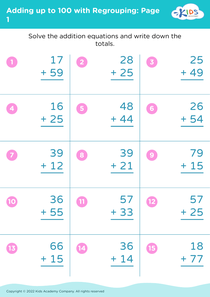
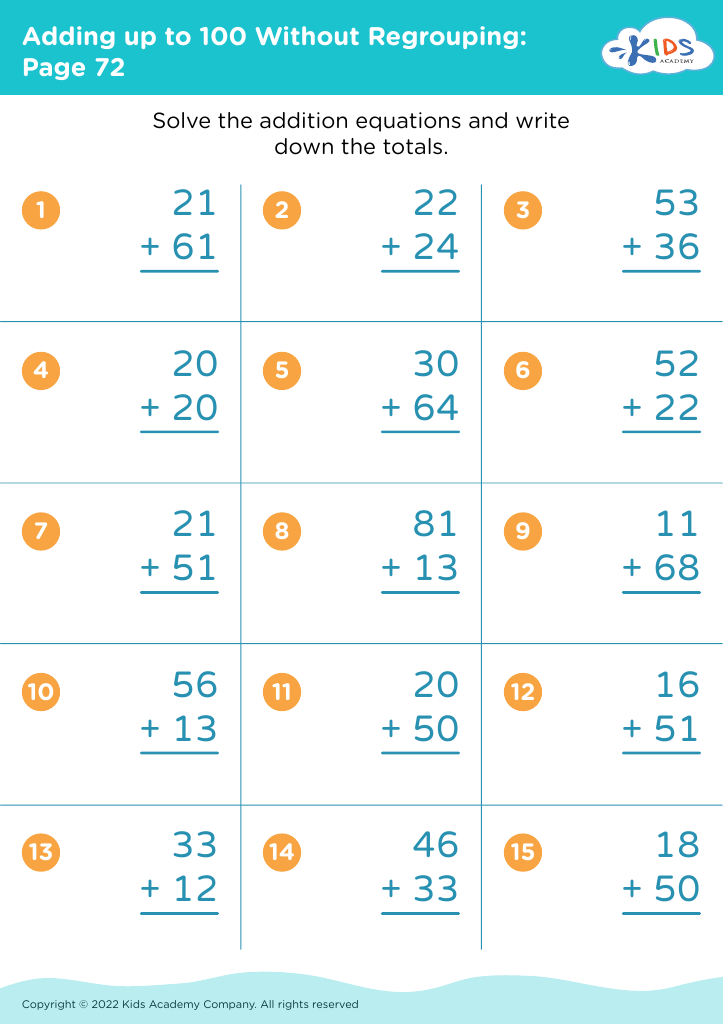
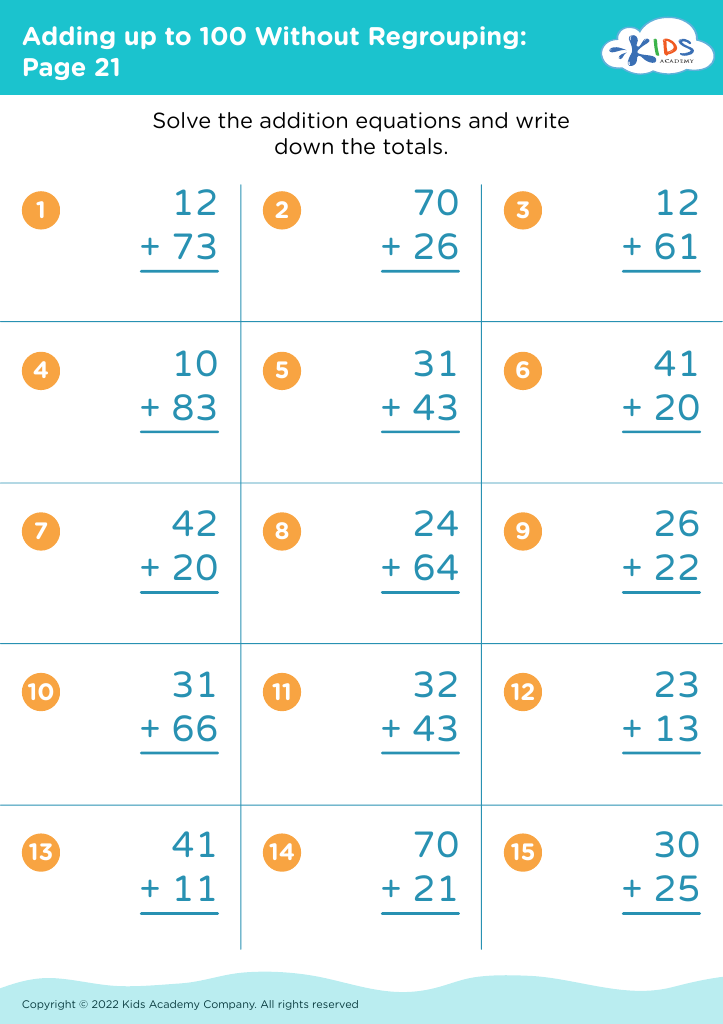
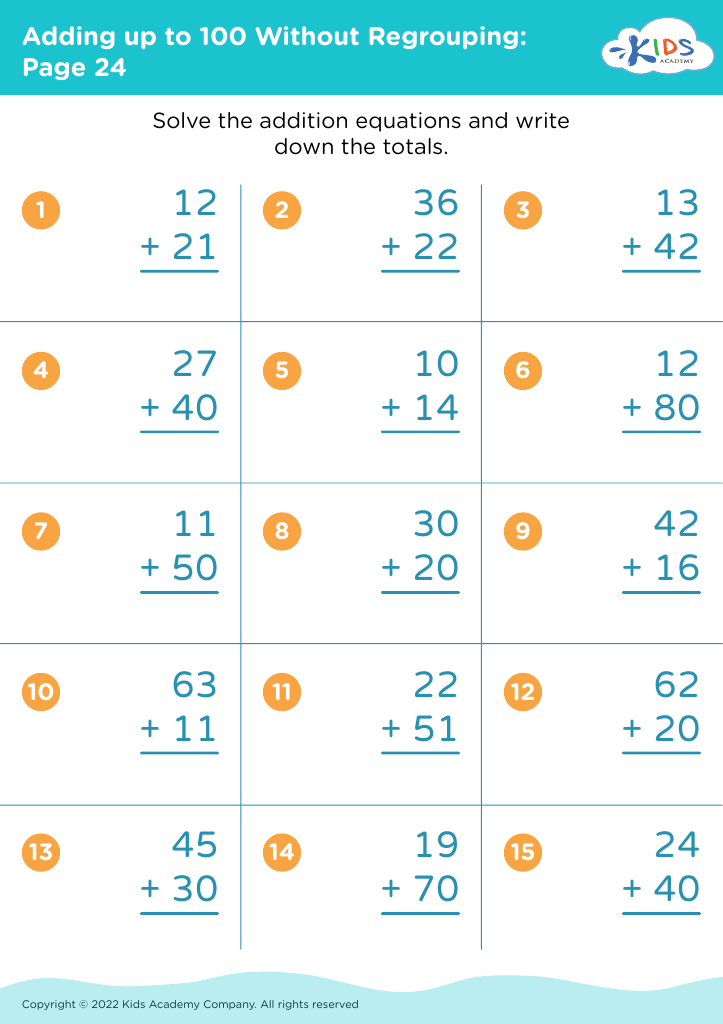
Enhance your child's critical thinking skills with our engaging "Adding Up to 100 Without Regrouping" worksheets tailored for 7-year-olds. These carefully designed activities challenge young learners to solve addition problems that reinforce their math comprehension and analytical abilities. As children work through these worksheets, they'll not only practice addition but also develop strategies to reason through problems and identify patterns. By focusing on problems that do not require regrouping, students can build a solid foundation in mathematics while boosting their critical thinking. Empower your child with the confidence and cognitive skills needed for future success—all while having fun with math!




Developing critical thinking skills in 7-year-olds, particularly in areas like arithmetic, is essential for their overall cognitive development. When children learn to add numbers without regrouping, they’re not just learning basic math; they are also honing their problem-solving abilities, logical reasoning, and analytical skills. These foundational skills enhance their ability to tackle more complex mathematical concepts later on.
Critical thinking in math encourages students to explore various methods for solving problems, recognize patterns, and make connections between concepts. For instance, when teaching addition, educators can ask students to explain their thought process, fostering a deeper understanding of the relationship between numbers. This practice not only improves their math skills but also encourages self-reflection and an appreciation for the learning process.
Furthermore, fostering such skills early contributes to a child's confidence in their abilities, reducing math anxiety in later years. As they become proficient in adding numbers without regrouping, they gain a sense of achievement that encourages a lifelong love for learning. Therefore, parents and teachers play a critical role in promoting these skills, equipping children to succeed academically and in everyday life tasks.