Identifying shapes Adding up to 100 Without Regrouping Worksheets for 7-Year-Olds
4 filtered results
-
From - To
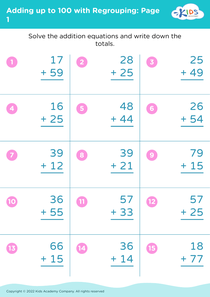
Discover engaging worksheets designed for 7-year-olds, combining fun and learning! These printable activities focus on identifying shapes and mastering addition up to 100 without regrouping. Perfect for first and second graders, our worksheets help children develop essential math skills and shape recognition abilities. Through a variety of exercises, kids will practice adding numbers and understanding geometric forms, ensuring they build a strong foundation in math. Make learning enjoyable and effective with our expertly crafted resources, designed to boost confidence and enhance both numeracy and spatial awareness in young learners. Ideal for classroom and home use!
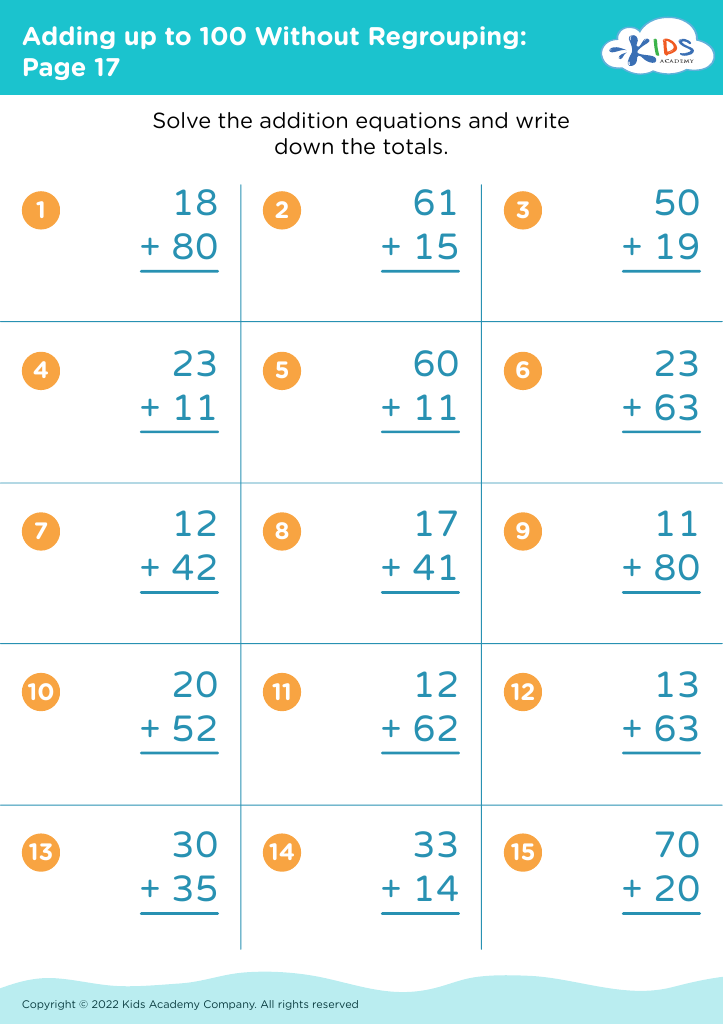
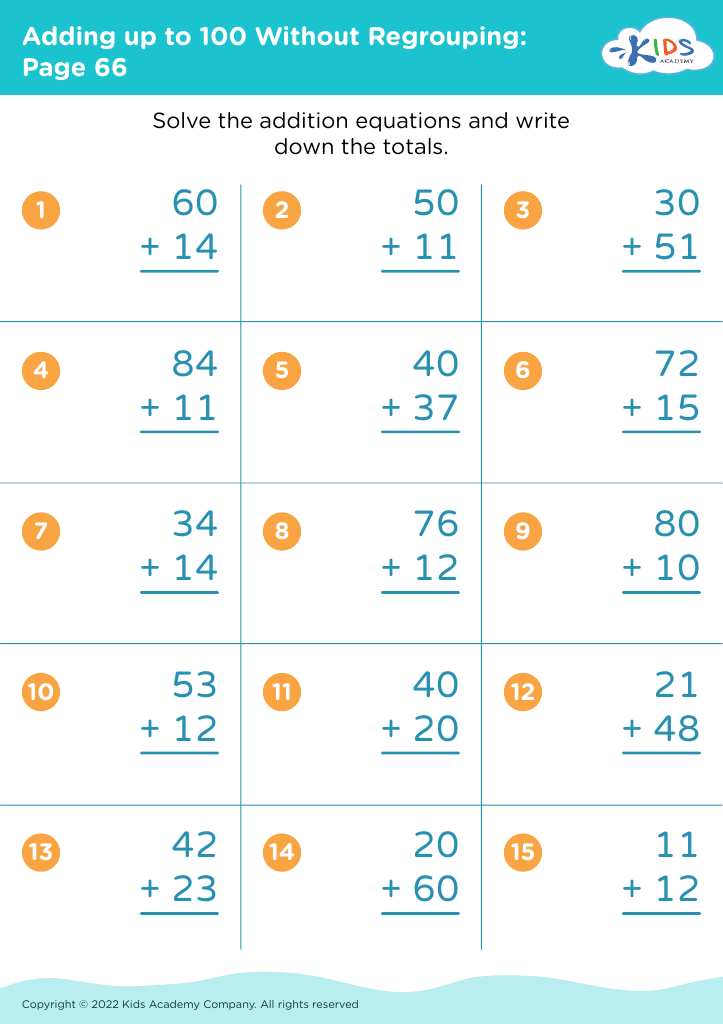
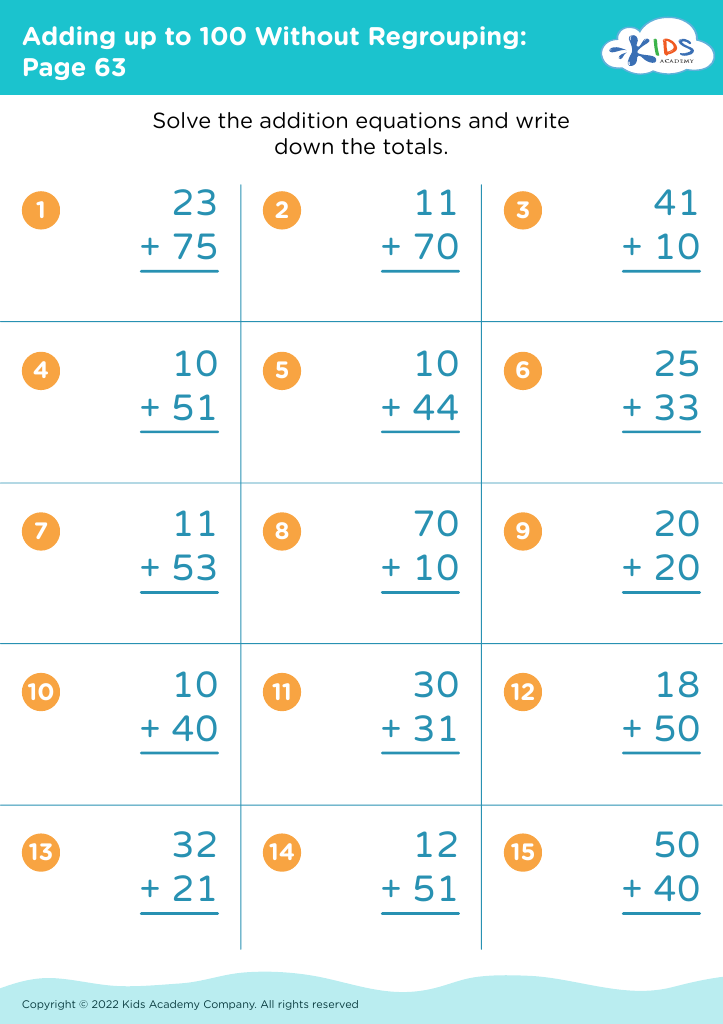
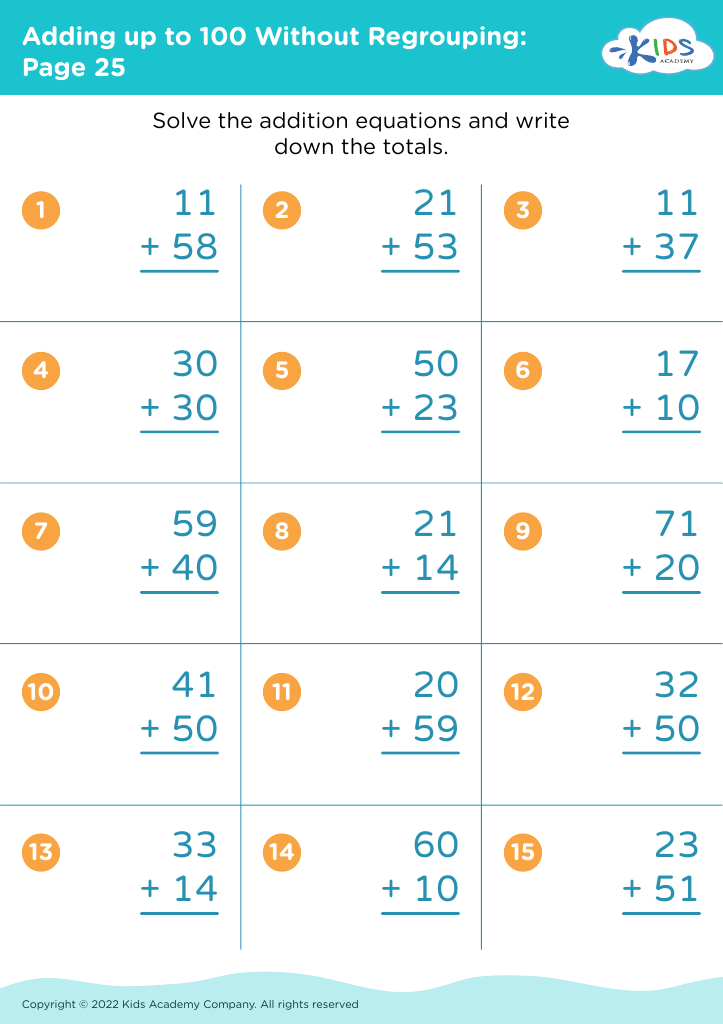




Identifying shapes and adding up to 100 without regrouping are foundational skills crucial for 7-year-olds as they underpin more advanced mathematical and cognitive development. For parents and teachers, understanding and emphasizing these skills is critical for several reasons.
Firstly, recognizing shapes enhances spatial awareness and geometric understanding, enabling children to relate real-world objects to mathematical concepts. This paves the way for future problem-solving skills in more advanced math and science courses. Activities like drawing, building, and sorting shapes also sharpen fine motor skills and hand-eye coordination.
Secondly, adding up to 100 without regrouping strengthens basic arithmetic skills, reinforcing number sense, and understanding place value. These skills are essential as they form the building blocks for more complex operations such as subtraction with borrowing, multiplication, and division. Assessments and simple exercises tailored to enhance these skills facilitate early success in arithmetic, which in turn boosts a child's confidence and fosters a positive attitude toward learning mathematics.
On a broader scale, engaging in these activities promotes critical thinking, logical reasoning, and attention to detail. Early competence in these areas can lay the groundwork for academic achievement and lifelong cognitive development. Therefore, it’s imperative that educators and parents support and encourage these fundamental learning milestones.