Mathematical reasoning Adding up to 100 Without Regrouping Worksheets for 7-Year-Olds
3 filtered results
-
From - To
Explore our engaging "Mathematical Reasoning Adding Up to 100 Without Regrouping Worksheets" designed specifically for 7-year-olds! These worksheets provide a variety of fun and interactive exercises, helping young learners grasp the fundamentals of addition while building essential mathematical reasoning skills. Each worksheet encourages children to add two-digit numbers up to 100 without the need for regrouping, promoting confidence and fluency in addition. With colorful illustrations and relatable scenarios, these resources make learning enjoyable. Ideal for use in both classroom and home settings, these worksheets ensure that kids master basic math concepts while developing critical thinking skills. Start the math adventure today!
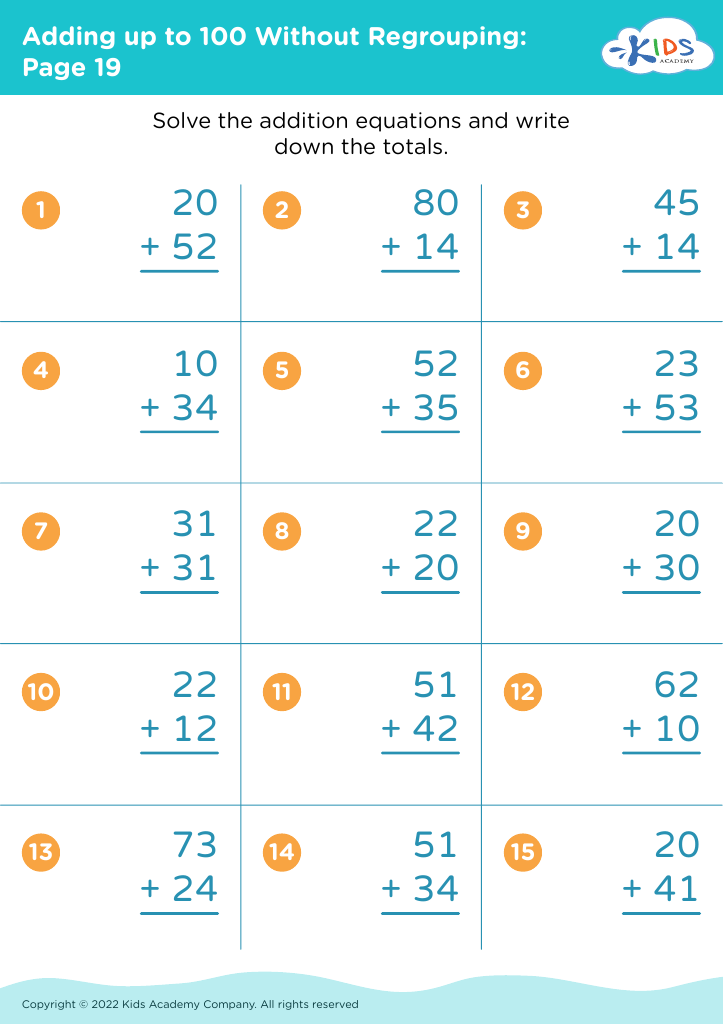
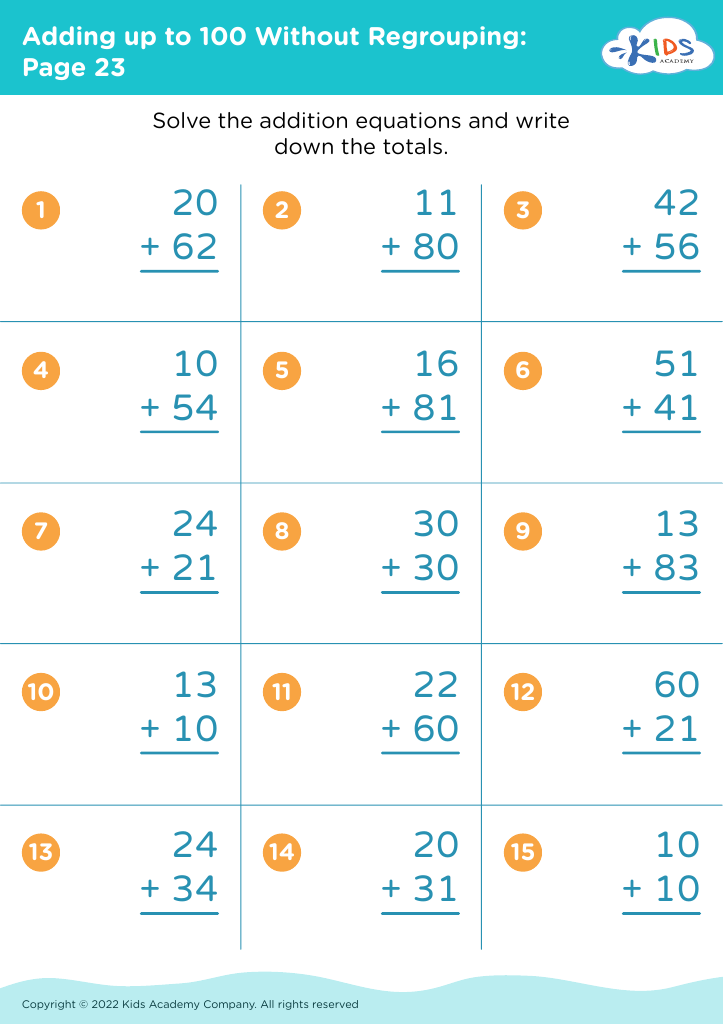
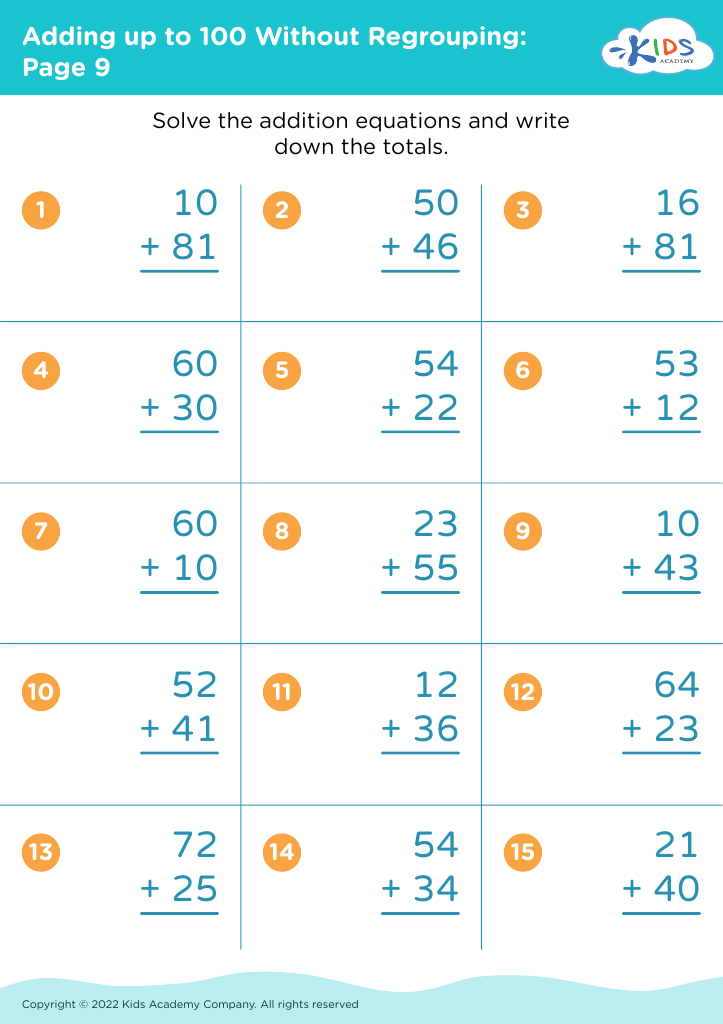




Mathematical reasoning, especially concepts like "adding up to 100 without regrouping," is crucial for 7-year-olds as it lays the foundation for future math skills and critical thinking. At this age, children's cognitive abilities are rapidly developing, making it an ideal time for them to learn not just how to compute, but why the processes work. Understanding addition to 100 without regrouping enhances their ability to break numbers into more manageable parts, promoting number sense and fluency.
When parents or teachers prioritize this skill, they empower children to approach math problems with confidence and strategy. By mastering basic addition, students can work on higher-level concepts in the future, such as subtraction, multiplication, and problem-solving techniques. Moreover, fostering a solid understanding and enjoyment of mathematics helps build positive attitudes towards learning.
Research indicates that early mathematical competency closely correlates with later academic success, meaning efforts put into teaching and nurturing these skills yield long-term benefits. Encouraging children to think critically and work methodically with numbers develops their overall cognitive abilities. Ultimately, focusing on mathematical reasoning equips students with essential life skills, promoting logical thinking and perseverance that extend beyond the classroom.