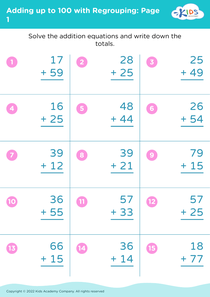
Practicing multiplication Adding up to 100 Without Regrouping Worksheets for 7-Year-Olds
3 filtered results
-
From - To
Discover engaging "Practicing Multiplication Adding Up to 100 Without Regrouping Worksheets" specifically designed for 7-year-olds! These worksheets provide a fun and interactive way for young learners to strengthen their multiplication skills while mastering addition techniques. Each worksheet emphasizes clear problem-solving strategies that support foundational math concepts, ensuring children become confident mathematicians. Streamlined for effortless learning, our printable resources are tailored to keep students motivated and challenged while achieving mastery without the complication of regrouping. Perfect for classroom activities or at-home practice, these worksheets are an excellent tool to enhance math fluency and foster a lifelong love for learning!
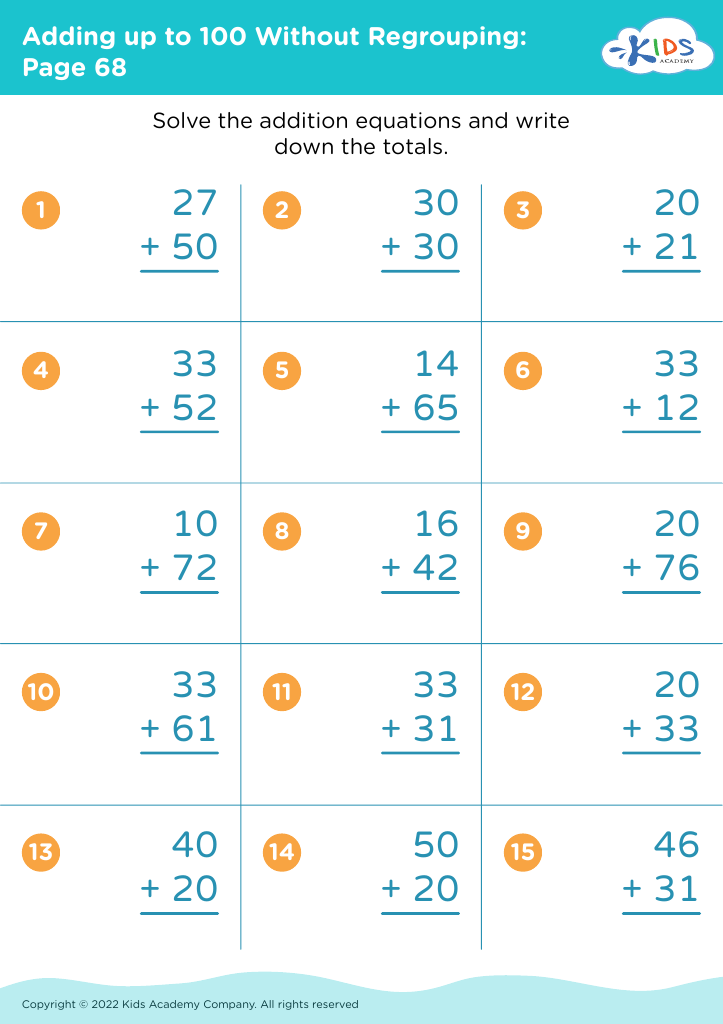
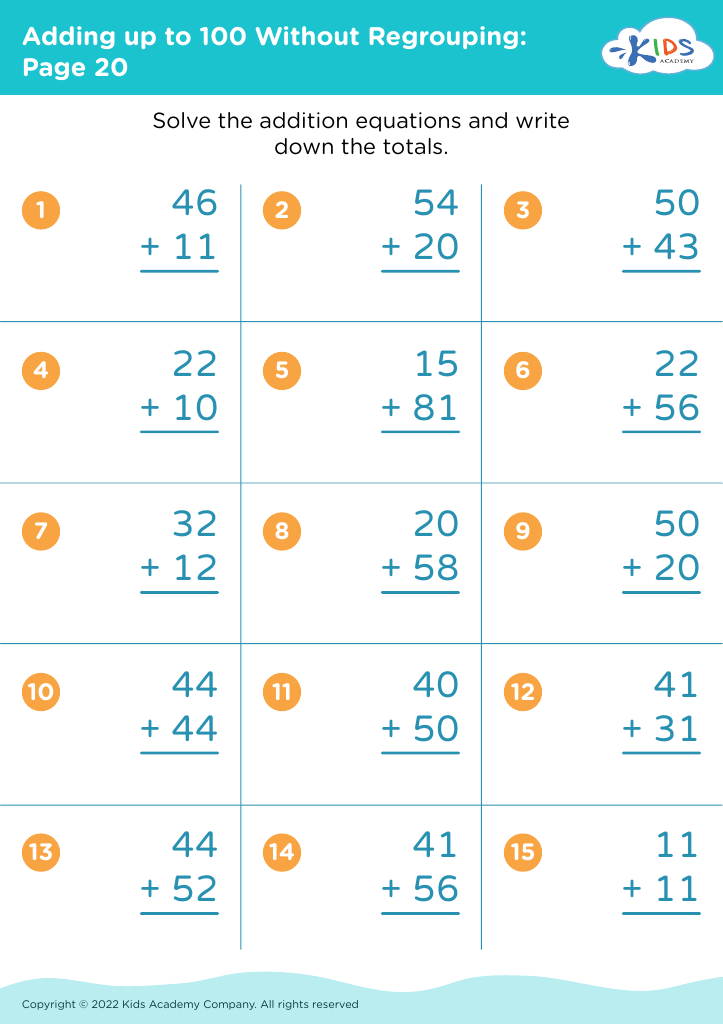
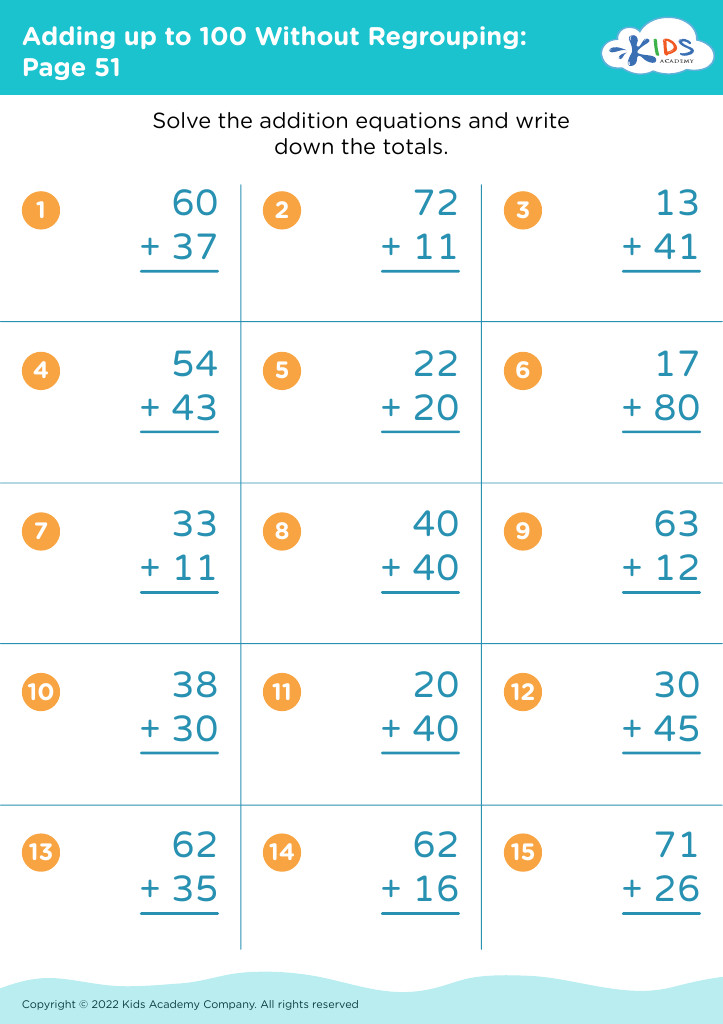




Practicing multiplication that adds up to 100 without regrouping is crucial for 7-year-olds, as it lays a strong foundation for their future mathematical skills. At this age, children are developing their cognitive abilities and learning to think logically. Mastering multiplication not only enhances their number sense but also boosts their confidence in tackling more complex problems.
By engaging students with multiplication combinations that add up to 100 without regrouping, parents and teachers can help children understand relationships between numbers, identify patterns, and strengthen their mental math abilities. This practice provides a clear and manageable context for children to grasp the concept of multiplication, promoting fluency in basic arithmetic operations.
Additionally, this skill is essential for everyday situations they will encounter, such as budgeting, measuring, and problem-solving. A solid grasp of multiplication at this stage prepares them for higher-level math concepts in later grades, ensuring a seamless transition as their mathematical education progresses. Therefore, emphasizing this practice shows commitment not just to rote memorization, but to fostering critical thinking and lifelong learning in young learners. Engaging with this practice now will serve to enrich their overall academic experience, better preparing them for future challenges.