Problem-Solving Skills Adding up to 100 Without Regrouping Worksheets for 7-Year-Olds
10 filtered results
-
From - To
Explore our engaging "Problem-Solving Skills: Adding Up to 100 Without Regrouping" worksheets designed specifically for 7-year-olds. These interactive resources help young learners develop crucial math skills while tackling fun, age-appropriate problems. Each worksheet encourages critical thinking and enhances cognitive abilities, focusing on addition strategies that avoid regrouping. Perfect for classroom use or at-home learning, these worksheets not only reinforce numerical understanding but also promote a positive attitude towards problem-solving. Empower your child to tackle mathematical challenges confidently and enjoyably. Dive into our collection today and watch your child's skills flourish!
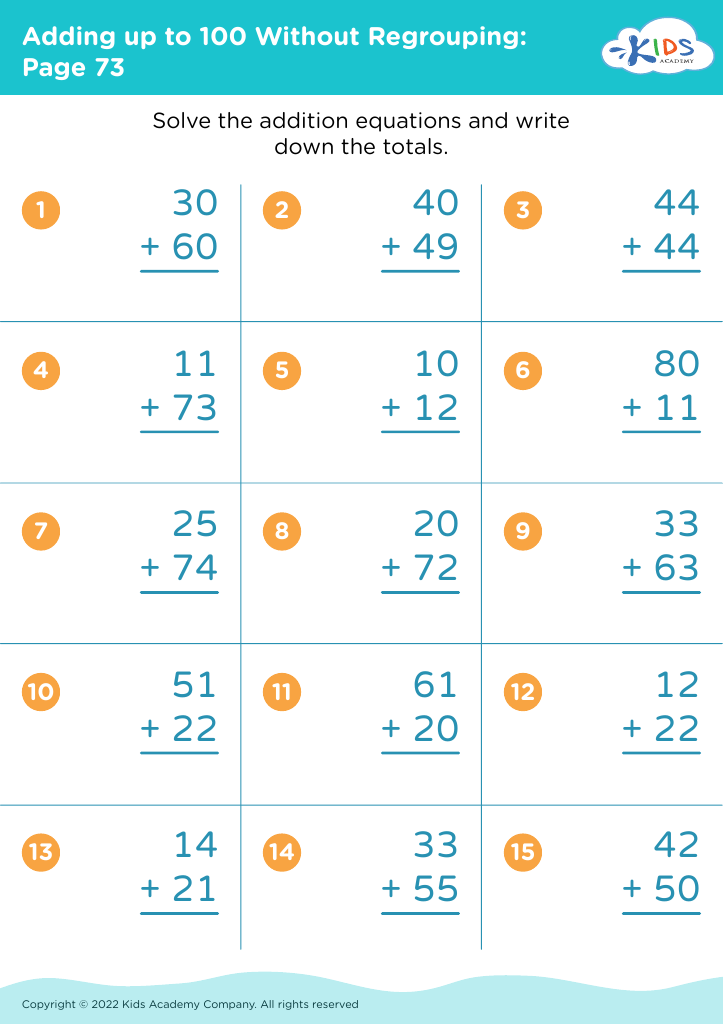
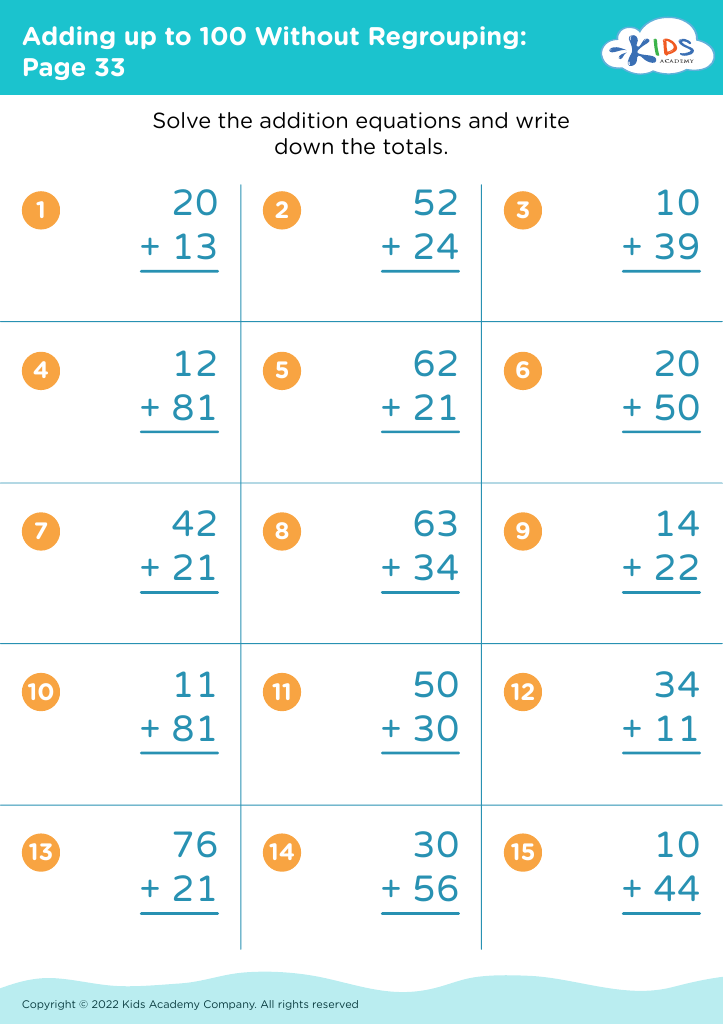
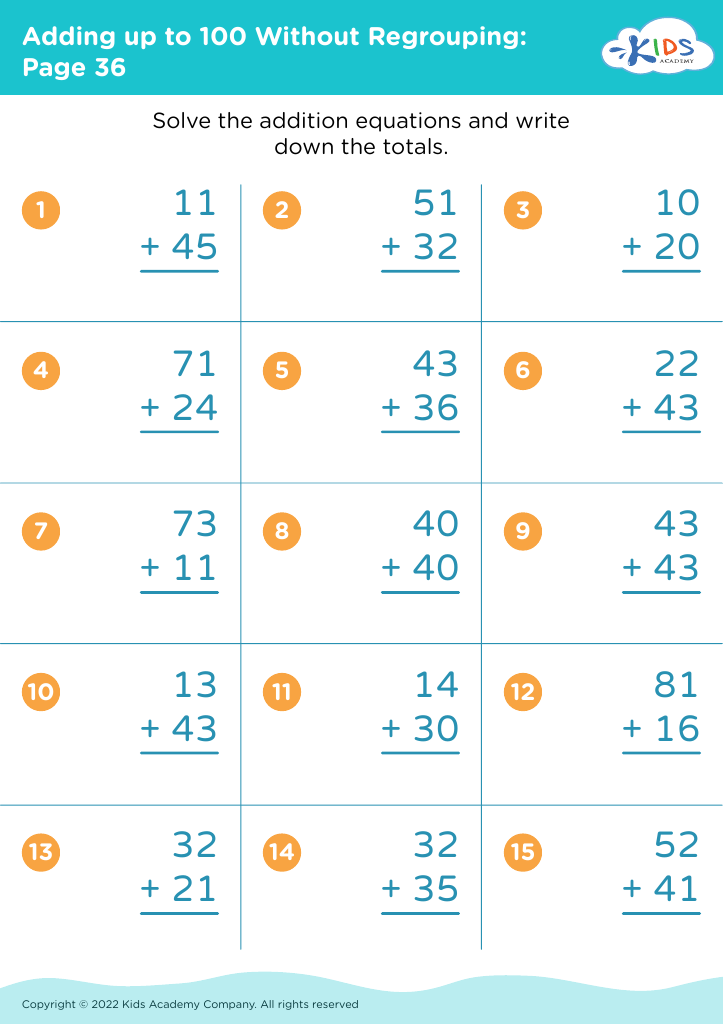
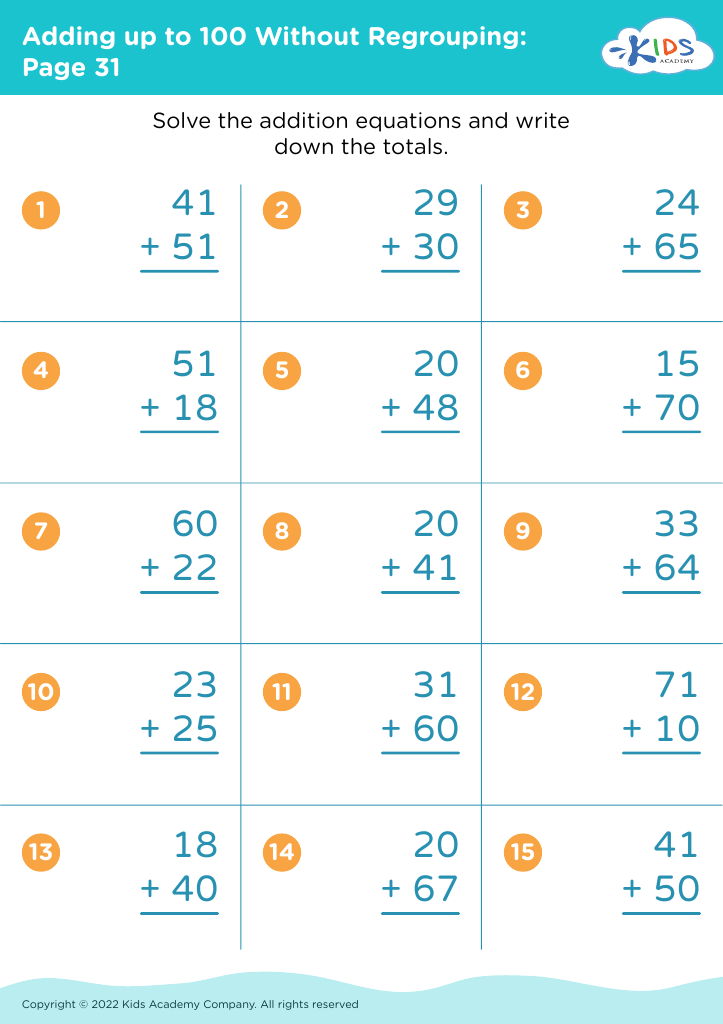
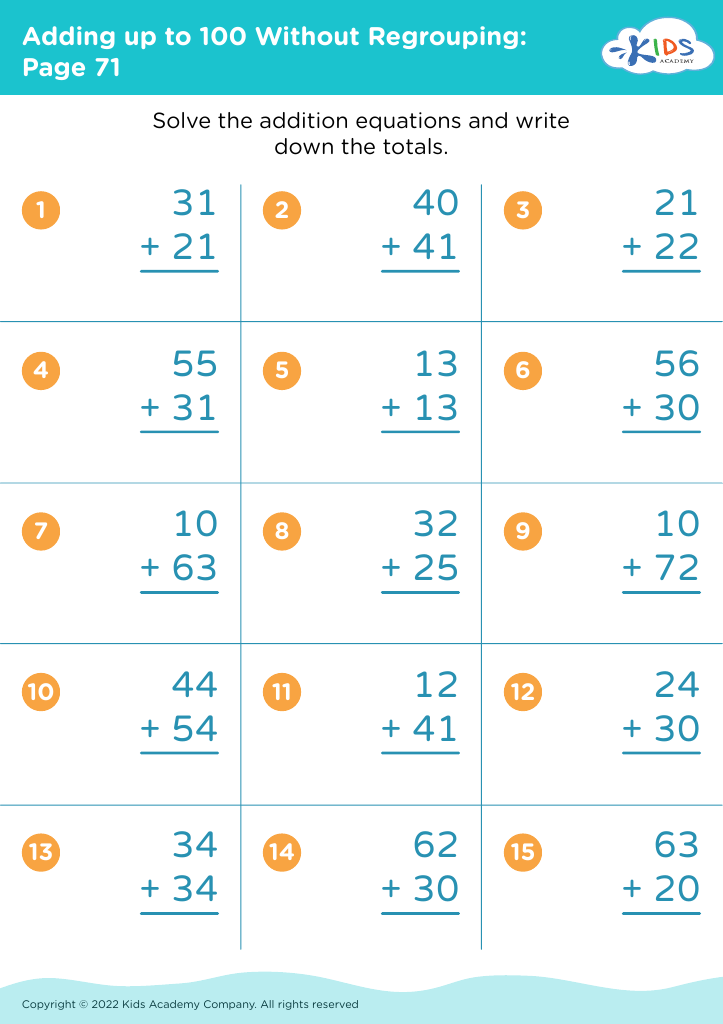
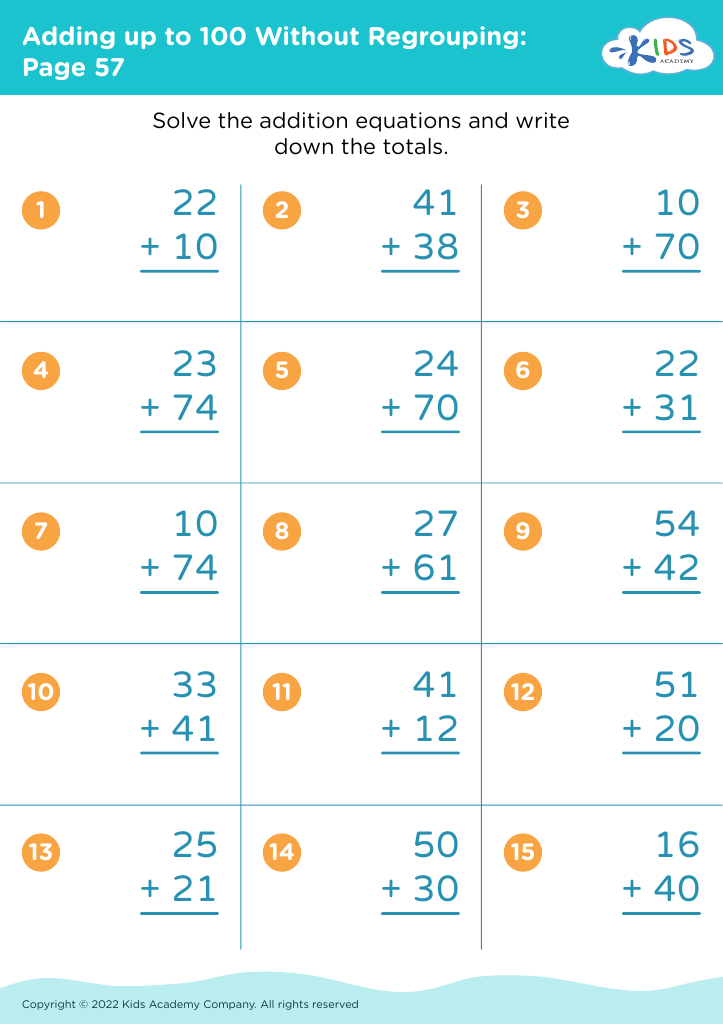
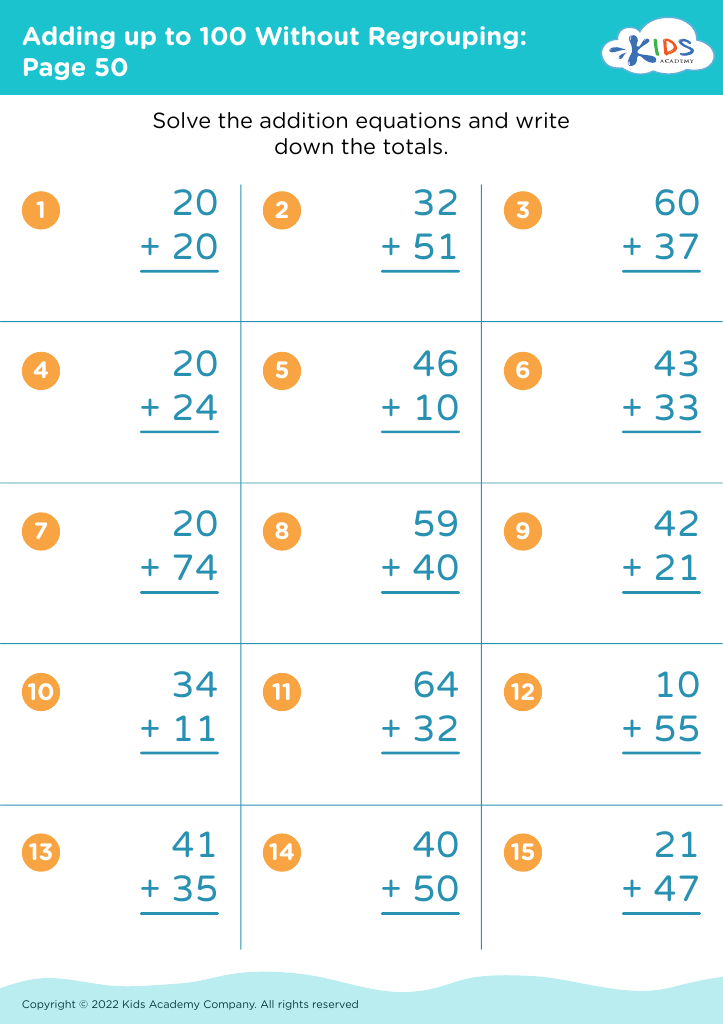
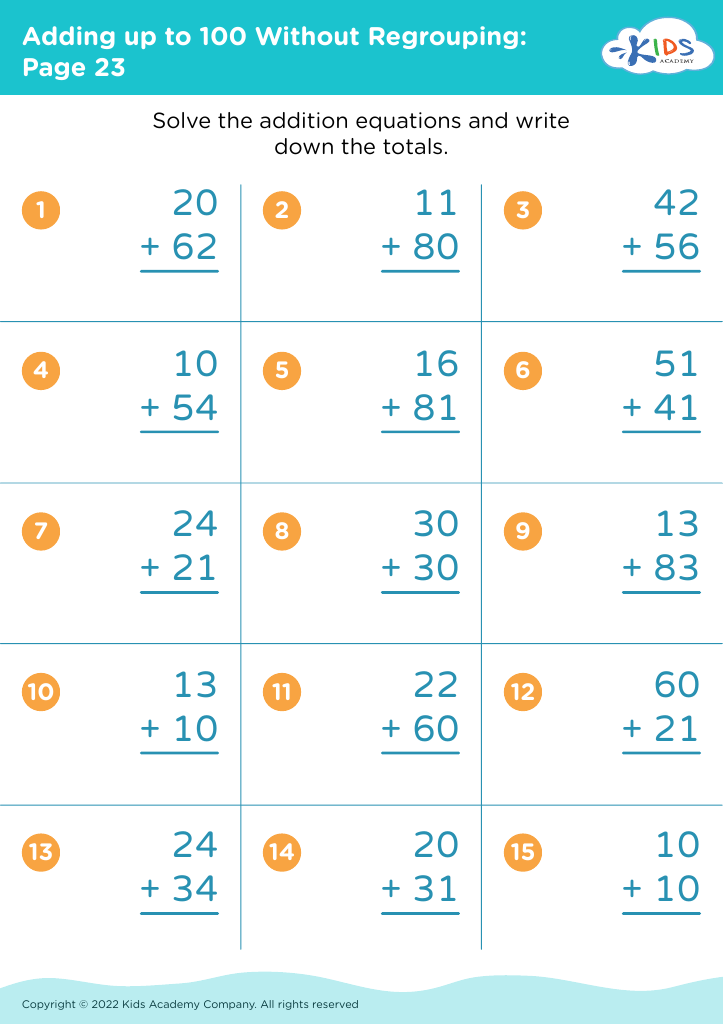
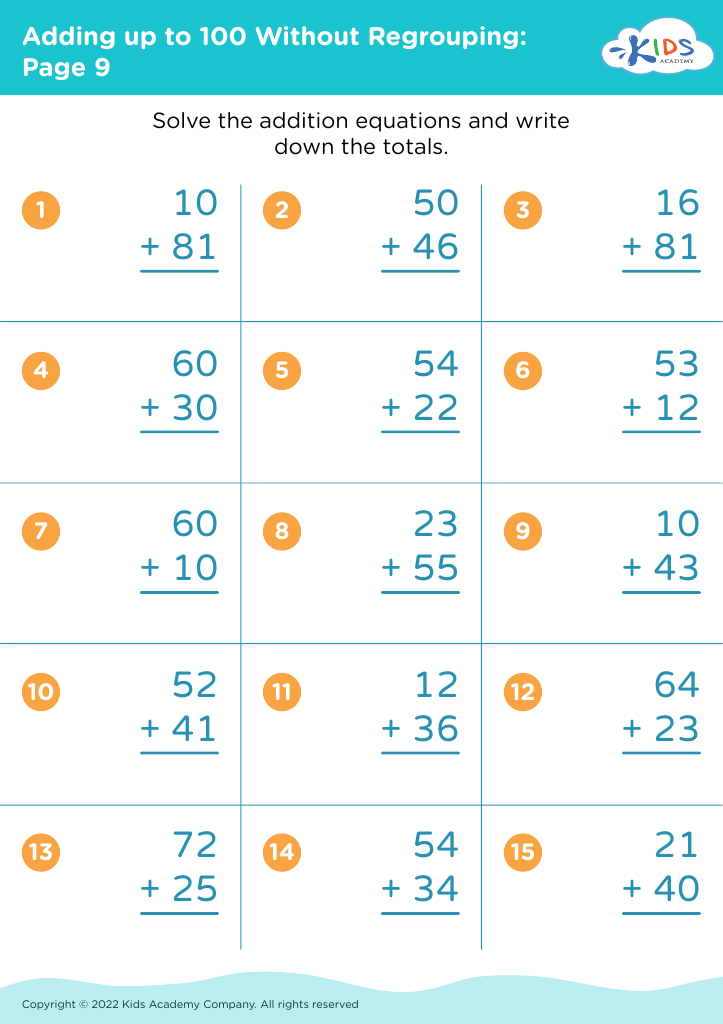
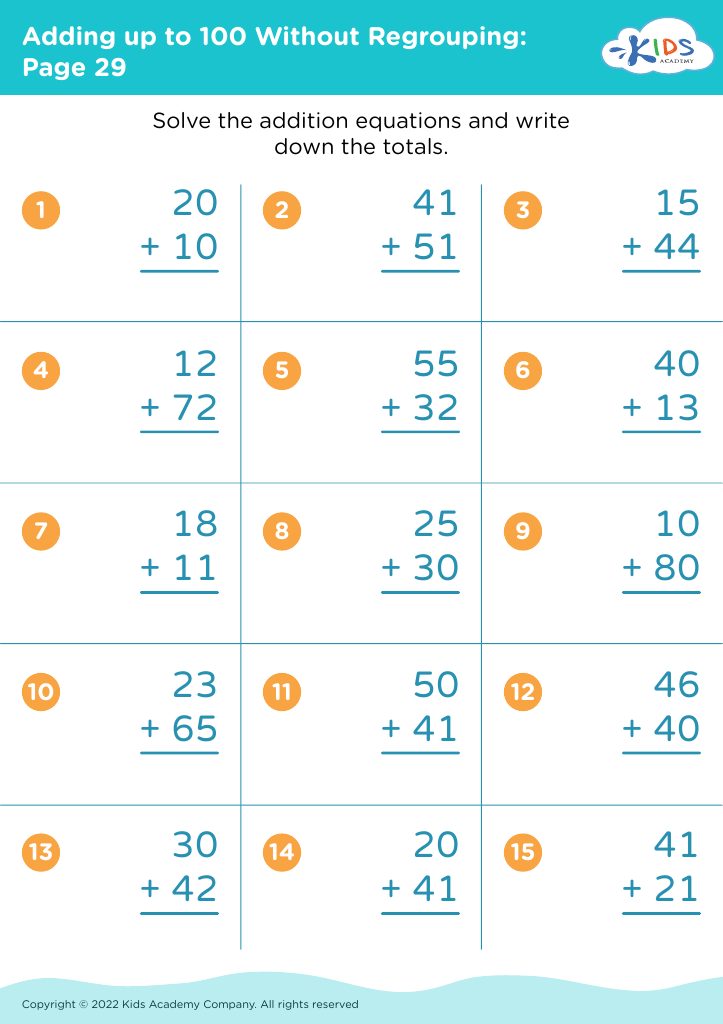




Parents and teachers should prioritize teaching problem-solving skills involving addition without regrouping to 7-year-olds for several key reasons. First, mastering basic math operations lays a strong foundation for future mathematical concepts. Addition skills are fundamental; they not only boost a child’s confidence but also enhance their ability to tackle more complex problems later in life.
Moreover, developing problem-solving skills encourages critical thinking. When children learn to add up to 100 without regrouping, they practice strategies to analyze problems, organize their thoughts, and apply logical reasoning—attributes critical for success across subjects, not just mathematics.
Additionally, fostering these skills strengthens perseverance. As children encounter challenges in problem-solving, they learn to stick with difficult tasks, enhancing their ability to cope with frustration and develop resilience. This mindset is invaluable in all areas of learning and personal growth.
Furthermore, engaging children in problem-solving activities promotes collaborative learning. Group work or discussions can help children communicate their thought processes, listen to different strategies, and refine their understanding through peer interaction.
In summary, focusing on solving problems with addition without regrouping not only supports mathematical proficiency but also cultivates essential life skills such as critical thinking, perseverance, and teamwork, making it a priority for families and educators alike.