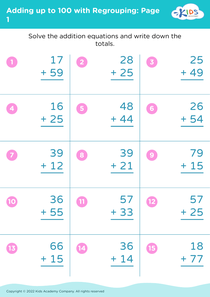
Understanding multiplication Adding up to 100 Without Regrouping Worksheets for 7-Year-Olds
5 filtered results
-
From - To
Unlock the world of multiplication for 7-year-olds with our engaging "Understanding Multiplication Adding Up to 100 Without Regrouping" worksheets. Designed to strengthen foundational math skills, these worksheets help young learners grasp the concept of multiplication as repeated addition. Through fun and interactive exercises, children will practice adding groups of numbers to reach totals up to 100, enhancing their confidence and mathematical fluency. Tailored for early grade students, our resources make learning multiplication enjoyable and effective, ensuring kids grasp these essential concepts without the confusion of regrouping. Perfect for at-home learning or classroom use, these worksheets foster critical thinking and problem-solving skills!
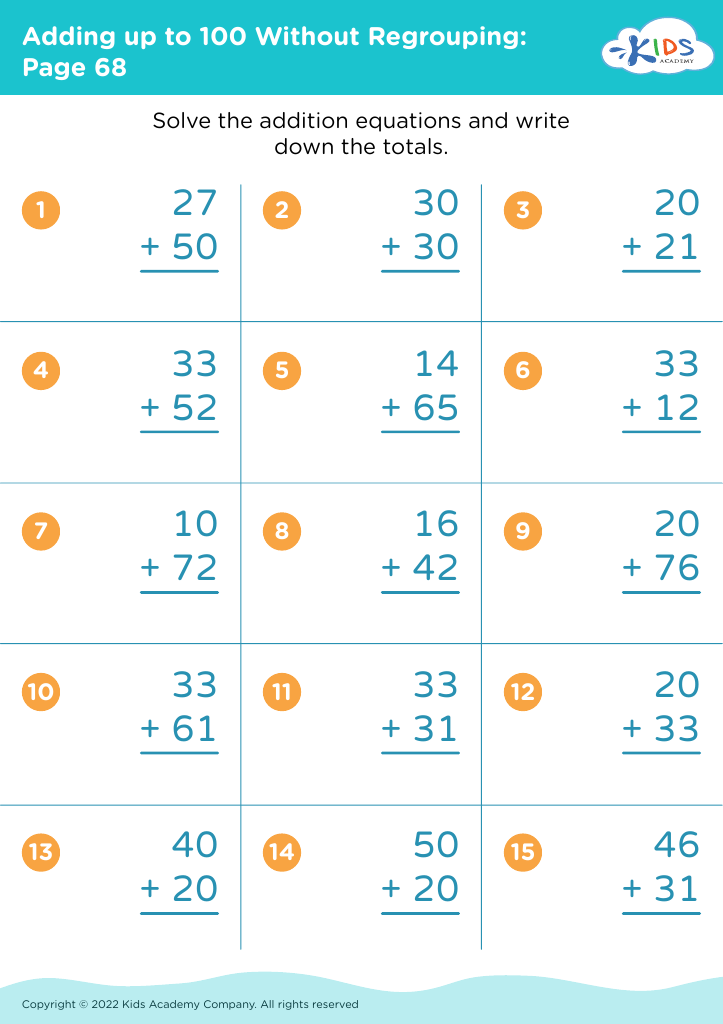
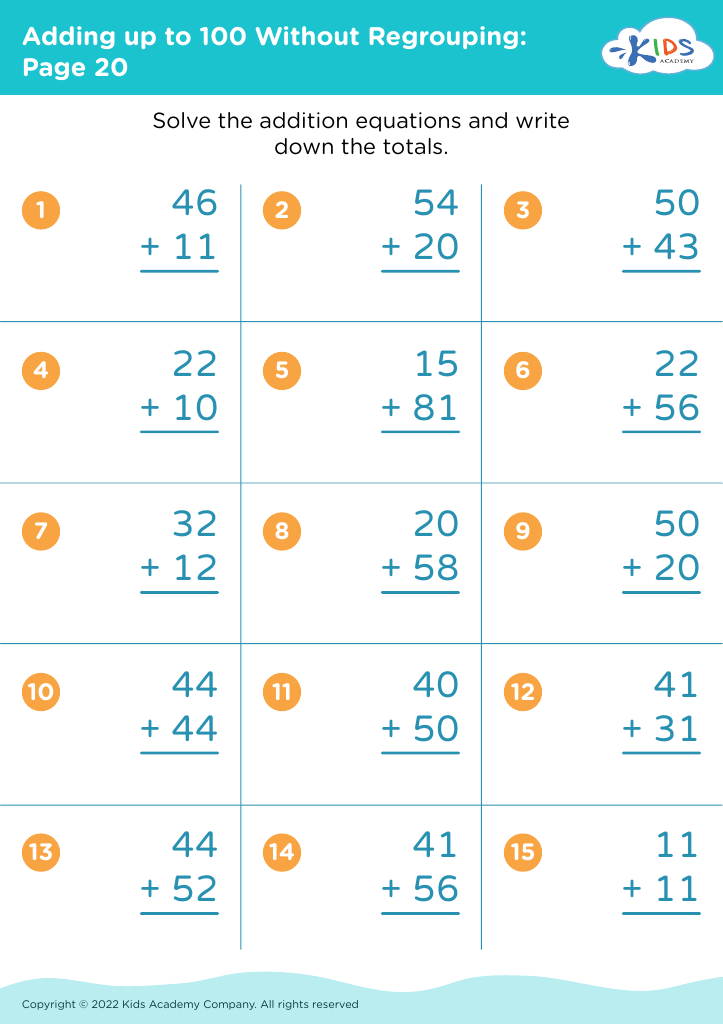
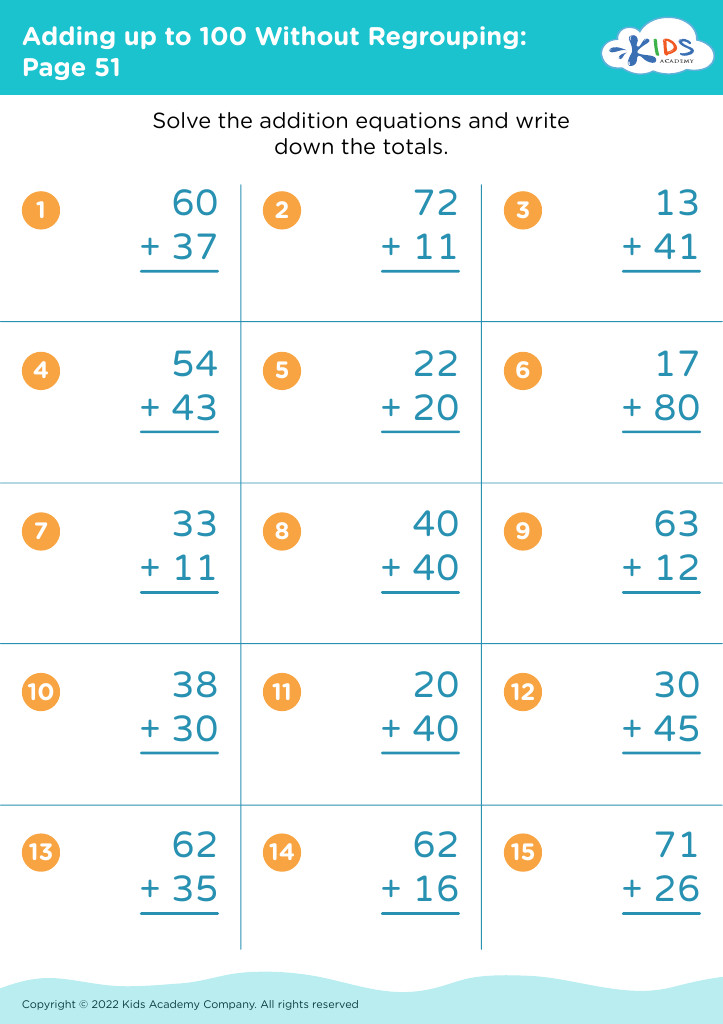
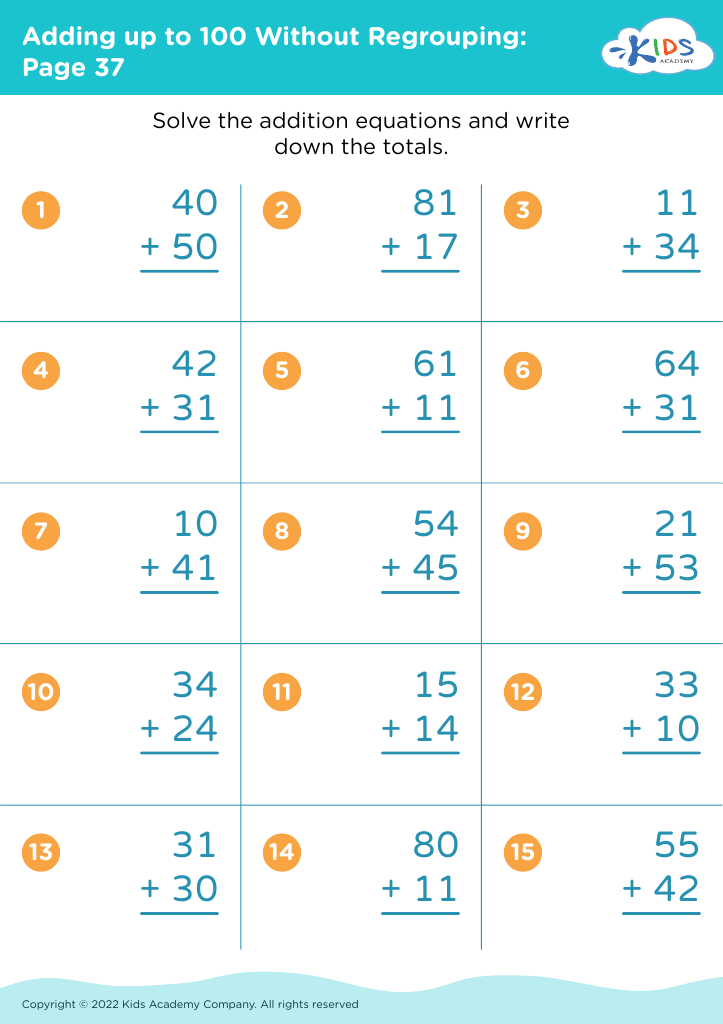
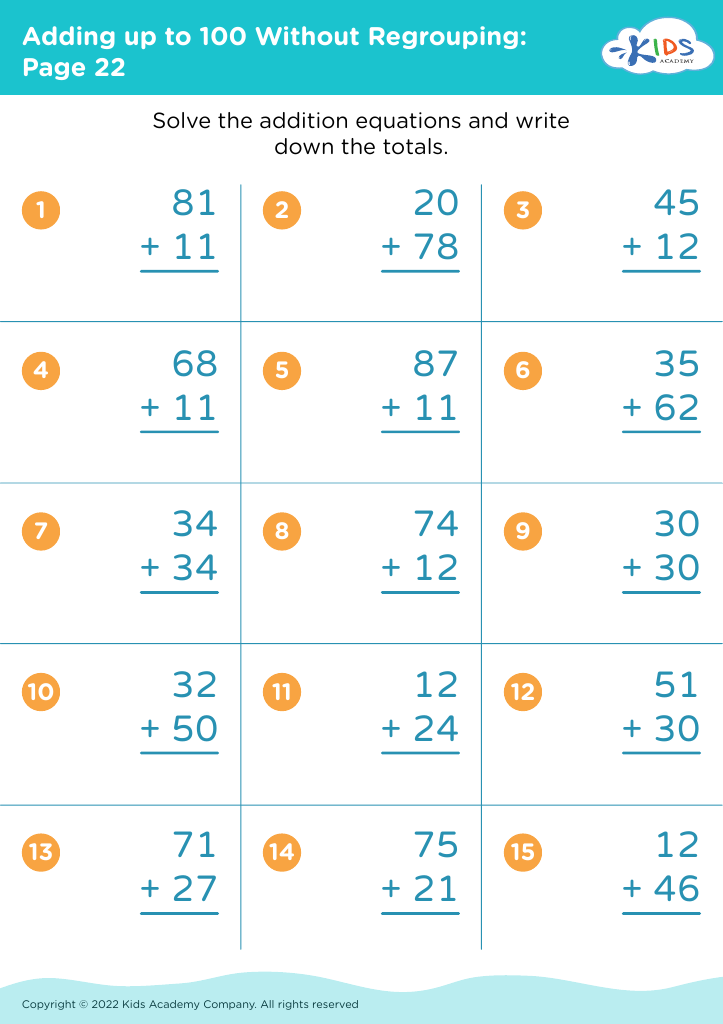




Understanding multiplication "Adding up to 100 Without Regrouping" is crucial for 7-year-olds as it lays the foundation for their mathematical development. At this age, students begin to transition from concrete to abstract thinking, and mastering these concepts reinforces their ability to systematically solve problems. This particular method helps students develop number sense, enabling them to identify patterns and relationships between numbers, which is essential in building a solid understanding of multiplication and its applications in everyday life.
For parents and teachers, fostering this understanding helps children gain confidence in their math skills. Confident learners are more likely to engage with math conceptually and collaboratively, transforming math from a daunting subject into an enjoyable challenge. Moreover, ensuring that children can perform addition without regrouping aids their overall arithmetic fluency, which is necessary for more complex topics as they progress in their education.
As multiplication lays the groundwork for more advanced mathematics, encouraging children to grasp these early concepts can make a significant impact on their future learning, helping to prevent skill gaps and fostering lifelong mathematical appreciation. Supporting children in their understanding of multiplication also cultivates critical thinking, problem-solving, and analytical skills essential for academic success.