Critical Thinking Adding up to 1000 Misc Worksheets for 7-Year-Olds
3 filtered results
-
From - To
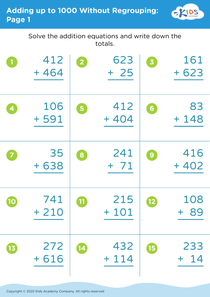
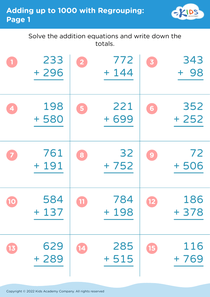
Unlock your child's potential with "Critical Thinking Adding up to 1000 Misc Worksheets for 7-Year-Olds" from Kids Academy. These engaging worksheets blend math practice with skill-building exercises designed to enhance critical thinking. Perfect for young learners, each activity challenges students to apply addition in real-world scenarios, promoting both accuracy and confidence. Tailored specifically for 7-year-olds, these resources offer varied problems that maintain interest while solidifying foundational arithmetic skills. Ideal for classroom and home use, our expertly crafted worksheets make mastering math a fun and interactive experience. Explore the collection today to empower your child's mathematical journey.
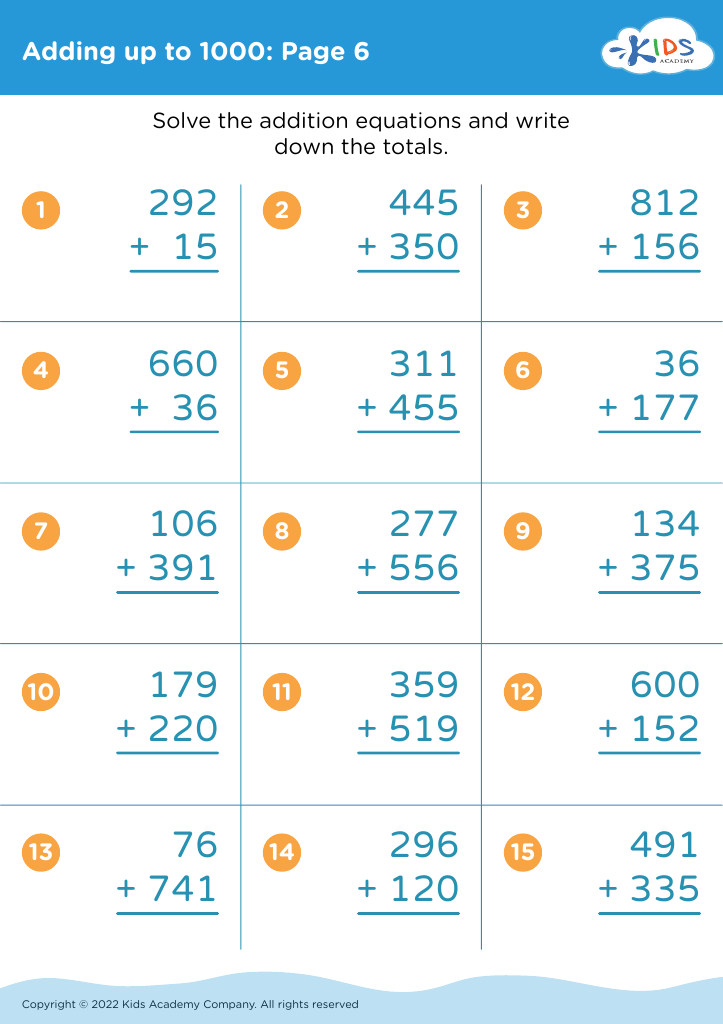
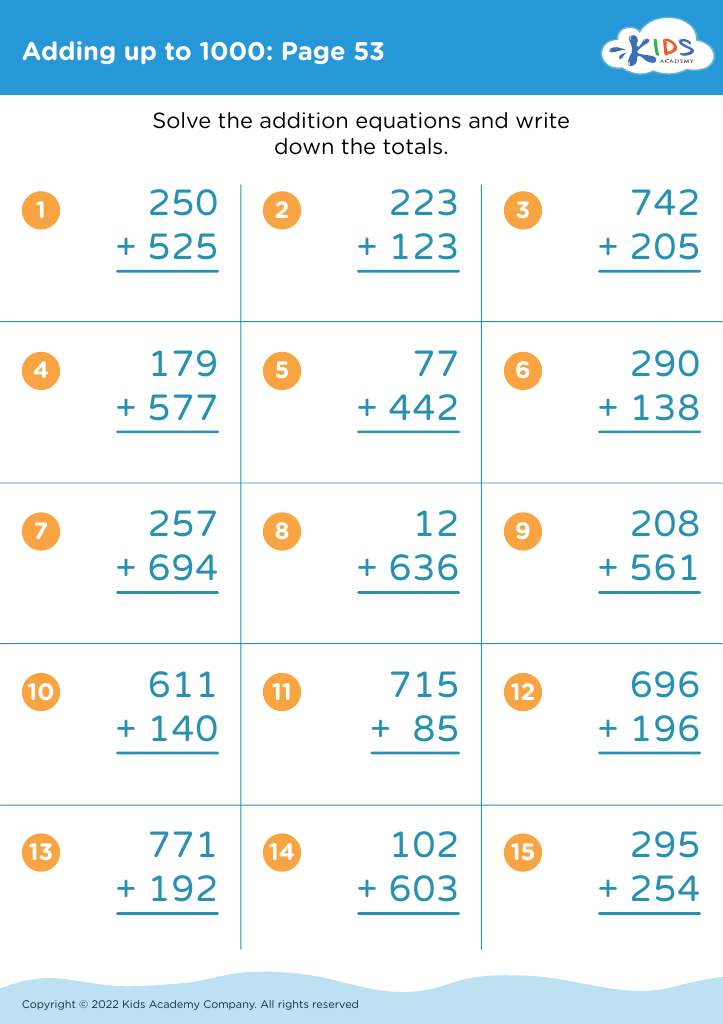
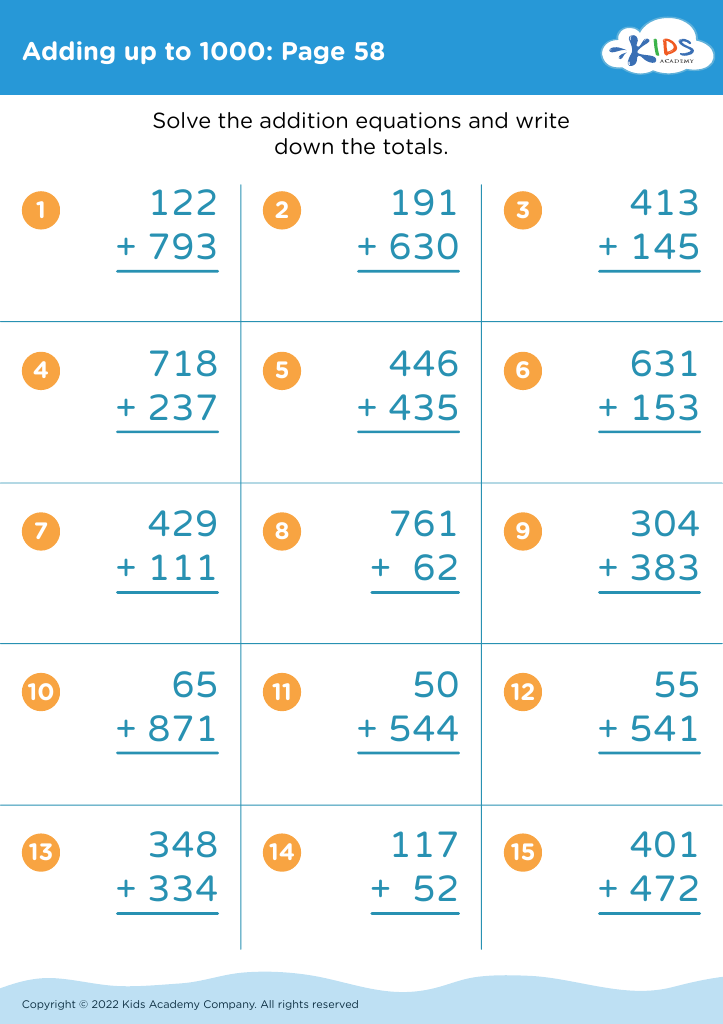


Encouraging critical thinking skills in 7-year-olds through activities like "Adding up to 1000" is crucial for their cognitive development. At this age, children are naturally curious and capable of absorbing new information quickly. Introducing them to complex yet achievable tasks, such as adding up to 1000, stretches their mental capabilities and builds strong mathematical foundations.
Critical thinking fosters problem-solving abilities, promoting a deeper understanding of how and why things work instead of merely memorizing facts. When kids engage in exercises like adding large numbers, they also enhance their numerical intuition, learn to recognize patterns, and develop logical reasoning skills. These benefits go beyond mathematics; they form essential life skills that aid in decision-making, scientific thinking, and effective communication.
Moreover, mastering such skills early on boosts a child’s confidence, enthusiasm, and perseverance when faced with challenging tasks. Parents and teachers play a vital role by providing supportive environments where kids can explore, question, and test different solutions. Enabling a child's critical thinking ultimately prepares them to face the complexities of the real world with resilience and creativity. As these young thinkers grow, they will be better equipped to approach diverse challenges with confidence and ingenuity, thanks in part to early investment in activities like adding up to 1000.