Improve reading skills Adding up to 1000 Without Regrouping Worksheets for 7-Year-Olds
6 filtered results
-
From - To
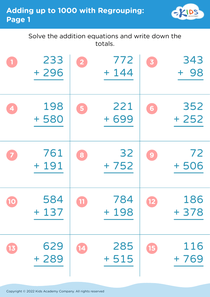
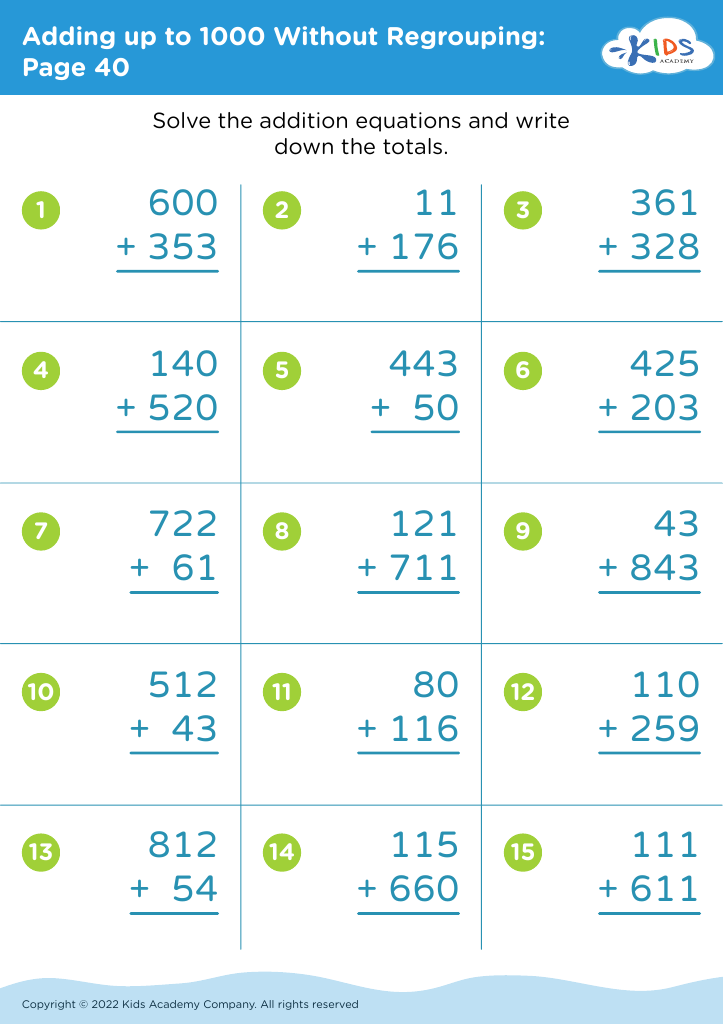
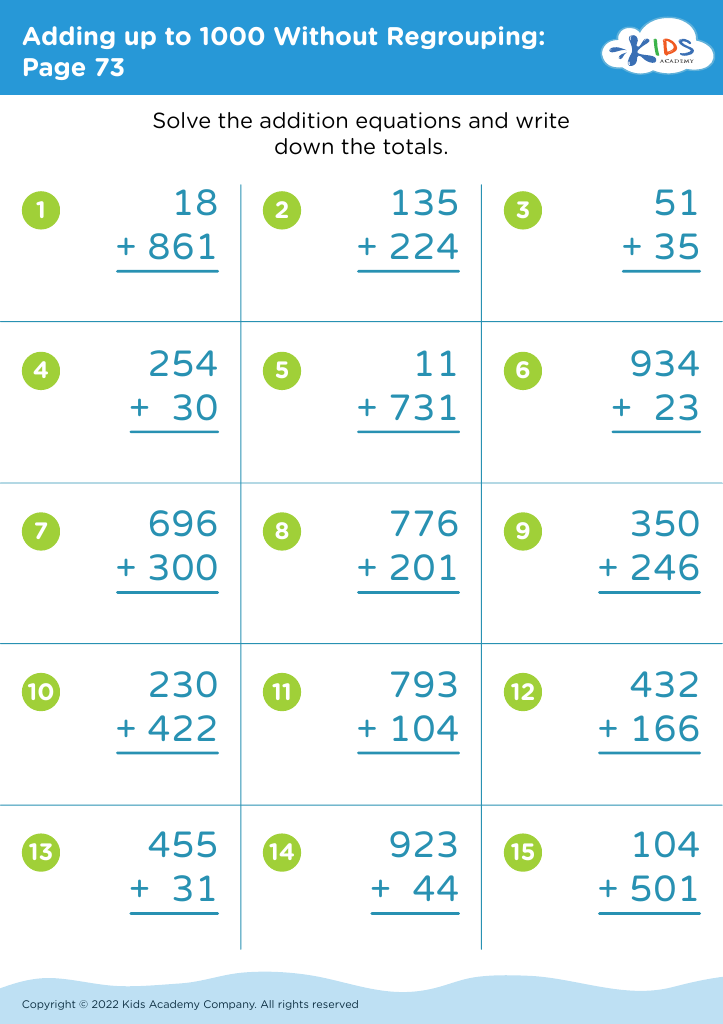
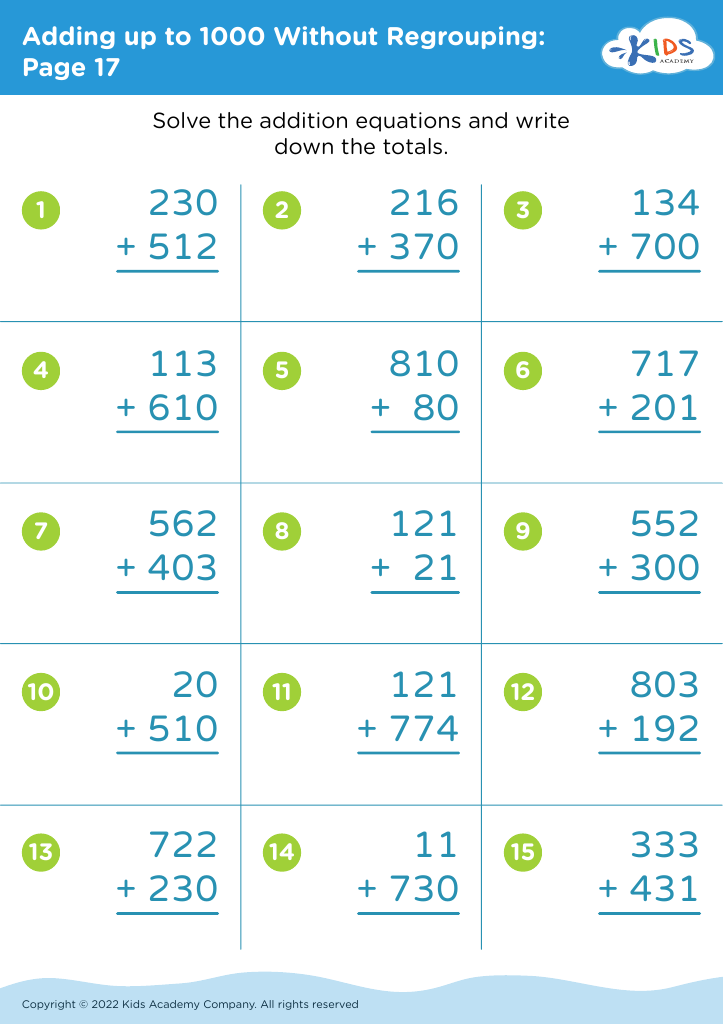
Enhance your child's reading and math abilities with our "Adding up to 1000 Without Regrouping Worksheets" tailored for 7-year-olds. Designed to promote numerical confidence, these worksheets help kids practice adding large numbers in an engaging way, without the complexity of regrouping. While working through these exciting activities, your child will simultaneously strengthen their reading comprehension as they follow instructions and solve problems. Perfect for young learners, these worksheets provide the essential practice needed to boost proficiency in both reading and math. Equip your child with the skills they need for academic success with Kids Academy’s innovative learning tools.
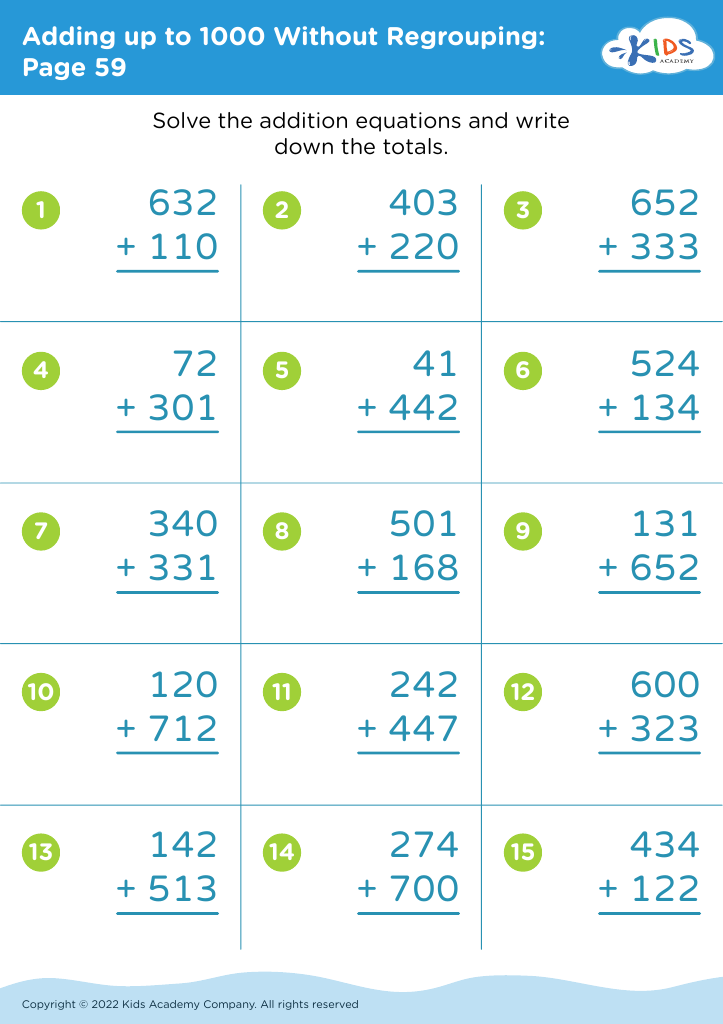
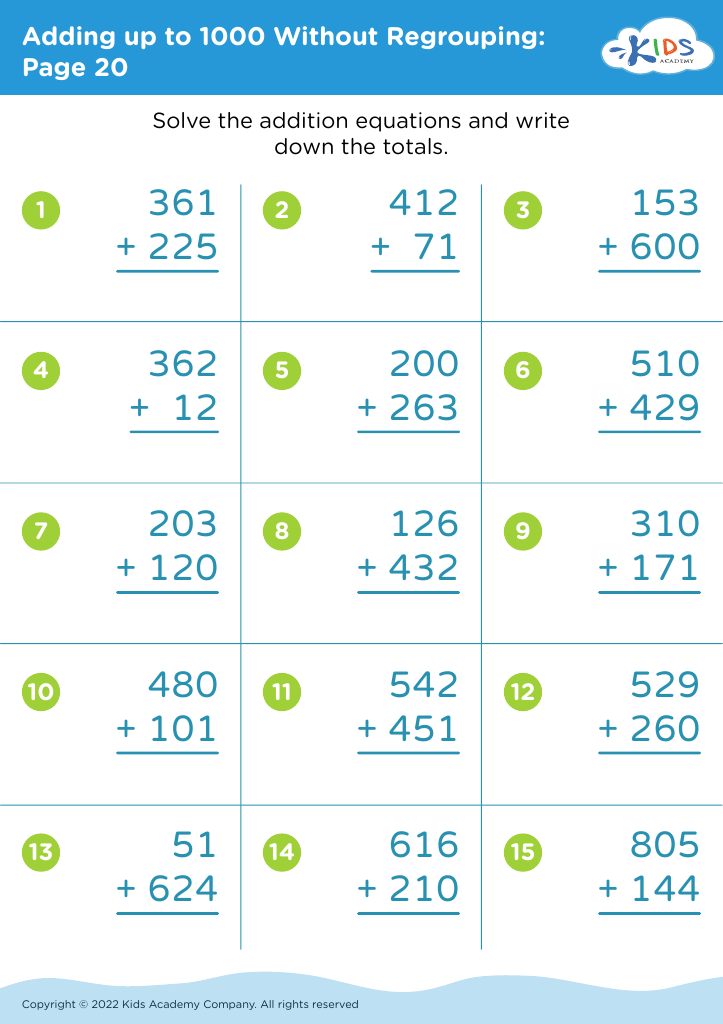
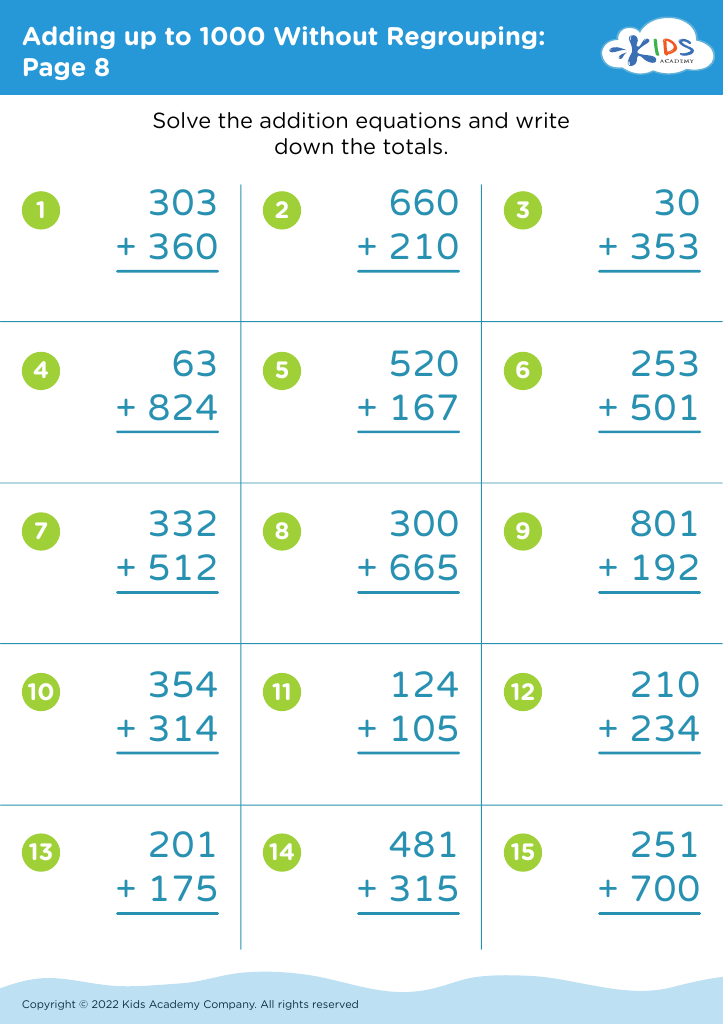


Parents and teachers should care about enhancing reading and arithmetic skills, such as counting up to 1000 without regrouping, for 7-year-olds because these foundational competencies are critical for academic success and intellectual development. Strong reading skills facilitate better comprehension, vocabulary growth, and critical thinking, which are essential for understanding classroom material across all subjects. Moreover, proficient reading abilities foster a love for learning and increase students' self-confidence, making them more eager and willing to explore new topics.
On the other hand, mastering addition up to 1000 without regrouping is a foundational math skill that builds numeracy and enhances problem-solving capabilities. This arithmetic competence is necessary for tackling more complex mathematical concepts in the future. By developing these basic math skills early on, children can approach data with a logical mindset, decreasing anxiety related to math tasks and increasing accuracy in their work.
Getting these skills honed at an early age sets children on a path to lifelong learning. Both reading fluently and calculating efficiently are gateways to more advanced studies and practical life applications, leading to well-rounded educational and personal development. Consequently, a lack of these skills can create educational gaps that can be hard to bridge later in life, making early development a key initiative for educators and parents alike.