Simplifying Fractions Adding up to 1000 Without Regrouping Worksheets for 7-Year-Olds
3 filtered results
-
From - To
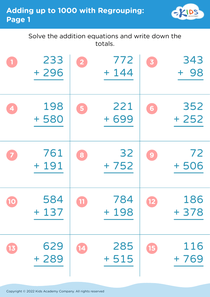
Explore our engaging "Simplifying Fractions Adding up to 1000 Without Regrouping Worksheets," specially designed for 7-year-olds! These worksheets offer a fun and interactive way for children to master the concept of simplifying fractions while honing their addition skills. With a focus on adding numbers up to 1000, students will learn to simplify fractions without regrouping, building a strong foundation in math. Each worksheet features colorful illustrations and age-appropriate problems, making math enjoyable and accessible. Perfect for classroom use or at-home practice, these resources will boost confidence and competence in young learners. Start simplifying fractions today!
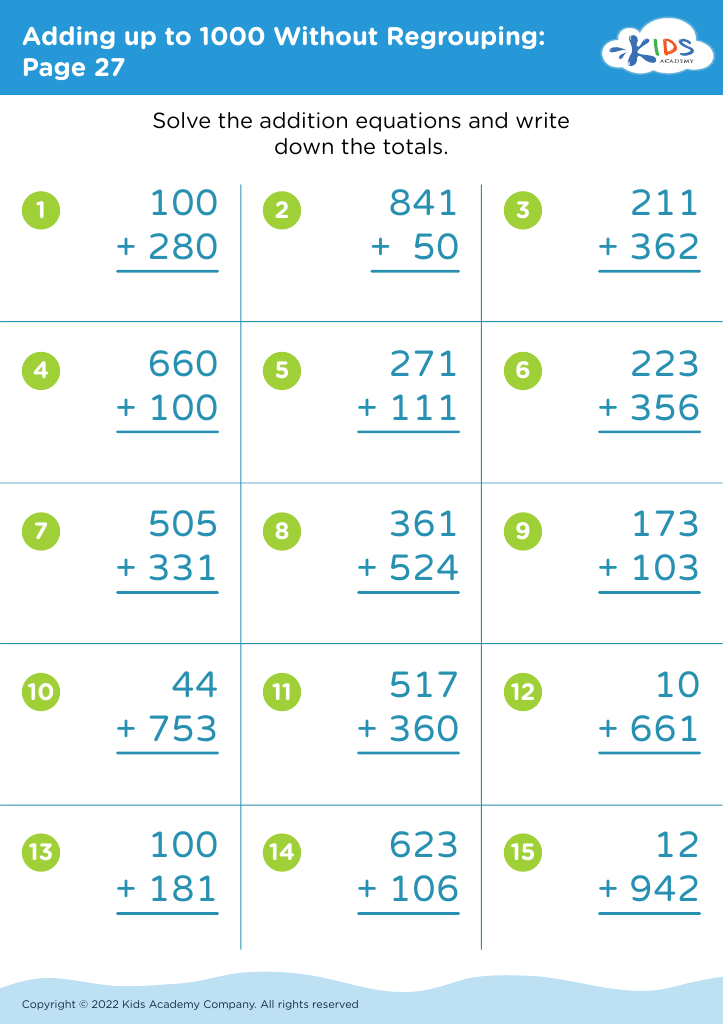
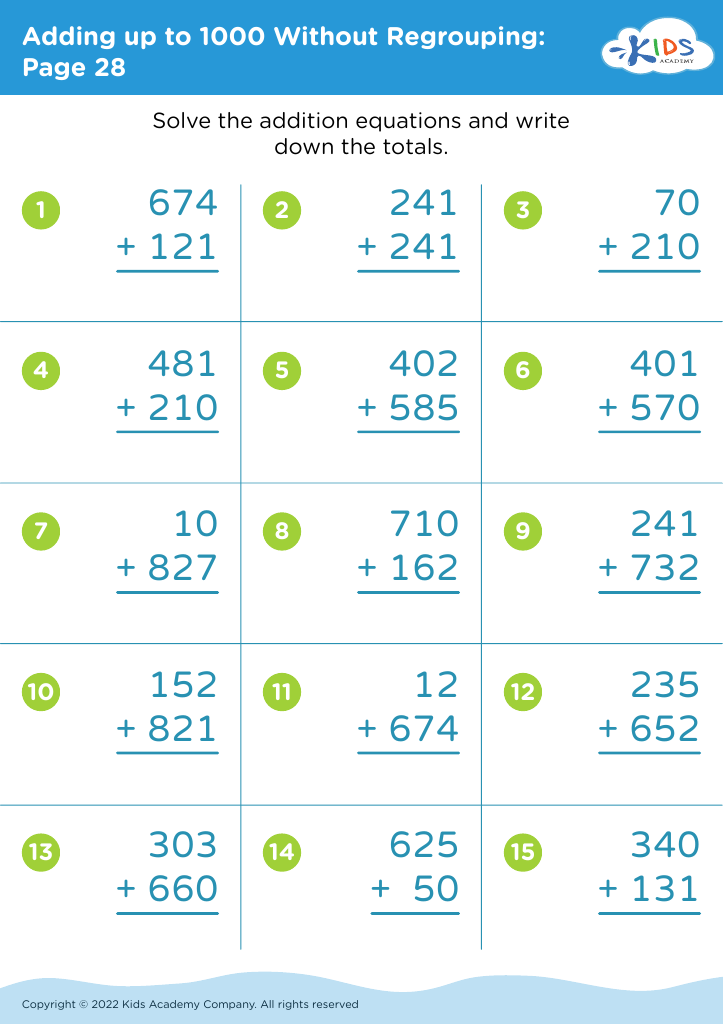
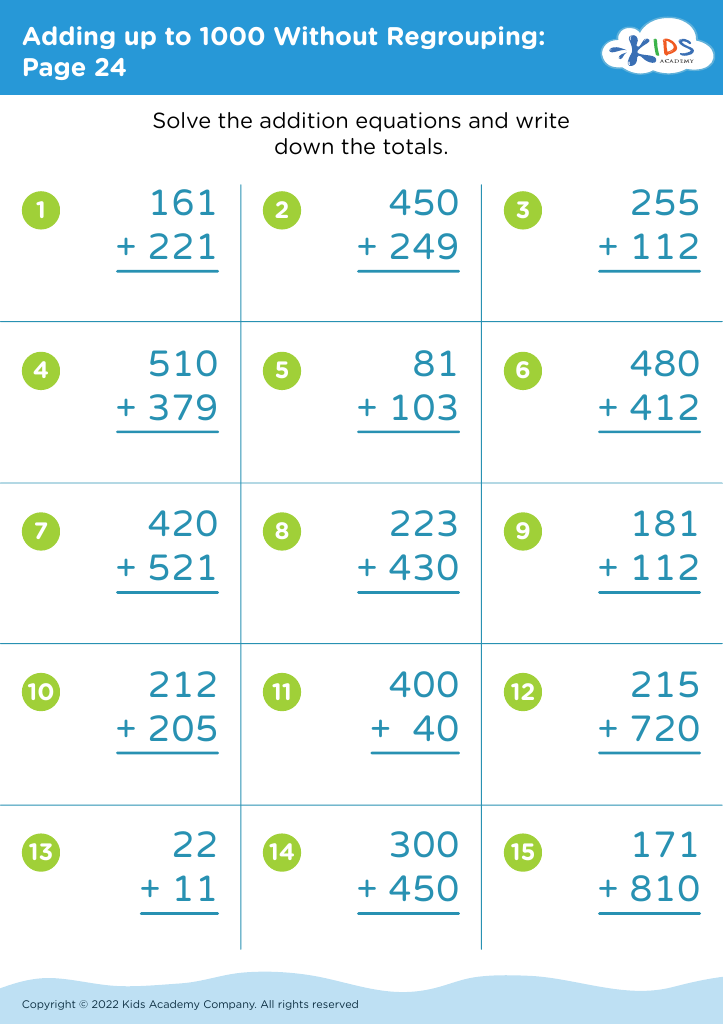


Understanding the concept of simplifying fractions and adding numbers up to 1000 without regrouping is crucial for 7-year-olds, as it lays the foundation for more advanced math skills. For parents and teachers, fostering proficiency in these areas not only enhances a child's numerical understanding but also encourages critical thinking and problem-solving abilities.
Simplifying fractions helps children grasp the concept of equivalency, pushing them to recognize relationships between numbers. This skill translates directly to various math applications, ensuring students can confidently approach more complex topics in the future. Additionally, viewing numbers as parts of a whole deepens their comprehension of the number system.
Adding numbers up to 1000 without regrouping strengthens fluency in basic arithmetic. It encourages mental math and quick, accurate calculations, diminishing reliance on calculators. This skill aids in building confidence and improves a child’s ability to tackle everyday math challenges effectively.
By focusing on these fundamental skills, parents and teachers contribute to a child's academic success and overall math appreciation. Moreover, early mastery fosters positive attitudes toward mathematics and promotes lifelong learning, setting the stage for future achievements in all areas of STEM.