Understanding fractions Adding up to 1000 Without Regrouping Worksheets for 7-Year-Olds
13 filtered results
-
From - To
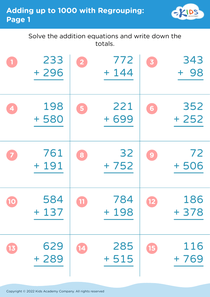
Help your 7-year-old master the essentials of math with our "Understanding Fractions and Adding Up to 1000 Without Regrouping Worksheets." Our engaging, easy-to-follow worksheets are tailored to solidify their grasp on fractions, enhancing number sense and boosting confidence in addition. Each worksheet focuses on adding numbers up to 1000 without regrouping, offering a balanced blend of fun activities and educational reinforcement. Designed by experts, these resources ensure young learners build a robust foundation in math. Perfect for extra practice at home or in the classroom, our worksheets make learning fractions and addition enjoyable and effective.
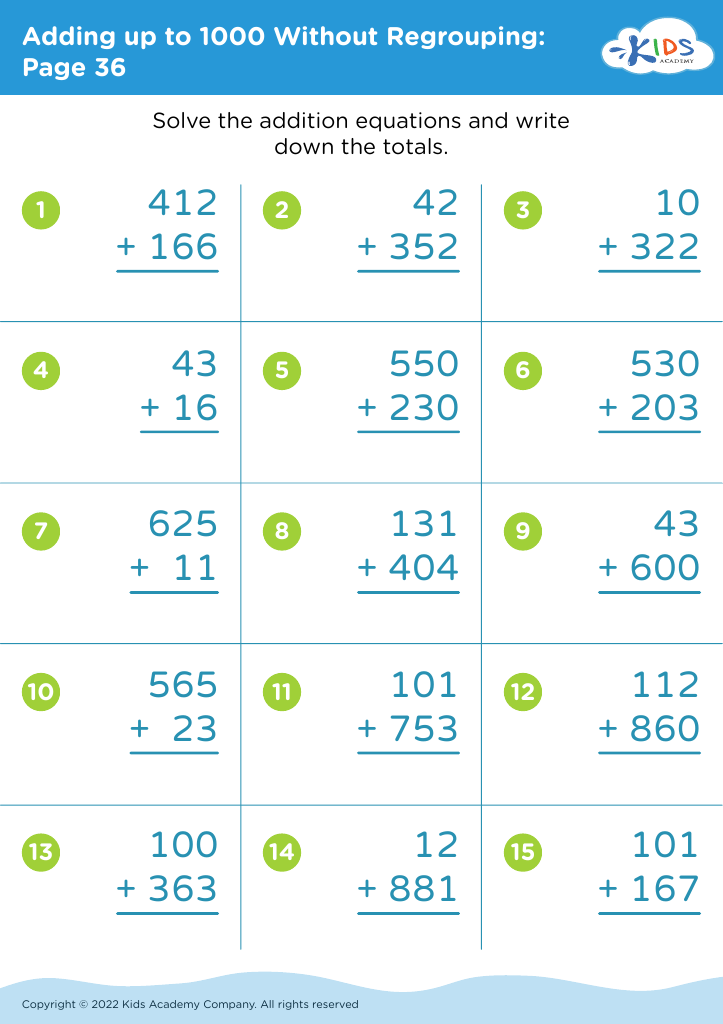
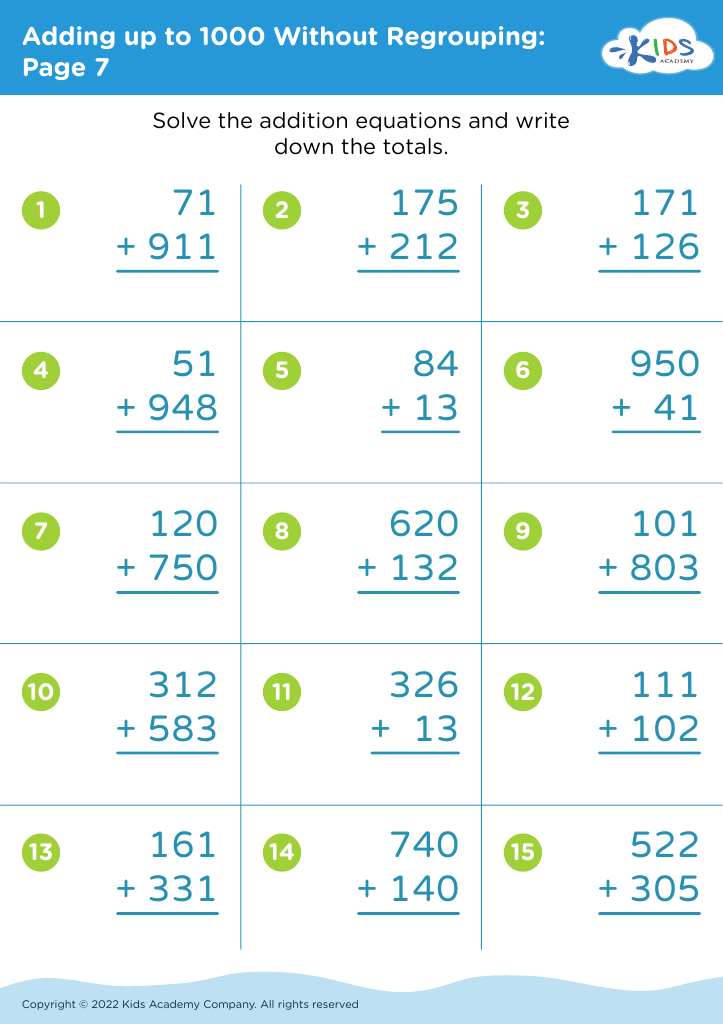
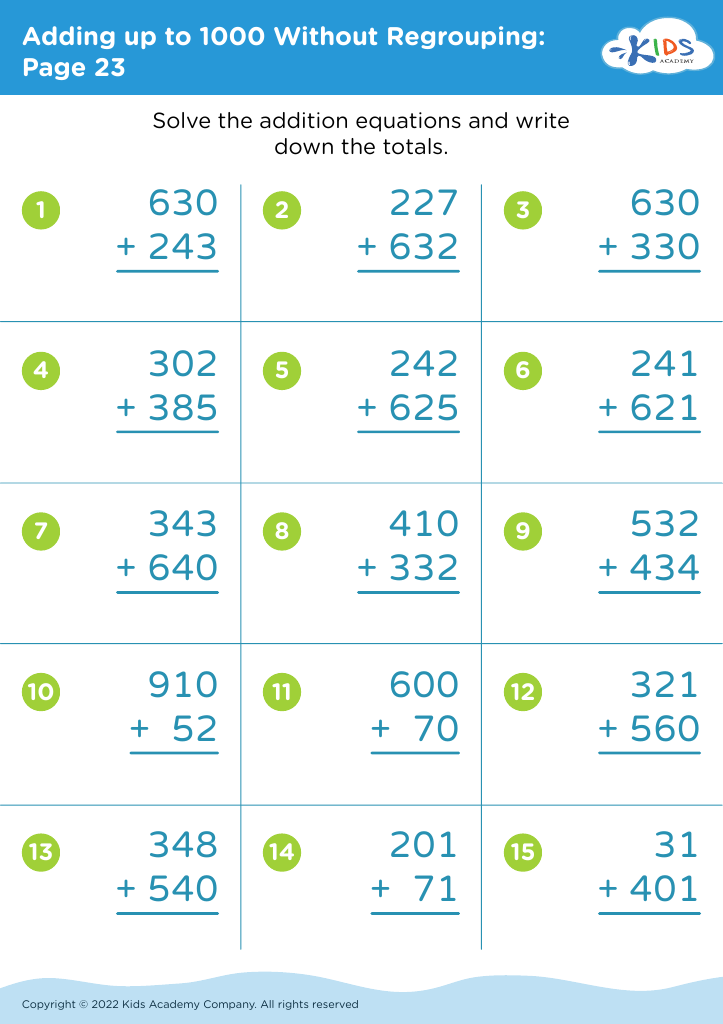
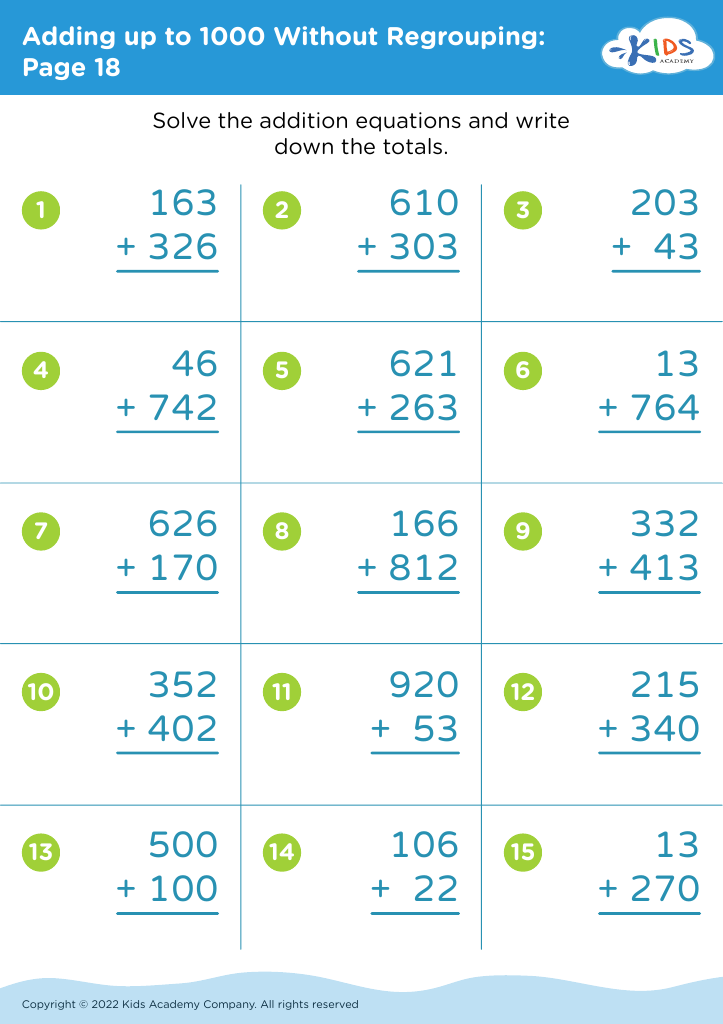
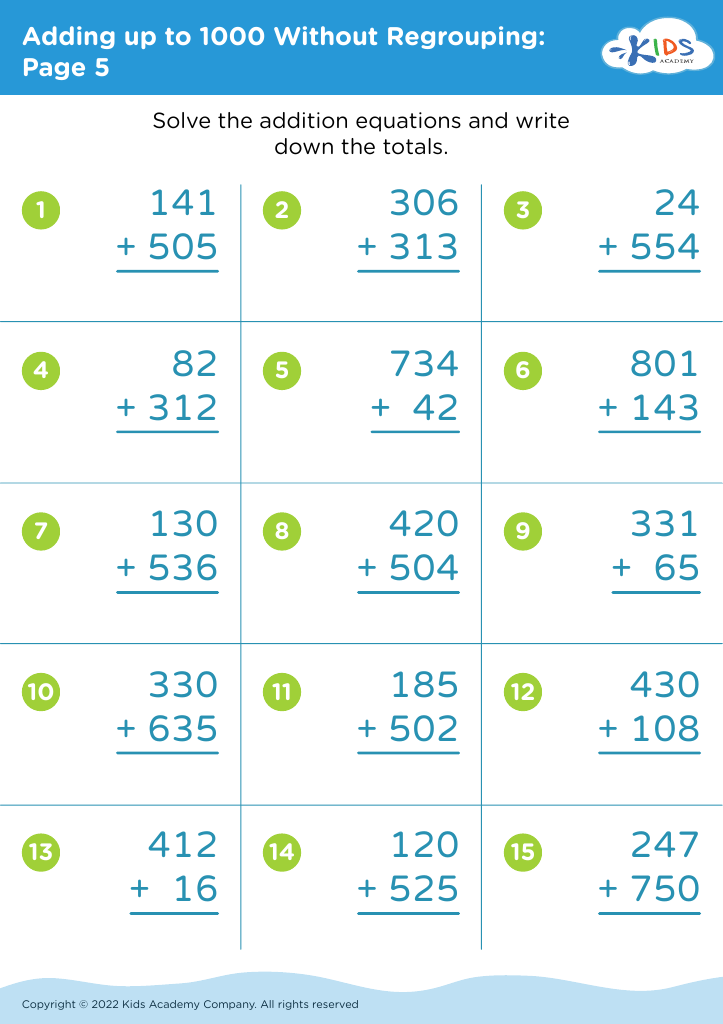
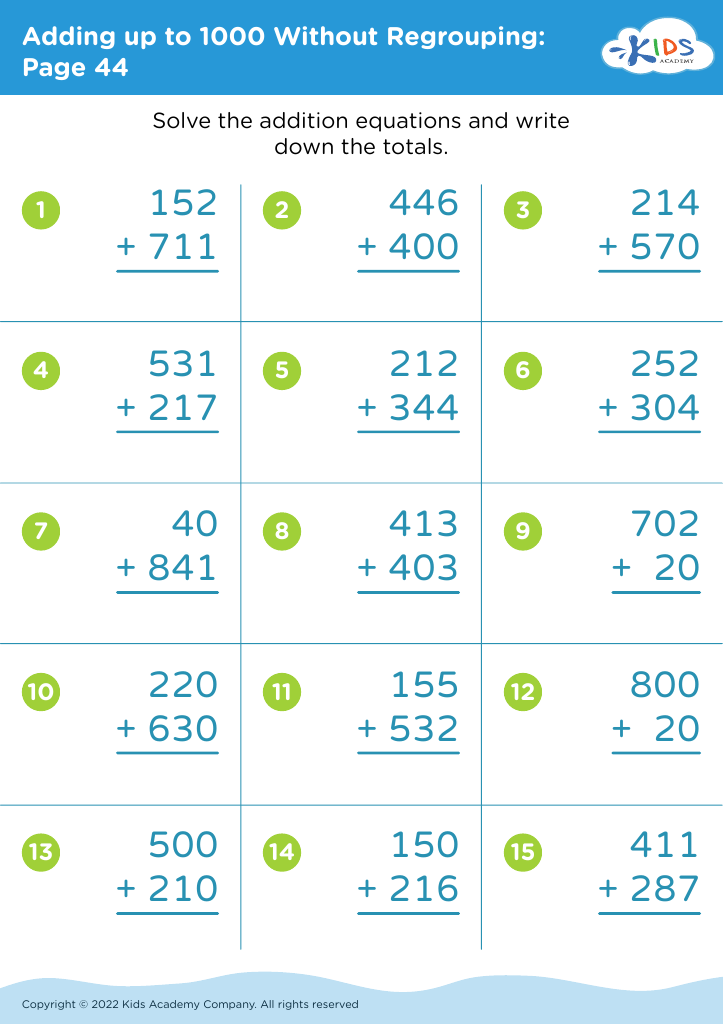
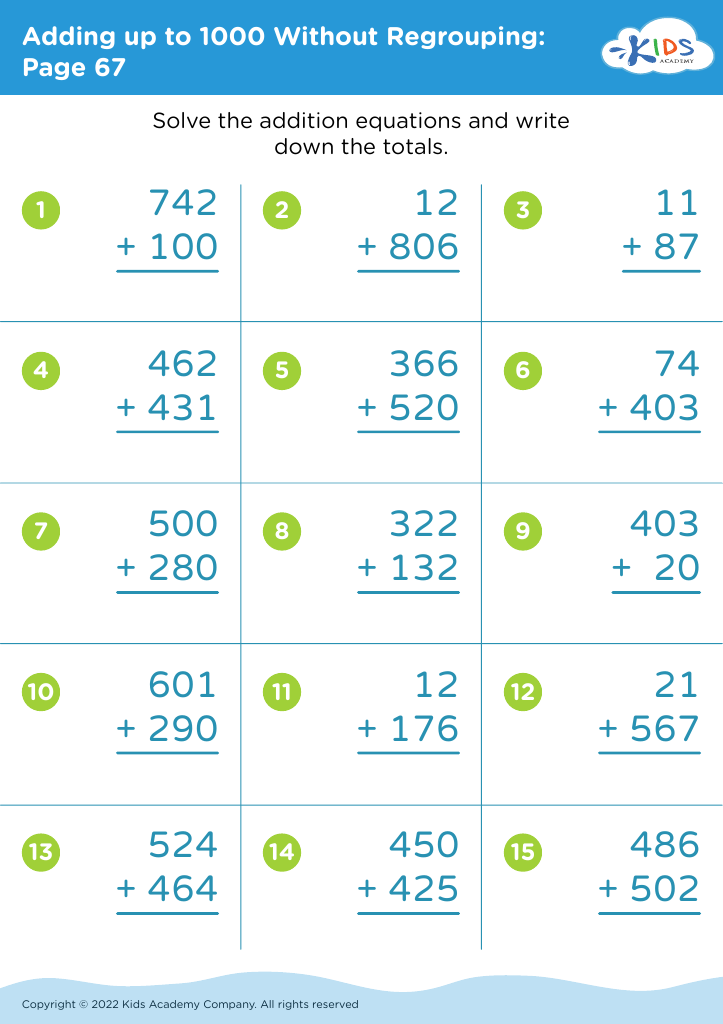
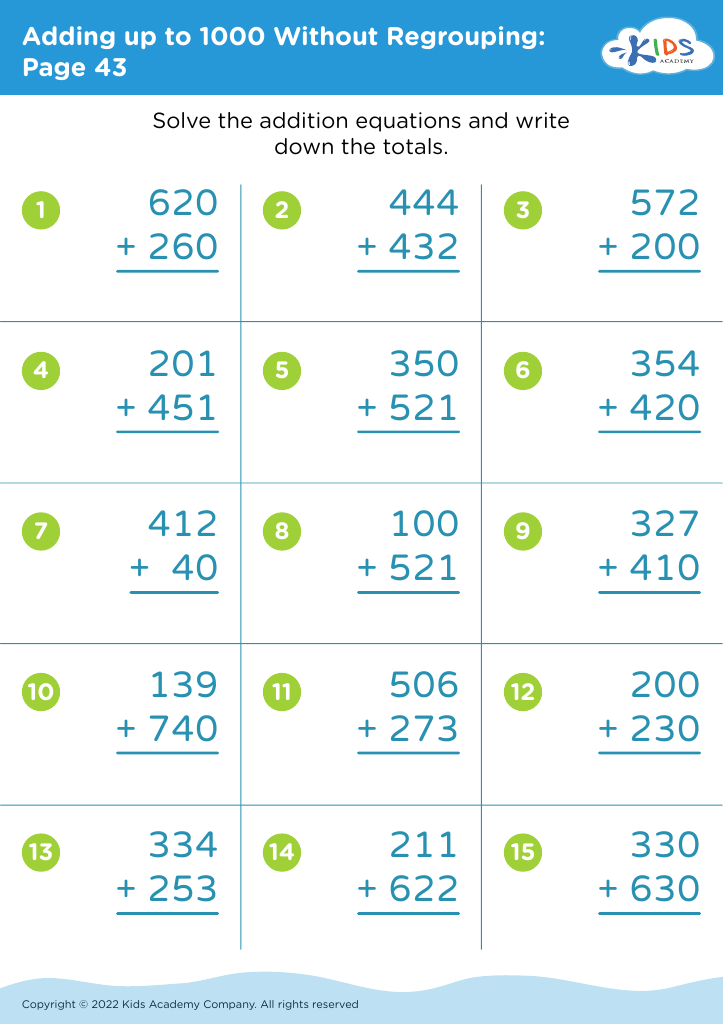
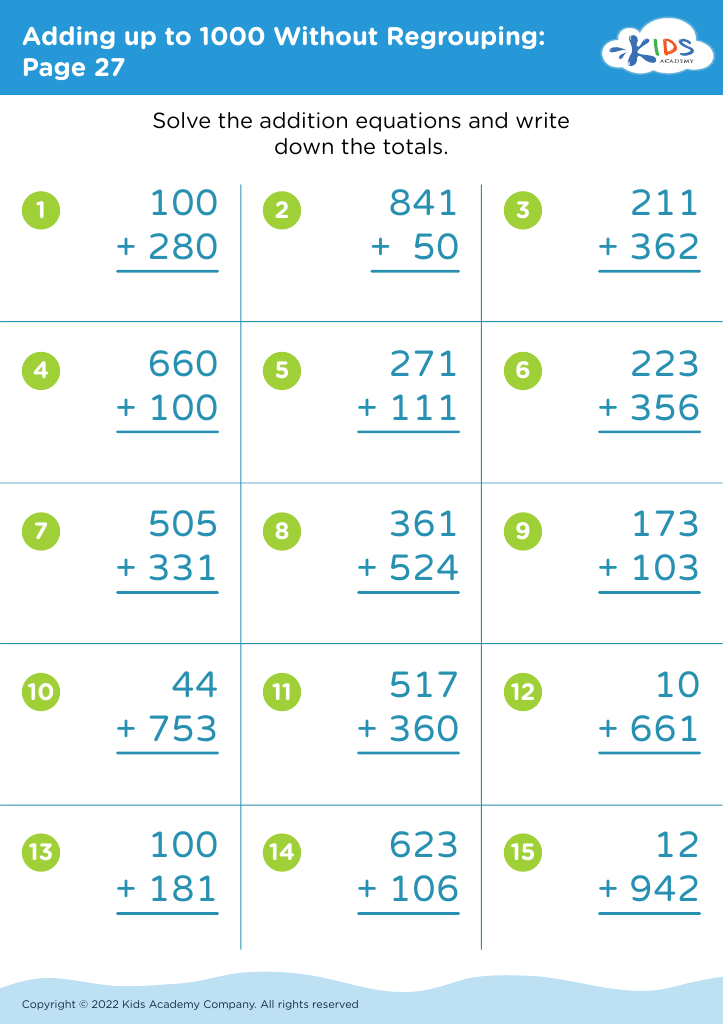
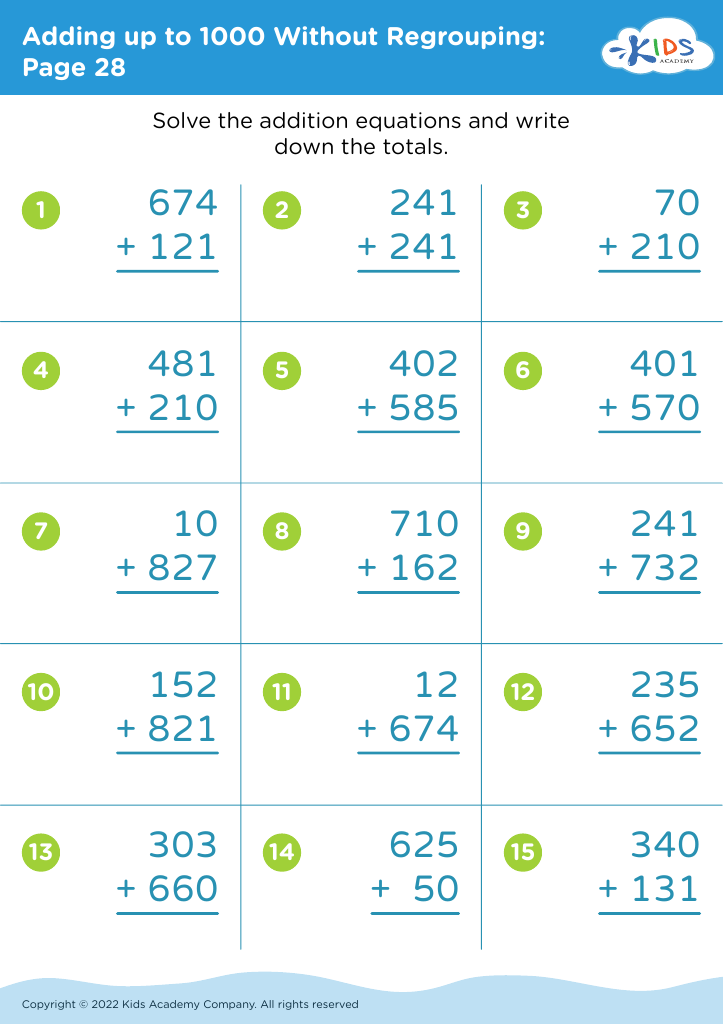
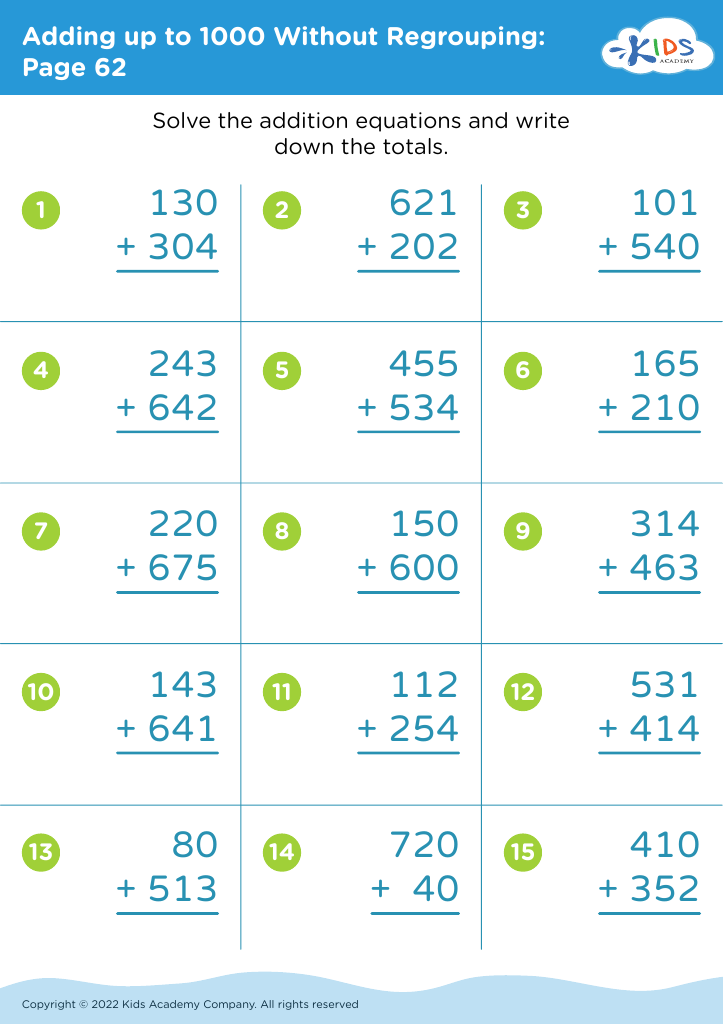
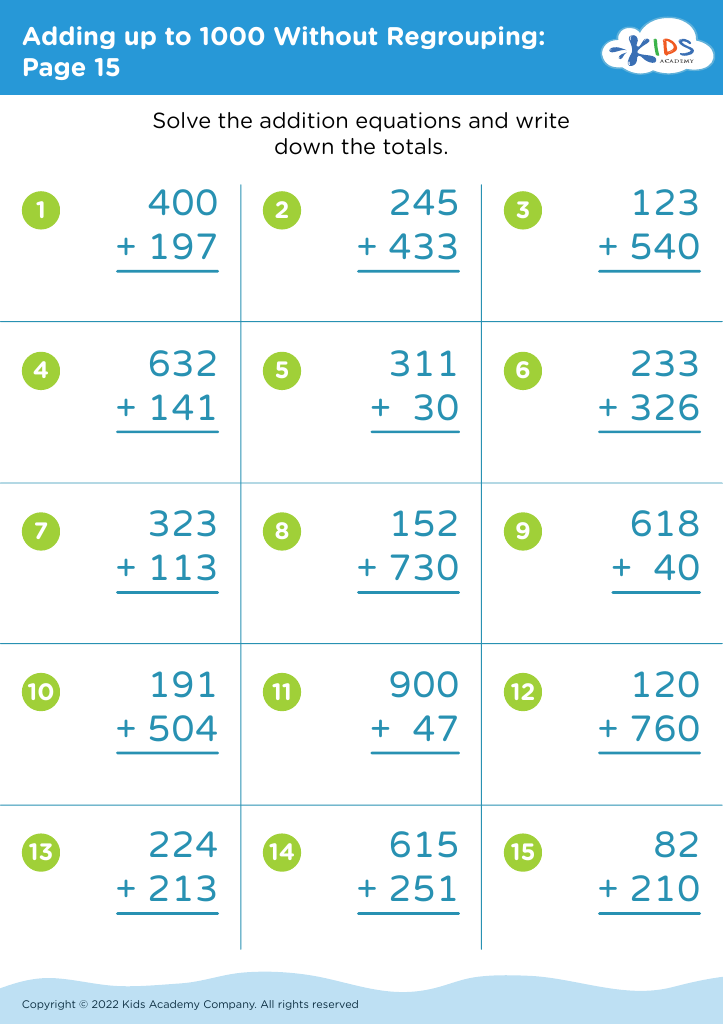
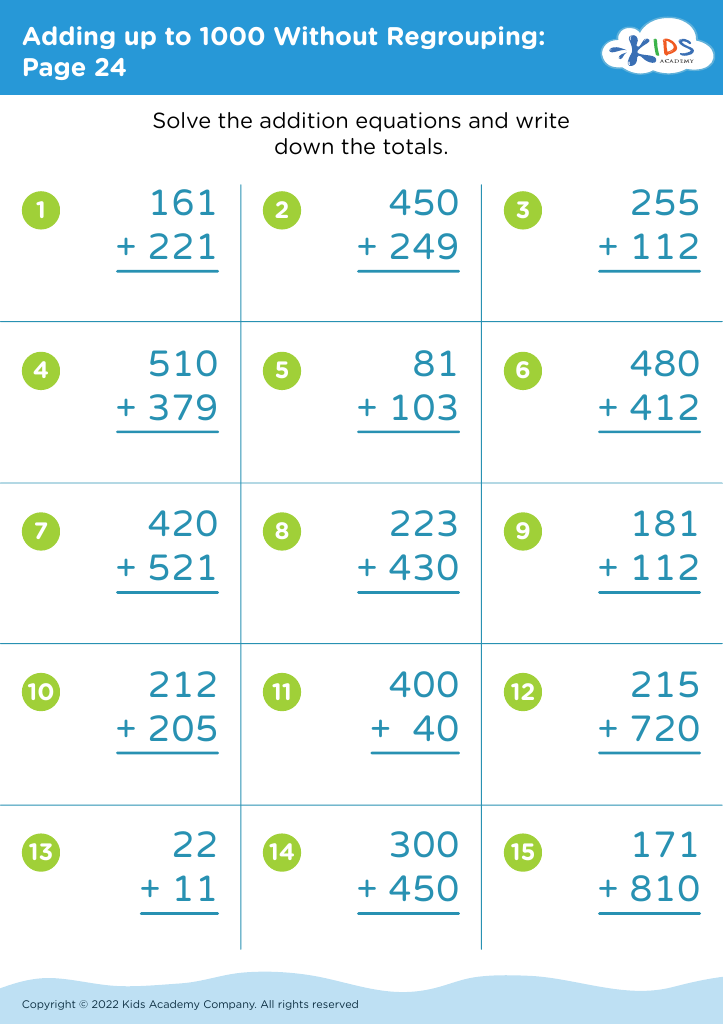


Parents and teachers should pay attention to the concept of understanding fractions and adding up to 1000 without regrouping for 7-year-olds because it lays the foundation for future mathematical competence and critical thinking skills. Learning fractions helps children understand parts of a whole and introduces them to the idea of division and proportion, which are crucial concepts not just in academics but in everyday life scenarios, such as in cooking, sharing items, or interpreting statistical data.
Familiarizing children with large numbers and the concept of addition without regrouping aids in increasing their number sense and ability to manipulate numbers mentally. This solidifies their arithmetic skills, fostering a sense of confidence and proficiency. Furthermore, such addition exercises help develop problem-solving strategies, logical reasoning, and pattern recognition.
From an educational standpoint, these early mathematical concepts form the backbone of more complex topics, such as multiplication, division, and algebra, which students will encounter in later grades. Early competence in fractions and addition paves the way for smoother and more successful transitions into these advanced topics. By ensuring that children have a strong understanding of these basic mathematics principles, parents and teachers can help facilitate a lifelong appreciation and proficiency in math, contributing significantly to their overall academic success and critical thinking skills.