Fraction comparison Adding up to 1000 Worksheets for 7-Year-Olds
13 filtered results
-
From - To
Engage your 7-year-old with our vibrant Fraction Comparison Adding up to 1000 worksheets! Tailored for young learners, these worksheets build essential math skills through fun, interactive exercises. Students will explore fractions and enhance their ability to compare and add numbers up to 1000. Each worksheet features captivating visuals and step-by-step guidance to make learning intuitive and enjoyable, fostering a strong foundation in math. Perfect for classroom or home use, these worksheets support a well-rounded understanding of fractions and large-number addition, preparing your child for more advanced math challenges with confidence and ease. Discover the joy of learning today!
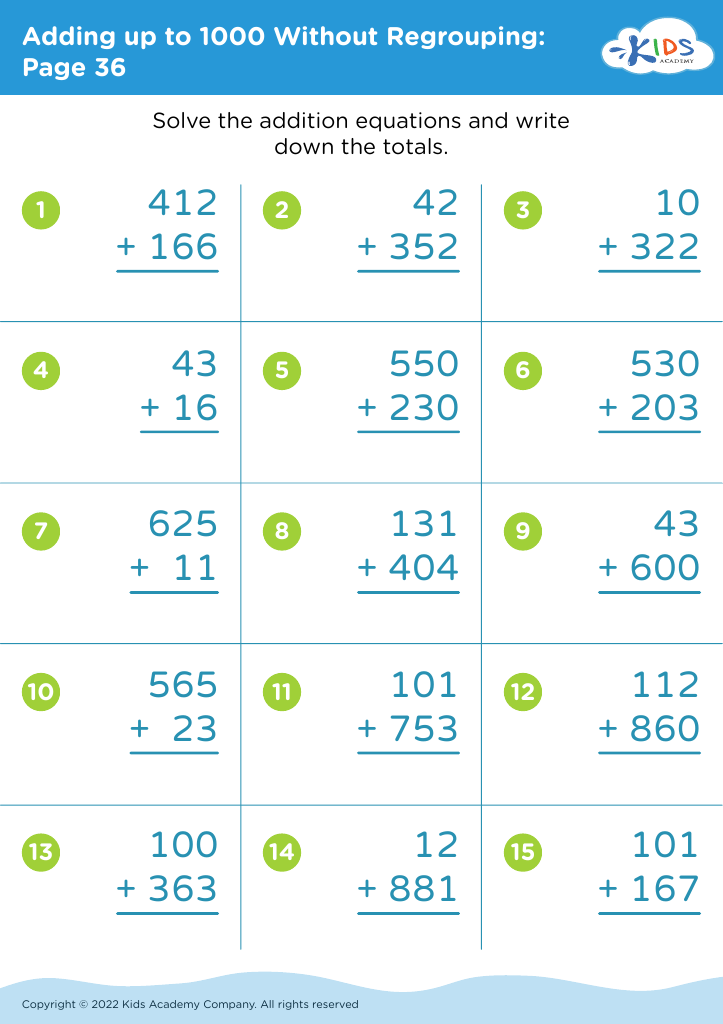
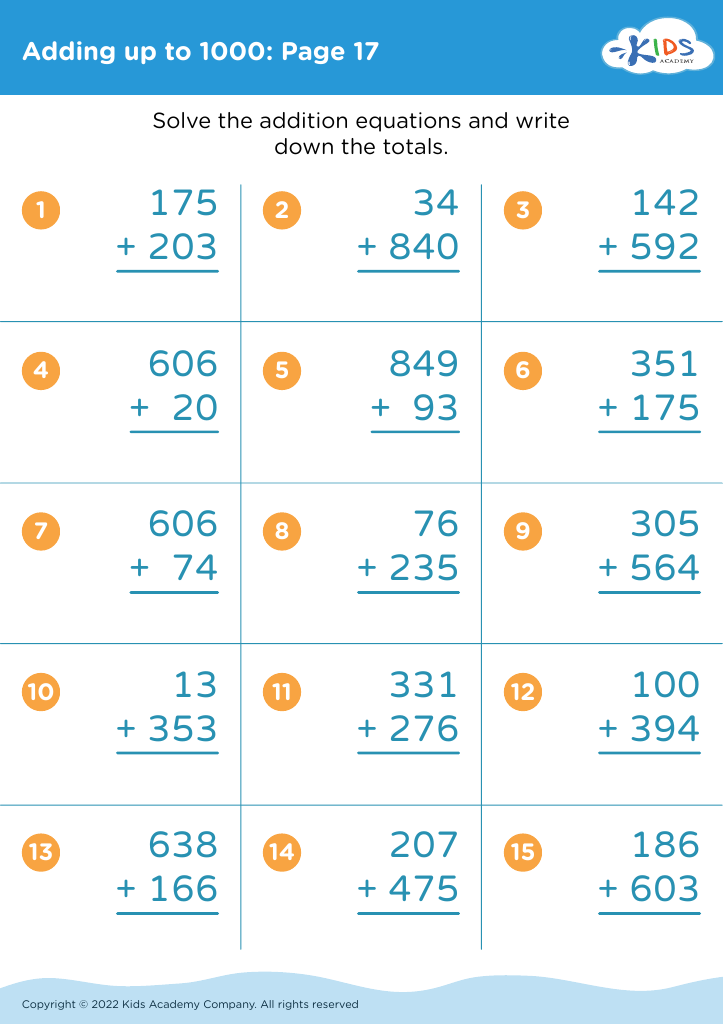
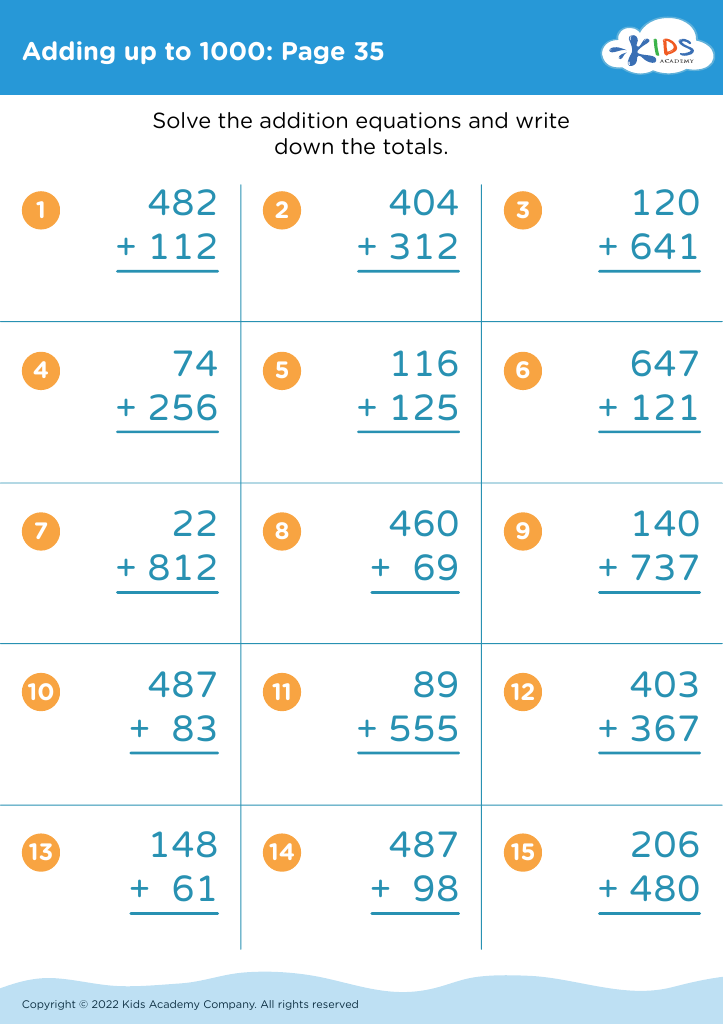
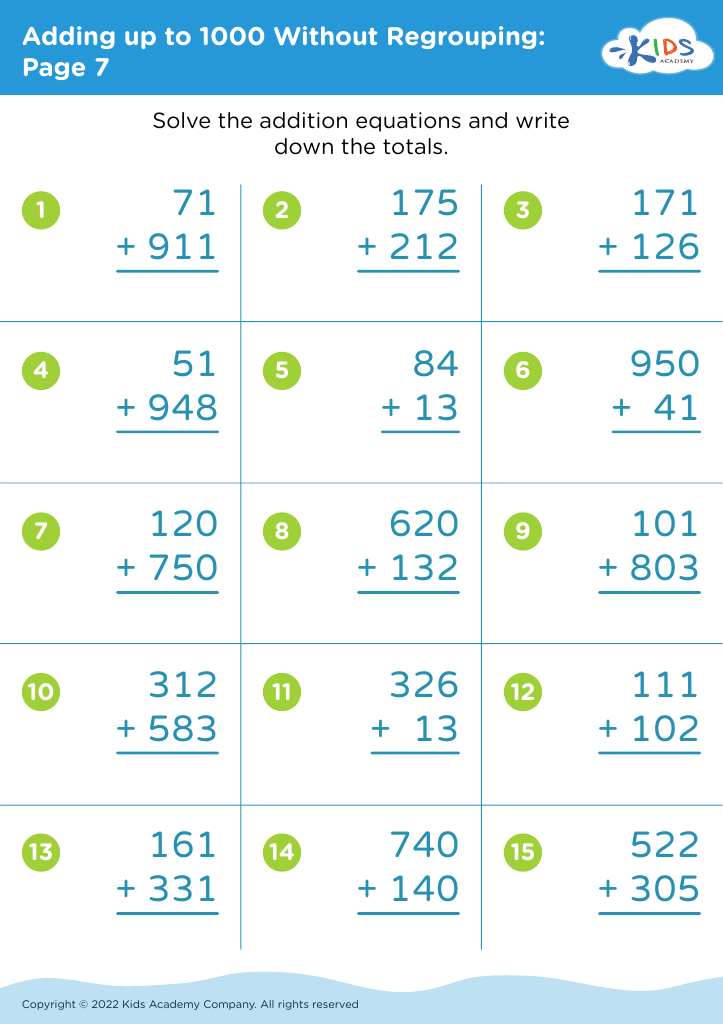
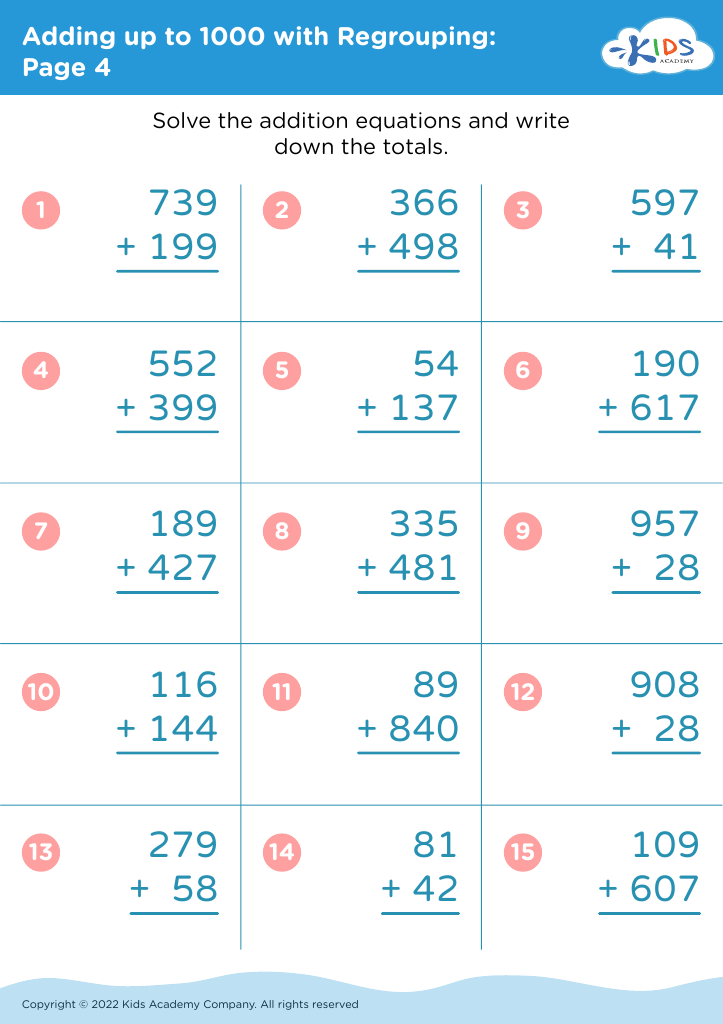
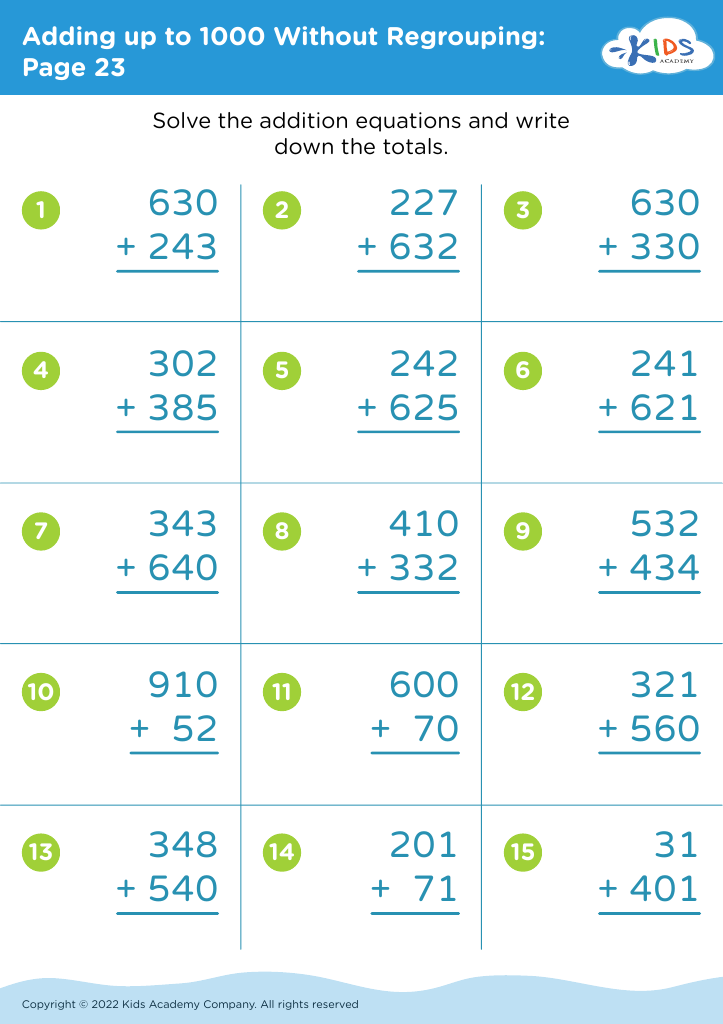
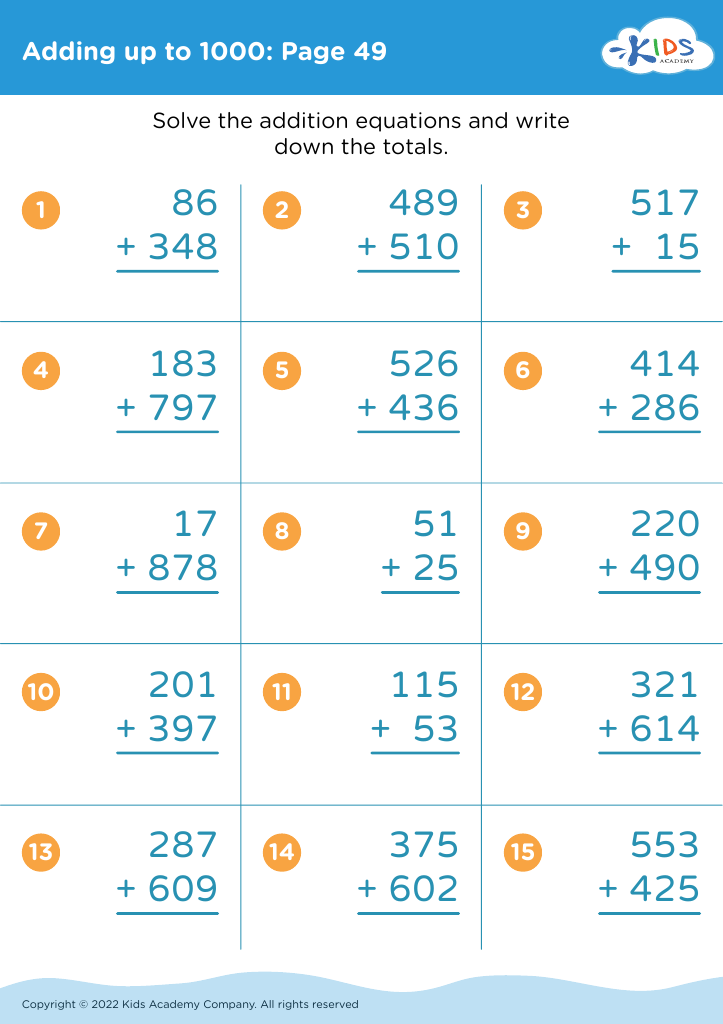
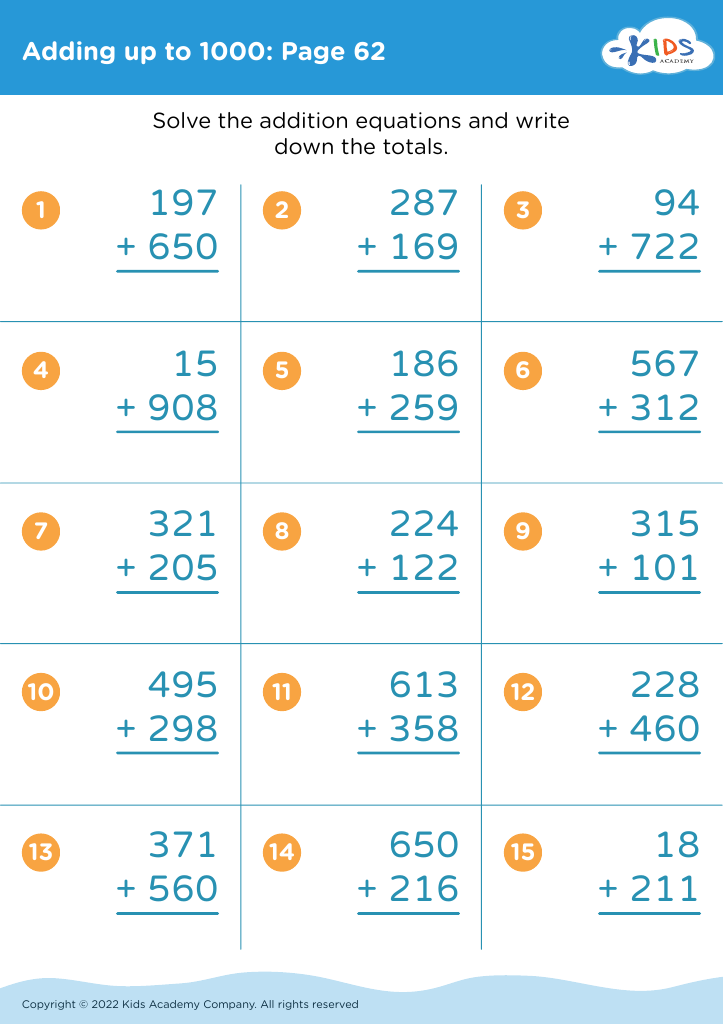
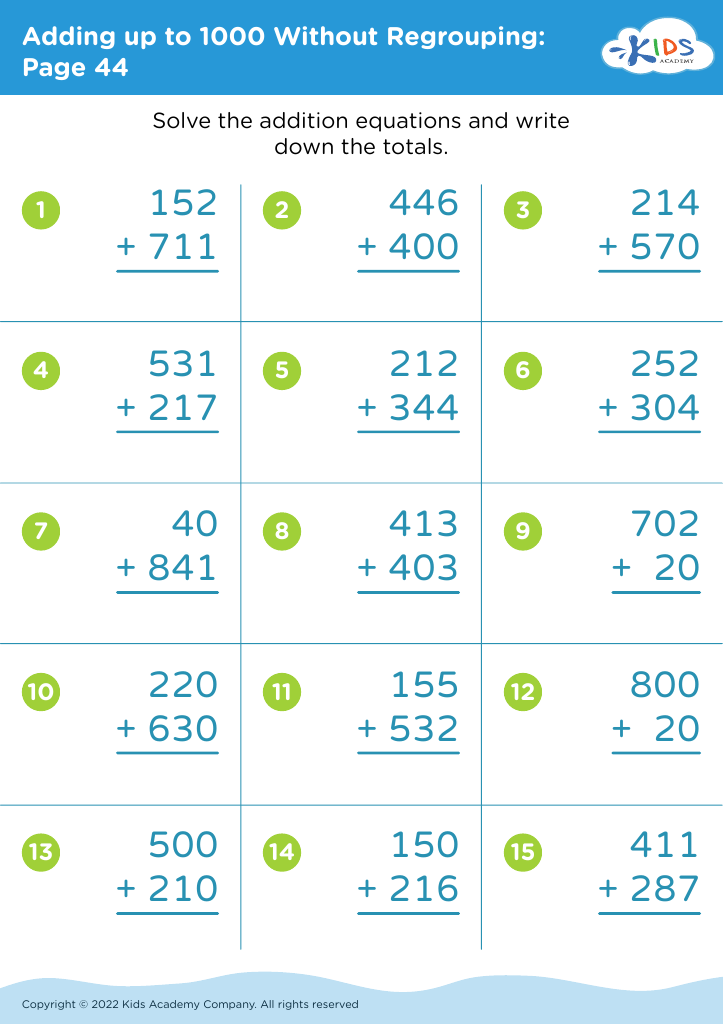
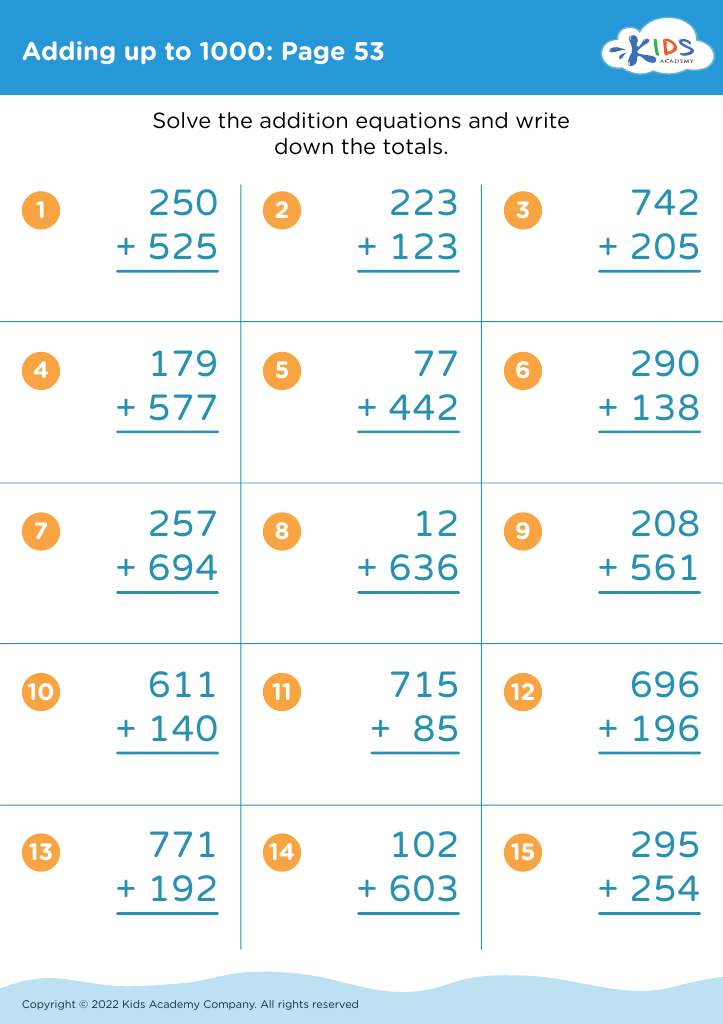
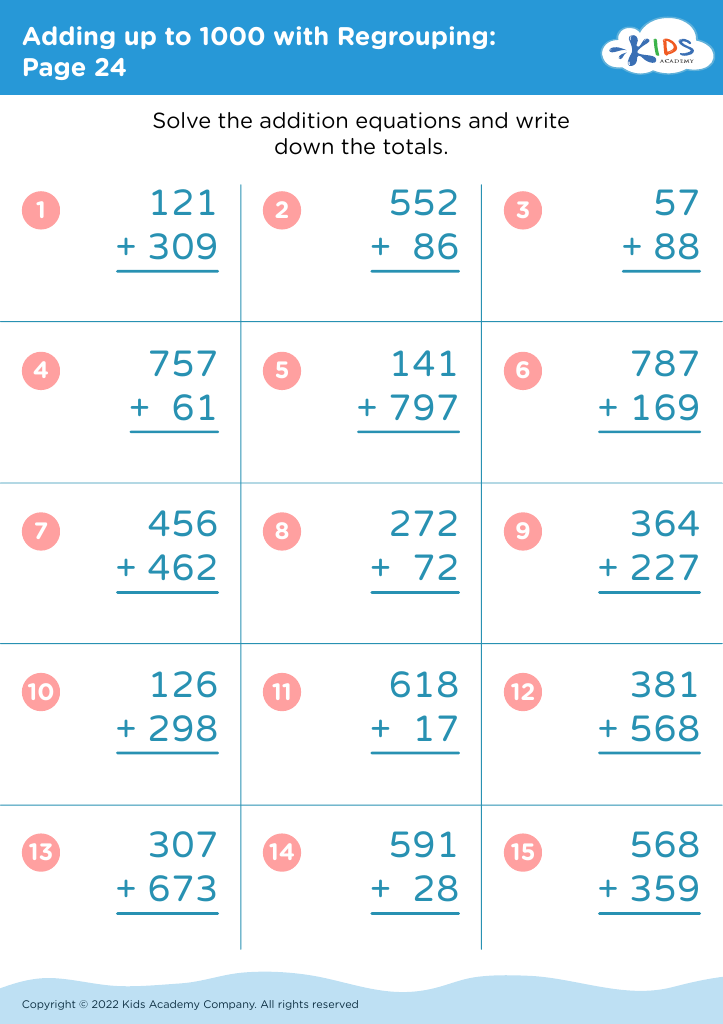
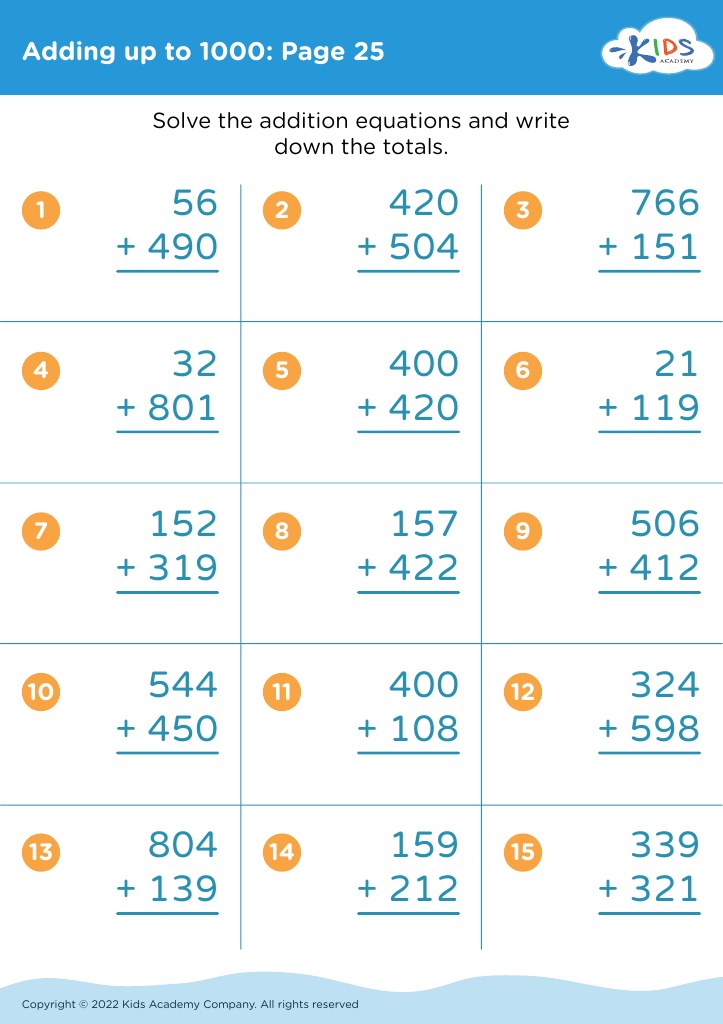
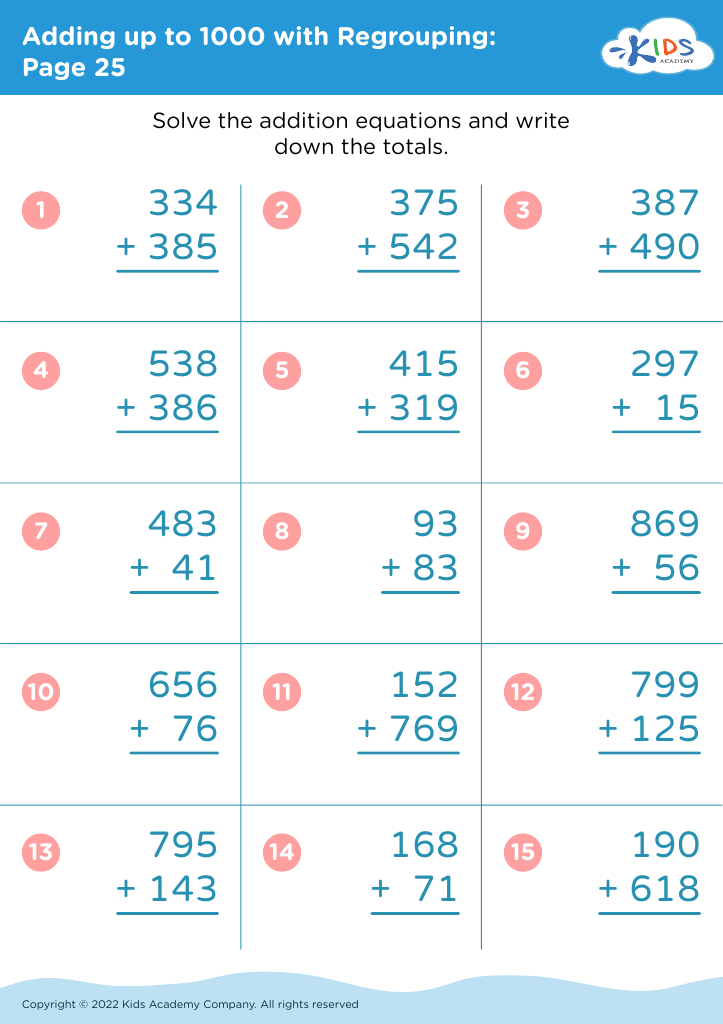



Understanding fraction comparison and adding numbers up to 1,000 at the age of seven is crucial for young learners for multiple reasons. Firstly, these mathematical skills lay the foundation for more complex arithmetic that students will encounter as they progress through their education. Mastery of fraction comparison aids in developing a child's ability to understand part-whole relationships, equivalence, and proportional reasoning, which are vital for success in areas such as algebra and geometry later on.
Moreover, being comfortable with adding numbers up to 1,000 enhances computational fluency. This proficiency allows children to approach problem-solving with confidence and efficiency. Developing these skills early helps take the intimidation out of larger numbers and more complex calculations, fostering a positive attitude toward math.
Lastly, these foundational math skills promote critical thinking and logical reasoning, which are applicable beyond the subject of mathematics. Math teaches children to approach problems methodically and recognize patterns, among other cognitive benefits. Encouraging these skills at a young age sets students up for academic success across various disciplines, promoting lifelong analytical and problem-solving abilities. Hence, both parents and teachers have strong reasons to ensure seven-year-olds grasp these essential math concepts effectively.








