Recognizing Patterns Adding up to 1000 Worksheets for 7-Year-Olds
6 filtered results
-
From - To
Enhance your 7-year-old's math skills with our "Recognizing Patterns Adding up to 1000" worksheets. Specifically designed for children aged 7, these engaging activities boost their ability to identify and apply mathematical patterns within the context of addition. Our worksheets aim to develop critical thinking and problem-solving abilities while making learning fun and interactive. With colorful visuals and age-appropriate challenges, kids will be motivated to explore and understand the concept of adding up to 1000. Perfect for classroom use or at-home practice, these worksheets will help your child build confidence and enjoy math like never before.
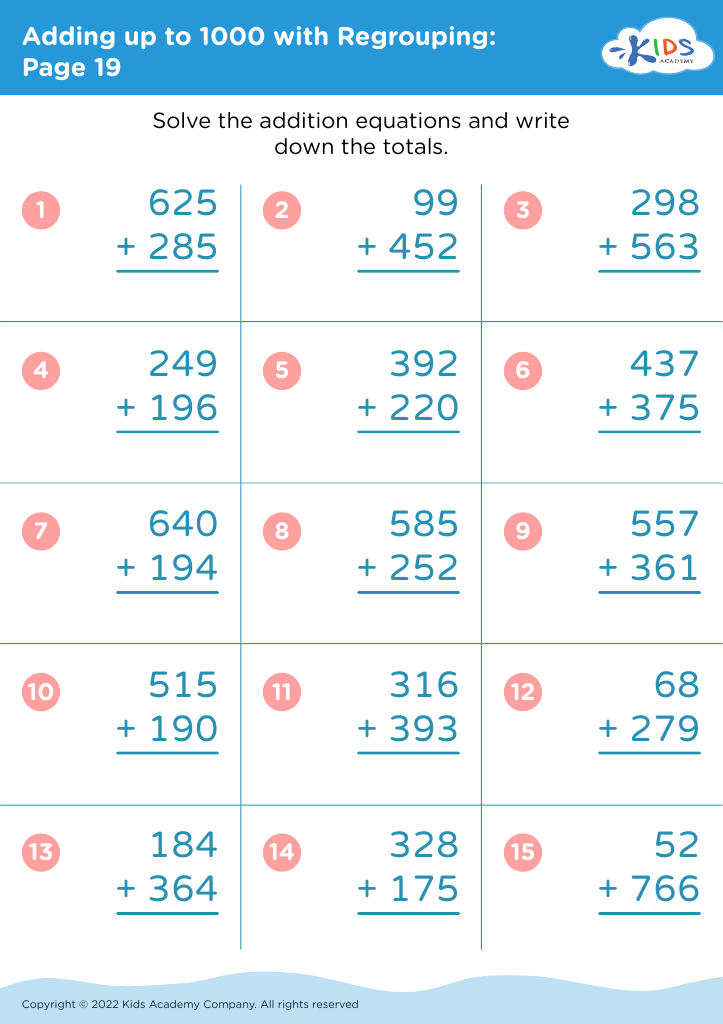
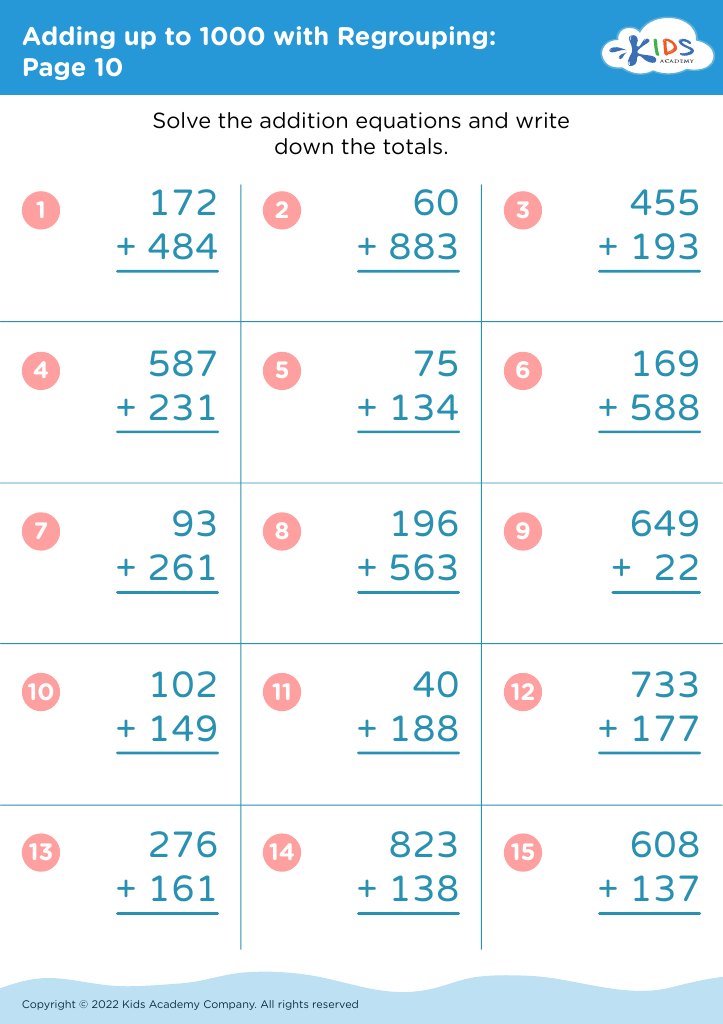
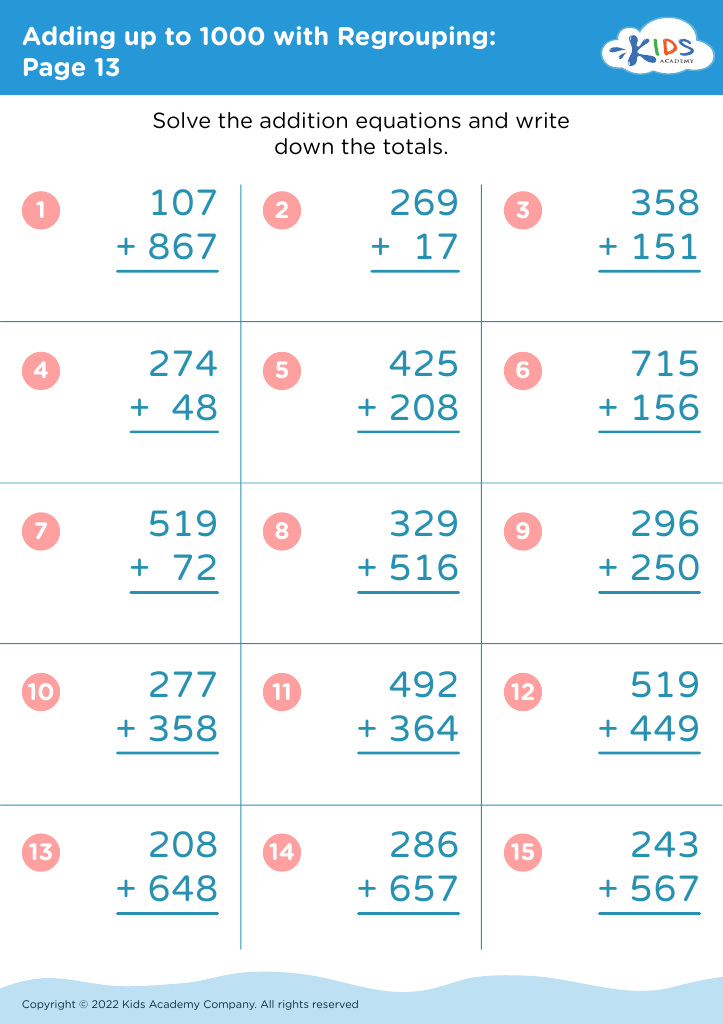
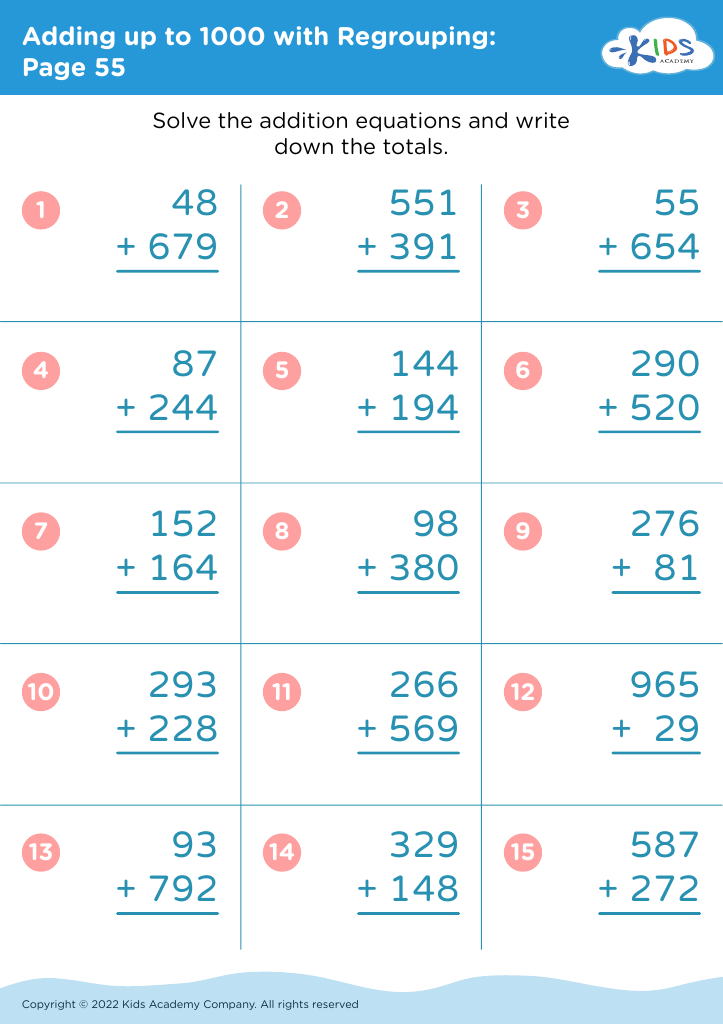
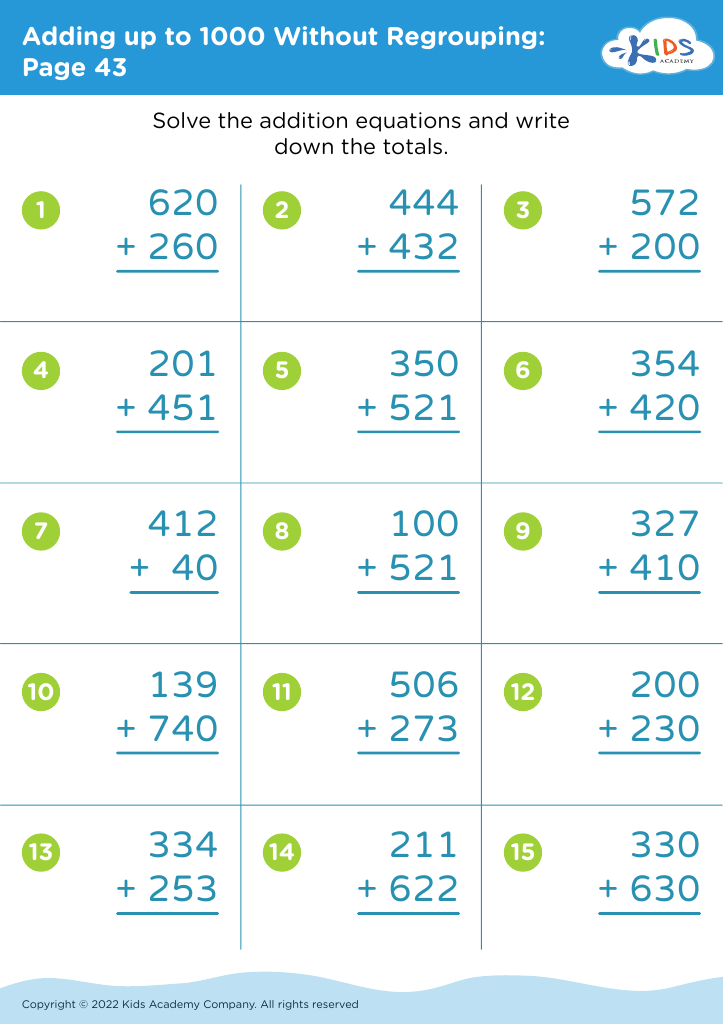
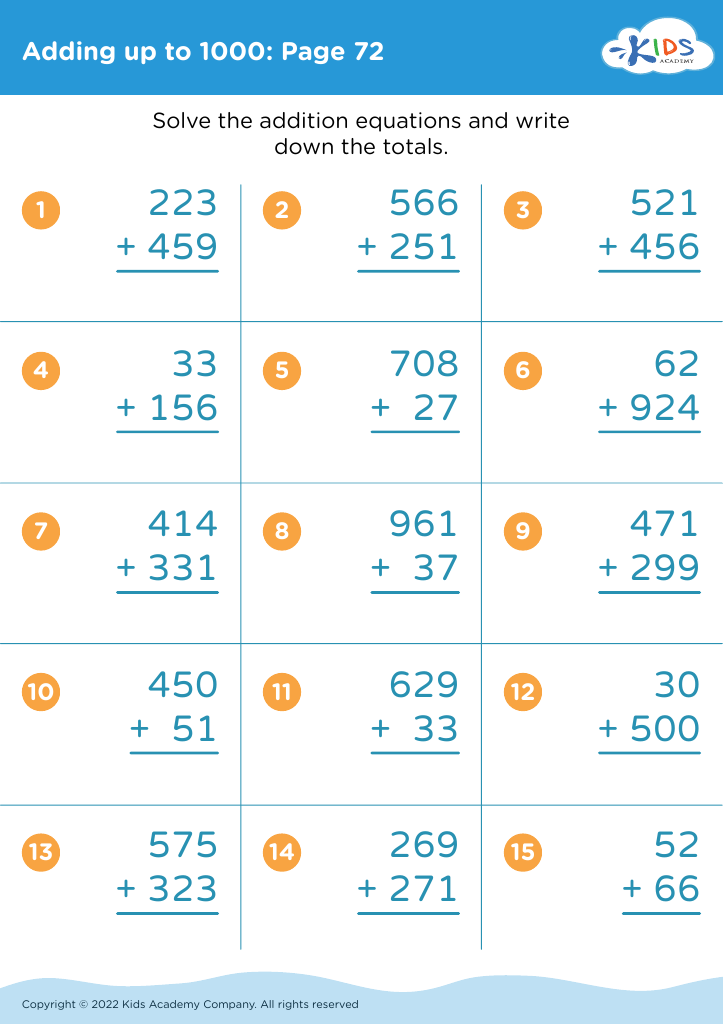



Recognizing patterns and adding numbers up to 1000 are foundational skills that significantly contribute to a child's cognitive and mathematical development. For 7-year-olds, developing these skills aids in the formation of crucial problem-solving abilities and logical thinking. Patterns help children make predictions and understand sequences, which are fundamental principles in both mathematics and everyday life. When children recognize numeric patterns, they sharpen their observational skills and enhance their ability to predict outcomes, thereby creating a strong base for more complex mathematical concepts.
Incorporating exercises that involve adding up to 1000 challenges young minds to practice mental arithmetic, which is important for building fluency in addition, a fundamental math operation. It also improves memory, concentration, and the ability to double-check work for errors. More importantly, these exercises build confidence in their math skills, making them more willing to take on complex problems in the future.
Both parents and teachers play crucial roles in guiding children through these learning experiences. Encouragement and practical application of these concepts can turn learning into an engaging and rewarding activity. Cultivating an early affinity for recognizing patterns and basic arithmetic lays the groundwork for future success in STEM (science, technology, engineering, and math) fields and everyday decision-making.








