Understand fractions Adding up to 1000 Worksheets for 7-Year-Olds
4 filtered results
-
From - To
Explore our "Understand Fractions Adding up to 1000 Worksheets" designed specifically for 7-year-olds! These engaging worksheets help young learners grasp the concept of fractions through fun, interactive exercises. Children will enhance their mathematical skills by practicing fraction addition and understanding how different fractions combine to make a whole. Our user-friendly format encourages self-paced learning, ensuring that kids gain confidence in their abilities. Ideal for classroom use or at home, these worksheets make mastering fractions an enjoyable experience. Unlock your child's potential in mathematics and watch them flourish with a solid foundation in understanding fractions! Perfect for young minds eager to learn!
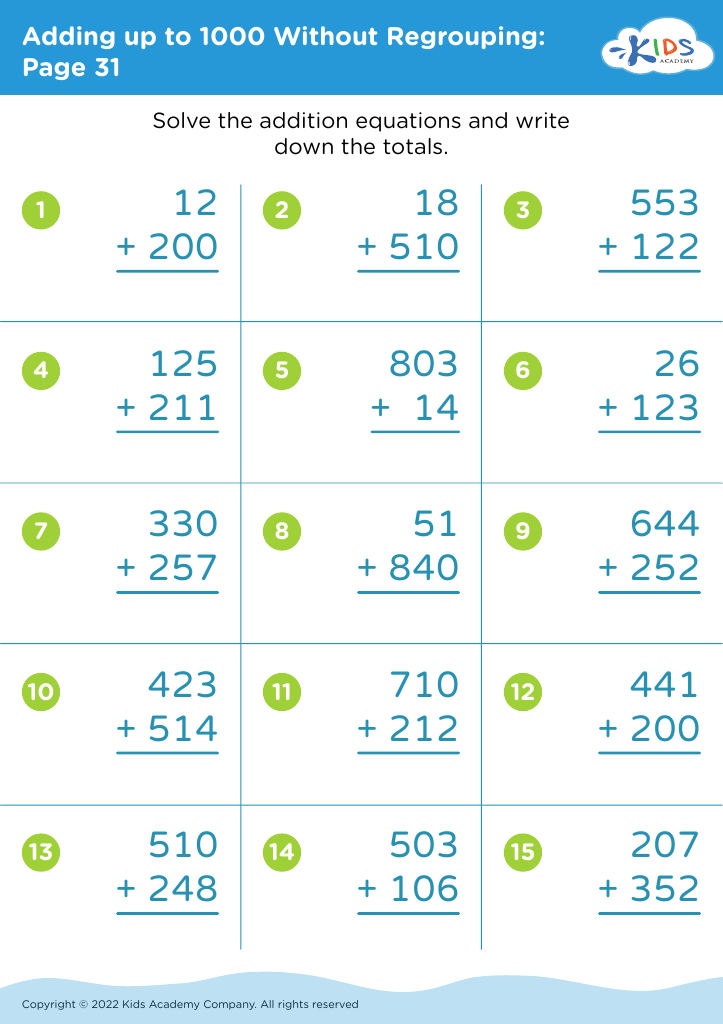
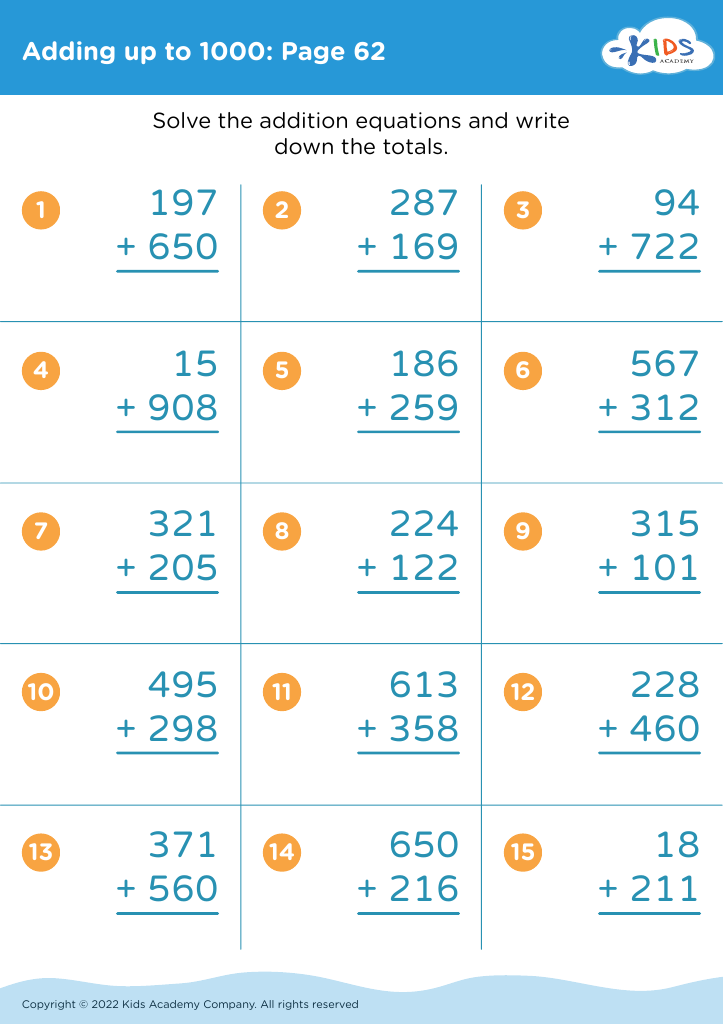
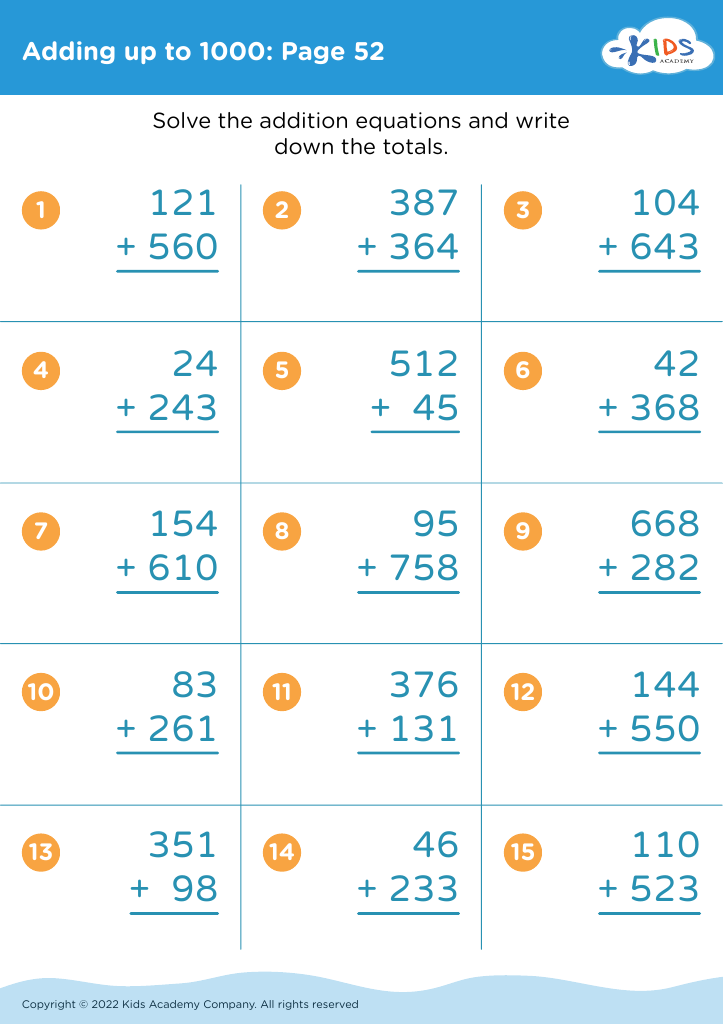
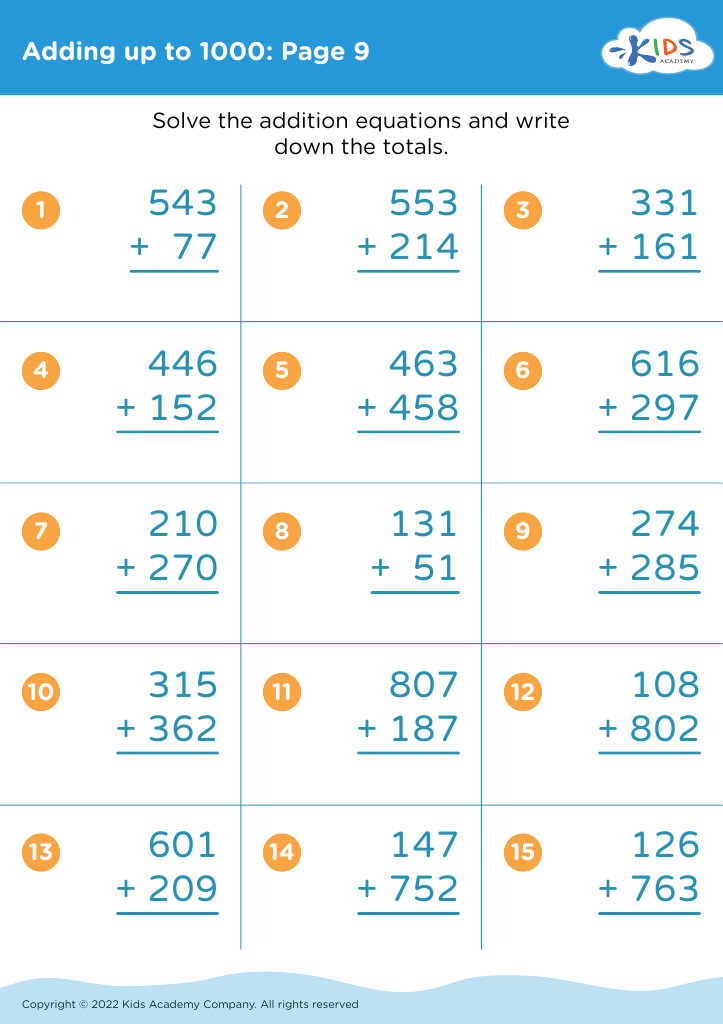



Understanding fractions is crucial for 7-year-olds as it builds a foundation for their future mathematical skills. At this age, children are beginning to encounter more complex concepts, and grasping fractions can significantly enhance their numerical reasoning. When students comprehend how fractions fit into the whole, they develop a critical analytical skill set that helps them understand division, ratios, and even percentages later on.
Adding fractions that sum up to whole numbers, such as 1000, encourages them to think logically and develop problem-solving skills. It introduces concepts of equivalence and part-whole relationships, which are essential knowledge for various real-life situations, including cooking, budgeting, and managing time.
Furthermore, parent and teacher involvement in teaching fractions can strengthen children’s confidence and interest in math. Engaging with students through games and practical activities makes learning fun, reinforcing their abilities without overwhelming them. The early acquisition of these concepts not only aids in academic progress but also encourages a positive attitude towards mathematics, which can benefit their lifelong learning journey. Overall, understanding fractions reduces future learning difficulties, paving the way for stronger performance in math-related subjects as they grow.








