Filters

44 filtered results

Clear all filters
Favorites
With answer key
Interactive

44 filtered results

Difficulty Level

Grade


Check out this FREE Trial Lesson on Adding up to 1000 for age 7!

T

Favorites
With answer key
Interactive
  • 7
  • Understanding fractions
  • Adding up to 1000
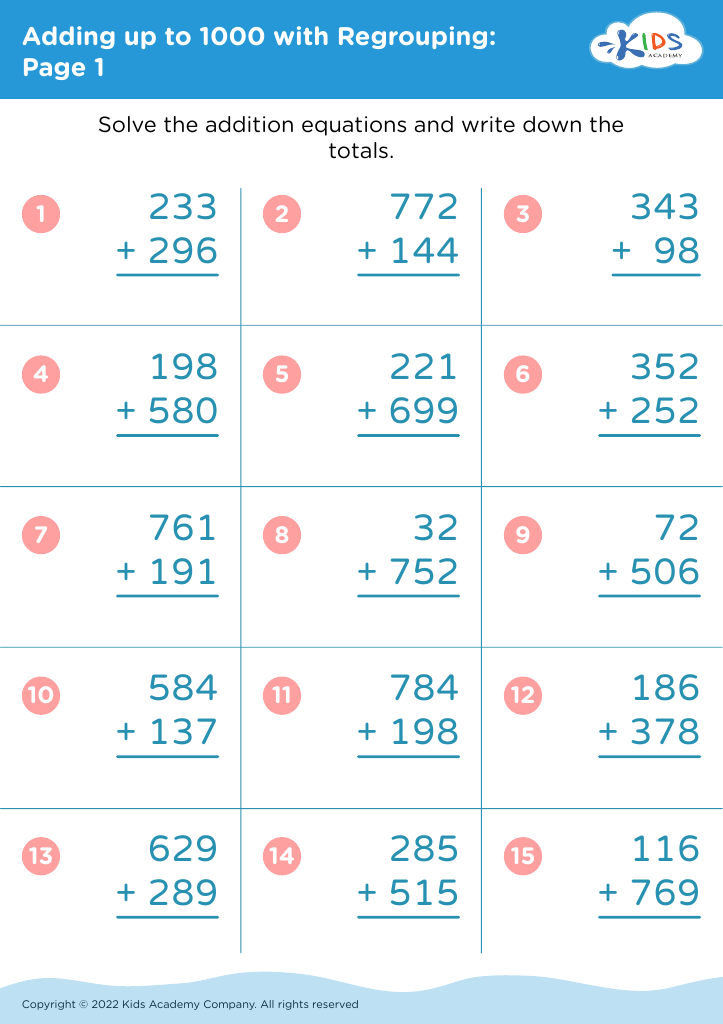
Adding up to 1000 with Regrouping: Page 1
Worksheet
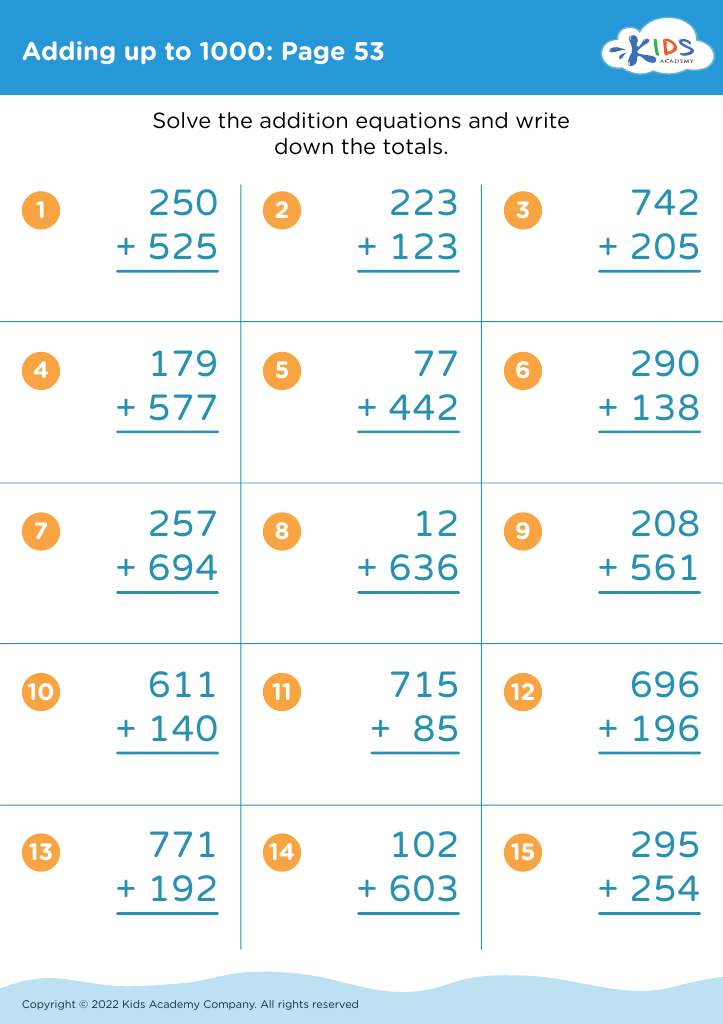
Adding up to 1000: Page 53

Adding up to 1000: Page 53

Adding up to 1000: Page 53
Worksheet
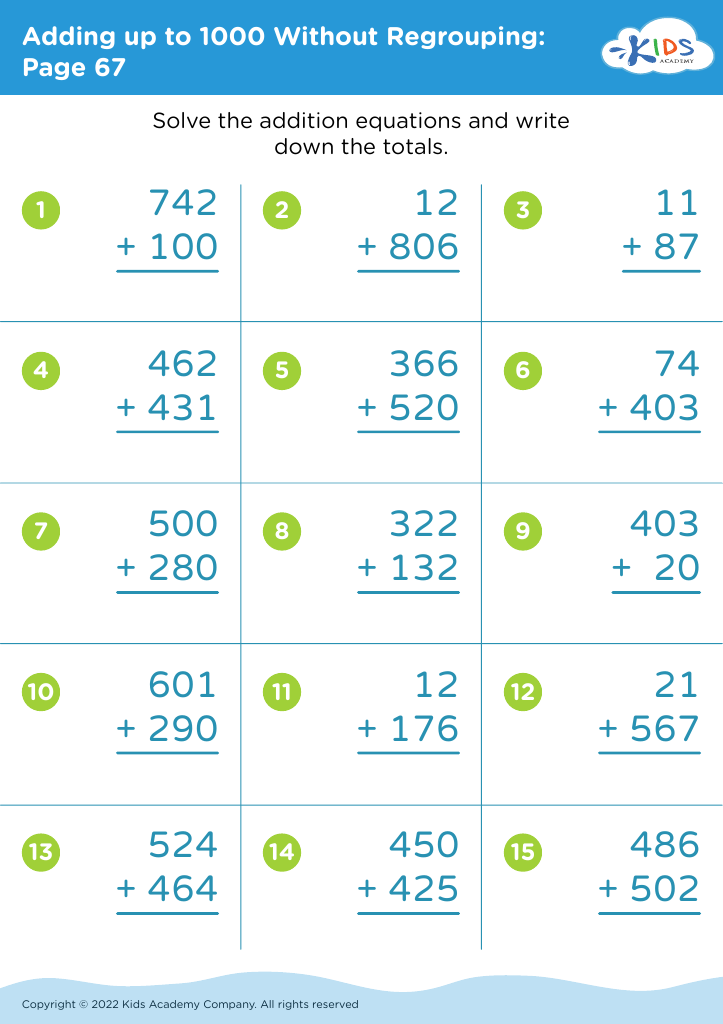
Adding up to 1000 Without Regrouping: Page 67
Worksheet
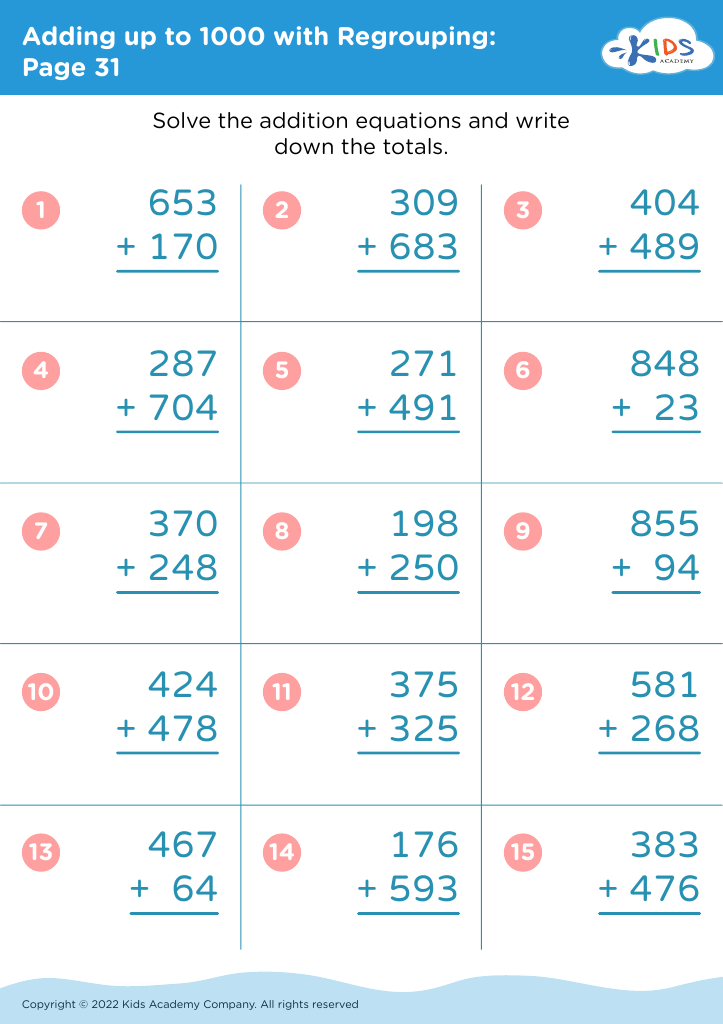
Adding up to 1000 with Regrouping: Page 31
Worksheet
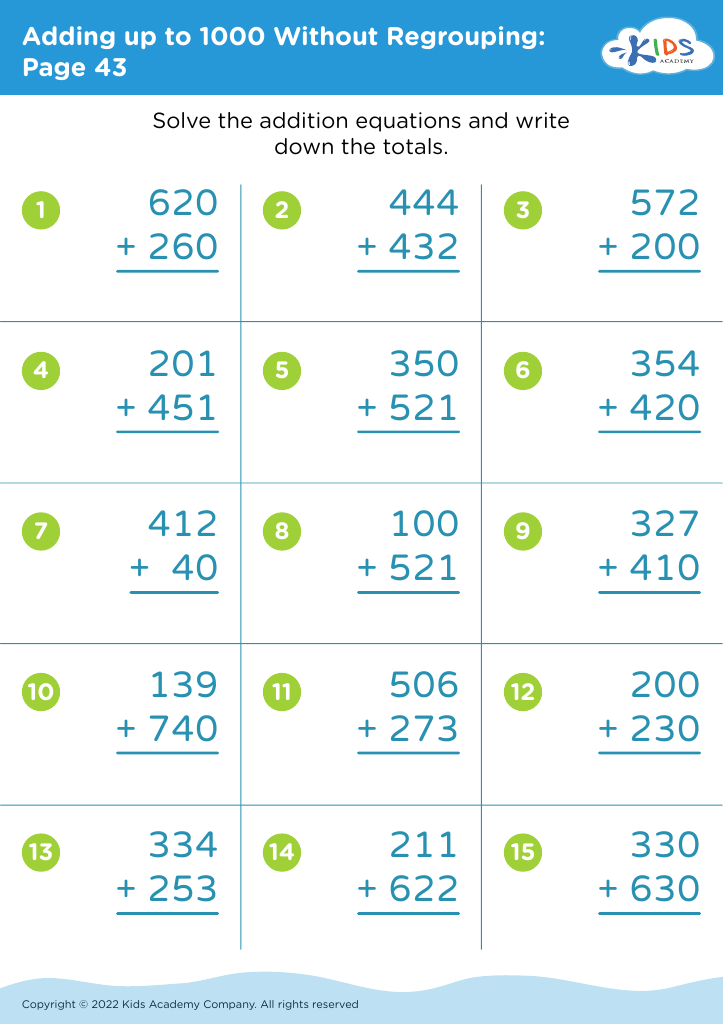
Adding up to 1000 Without Regrouping: Page 43
Worksheet
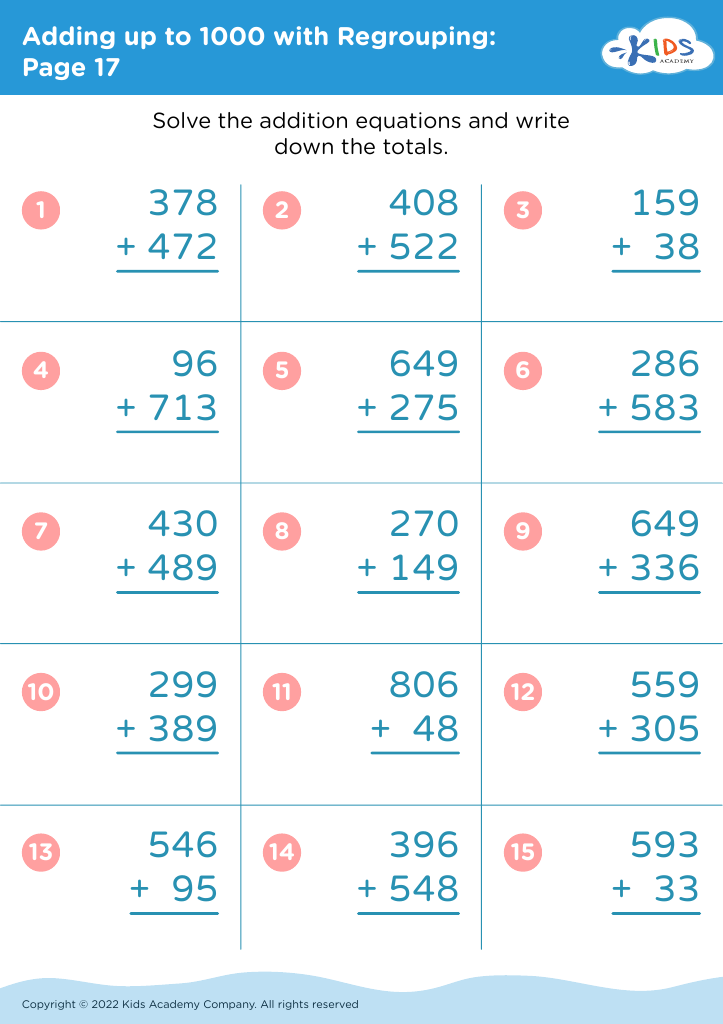
Adding up to 1000 with Regrouping: Page 17
Worksheet
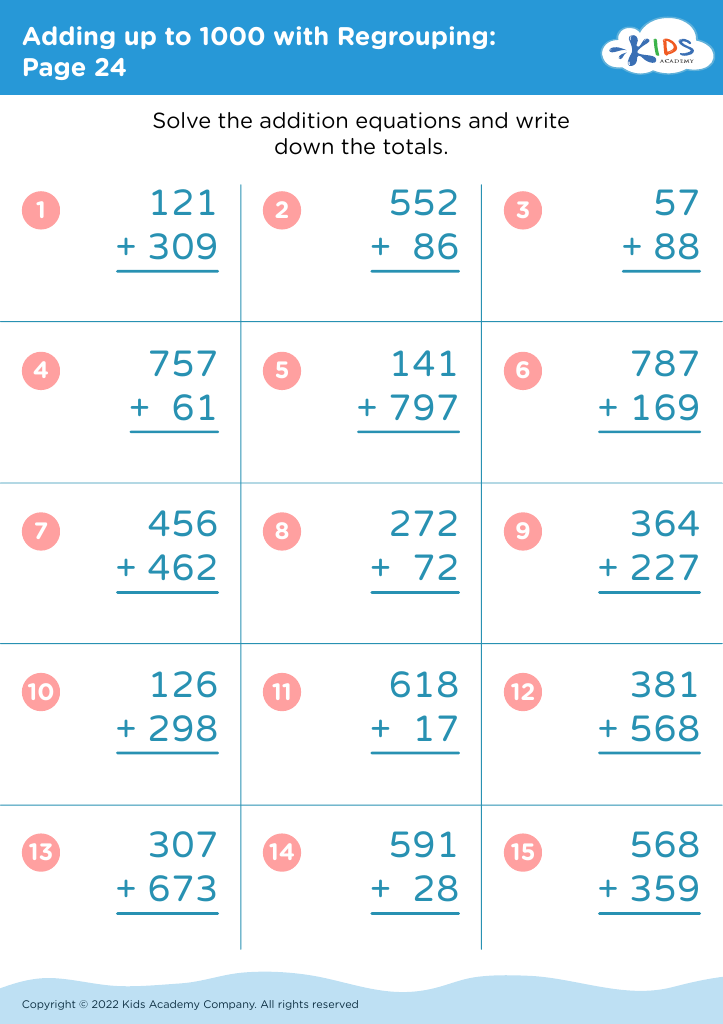
Adding up to 1000 with Regrouping: Page 24
Worksheet
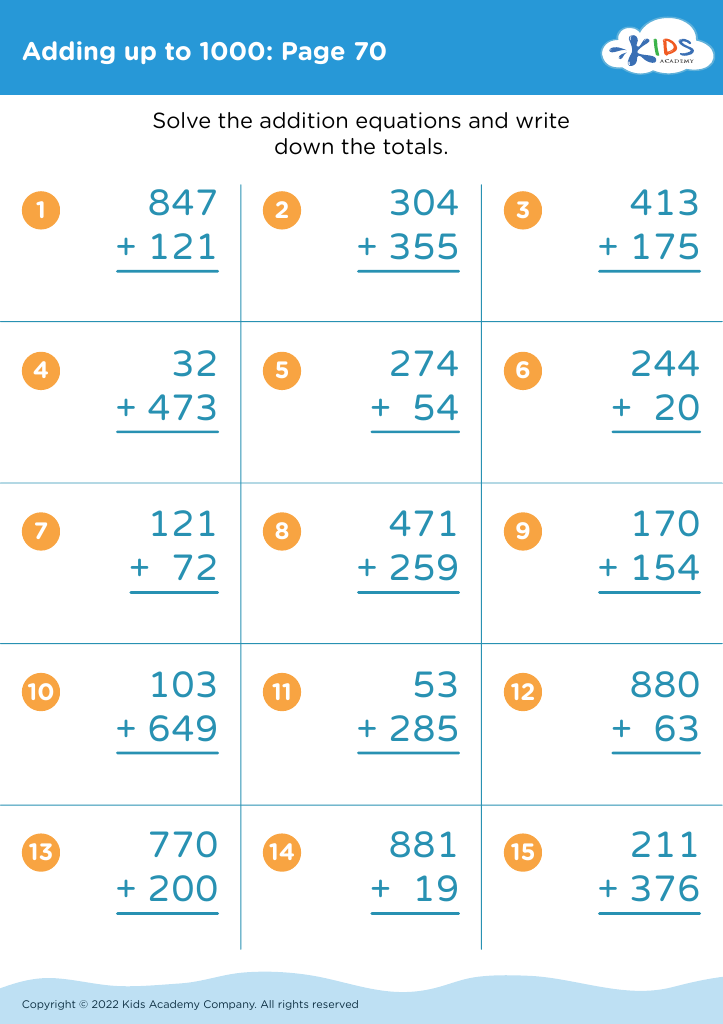
Adding up to 1000: Page 70

Adding up to 1000: Page 70

Adding up to 1000: Page 70
Worksheet
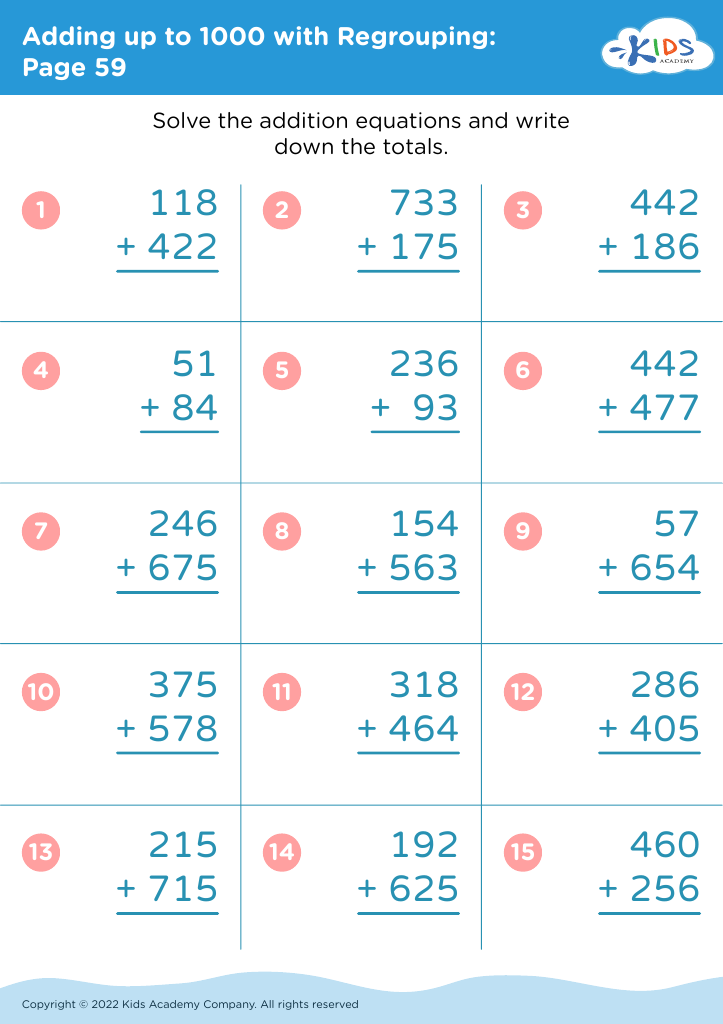
Adding up to 1000 with Regrouping: Page 59
Worksheet
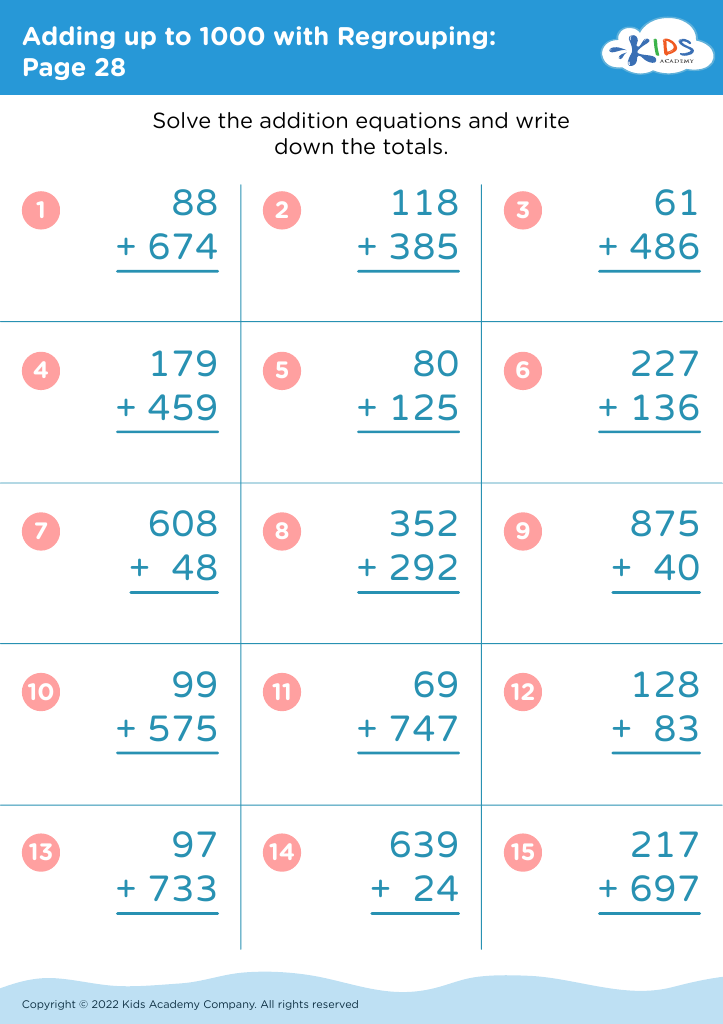
Adding up to 1000 with Regrouping: Page 28
Worksheet
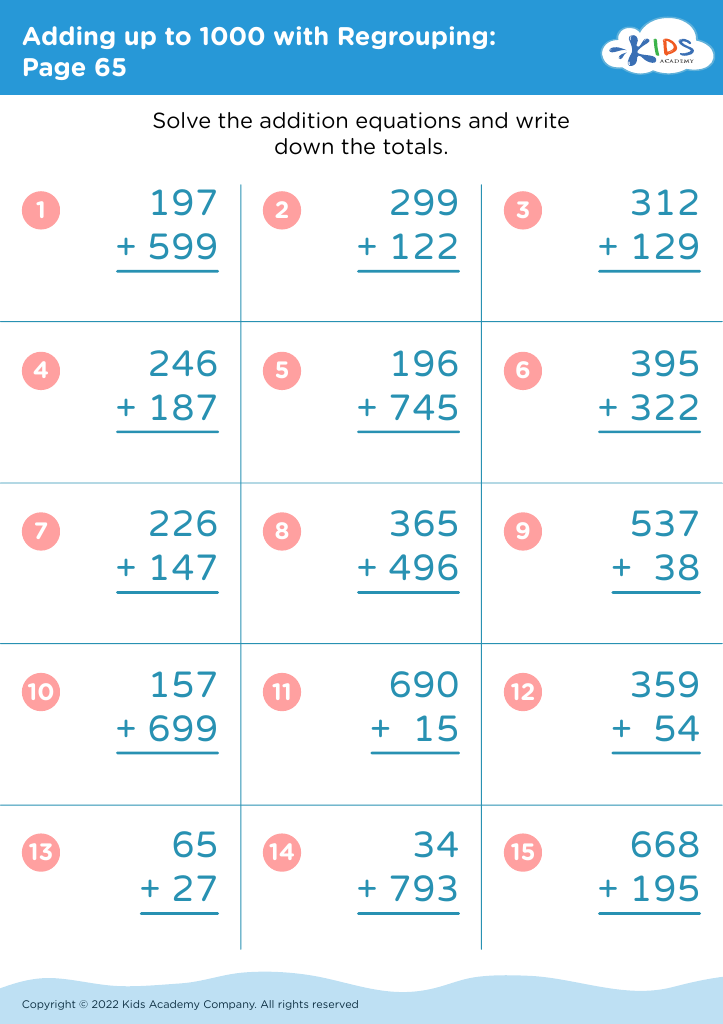
Adding up to 1000 with Regrouping: Page 65
Worksheet
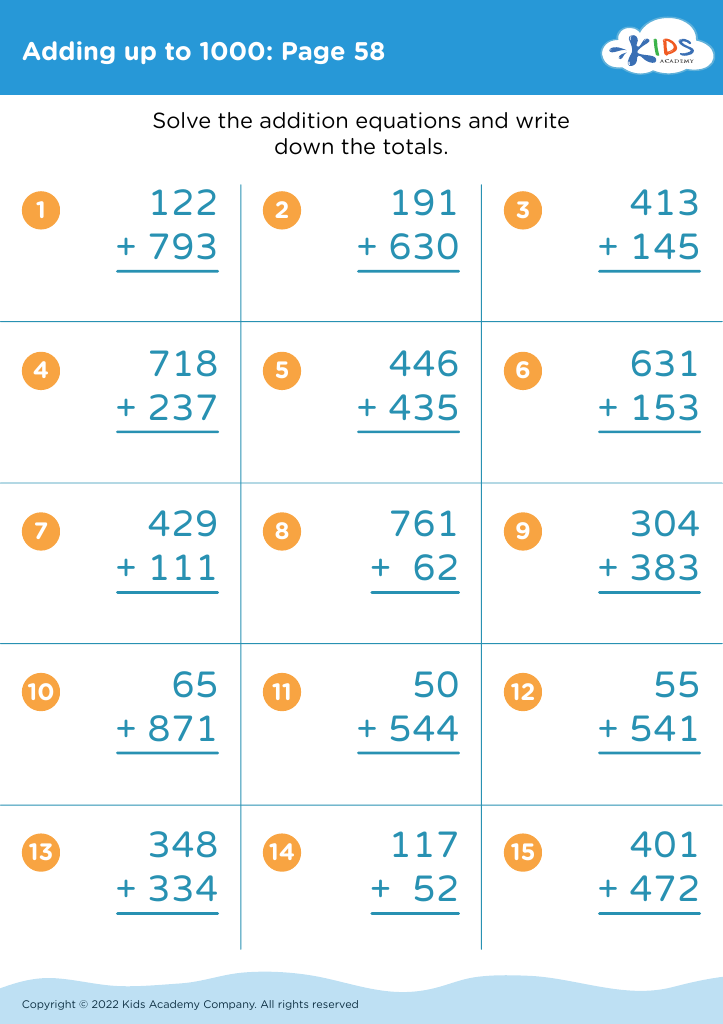
Adding up to 1000: Page 58

Adding up to 1000: Page 58

Adding up to 1000: Page 58
Worksheet
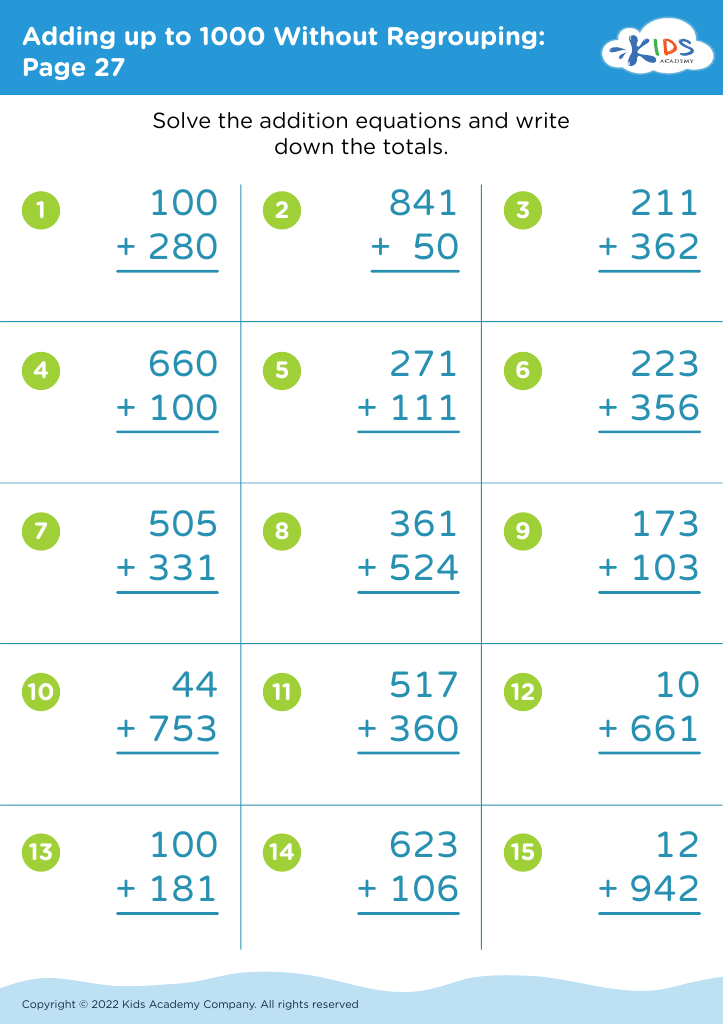
Adding up to 1000 Without Regrouping: Page 27
Worksheet
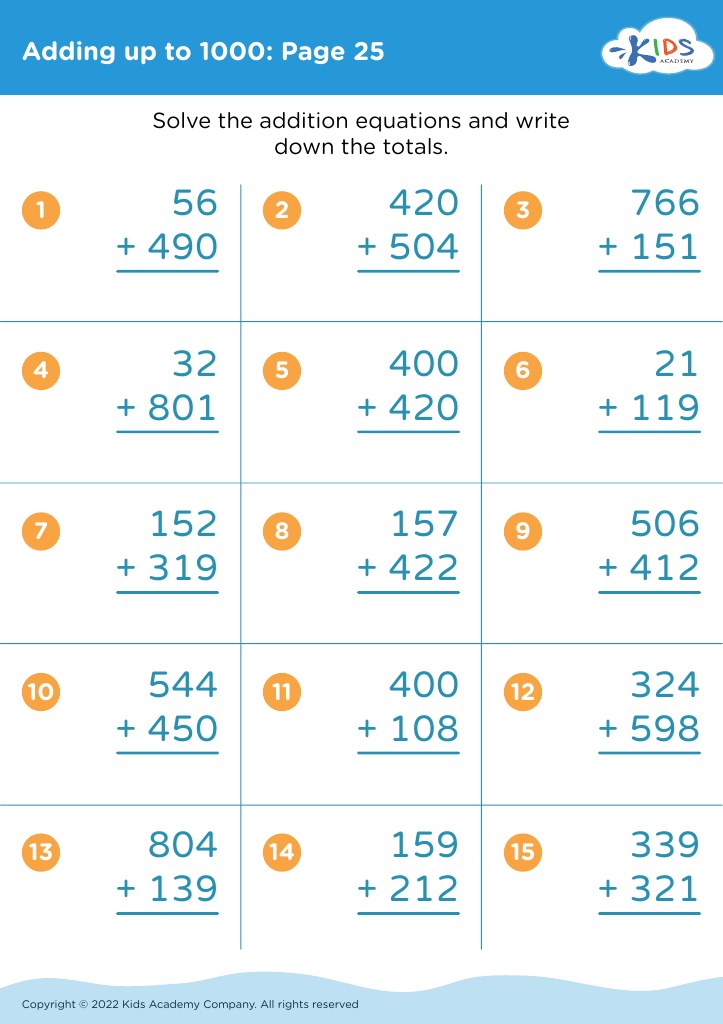
Adding up to 1000: Page 25

Adding up to 1000: Page 25

Adding up to 1000: Page 25
Worksheet
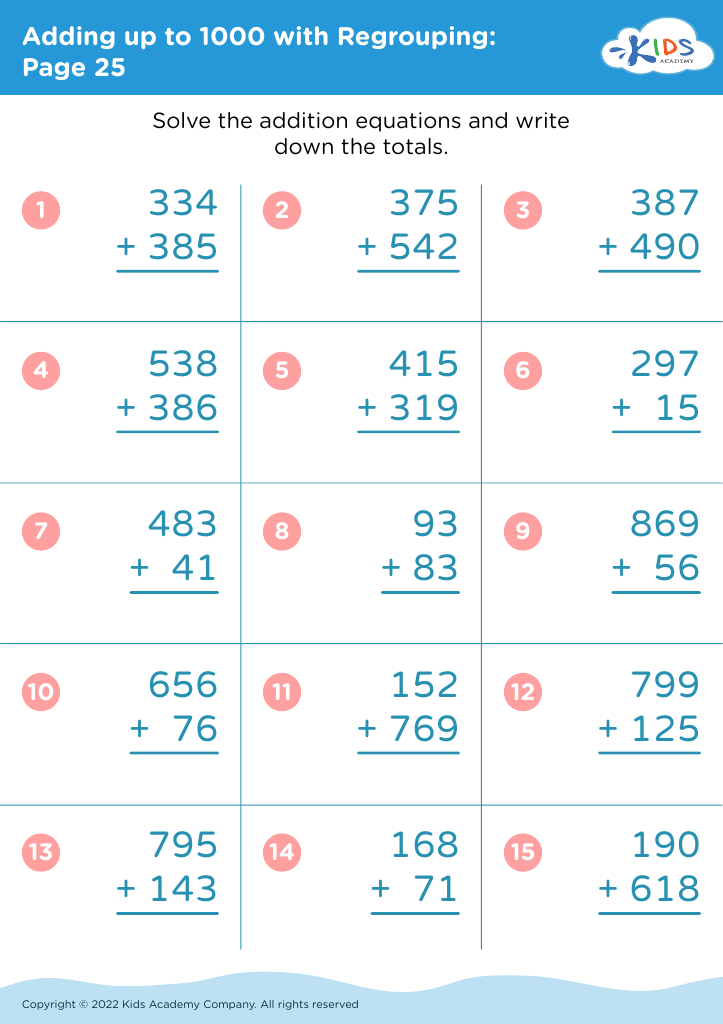
Adding up to 1000 with Regrouping: Page 25
Worksheet
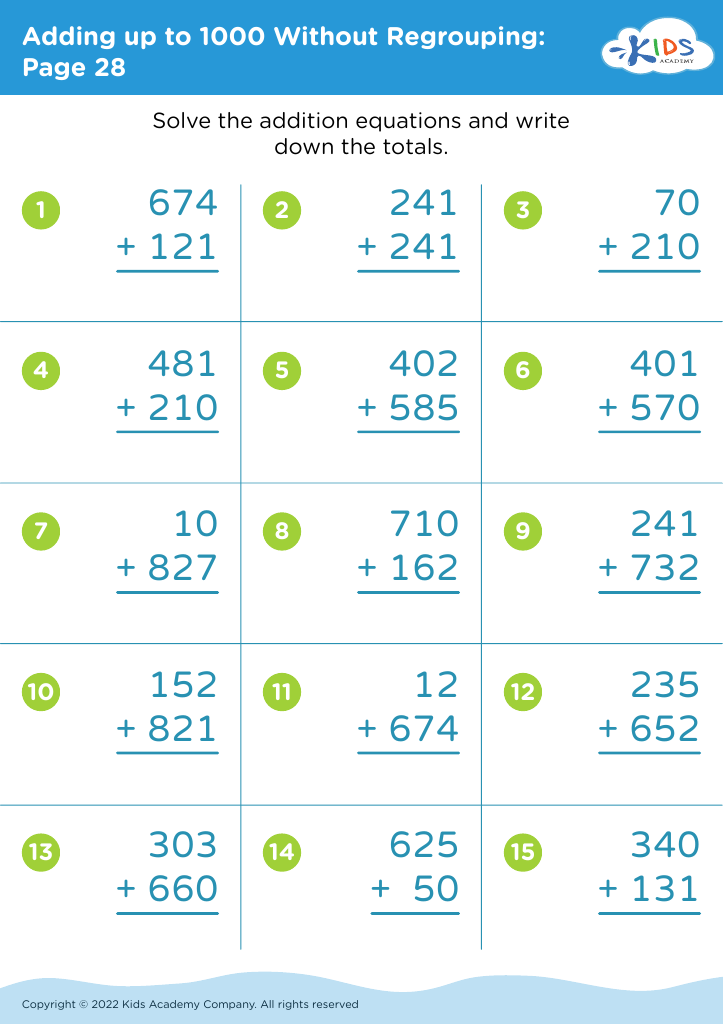
Adding up to 1000 Without Regrouping: Page 28
Worksheet
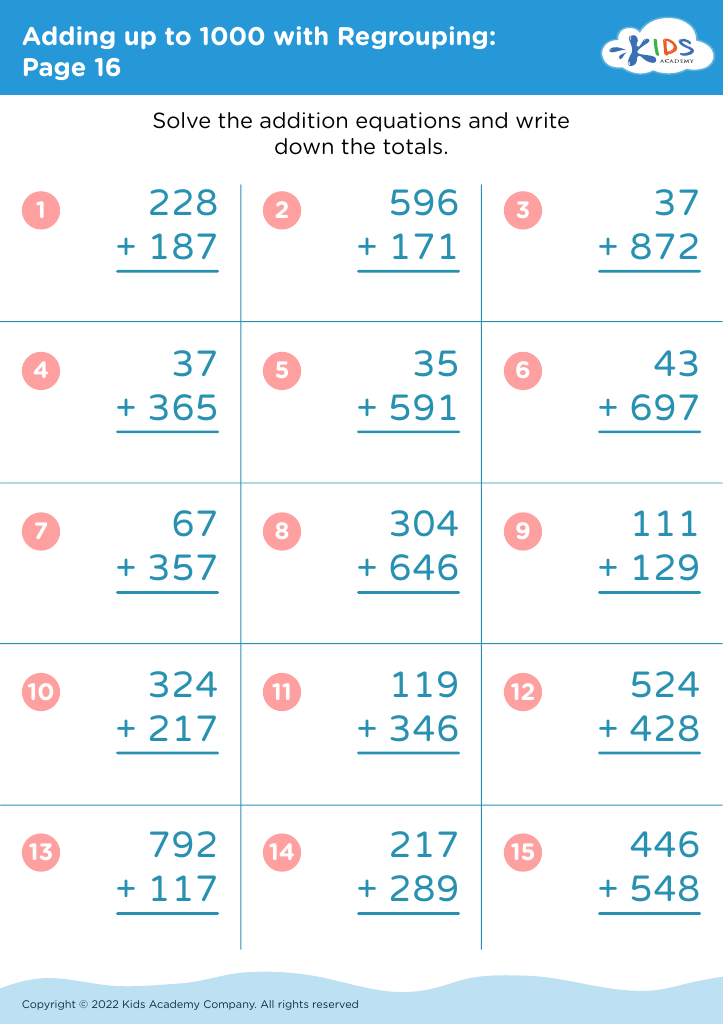
Adding up to 1000 with Regrouping: Page 16
Worksheet
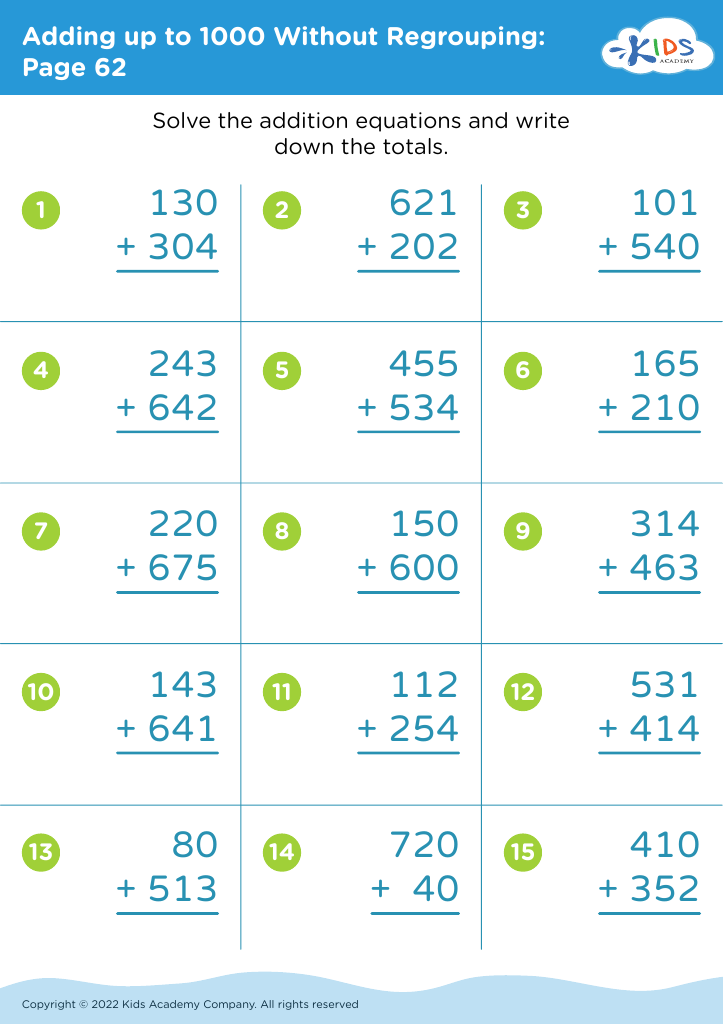
Adding up to 1000 Without Regrouping: Page 62
Worksheet
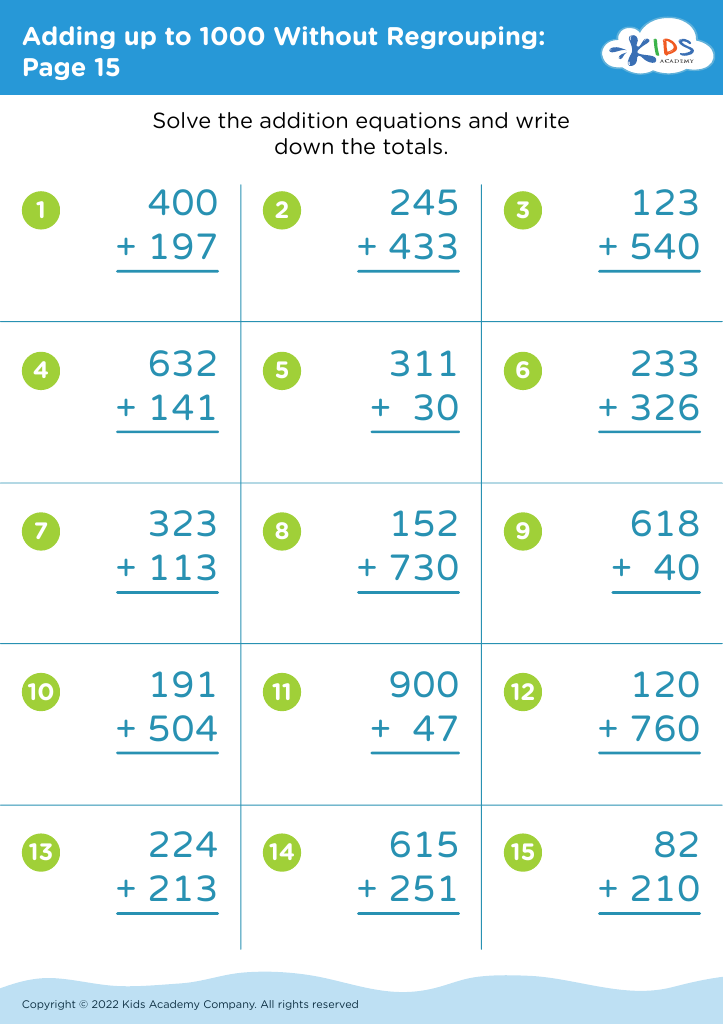
Adding up to 1000 Without Regrouping: Page 15
Worksheet
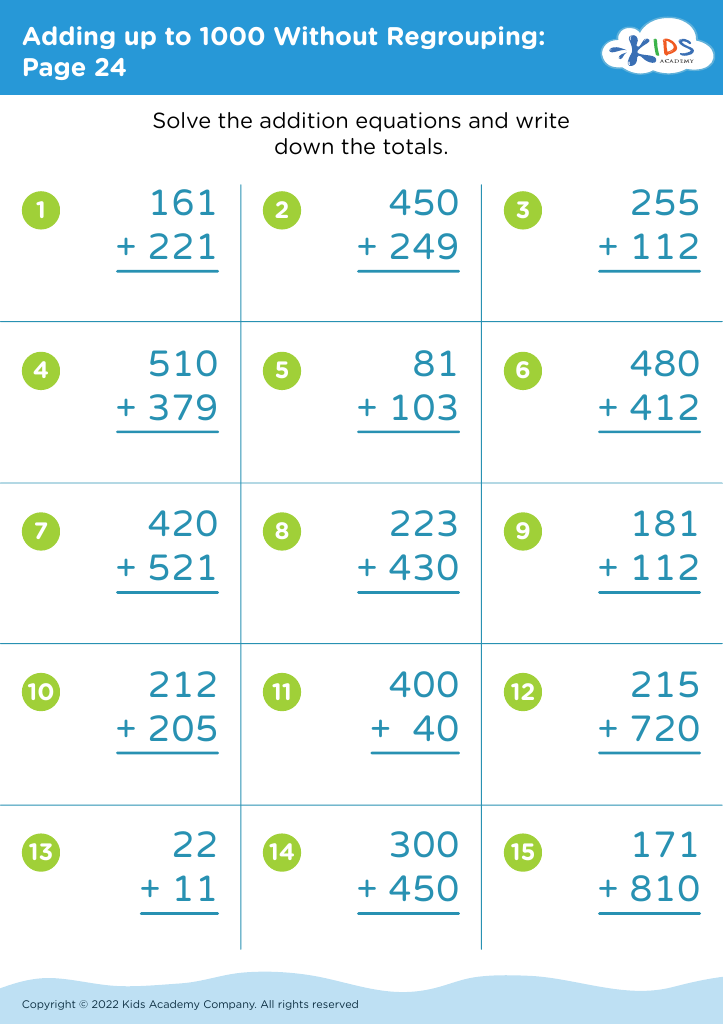
Adding up to 1000 Without Regrouping: Page 24
Worksheet


Understanding fractions and adding up to 1,000 are critical skills for 7-year-olds that provide a strong foundation for future mathematics success. For one, grasping fractions at a young age helps children develop a sense of how parts relate to a whole, which is essential not only in math but also in real-life contexts, such as sharing food or dividing tasks. This foundational concept supports their ability to understand more complex mathematical principles they will encounter later on.

Additionally, the ability to add up to 1,000 broadens a child's numerical comprehension and strengthens their mental arithmetic skills. When children can confidently work with larger numbers, they become better prepared for more advanced math topics in subsequent grades. It encourages logical thinking, problem-solving, and fluency in calculations, translating into greater confidence in their abilities.

For parents and teachers, fostering these skills early helps identify any learning challenges that children may face, thereby allowing for timely intervention. This creates an inclusive environment where all students can achieve their potential. Moreover, mathematical proficiency extends beyond academics; it enhances critical thinking and practical life skills. Therefore, by nurturing these abilities in 7-year-olds, parents and teachers invest in a child's holistic development, equipping them with tools to succeed in diverse aspects of life.