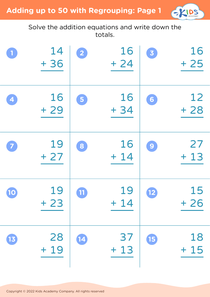
Understand fractions Adding up to 50 Without Regrouping Worksheets for 7-Year-Olds
4 filtered results
-
From - To
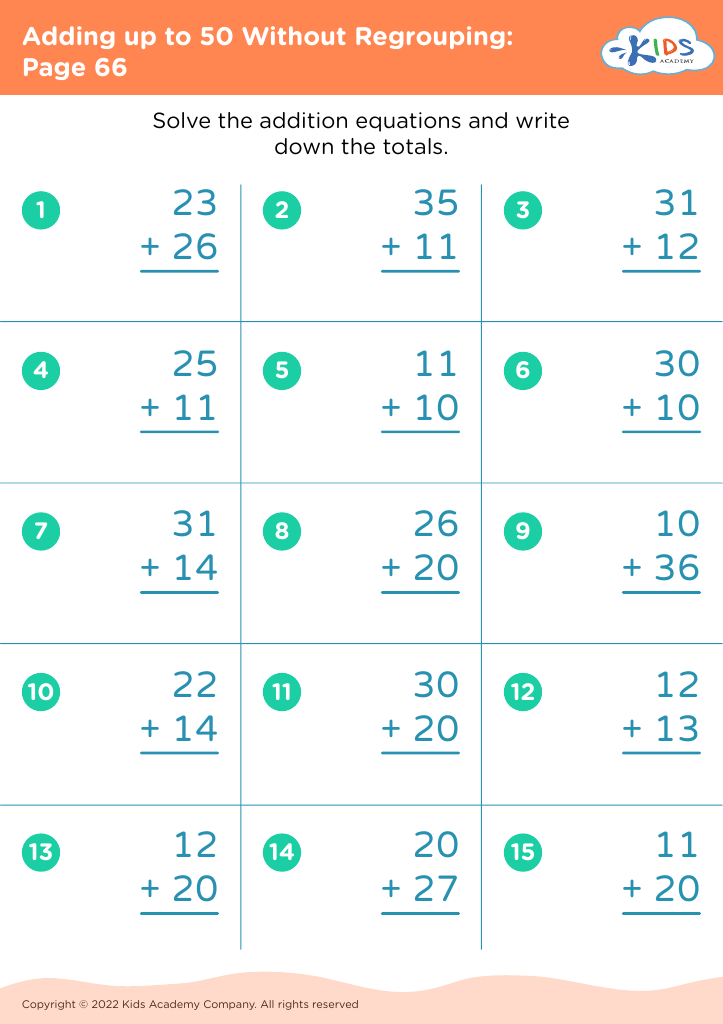
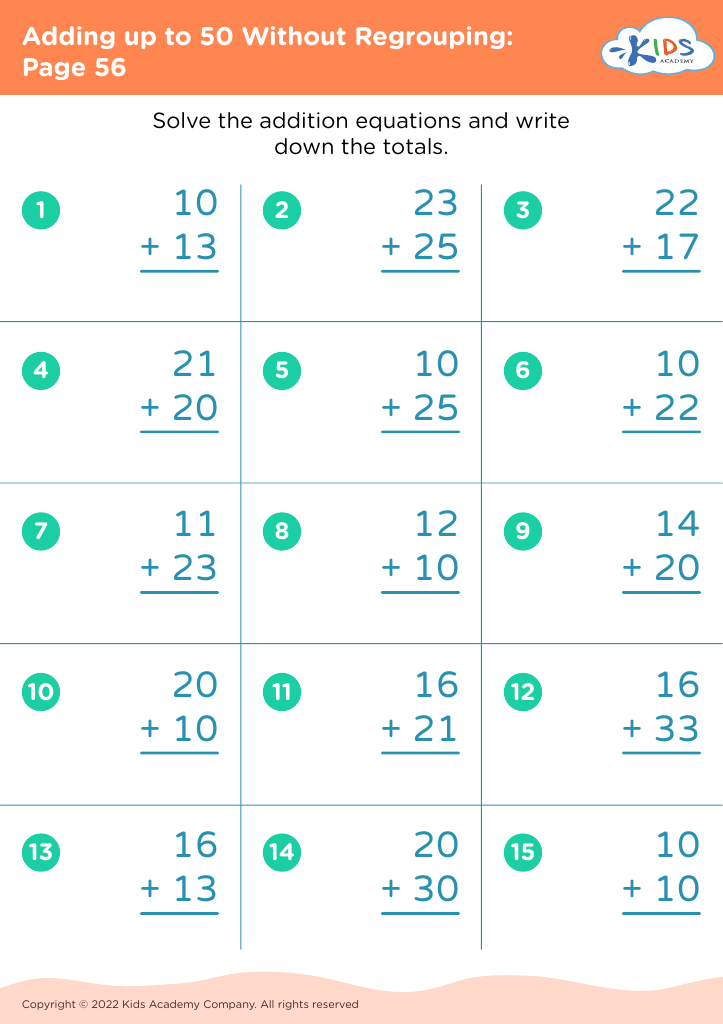
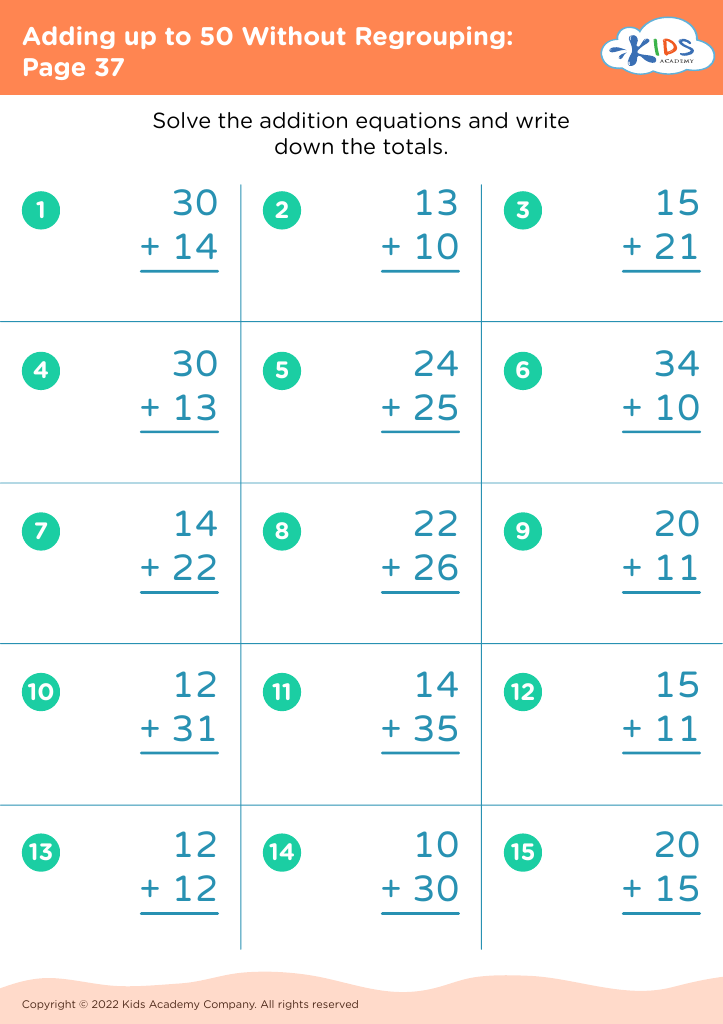
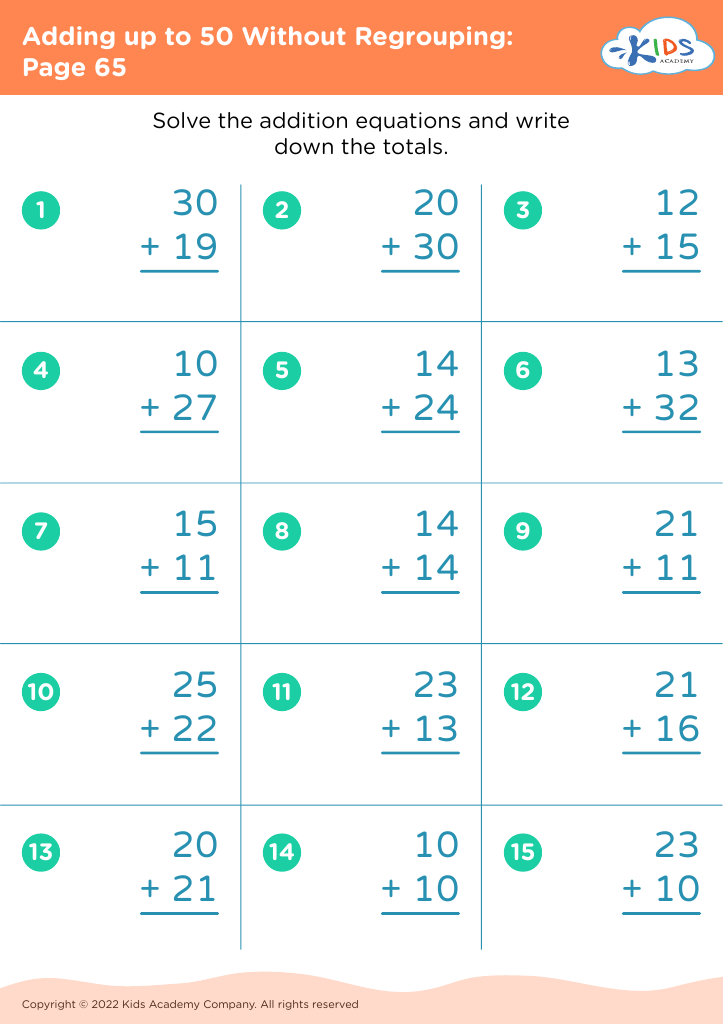
Help your 7-year-old master fractions and addition up to 50 with our worksheets! Designed especially for young learners, these printable activities make complex math concepts simple and fun. Kids will learn to add numbers up to 50 without regrouping while understanding basic fractions. Each worksheet combines bright illustrations with engaging exercises, ensuring students build confidence in their math skills. Perfect for in-class practice or at-home reinforcement, our worksheets are a great resource for any first or second-grade curriculum. Watch your child’s excitement grow as they successfully solve problems and grasp new concepts step by step!


Parents and teachers should care about helping 7-year-olds understand adding fractions up to 50 without regrouping for a several essential reasons. Firstly, introducing young children to fractions and basic addition builds a strong mathematical foundation. Understanding these concepts early on boosts a child's confidence in math, making it easier for them to tackle more complex problems later.
Additionally, fractions represent a key element in many everyday activities, from cooking to time management. A grasp of how to add up fractions using simple problems without regrouping helps children develop practical skills they will use in real life, promoting an intuitive sense of numbers and quantities. This understanding reinforces their overall numeracy and nuances their problem-solving abilities.
Moreover, integrating fraction practice into their routine math lessons also enhances their cognitive development. It aids in improving focus, analytical thinking, and perseverance – skills valuable in all areas of learning and personal growth.
Lastly, early exposure to such numerical activities promotes a positive attitude towards math. It shifts the perception from math being difficult to math being enjoyable and manageable. This positive mindset will encourage continuous learning and curiosity, which are crucial traits for academic success and lifelong learning. Hence, the concern for such concepts is justified due to their broad and lasting impact on a child’s educational journey and day-to-day life.