Basic addition practice Adding up to 50 Worksheets for 7-Year-Olds
5 filtered results
-
From - To
Looking for effective and fun ways to boost your child's basic addition skills? Our "Basic Addition Practice Adding up to 50 Worksheets for 7-Year-Olds" are perfect for young learners! Engineered to cultivate mathematical confidence, these engaging worksheets focus on adding numbers up to 50. Designed for seven-year-olds, the exercises make learning enjoyable and intuitive, helping kids understand fundamental addition concepts. These printables are ideal for both classroom use and home practice, allowing children to enhance their skills at their own pace. Visit Kids Academy to download these expertly crafted worksheets and watch your child's math proficiency grow!
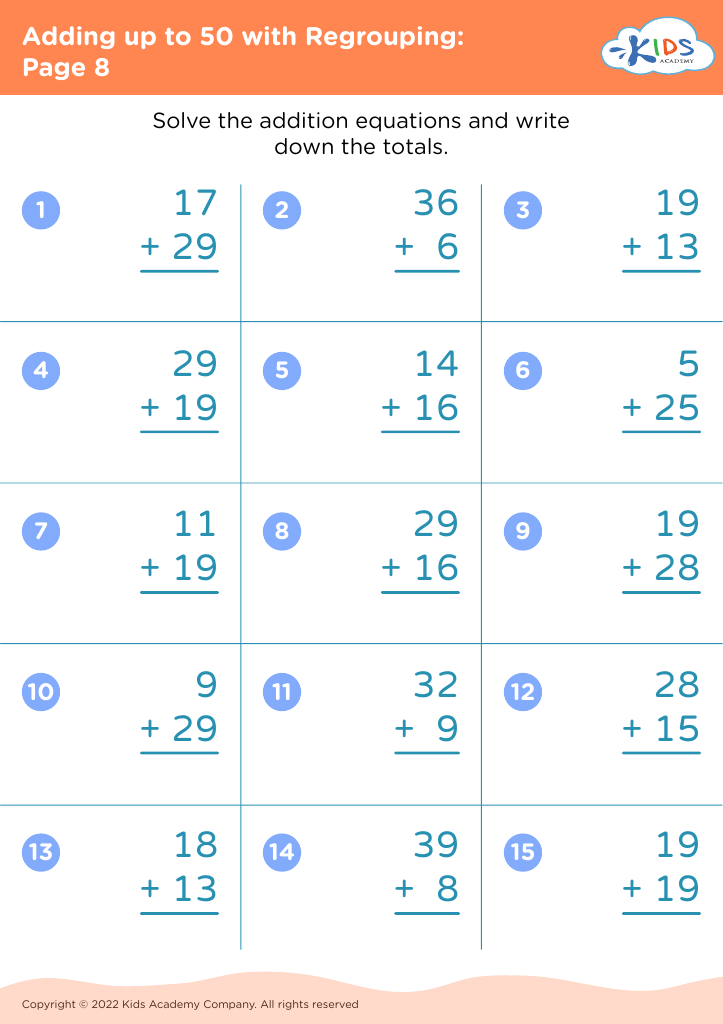
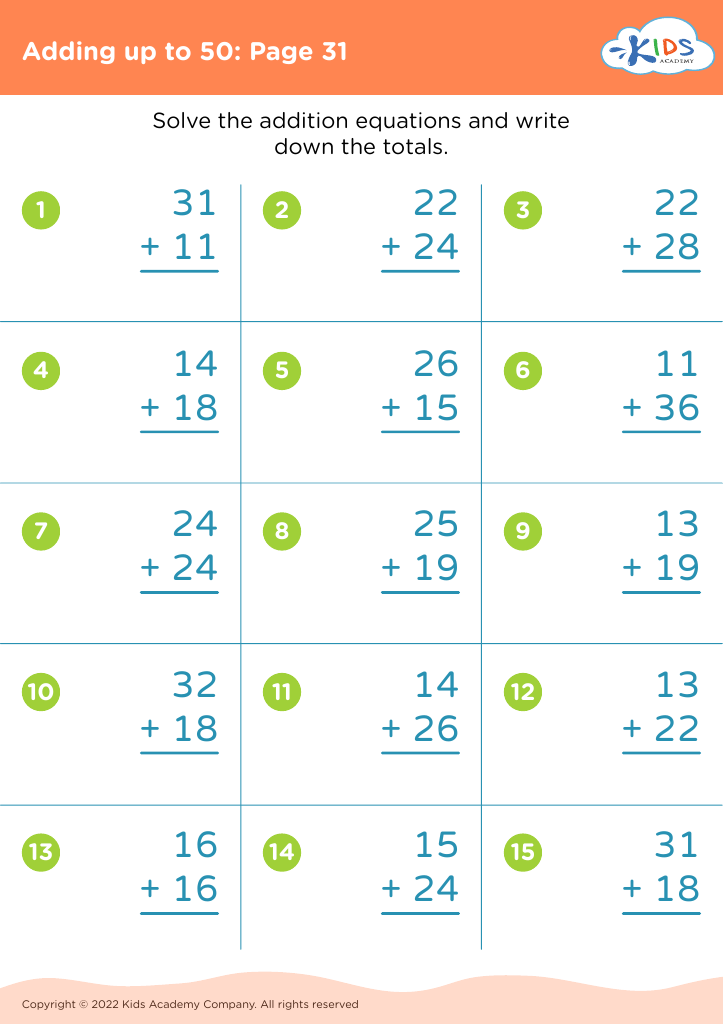
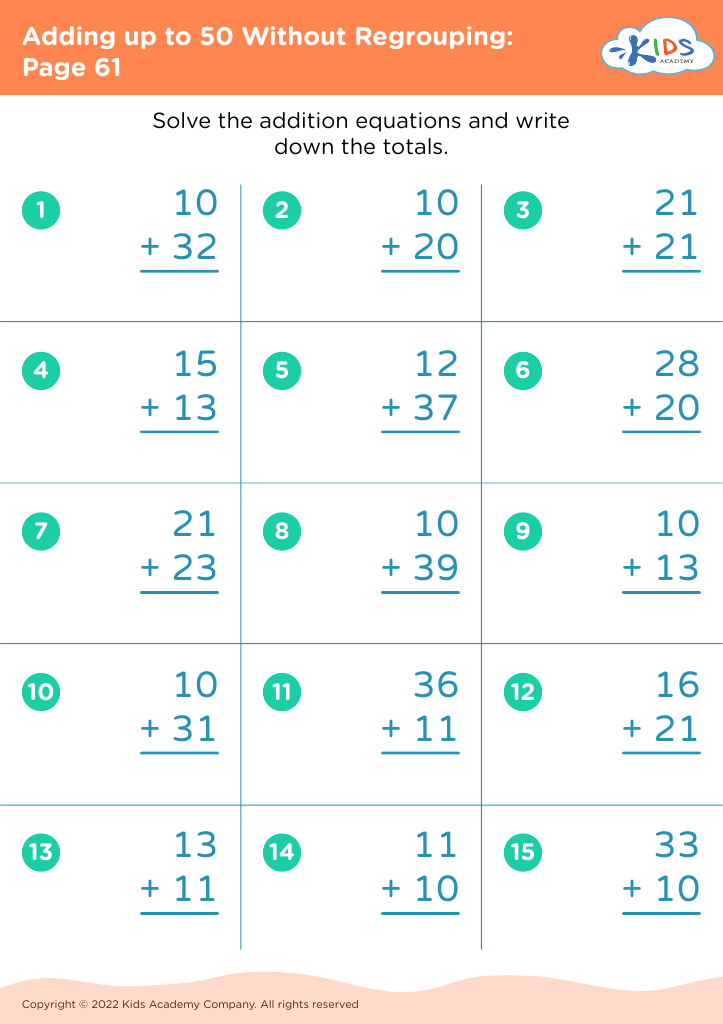
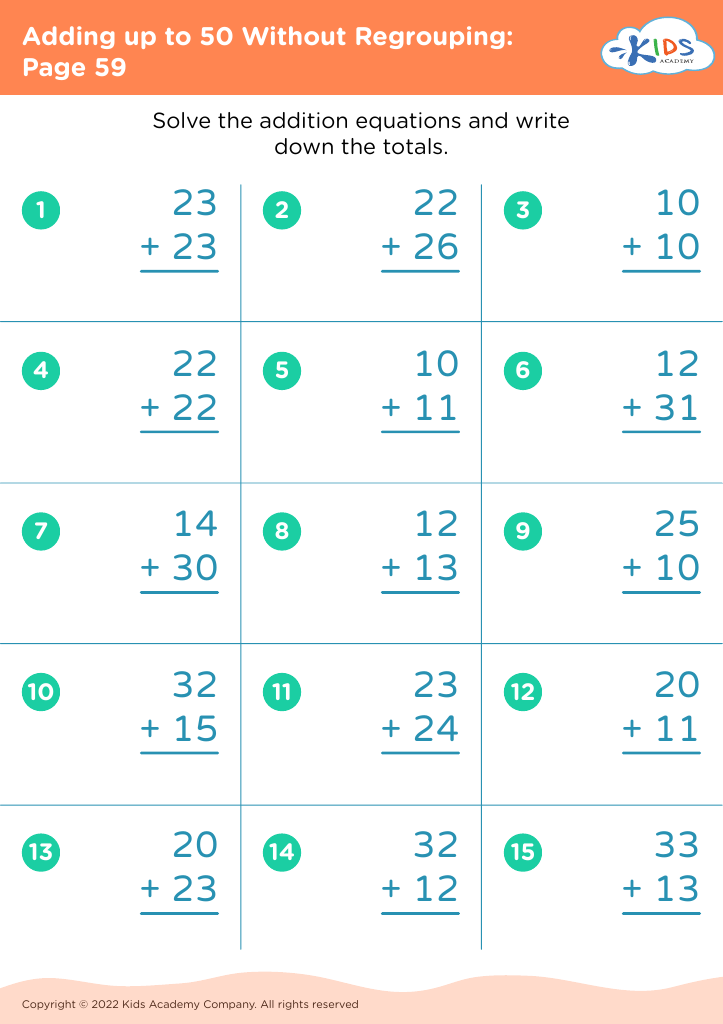
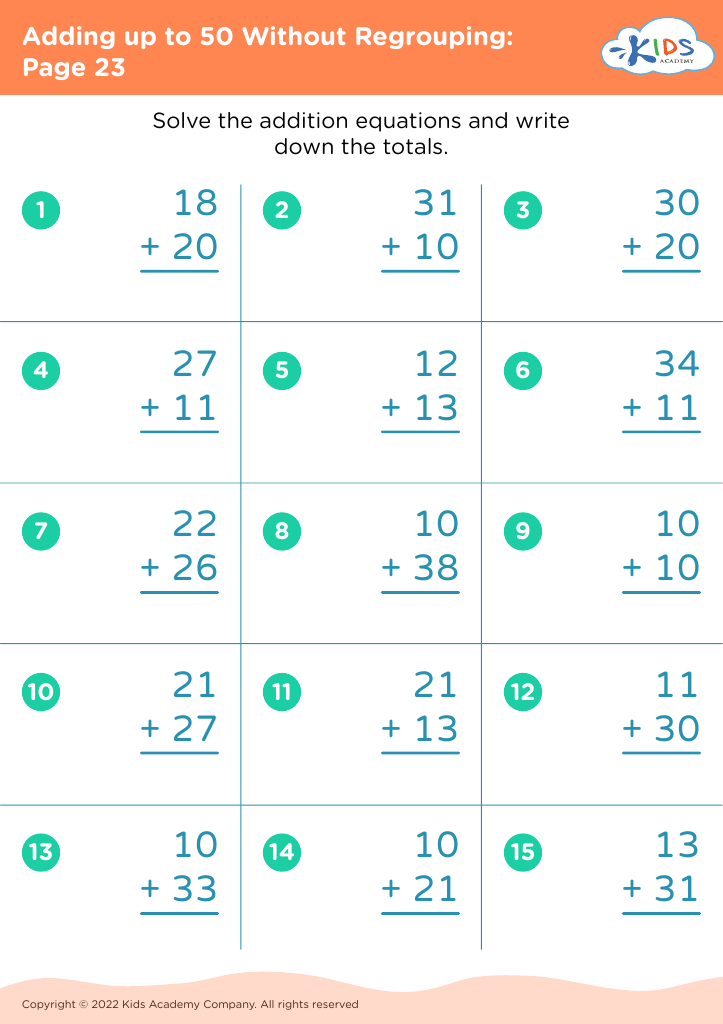




Basic addition practice up to 50 for 7-year-olds plays a crucial role in building a solid mathematical foundation for children. At this age, students are just beginning to understand and manipulate numbers, which is essential for their cognitive development. Practicing addition helps them refine their counting skills, recognize numerical patterns, and boost their mental arithmetic abilities, which are essential for more complex math concepts later on.
Parents and teachers who prioritize basic addition create an environment that fosters confidence in math. When children repeatedly practice adding numbers up to 50, they become more comfortable and less anxious about math tasks, creating a positive attitude towards the subject. This foundational skill paves the way for learning other arithmetic operations like subtraction, multiplication, and division, as well as more advanced topics such as fractions and algebra.
Moreover, mastering basic addition enhances problem-solving skills and critical thinking. These children are better equipped to approach real-life situations that require mathematical logic, such as handling money or measuring ingredients while cooking. Therefore, solidifying these skills at an early age ensures children are prepared for academic challenges, boosting their overall educational trajectory and nurturing lifelong learning skills.
In sum, basic addition practice is not just about memorizing facts but about instilling a deep understanding and appreciation for mathematics, building capabilities that extend beyond the classroom.








