Comparing Fractions Adding up to 50 Worksheets for 7-Year-Olds - Page 2
30 filtered results
-
From - To
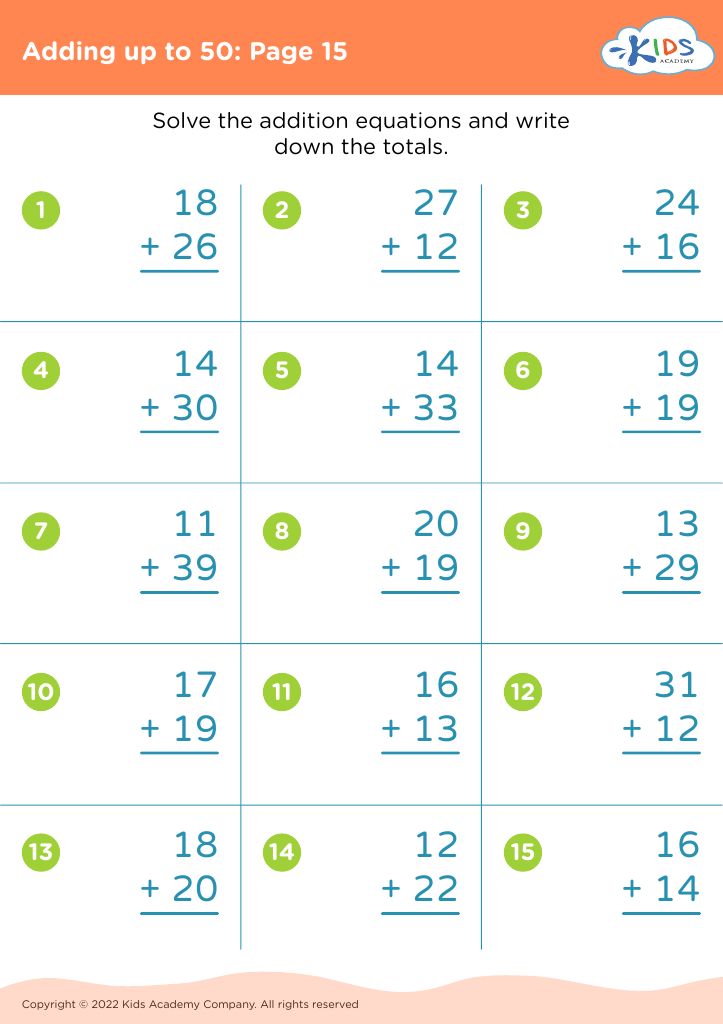
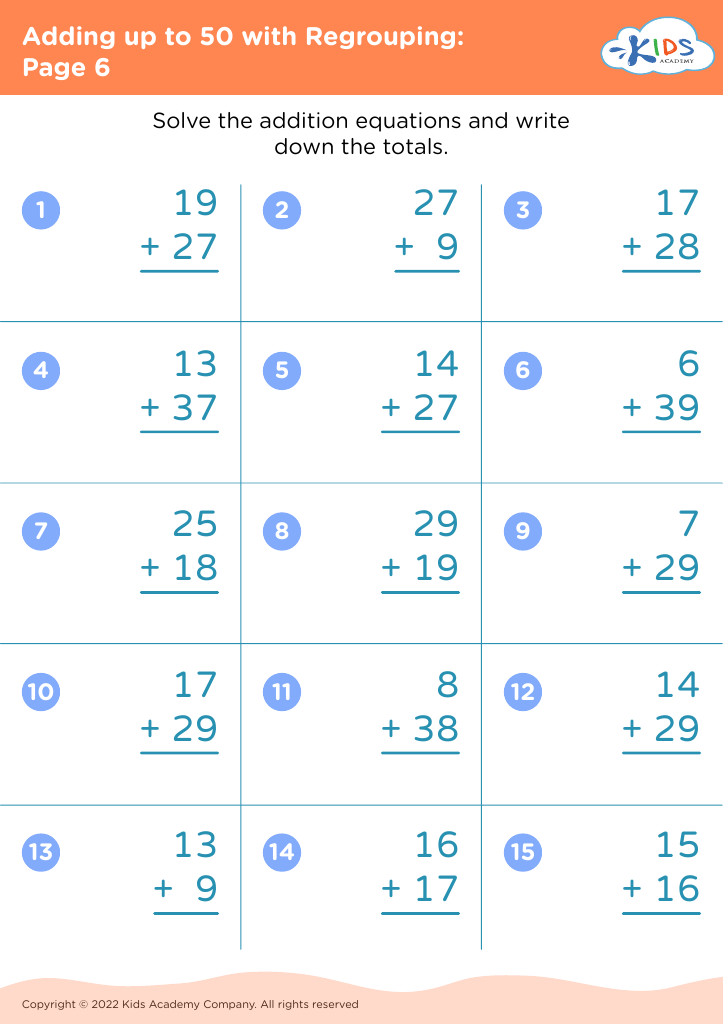
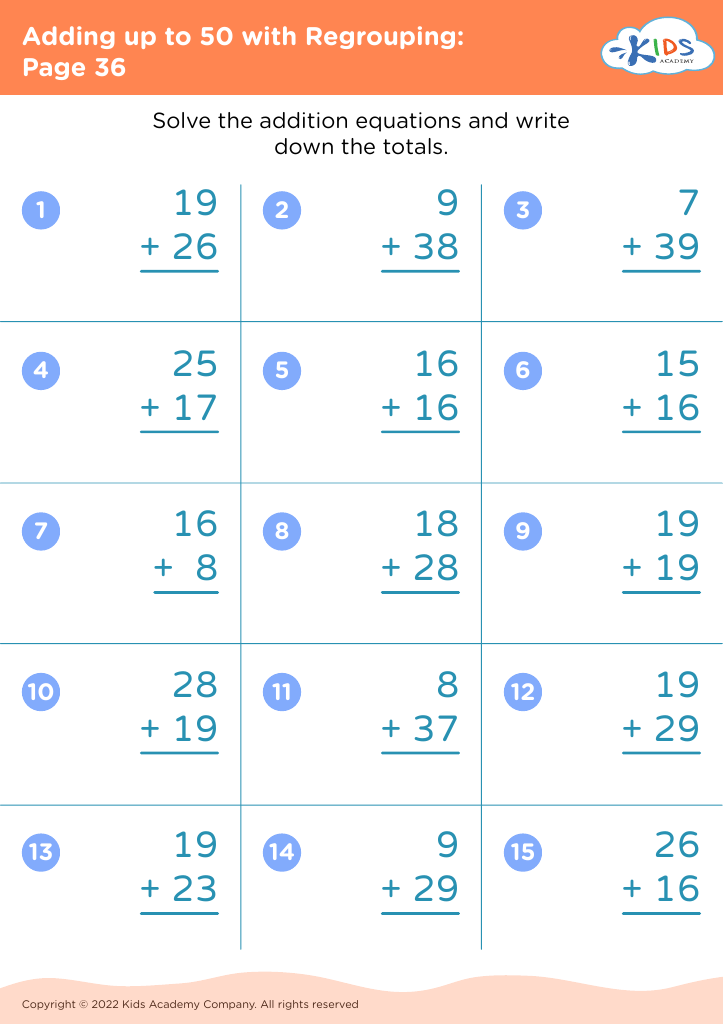
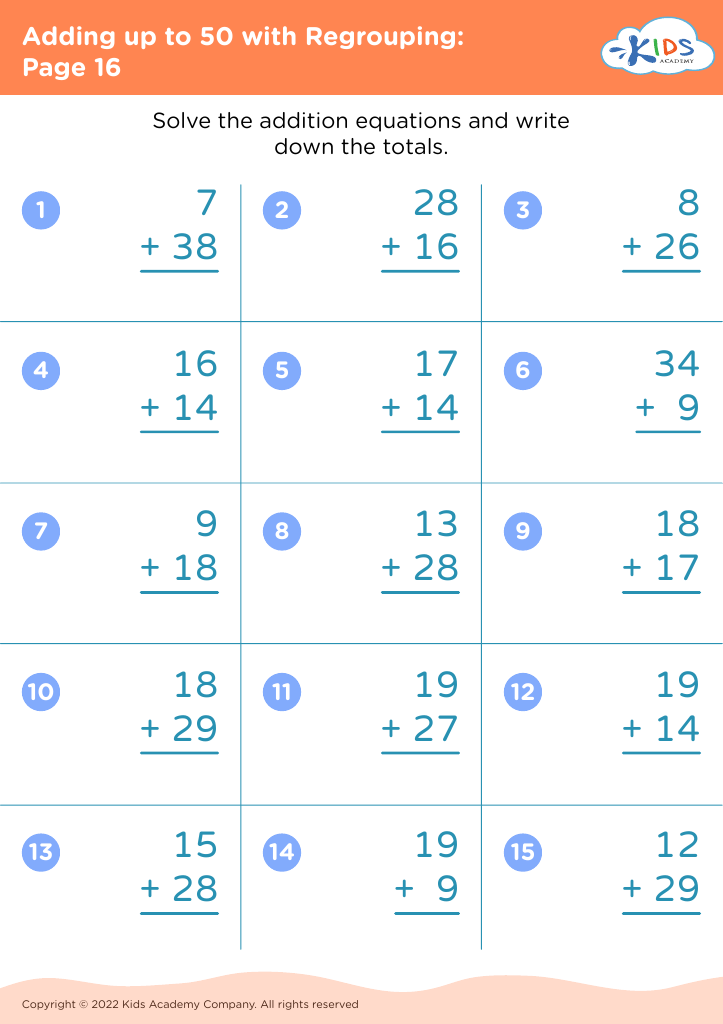
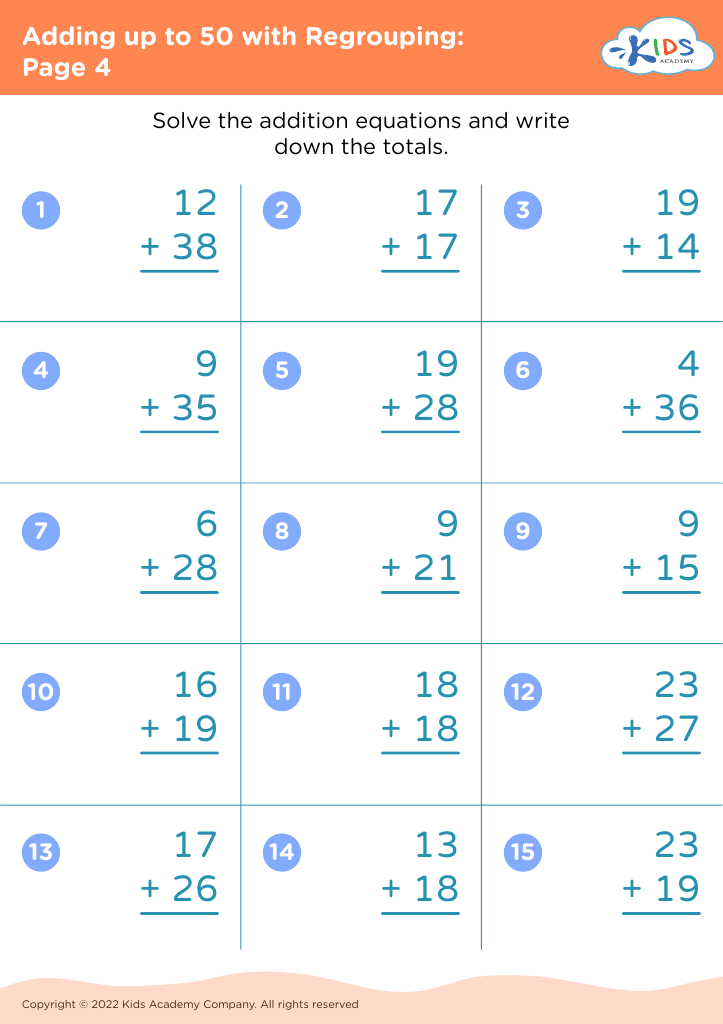
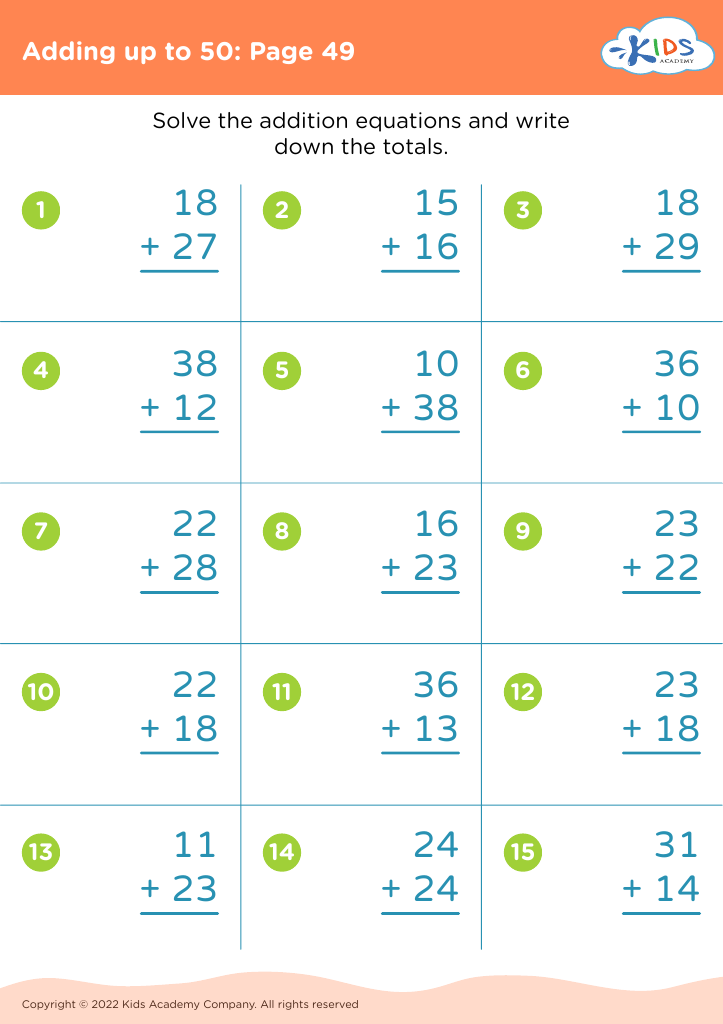




Comparing fractions and understanding their relationships is a vital skill for 7-year-olds, as it lays the groundwork for more advanced mathematical concepts. When students learn to compare fractions, they begin to develop critical thinking and problem-solving skills that are essential in everyday life. For educators and parents, introducing comparing fractions adds up to 50 helps deepen a child's comprehension of number sense and proportion.
Engaging with fractions enriches a student's mathematical vocabulary and fosters confidence in handling numbers. When fractions add up to a whole, children learn the importance of parts making a whole, which parallels real-world situations like sharing food or divided quantities.
Moreover, this foundational knowledge is not isolated; it’s applicable in various subjects such as cooking, budgeting, and even in science experiments, where measurements are crucial. Parents and teachers should take an active interest in these concepts, as they support children in making connections across different contexts. Furthermore, encouraging a playful exploration of fractions can inspire a lasting interest in mathematics, helping children see it as a fun and applicable tool, rather than just a set of rules. Ultimately, the skills developed through comparing fractions form essential building blocks for future academic success.








