Fraction Addition Adding up to 50 Worksheets for 7-Year-Olds
5 filtered results
-
From - To
Our "Fraction Addition Adding up to 50 Worksheets for 7-Year-Olds" are designed to make learning fun and effective! These engaging worksheets help young learners practice adding fractions with sums up to 50, enhancing their math skills in a playful and interactive way. Created specifically for 7-year-olds, each worksheet features colorful illustrations and easy-to-follow instructions that make complex concepts simple to understand. By working through these worksheets, children will build a solid foundation in fraction addition while boosting their confidence and love for math. Perfect for classroom activities or extra practice at home!
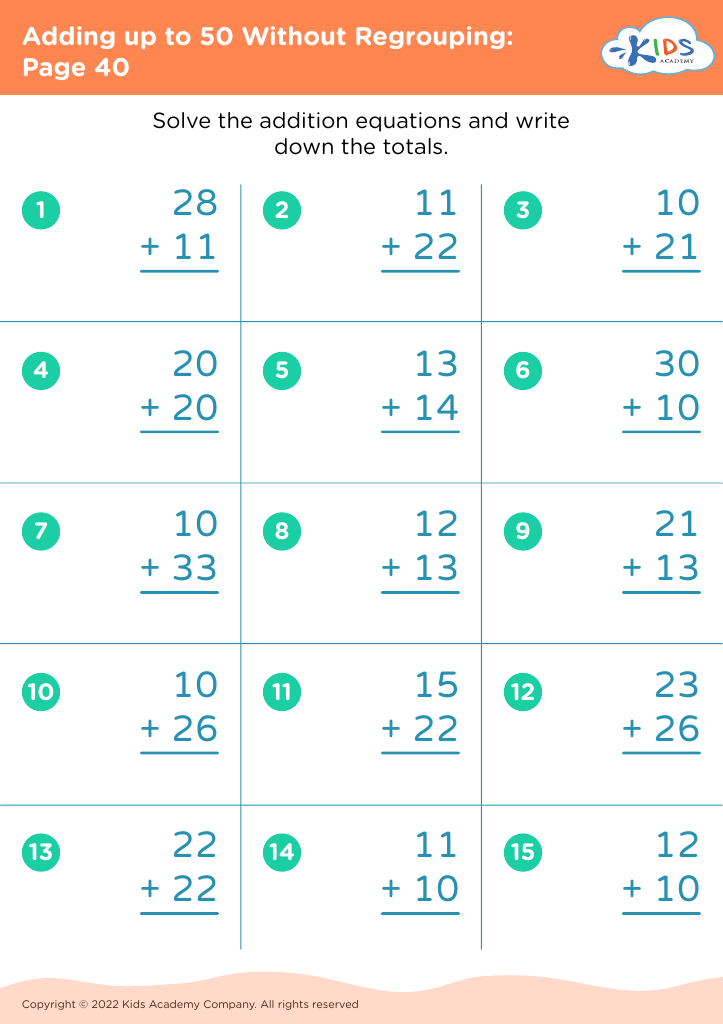
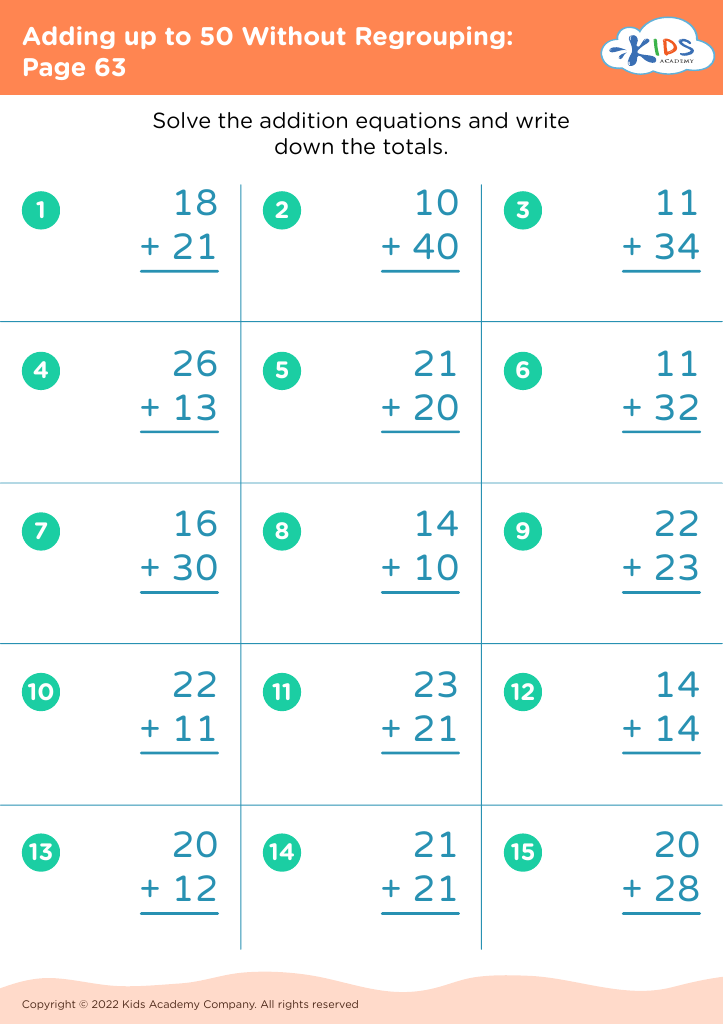
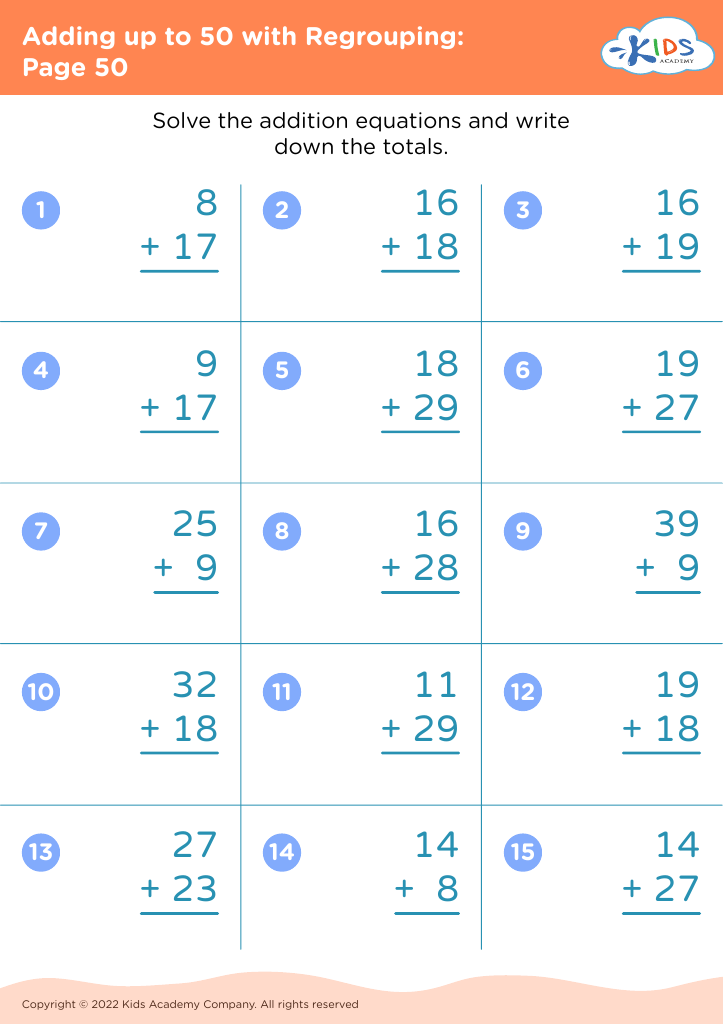
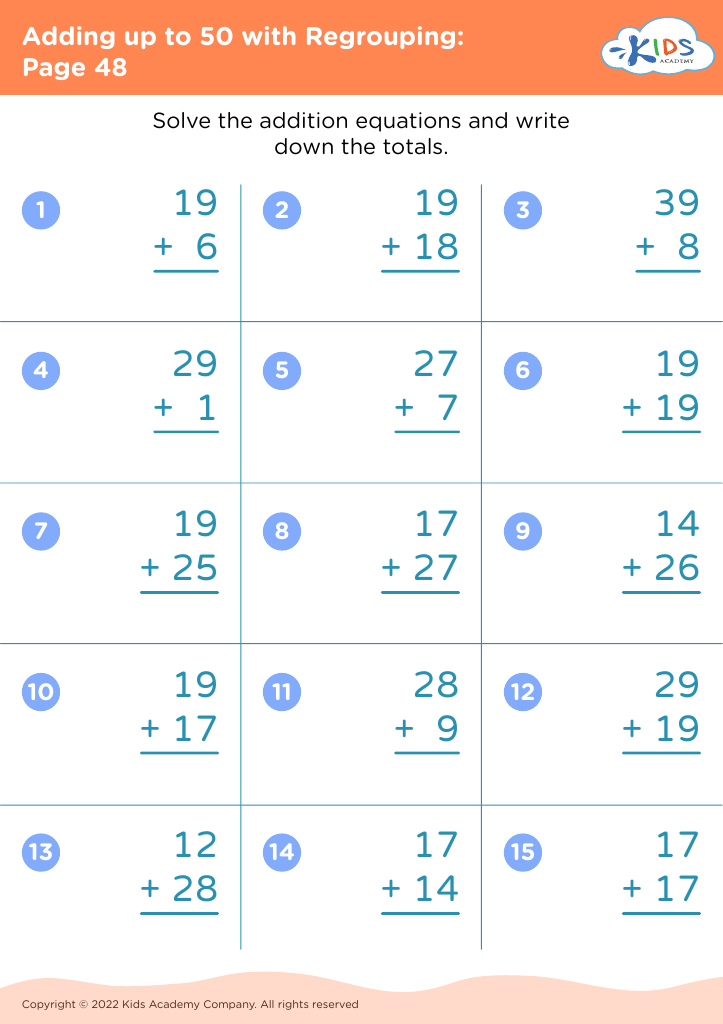
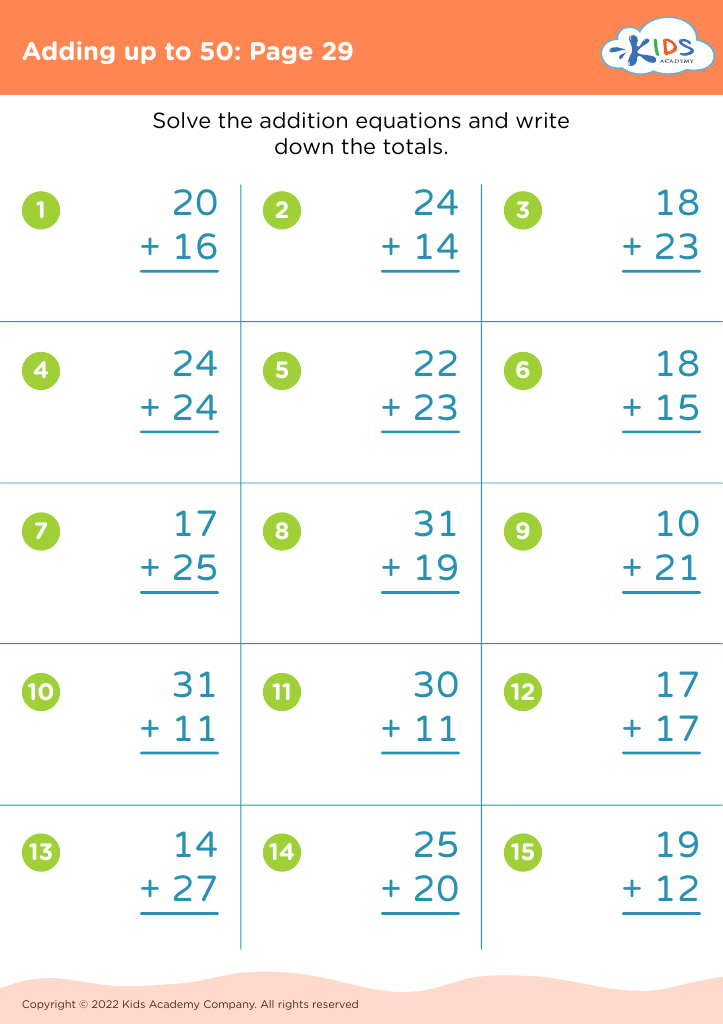




It's crucial for parents and teachers to care about fraction addition for 7-year-olds because mastering this concept lays the foundation for future mathematical understanding and cognitive development. At this age, children are transitioning from simple arithmetic to more complex operations, and learning how to add fractions adds an essential layer to their numerical comprehension. This skill not only enhances their problem-solving abilities but also strengthens their understanding of the relationships between numbers.
Fractions are a key component of everyday life; they help in understanding concepts like time, measurements, and proportions. For instance, a child who can add fractions is better equipped to follow recipes, divide treats among friends fairly, and understand time intervals. Furthermore, early exposure to fraction addition fosters a positive attitude toward math. Children who grasp these concepts early on are less likely to experience "math anxiety" and more likely to enjoy academic success in this subject.
Teachers and parents play a critical role by providing the right resources, support, and encouragement. Utilizing visual aids, interactive activities, and practical examples makes the learning process engaging and effective. By investing effort at this stage, adults can ensure children build a strong, positive mathematical foundation, equipping them for various life skills and academic challenges ahead.








