Fraction comparison Adding up to 50 Worksheets for 7-Year-Olds
7 filtered results
-
From - To
Boost your child's math skills with our engaging "Fraction Comparison Adding up to 50 Worksheets" designed specifically for 7-year-olds! These worksheets focus on helping children compare fractions and improve their understanding of numerical relationships. Each colorful and interactive activity guides young learners step-by-step, making complex concepts simple and fun. Perfect for reinforcing classroom lessons, our worksheets provide the practice needed to master comparison and addition. Empower your child to excel in math with these enjoyable, educational tools that build a strong numerical foundation. Explore our collection and watch your child's confidence and skills soar!
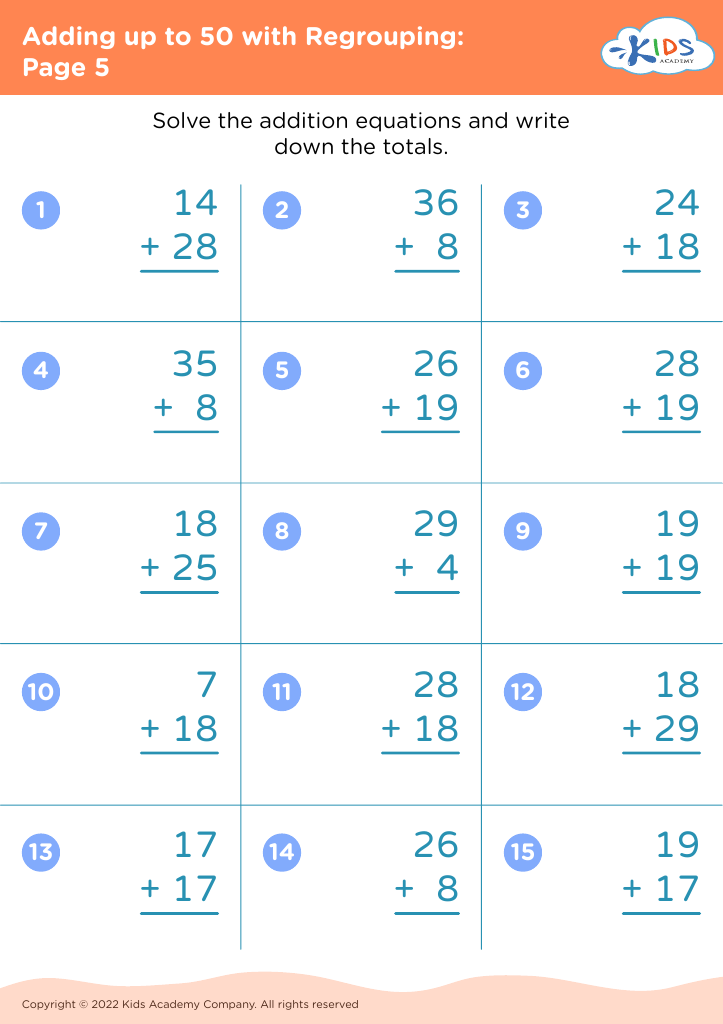
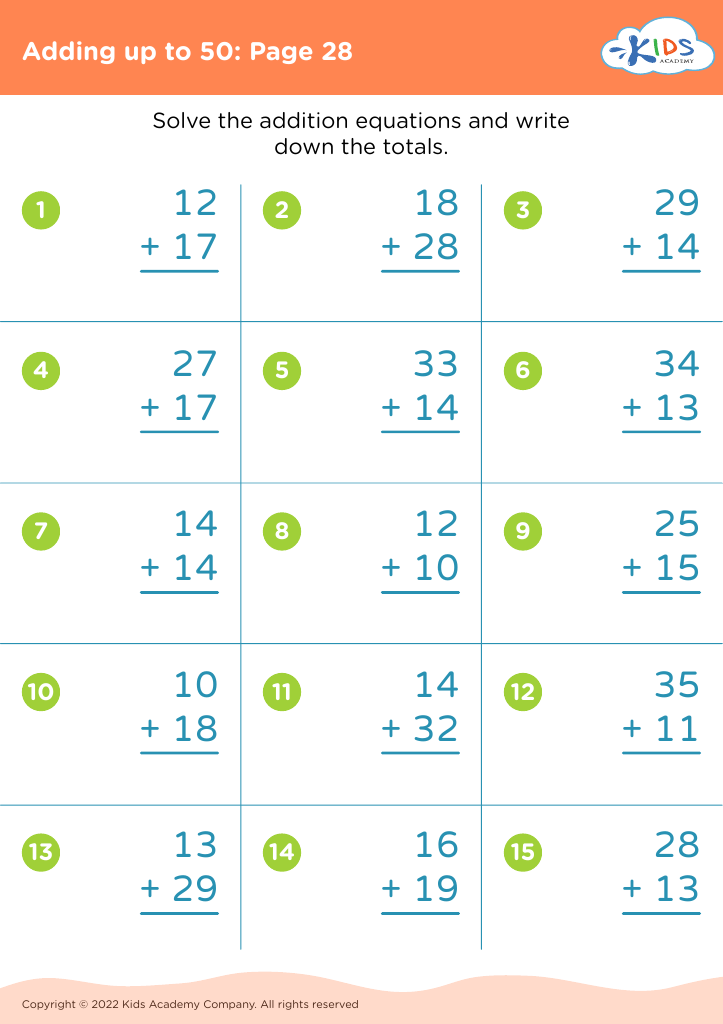
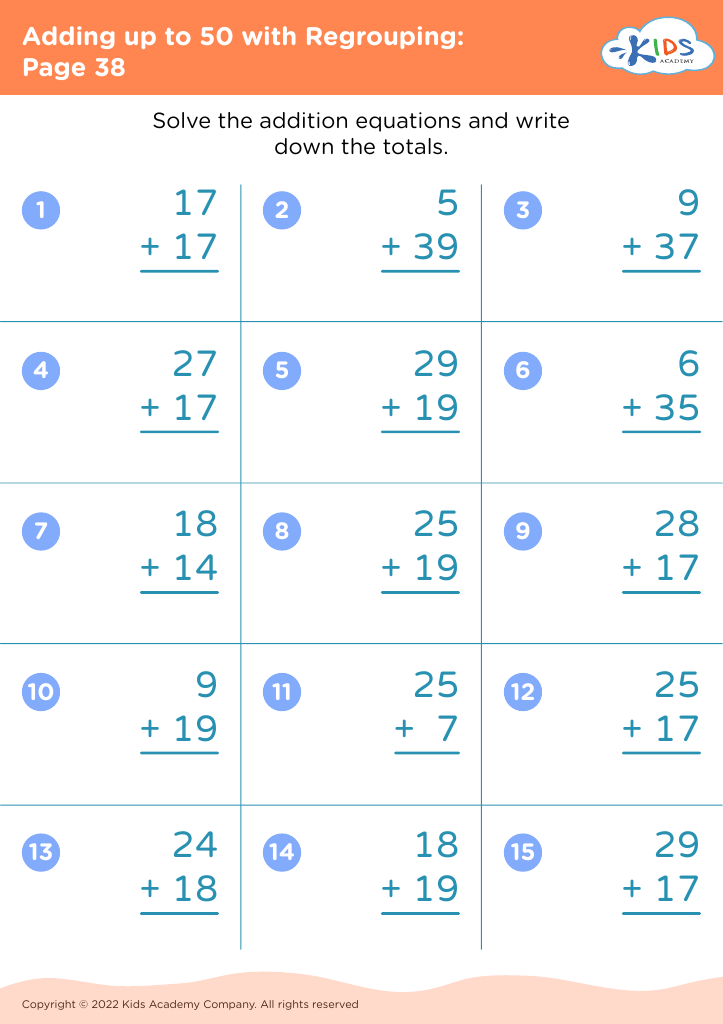
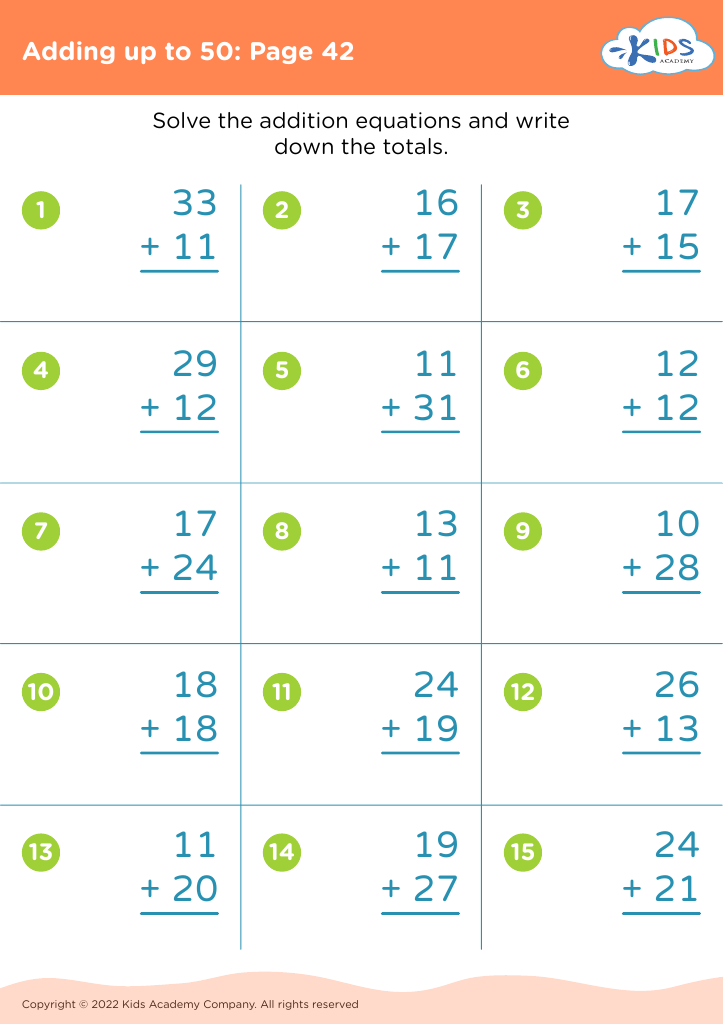
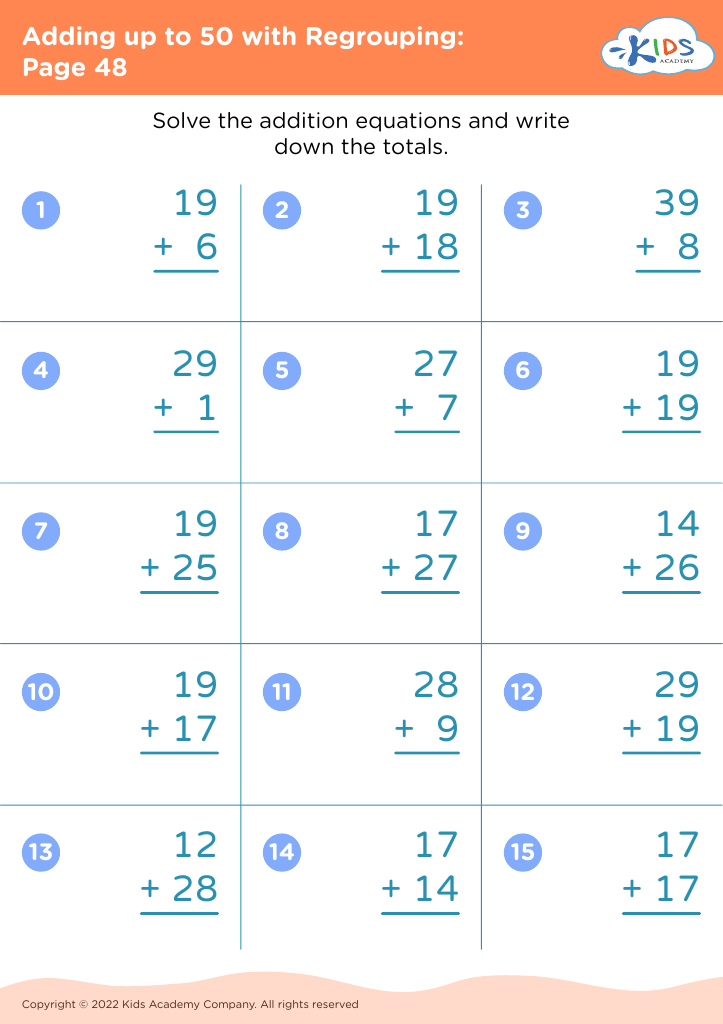
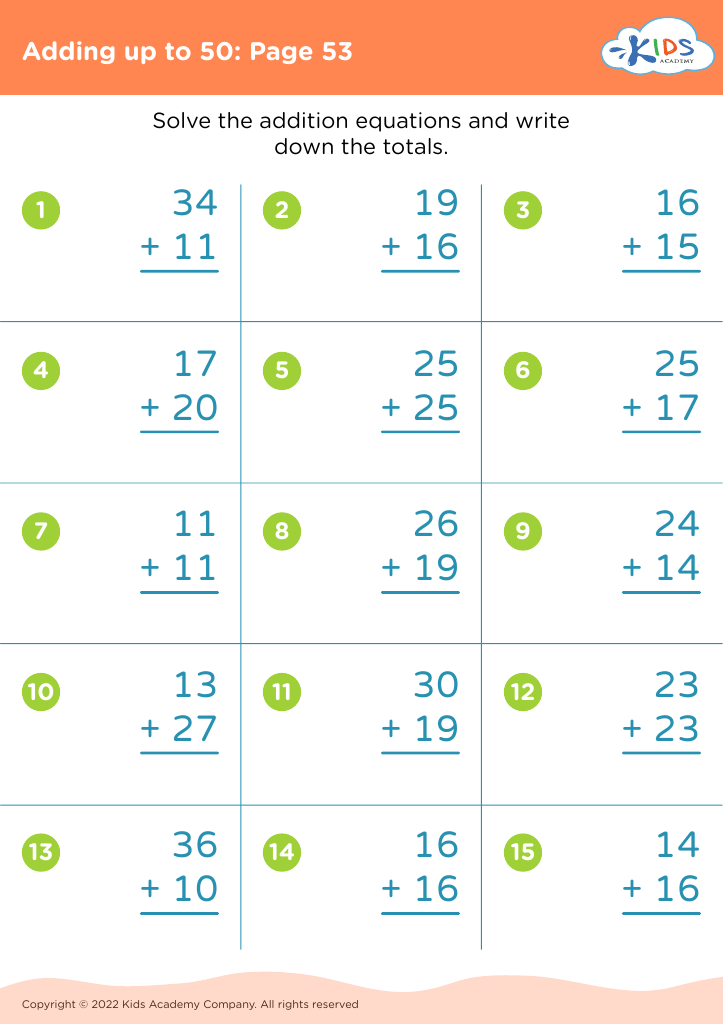
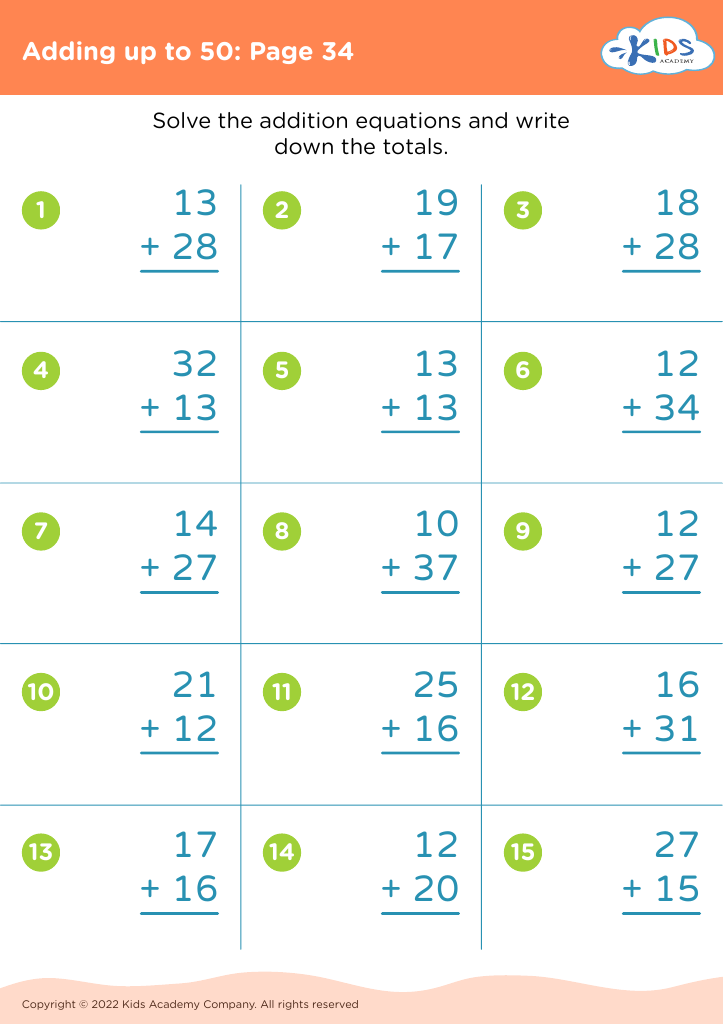




Fraction comparison and addition up to 50 are foundational skills for 7-year-olds that play a crucial role in their overall math development and academic success. At this age, children are beginning to grasp more complex mathematical concepts, and mastering these early skills sets the stage for more advanced topics they will encounter later, such as percentages, ratios, and algebra.
Understanding how to compare fractions helps children develop a sense of numerical relationships and spatial reasoning. It also introduces them to the idea that different fractions can represent the same value, fostering a more flexible understanding of numbers. For instance, recognizing that 1/2 is the same as 2/4 builds a solid foundation for equivalency concepts.
Adding up to 50, on the other hand, challenges students to become comfortable with larger numbers, preparing them for future addition and subtraction tasks involving higher numerical values. This skill is not only essential for math but also for daily activities, such as handling money and telling time.
Moreover, engaging in these practices enhances problem-solving abilities and critical thinking. It helps children become more confident in their math abilities, boosting self-esteem and reducing math anxiety. Parents and teachers play a pivotal role in ensuring these foundational skills are understood and applied correctly, paving the way for academic success and a lifelong appreciation of mathematics.








