Fraction identification Adding up to 50 Worksheets for 7-Year-Olds
3 filtered results
-
From - To
Looking for engaging worksheets to help your 7-year-old master fractions while practicing addition up to 50? Our "Fraction Identification Adding up to 50 Worksheets" offer an exciting mix of problems designed to develop essential math skills. These worksheets guide young learners through identifying and working with fractions, reinforcing their understanding through practical addition exercises. Perfect for both classroom and home use, these printable activities ensure children build a solid foundation in fractions and addition by making learning fun and interactive. Support your child's math journey with our expertly crafted worksheets that blend skill-building with enjoyable practice.
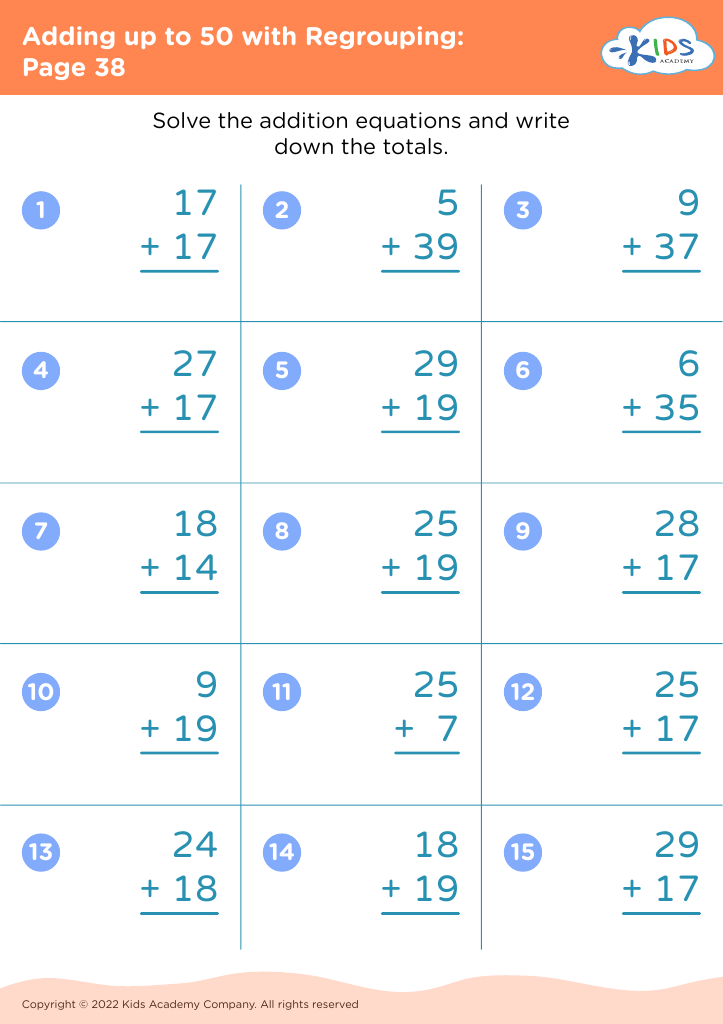
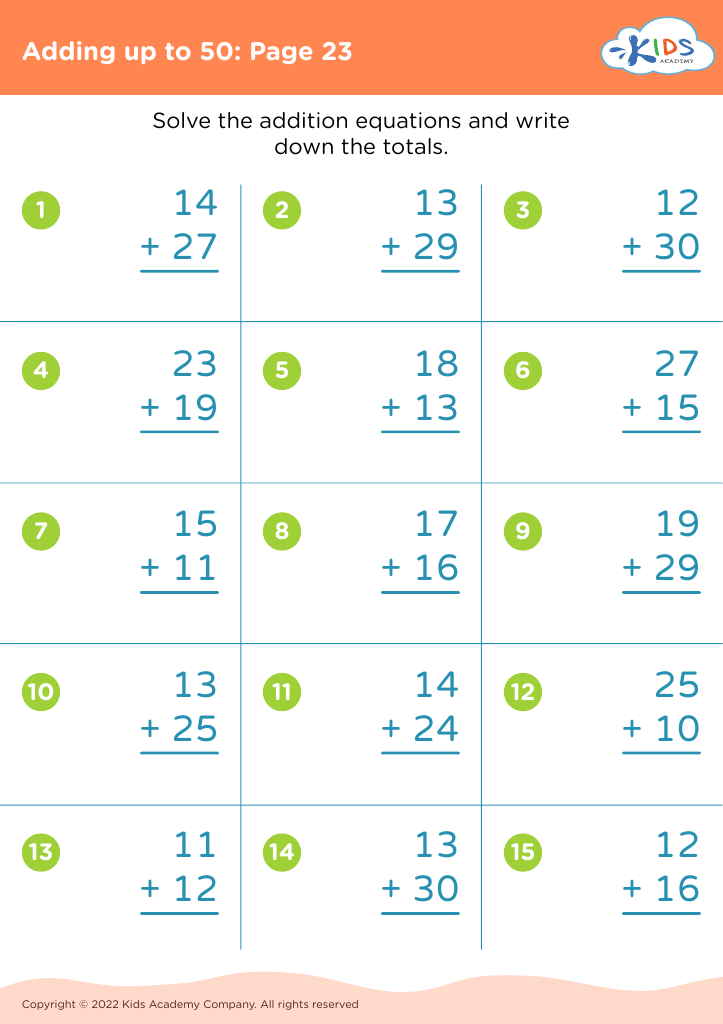
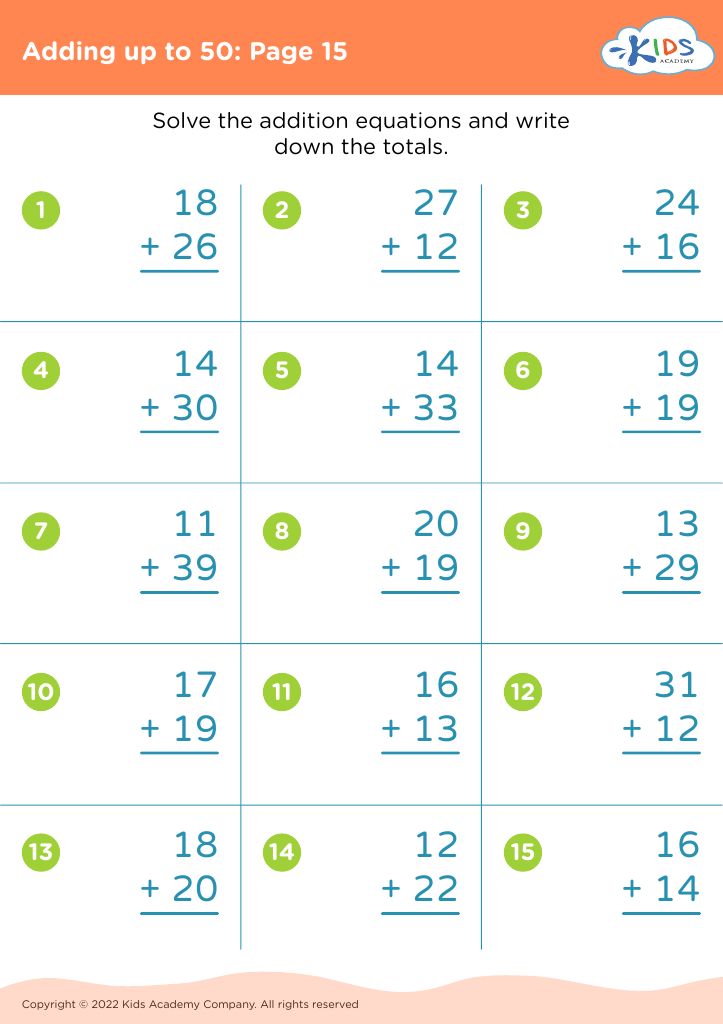




Understanding fractions and their applications is critical for early mathematical development, especially for 7-year-olds. At this age, children's cognitive skills are expanding, allowing them to grasp more complex mathematical concepts. Introducing fraction identification and addition up to 50 can greatly benefit their academic progress in several ways.
Firstly, learning fractions cultivates a strong foundation for more advanced math skills. As children master these basic concepts, they are better prepared to handle more complicated arithmetic, such as multiplication and division involving fractions. It fosters a sense of numerical awareness and proportional reasoning that is essential for problem-solving.
Additionally, fraction knowledge enhances everyday life skills. Understanding how to divide a pizza into equal parts or measuring ingredients accurately while cooking are practical applications that children can relate to. This relevance makes learning more engaging and meaningful, further reinforcing their math skills.
Furthermore, lifelong skills in handling fractions can aid in various fields such as science, engineering, and even finances. Equip children early with these tools, and conversations on complex topics in the future will be smoother and more intuitive.
Finally, engaging in such exercises boosts confidence and fosters a positive attitude toward mathematics. When parents and teachers invest in this, they’re nurturing a generation that views math not as a hurdle but as a pathway to achievement and understanding in numerous domains.








