Improve number recognition Adding up to 50 Worksheets for 7-Year-Olds
5 filtered results
-
From - To
Boost your child's number recognition skills with our engaging "Improve Number Recognition: Adding Up to 50 Worksheets" designed specifically for 7-year-olds. These interactive worksheets help young learners reinforce their understanding of numbers while practicing addition up to 50. Each activity combines fun exercises with essential math concepts, ensuring a balanced learning experience. Ideal for both home and classroom settings, our resources promote independent learning and boost confidence in young mathematicians. Download now and provide your child with the tools to excel in number recognition and addition, paving the way for future math success!
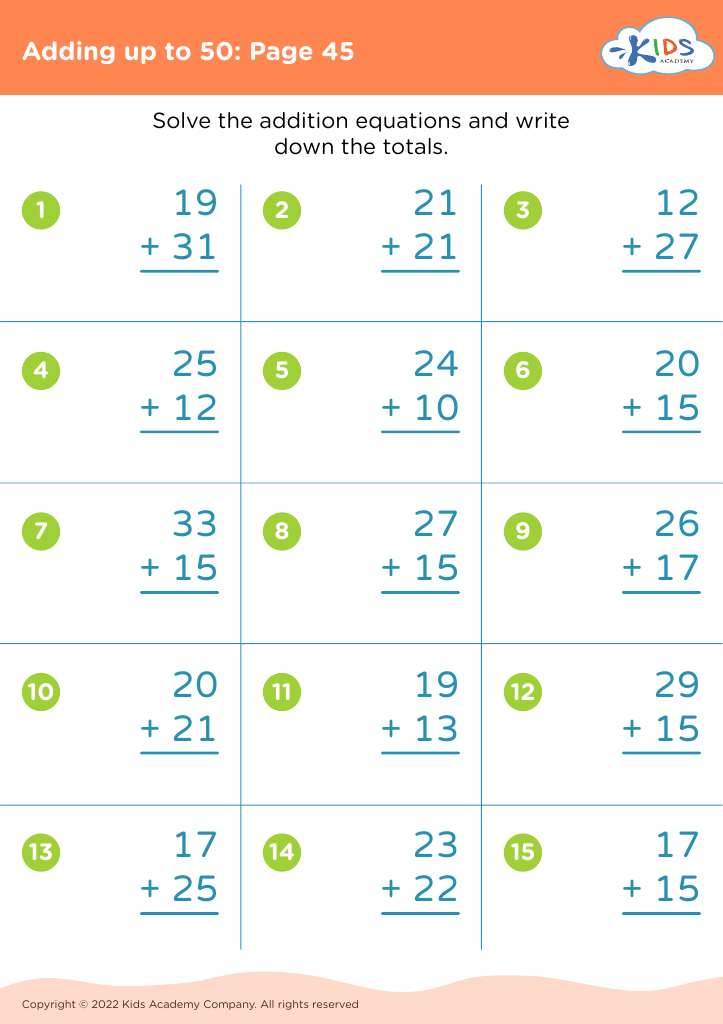
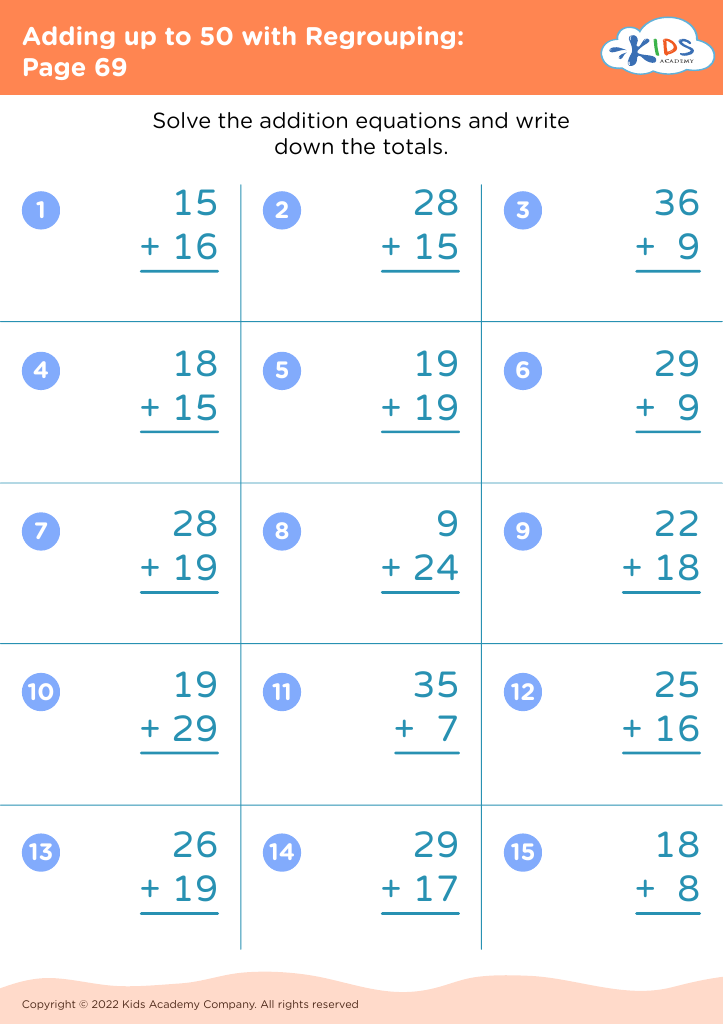
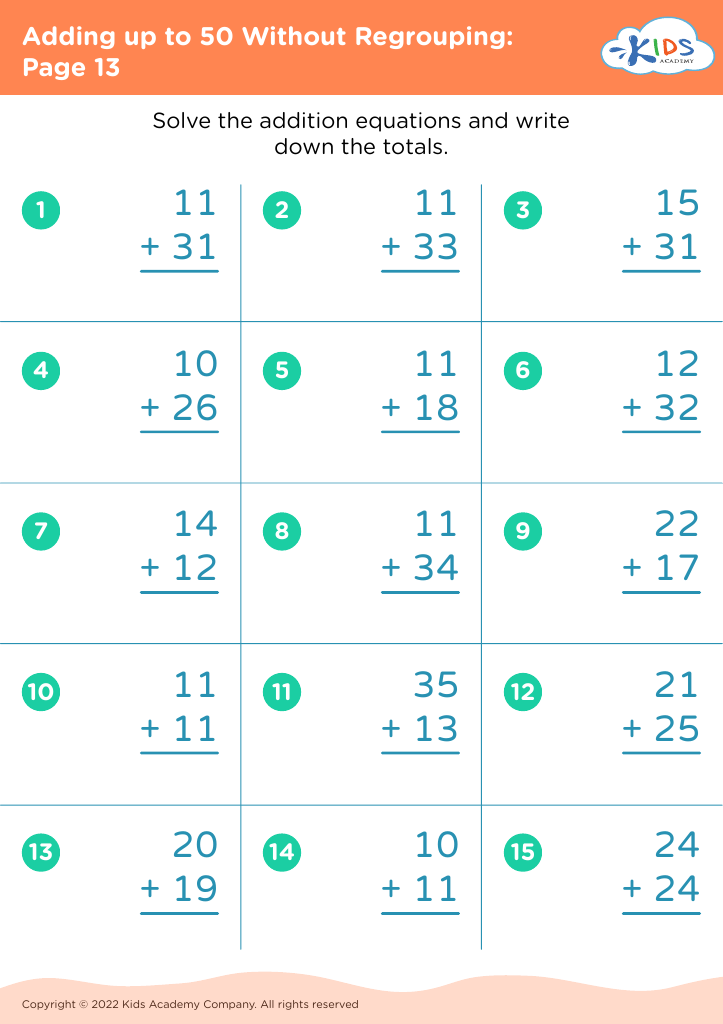
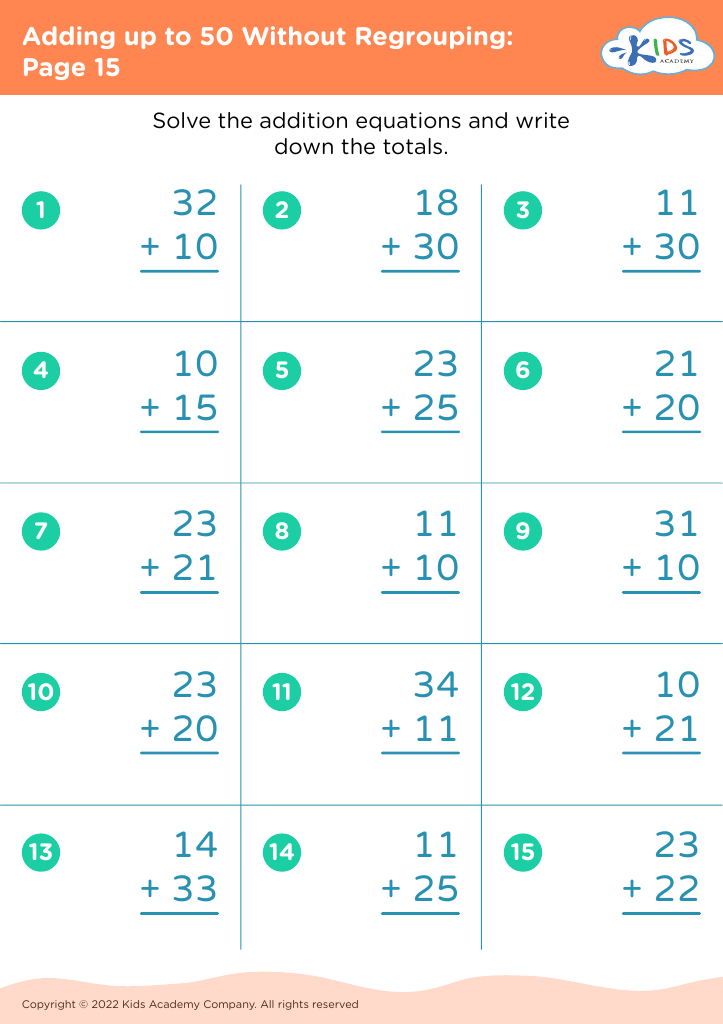
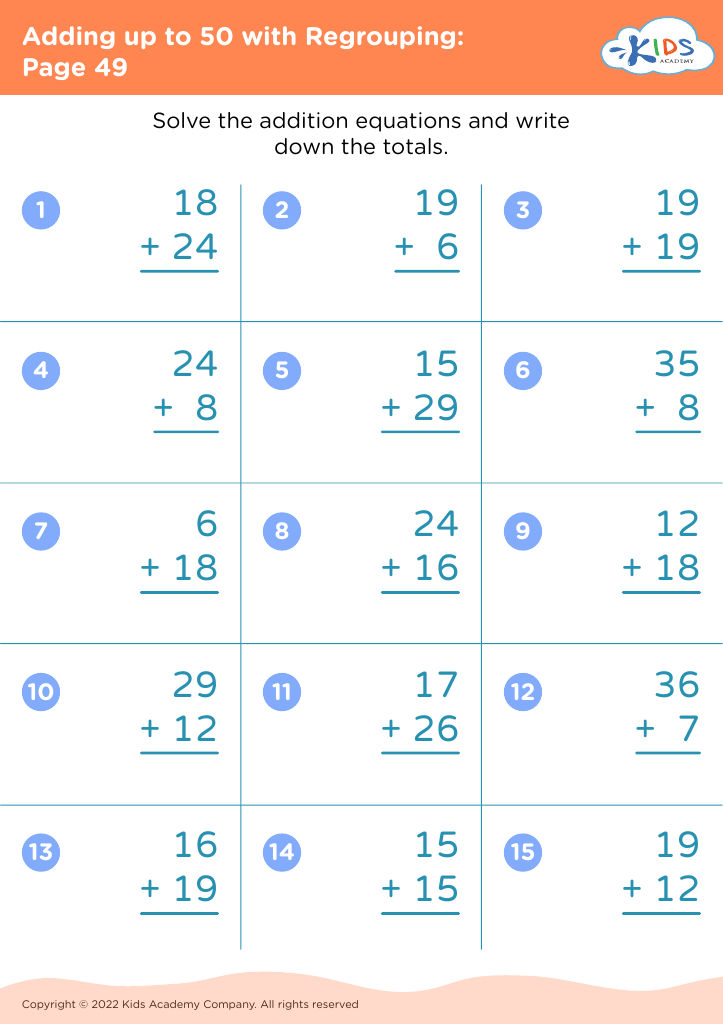




Improving number recognition and addition skills up to 50 is crucial for 7-year-olds, as these abilities form the foundation for future mathematical understanding. At this age, children are developing their cognitive skills, and mastering basic arithmetic is essential for fostering confidence and competence in mathematics. Proficient number recognition enables children to easily identify and manipulate numbers, which is integral for problem-solving and higher-order thinking.
Parents and teachers should care about this skill enhancement for several reasons. Firstly, a strong grasp of numbers enables children to engage more effectively in everyday situations, such as managing money or telling time, which are essential life skills. Secondly, proficient addition skills set the stage for more advanced mathematical concepts, including subtraction, multiplication, and eventually, algebra.
Moreover, early math skills are closely linked to academic success and can influence children's attitudes toward math. A positive experience with numbers encourages a lifelong love for math and learning. By focusing on improving number recognition and the ability to add up to 50, parents and teachers can help cultivate a strong mathematical foundation that will support children's education and personal growth throughout their lives.








