Logical thinking Adding up to 50 Worksheets for 7-Year-Olds
3 filtered results
-
From - To
Our "Logical Thinking Adding up to 50 Worksheets for 7-Year-Olds" are expertly designed to enhance both math skills and critical thinking. These engaging, age-appropriate worksheets help young learners practice addition up to 50 while fostering logical reasoning and problem-solving abilities. Each worksheet features fun, interactive problems that keep kids motivated and excited about learning. Perfect for classroom or at-home practice, these worksheets align with educational standards and are an excellent resource for reinforcing fundamental math concepts. Give your child the tools they need to succeed with our thoughtfully crafted math resources.
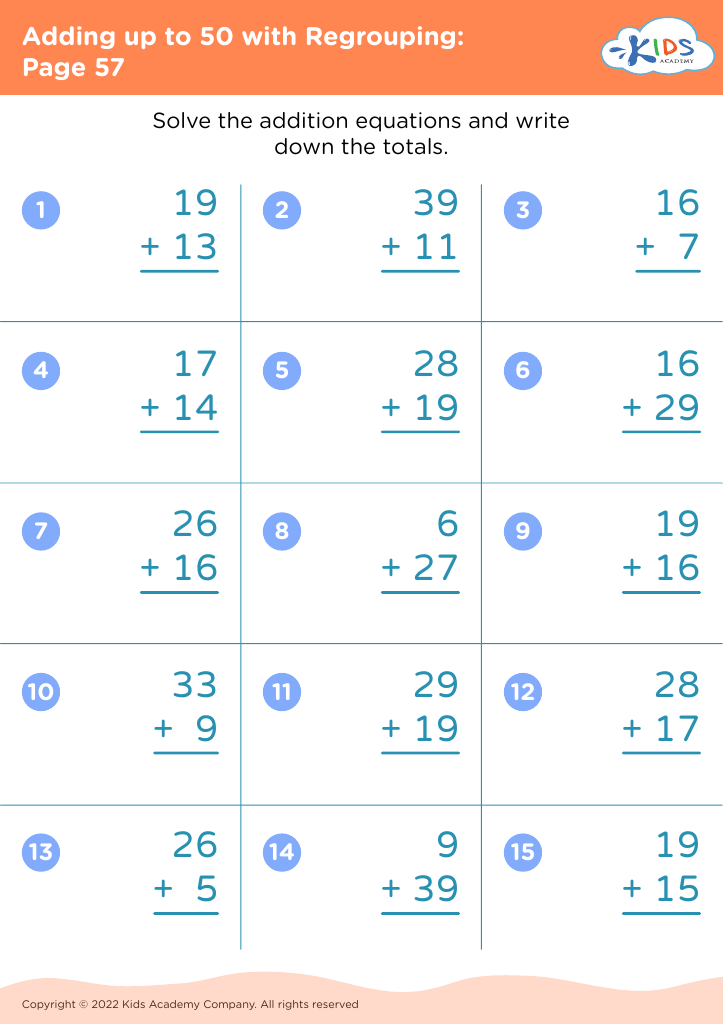
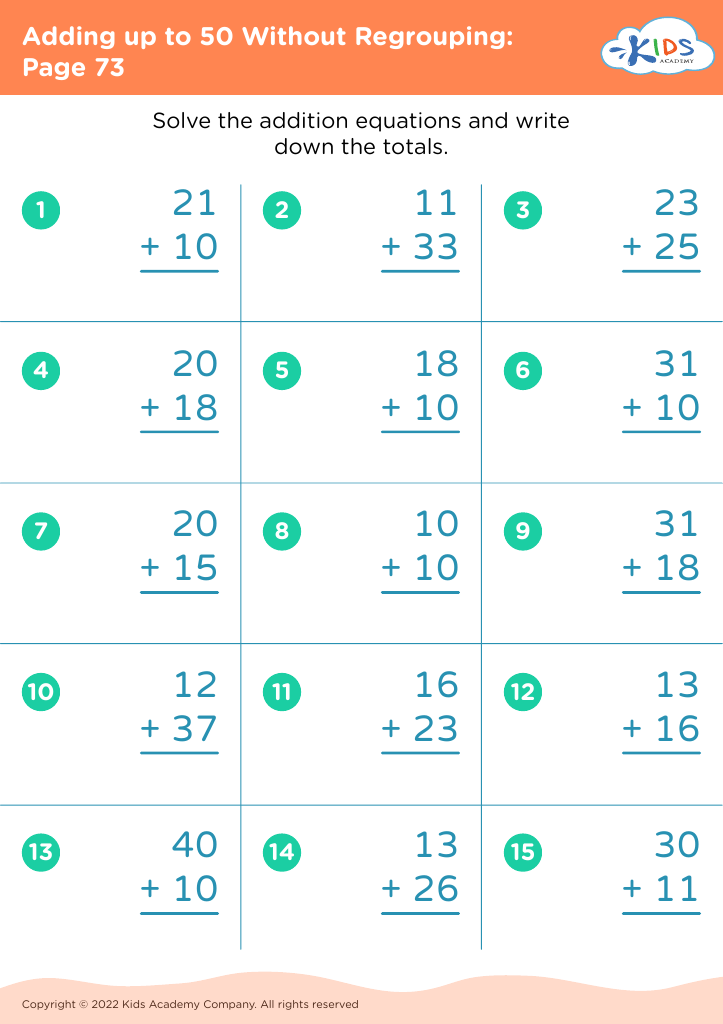
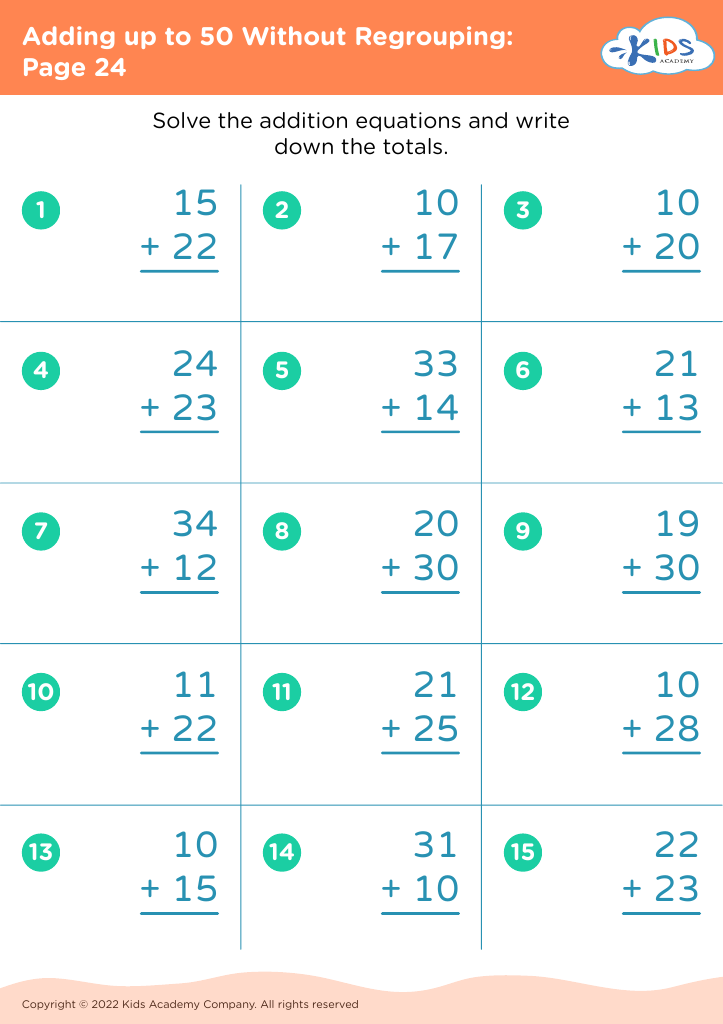




Logical thinking and the ability to add up to 50 are crucial skills for 7-year-olds, and there are several reasons why parents and teachers should care.
First, mastering addition up to 50 lays the foundation for more complex mathematical concepts. Just like building blocks, these early skills are essential for tackling future topics such as subtraction, multiplication, and division. If children struggle at this stage, they may find it challenging to keep up as the curriculum advances.
Additionally, logical thinking skills extend far beyond math class. They aid in problem-solving, decision-making, and understanding cause and effect—all critical aspects of cognitive development. For instance, figuring out how many more pieces are needed to total 50 encourages children to think critically and make connections between numbers, fostering a deeper understanding of mathematical concepts.
Moreover, developing strong mathematical and logical thinking skills boosts confidence and academic performance. When children grasp these basic concepts, they are more likely to participate actively in class, enjoy learning, and maintain a positive attitude toward school.
In summary, prioritizing logical thinking and addition skills up to 50 at an early age sets the stage for academic success and equips children with essential problem-solving abilities that will benefit them throughout their lives.








