Mathematical reasoning Adding up to 50 Worksheets for 7-Year-Olds
4 filtered results
-
From - To
Discover our engaging "Mathematical Reasoning: Adding Up to 50 Worksheets" designed specifically for 7-year-olds! These interactive worksheets help young learners develop essential math skills while enhancing their reasoning abilities. Through a variety of fun exercises, children will practice addition problems that sum up to 50, reinforcing their understanding of numbers and fostering critical thinking. Ideal for classroom use or at-home learning, our worksheets cater to different skill levels, ensuring every child can thrive. Encourage a love for math while building confidence with these thoughtfully crafted worksheets that make learning enjoyable and effective. Start exploring today!
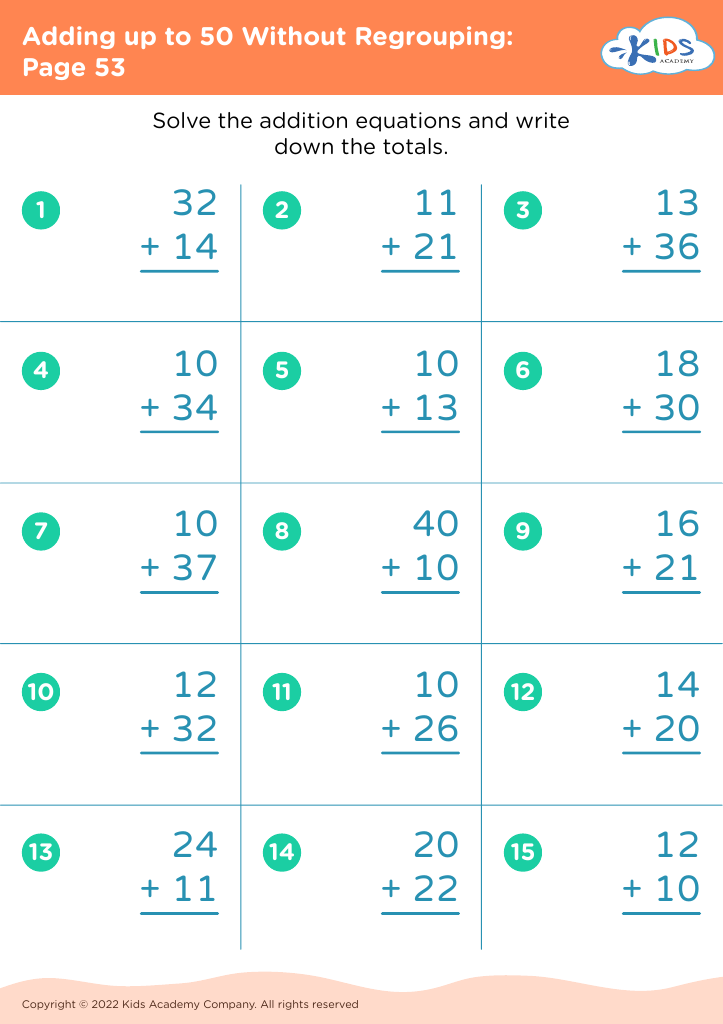
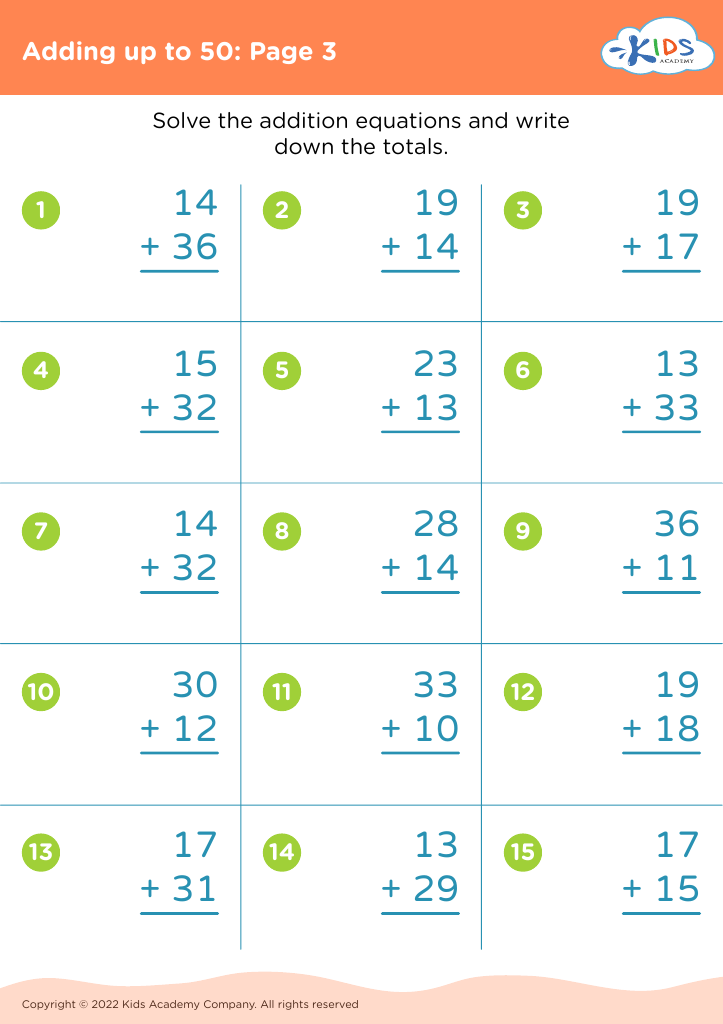
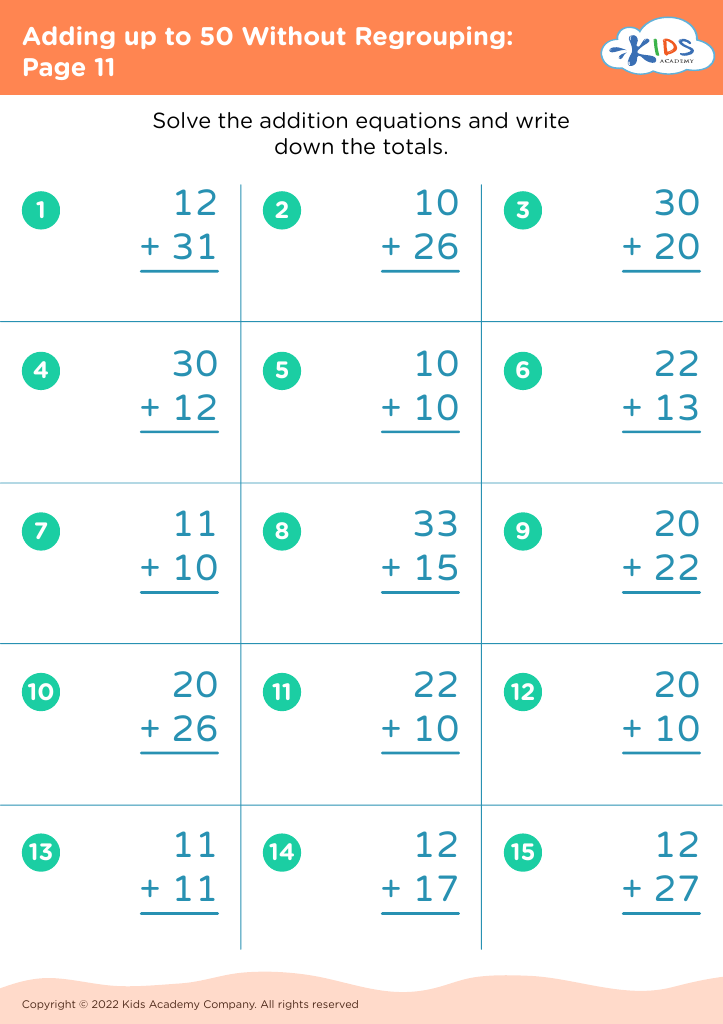
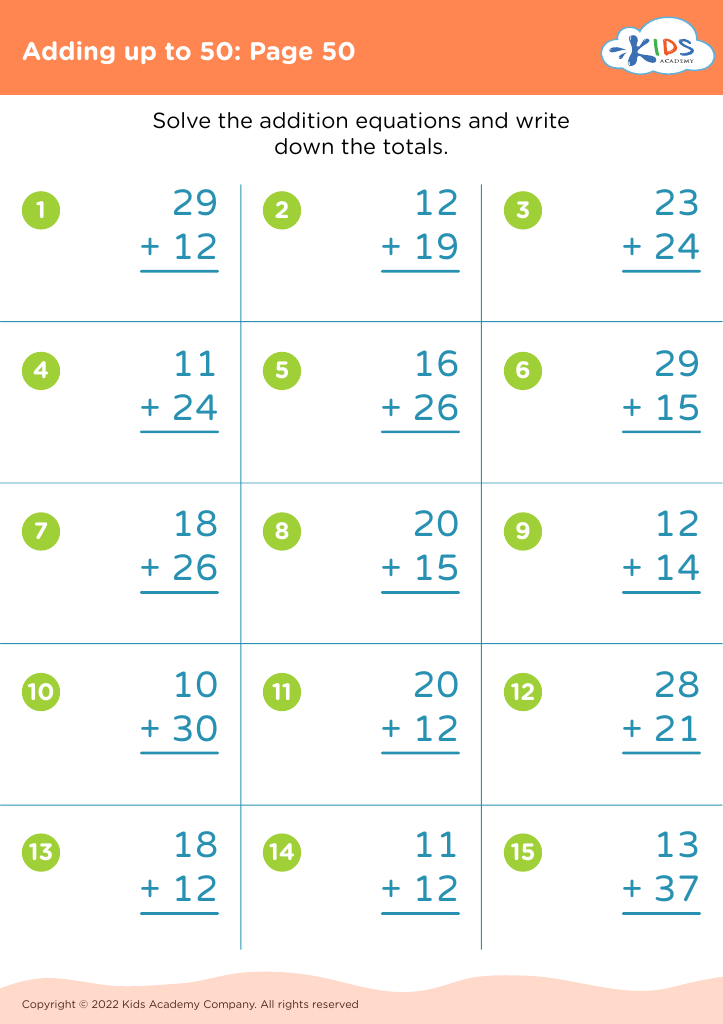




Mathematical reasoning is crucial for 7-year-olds learning to add up to 50, as it lays the foundation for critical thinking and problem-solving skills essential in their academic journey and everyday life. At this age, children develop cognitive abilities that allow them to understand numbers and functions beyond rote memorization.
When parents and teachers prioritize mathematical reasoning, they enhance a child's ability to recognize patterns, make connections, and apply strategies in real-world situations. By mastering addition skills and understanding the concept of number relationships, children not only achieve fluency in adding up to 50, but also build confidence in their mathematical abilities.
Furthermore, engaging young learners through problem-solving activities promotes a positive attitude towards math, making it less intimidating as they progress through the school years. Yet, challenges arise in daily experiences that require mathematical reasoning, from managing finances to making calculations in science and technology.
Incorporating play-based and interactive approaches can enrich this learning process, ensuring that children not only know how to add but understand why their methods work. Thus, fostering mathematical reasoning is vital for equipping children with skills they will use throughout life.








