Recognizing equivalent fractions Adding up to 50 Worksheets for 7-Year-Olds
3 filtered results
-
From - To
Enhance your child’s mathematical journey with our "Recognizing Equivalent Fractions Adding up to 50" worksheets, designed specifically for 7-year-olds! These engaging and interactive worksheets help young learners grasp the concept of equivalent fractions while practicing addition skills with sums up to 50. Each activity is perfect for reinforcing fraction recognition in a fun and informative way, promoting critical thinking and problem-solving. Ideal for both homeschooling and classroom settings, these worksheets make learning fractions enjoyable and effective. Watch your child build confidence in their math abilities as they learn and practice at their own pace. Download now and get started!
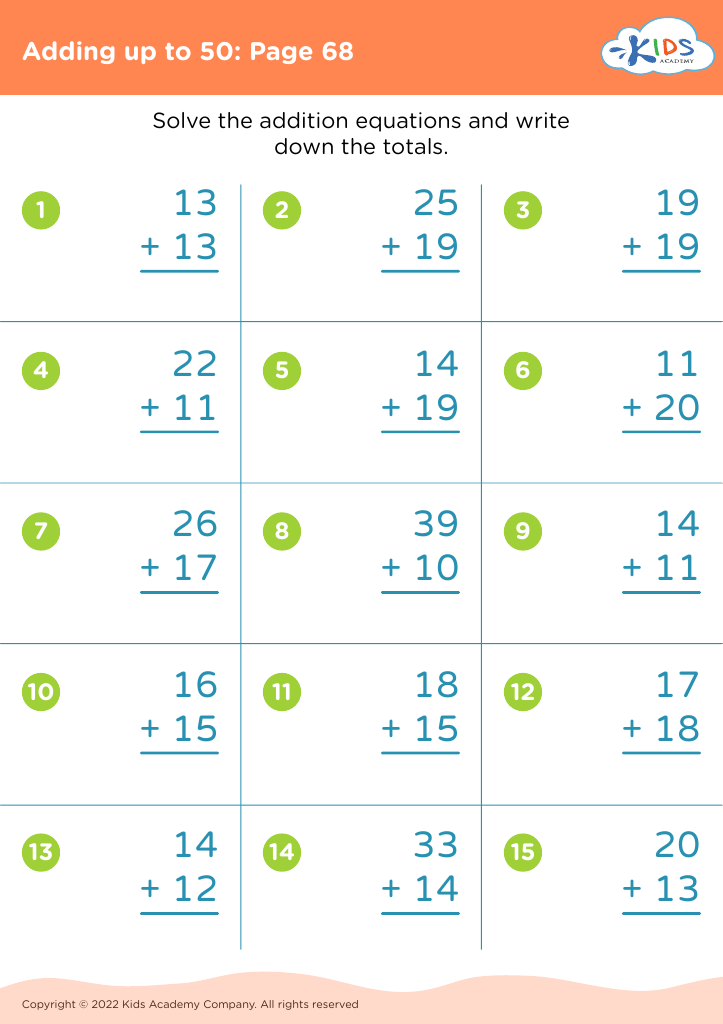
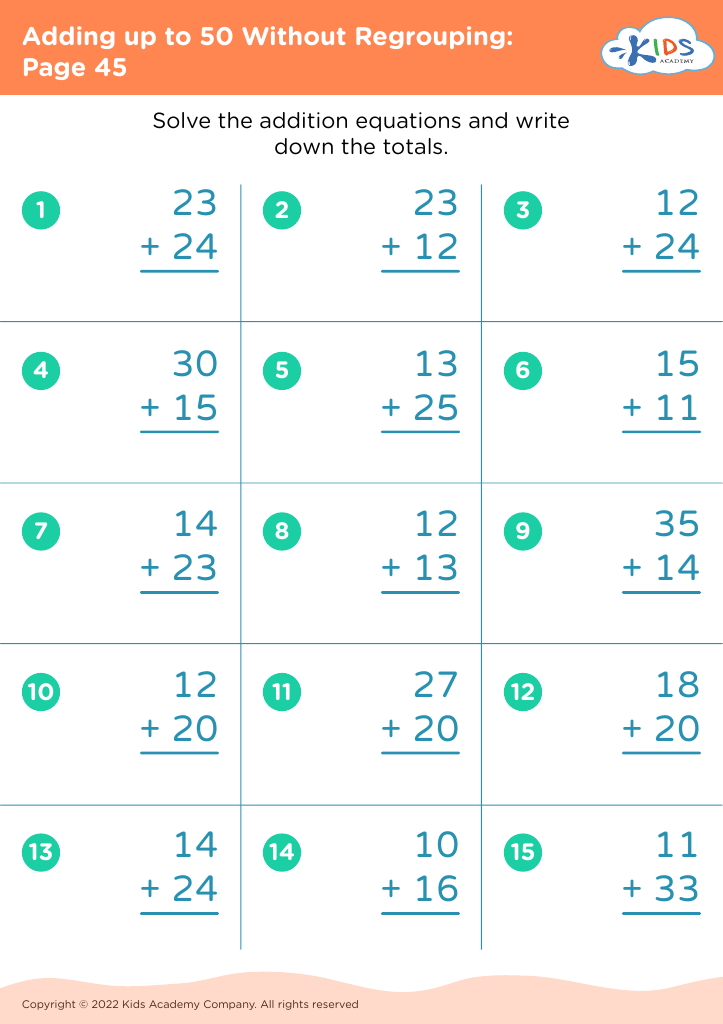
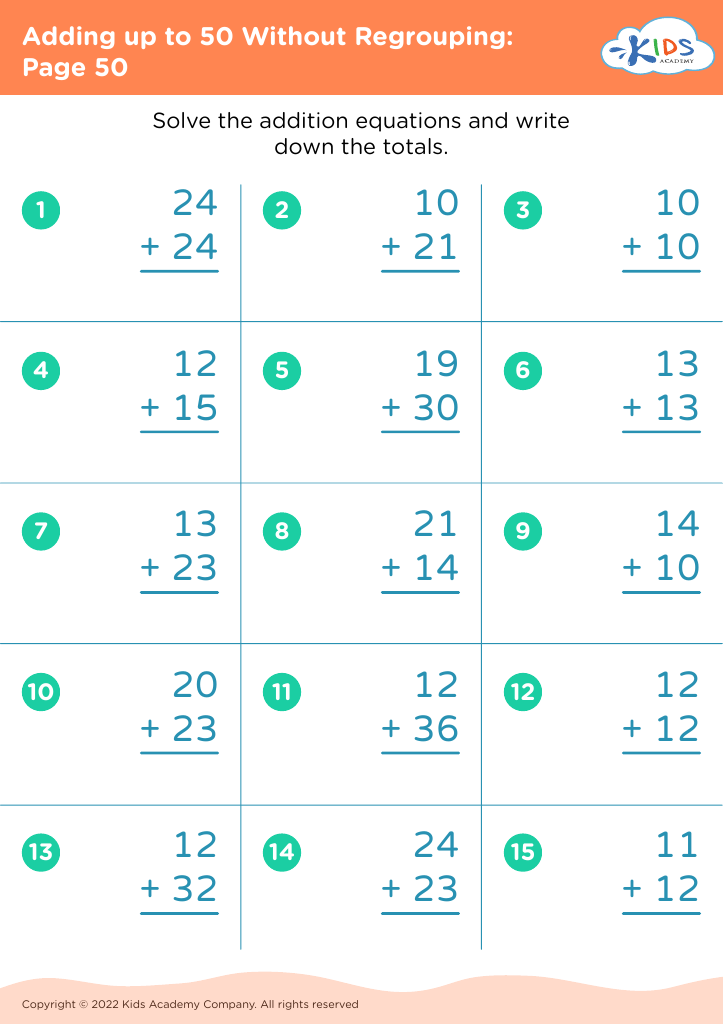




Recognizing equivalent fractions and adding up to 50 are crucial mathematical skills for 7-year-olds that promote a solid foundation for more advanced concepts. Understanding equivalent fractions helps children grasp the idea of numbers being parts of a whole, which is essential in various real-life scenarios—from cooking to sharing. This comprehension enhances their problem-solving skills and critical thinking, encouraging them to see the interconnectedness of numbers.
Learning to add up to 50 reinforces basic addition skills, aiding in the development of mental math strategies. As children practice these concepts, they gain confidence in their abilities, which is fundamental at this developmental stage. Additionally, mastering both equivalent fractions and addition lays the groundwork for understanding larger numbers and more complex operations in higher grades.
Parents and teachers should foster these skills by integrating engaging and relevant activities into learning. Collaborative games, visual aids, and hands-on activities can make learning enjoyable, helping children retain concepts better. Ultimately, equipping 7-year-olds with these essential math skills ensures they are set on a path toward academic success, builds their confidence, and prepares them for real-world problem-solving scenarios, nurturing a lifelong appreciation for mathematics.








