Simplifying Fractions Adding up to 50 Worksheets for 7-Year-Olds
8 filtered results
-
From - To
Explore our engaging "Simplifying Fractions Adding up to 50 Worksheets" designed specifically for 7-year-olds! These worksheets provide a fun and interactive way for young learners to master the concept of simplifying fractions while practicing their addition skills. With colorful illustrations and age-appropriate exercises that focus on fractions that sum to 50, students will build confidence in their math abilities. Ideal for classroom activities or at-home learning, our resources foster a love for math through interactive content. Give your child the tools they need for success with our innovative, intuitive worksheets that make learning about fractions enjoyable!
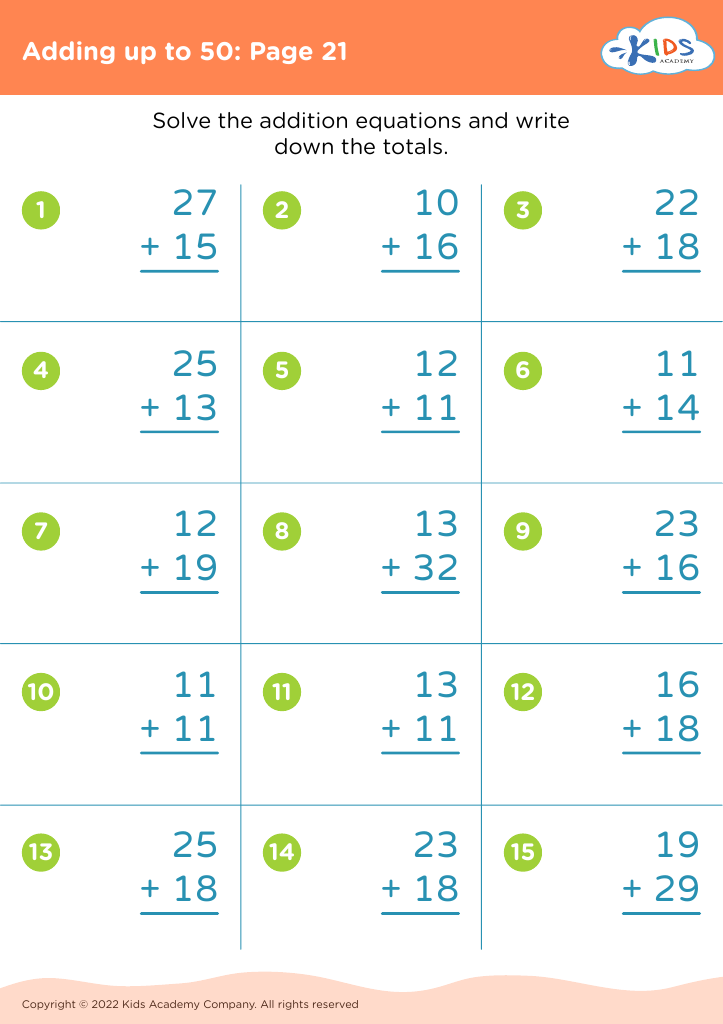
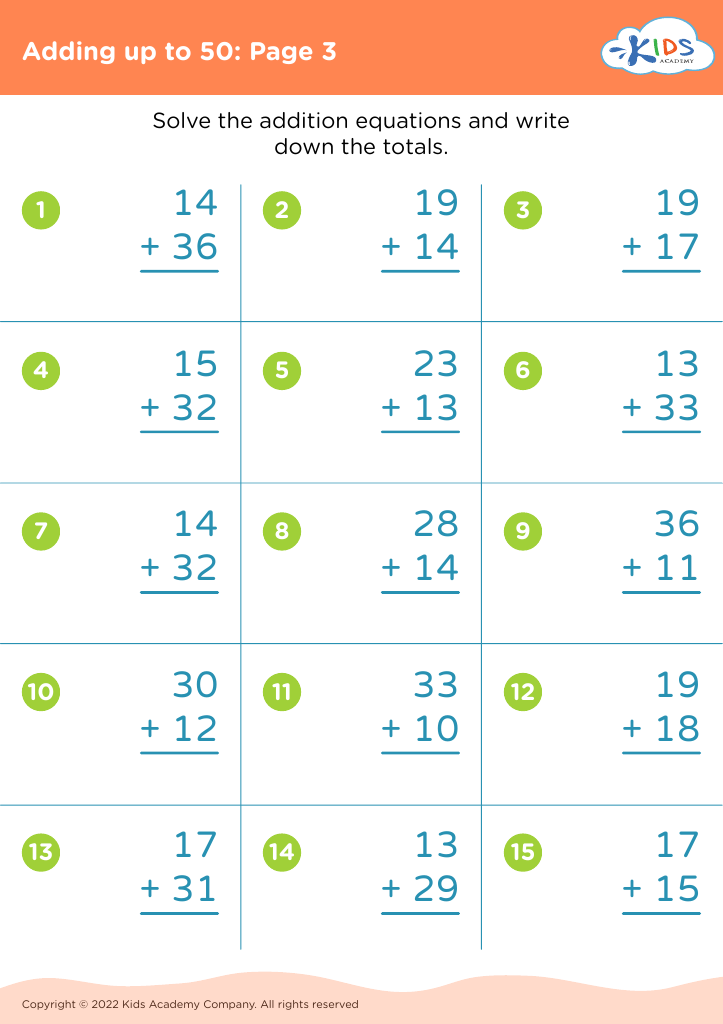
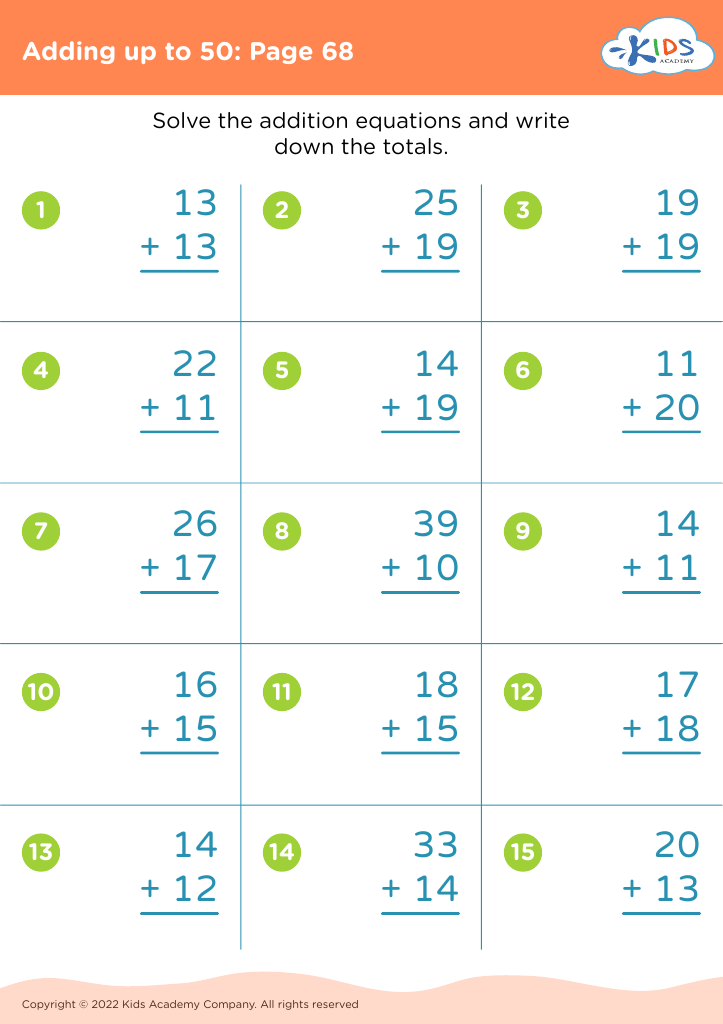
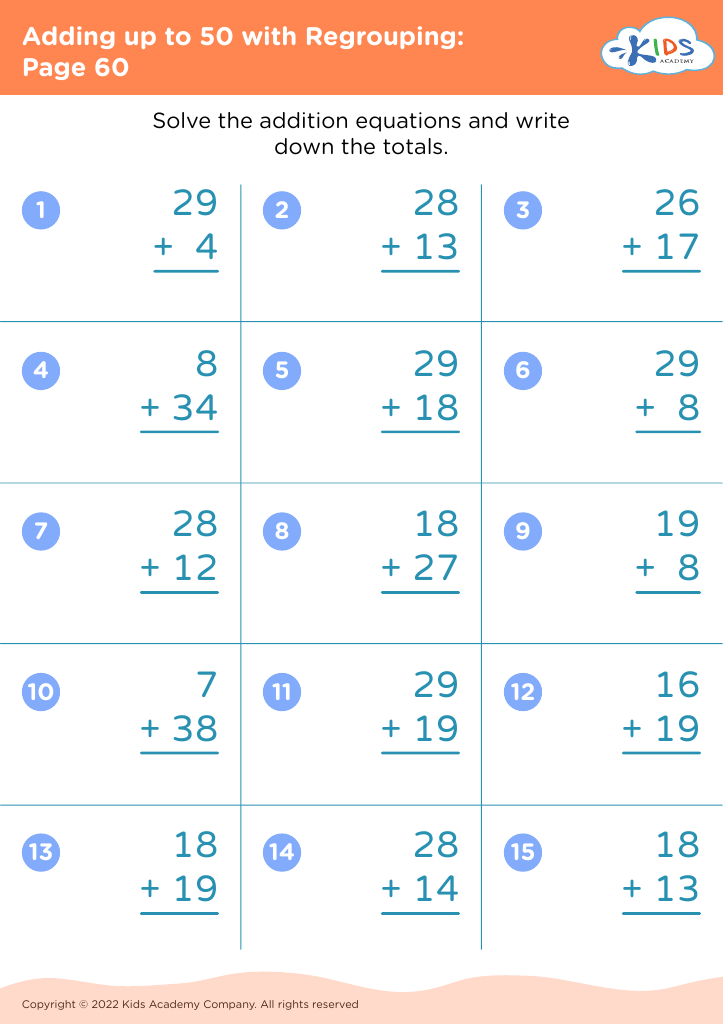
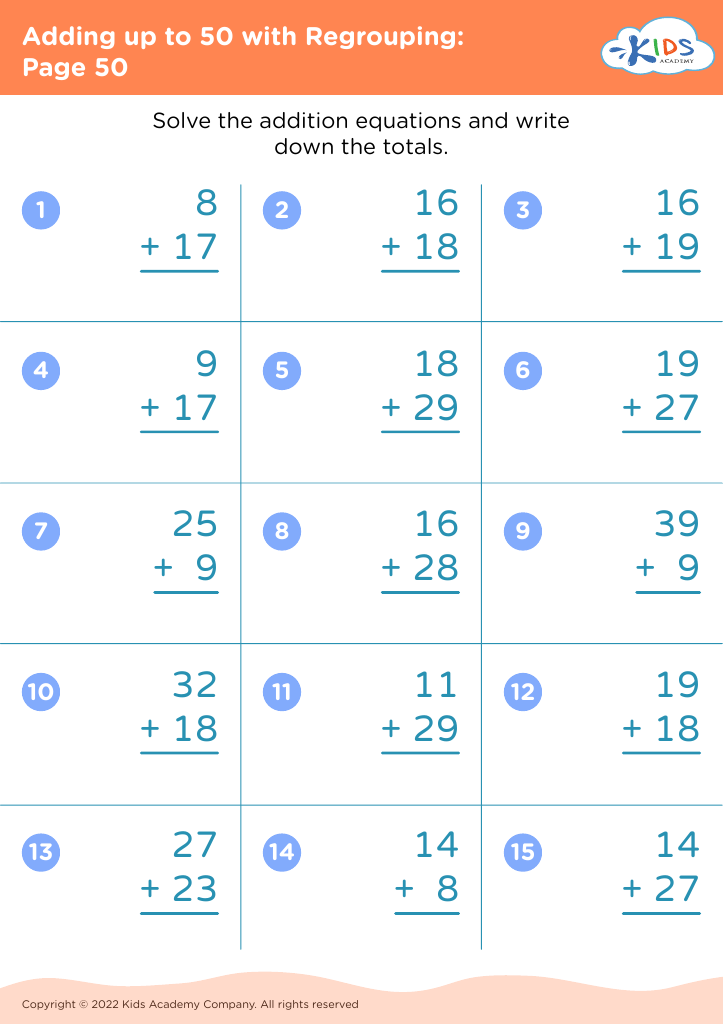
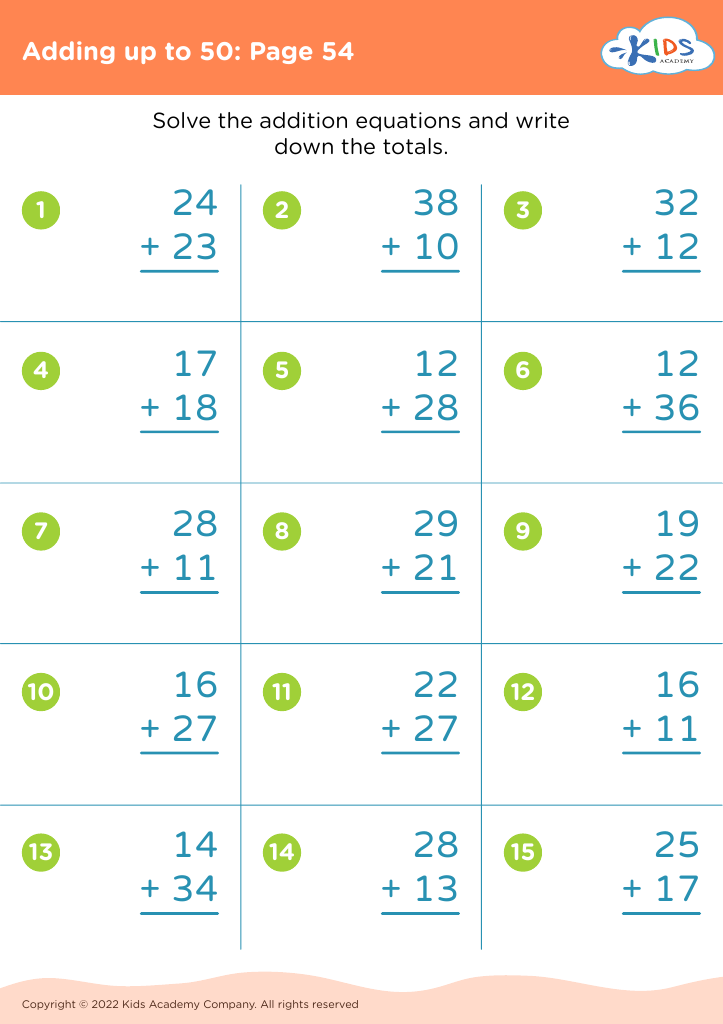
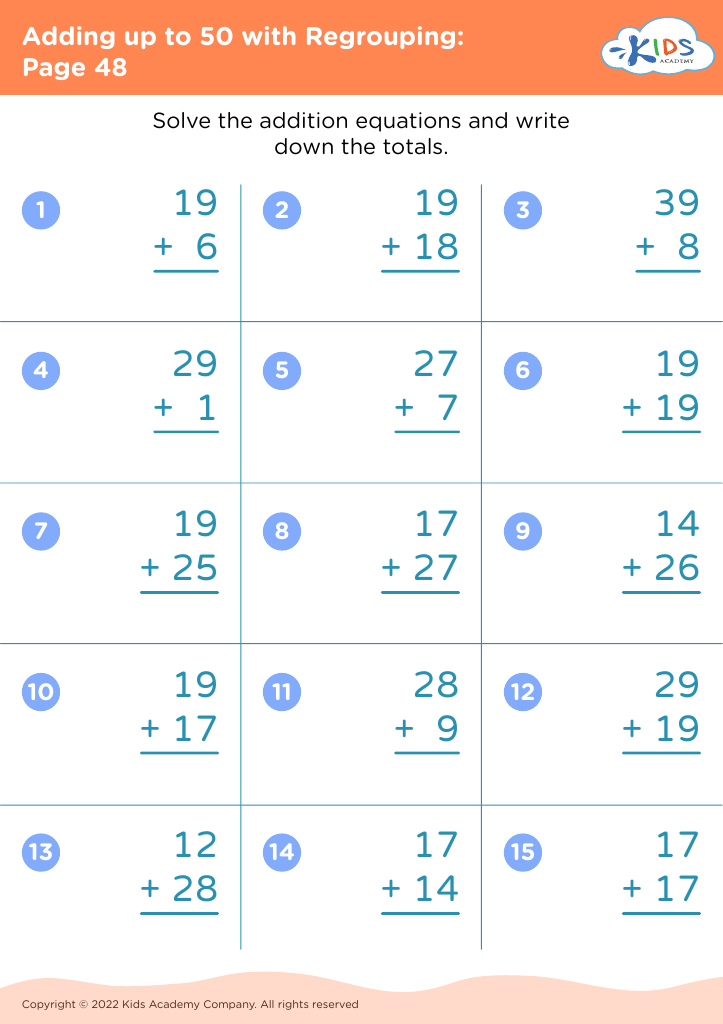
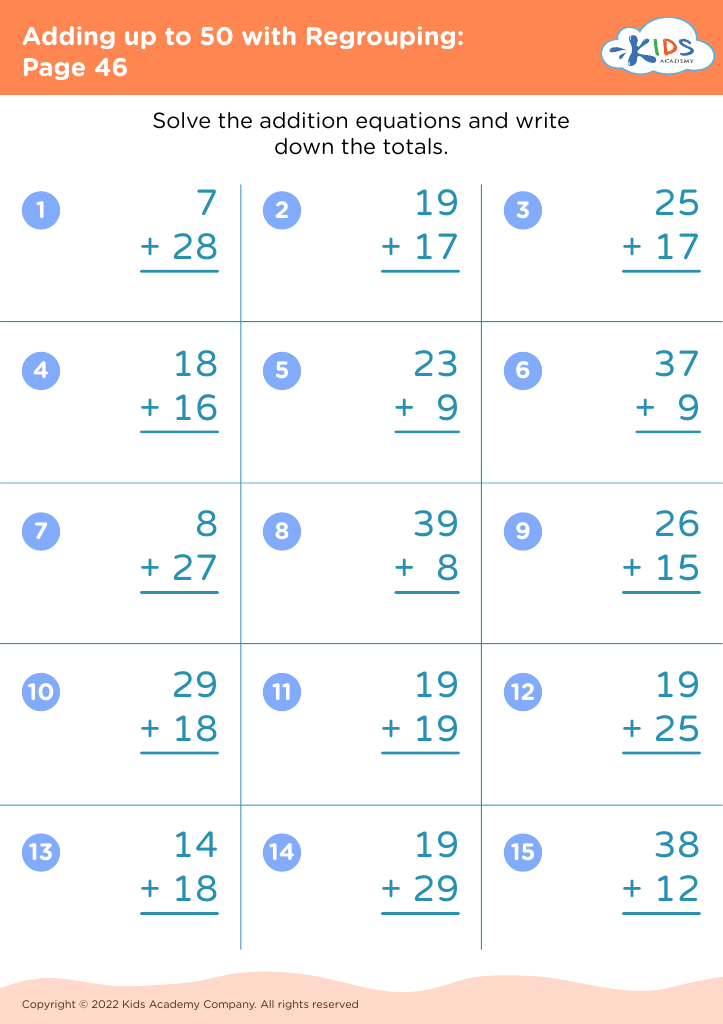




Simplifying fractions is a foundational math skill that can significantly enhance a 7-year-old's understanding of numbers and relationships. When students simplify fractions, such as those adding up to 50, they learn to recognize common factors and develop problem-solving strategies that are crucial for future math concepts. This skill not only boosts numerical fluency but also reinforces critical thinking, as children must analyze and manipulate numbers to reach their solution.
For parents and teachers, emphasizing this concept offers the opportunity to create engaging learning experiences. It enhances their ability to grasp the significance of fractions, aiding in their comprehension of more complex topics in addition, subtraction, and even multiplication later on. Engaging children in simplifying fractions helps cultivate a positive attitude towards math by making it more approachable.
Moreover, as children learn to simplify, they develop perseverance and resilience, essential qualities for tackling challenges across all subjects. Supporting children at this developmental stage fosters a lifelong appreciation of mathematics and equips them with vital skills needed in real-world situations. By investing time in teaching these concepts, parents and teachers can lay a strong foundation for their children's future academic success.








