Subtraction practice Adding up to 50 Worksheets for 7-Year-Olds
3 filtered results
-
From - To
Enhance your 7-year-old's math skills with our engaging "Subtraction Practice Worksheets Adding Up to 50"! Designed specifically for young learners, these worksheets provide a fun and interactive way to master subtraction concepts, focusing on numbers up to 50. Each worksheet features vibrant visuals and age-appropriate exercises that foster problem-solving abilities and boost confidence in math. Perfect for use at home or in the classroom, our subtraction practice materials ensure students develop a strong foundational understanding of mathematics. Download and print the worksheets to inspire your child’s love for learning while making subtraction a breeze!
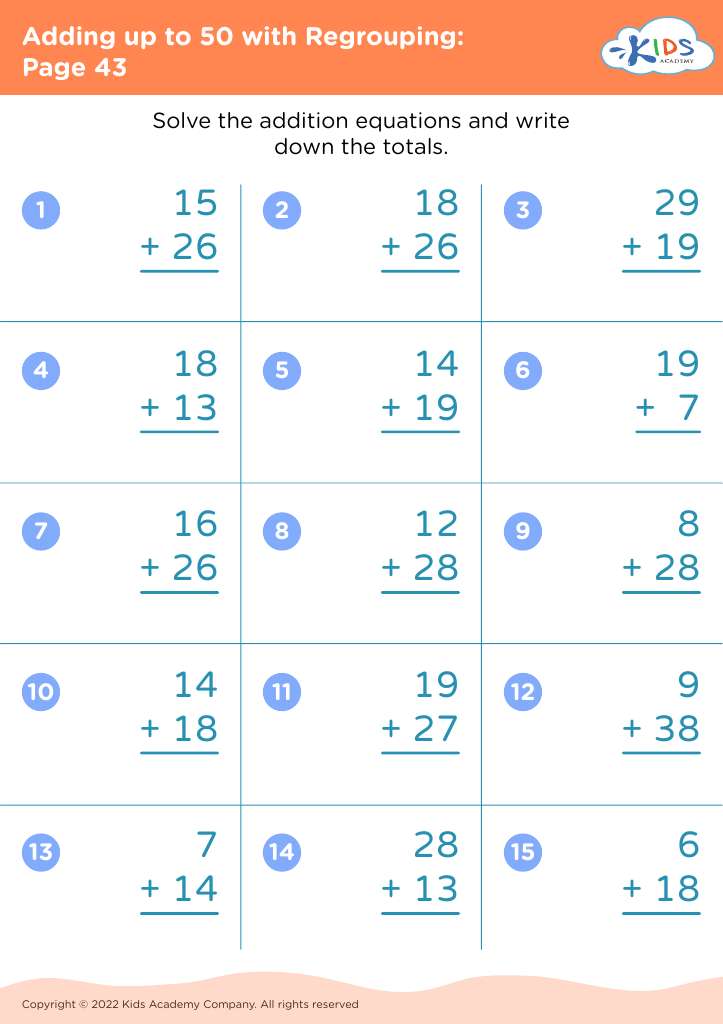
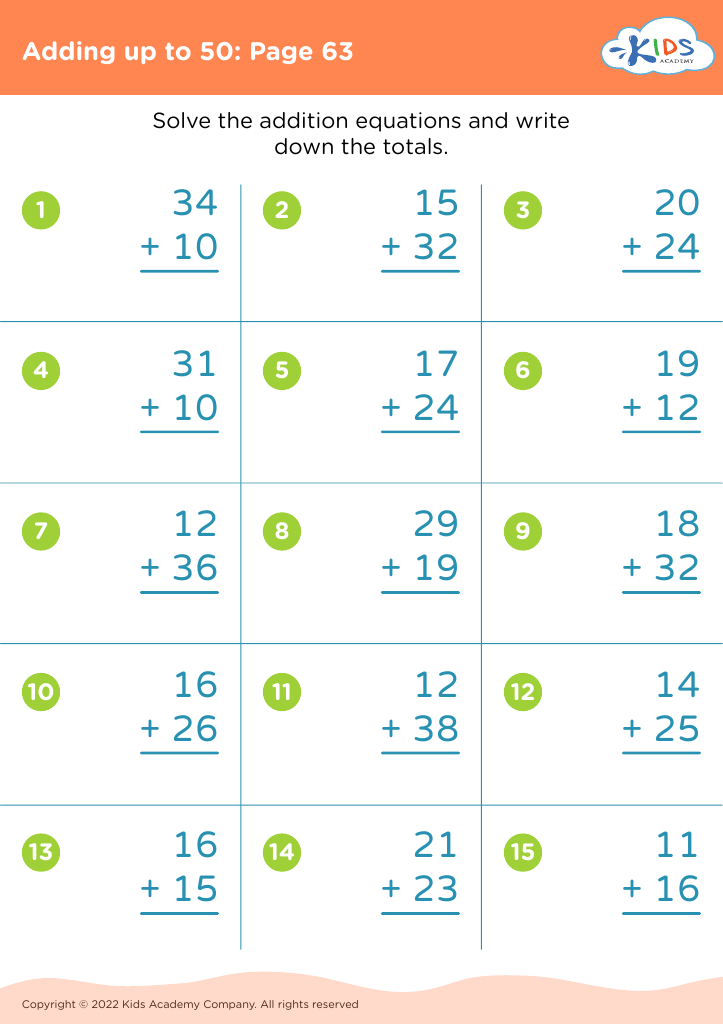
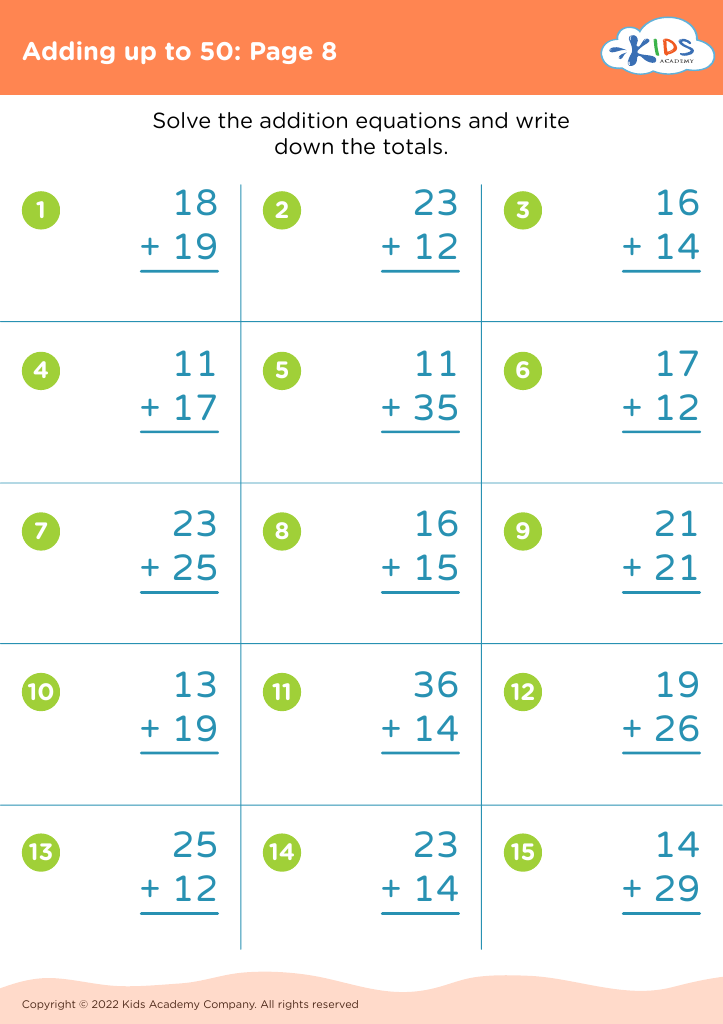




Parents and teachers should prioritize subtraction practice that adds up to 50 for 7-year-olds for several compelling reasons. Firstly, mastering subtraction is a fundamental building block of mathematics and is crucial for developing problem-solving skills. At this age, children are starting to move beyond simple arithmetic and need a solid grasp of subtraction to tackle more complex concepts in the future.
Secondly, engaging in regular subtraction practice helps to enhance a child's cognitive abilities. It improves their critical thinking, logic, and analytical skills, which are transferable to other learning areas.
Additionally, understanding subtraction within the limit of 50 allows children to build a strong numerical foundation. This skill will empower them when they interact with real-world situations that involve calculations, such as shopping, cooking, or sharing.
Finally, consistent practice instills confidence in children. When they successfully navigate subtraction challenges, it boosts their self-esteem and encourages a positive attitude towards math, reducing math anxiety later on.
By supporting subtraction practice, parents and teachers actively foster not only mathematical abilities but also contribute to a well-rounded educational experience for every child.








