Animal recognition Addition & Subtraction Worksheets for 7-Year-Olds
6 filtered results
-
From - To
Introduce your 7-year-old to the exciting world of arithmetic with our Animal Recognition Addition & Subtraction Worksheets. Designed to make math engaging, these printable worksheets feature colorful animal illustrations that captivate young learners. Through connecting animals with numbers, children practice addition and subtraction in a fun, interactive way. This innovative approach not only helps reinforce essential math skills but also enhances observation and recognition abilities. Ideal for classroom use or at-home practice, our worksheets provide an enjoyable learning experience that promotes mathematical confidence and a love for animals, ensuring your child develops a solid foundation in both subjects.
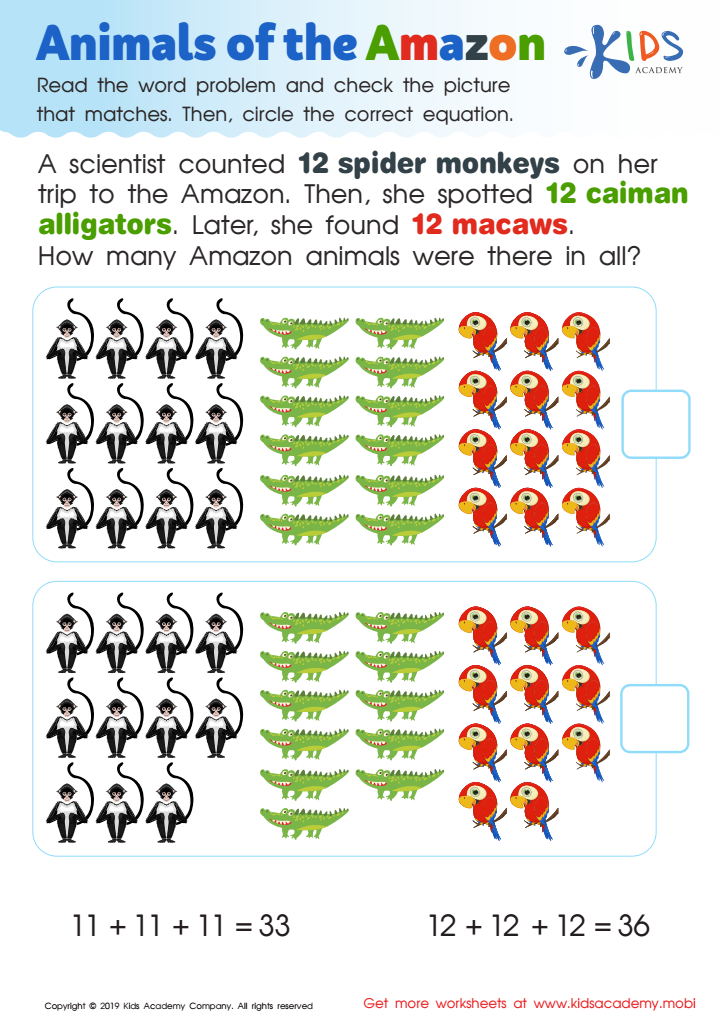
Animals of Amazon Worksheet
 Assign to My Students
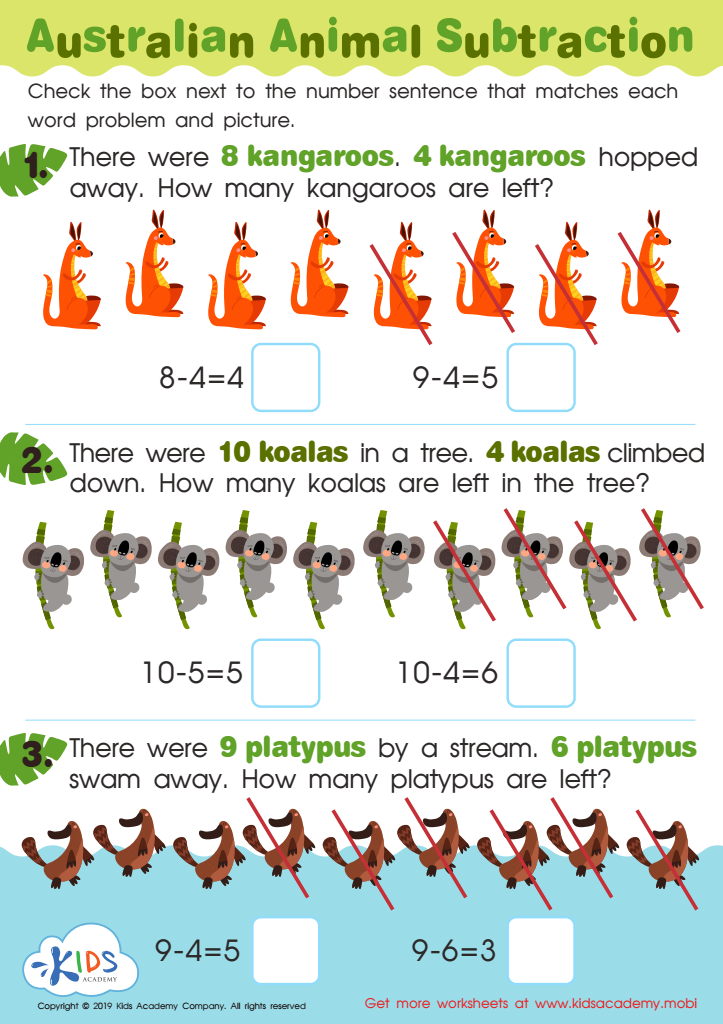
Australian Animal Subtraction Worksheet
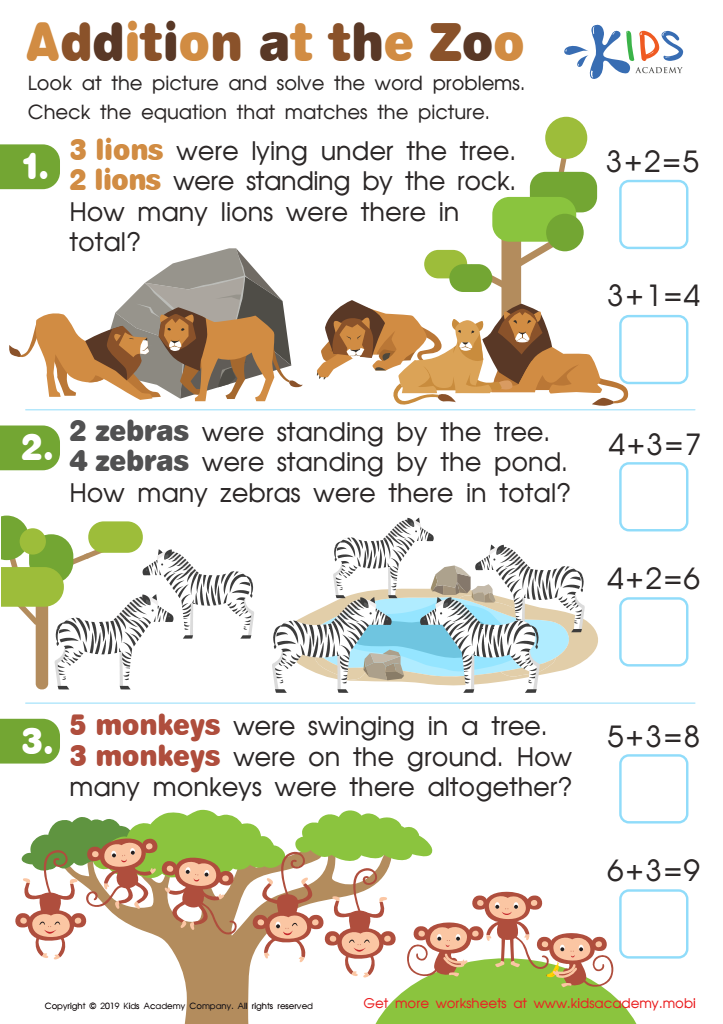
Addition at the Zoo Worksheet
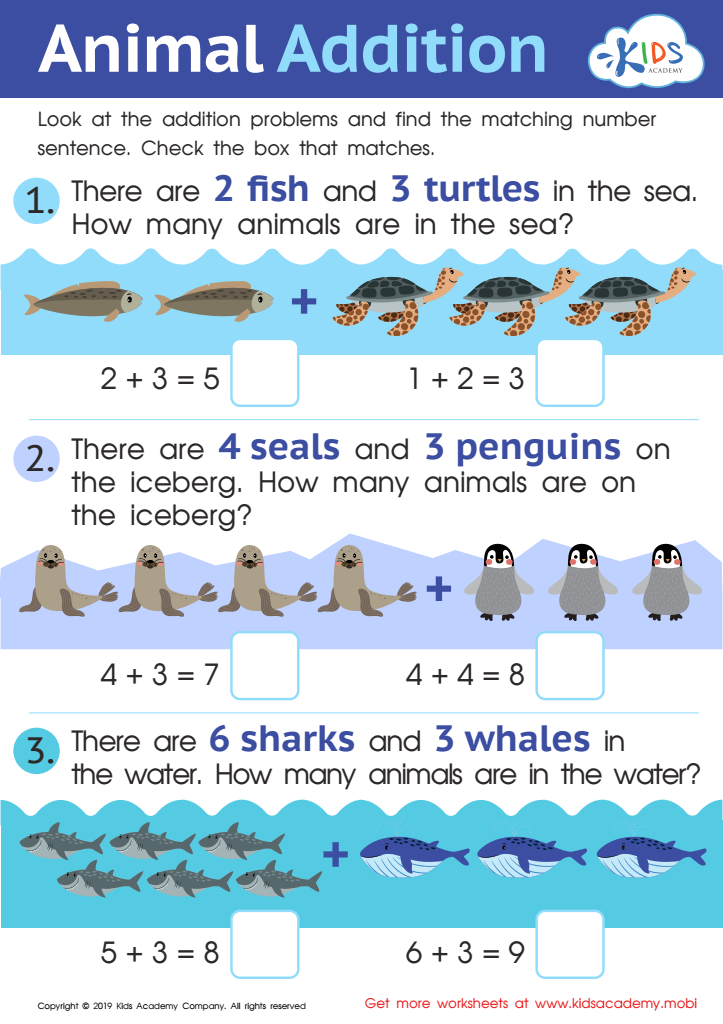
Animal Addition Worksheet
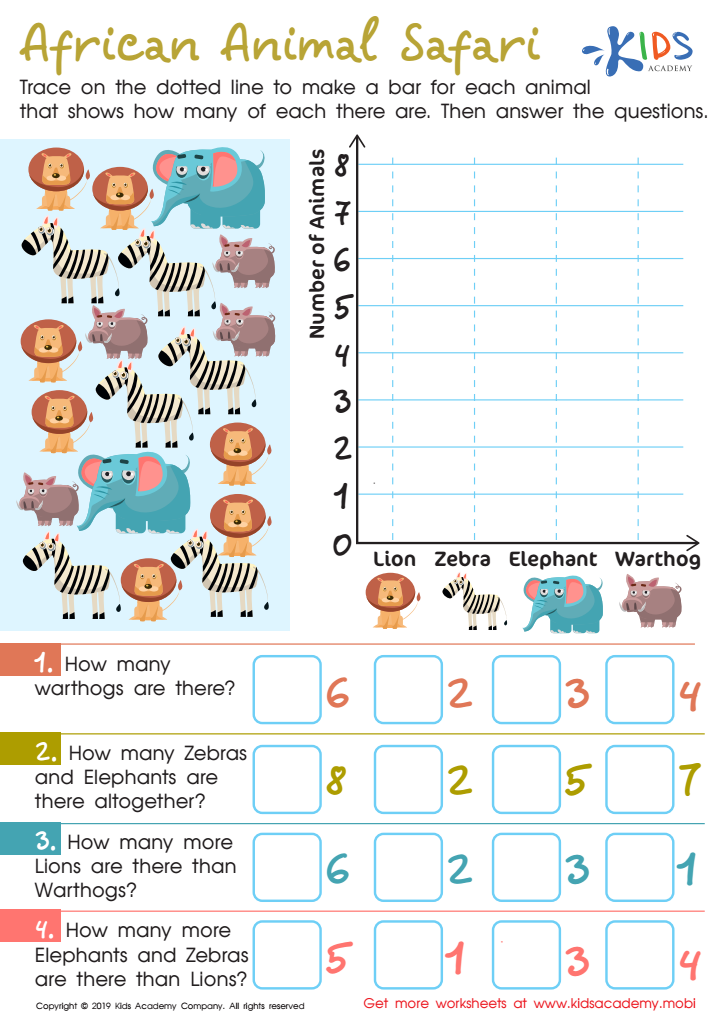
African Animal Safari Worksheet








Parents and teachers should care about animal recognition intertwined with addition and subtraction for 7-year-olds because it offers a multifaceted approach to learning that enhances cognitive and emotional development. First, incorporating animal recognition boosts engagement. Children are naturally curious about animals, making math activities more appealing and enjoyable. This enhances their attention spans and deepens their interest in the subject matter.
Moreover, using animals gives tangible meaning to abstract concepts. Instead of viewing numbers as mere figures, children can visualize five zebras or seven monkeys. This contextual representation fosters better understanding and retention of mathematical principles. It promotes critical thinking by encouraging kids to count, classify, and even consider basic biological concepts, thus linking math to the world around them.
Incorporating animal recognition also supports early literacy and general knowledge. Learning the names and features of animals can expand vocabulary and general knowledge, opening up discussions on various topics like habitats, diets, and ecosystems. Emotional connections with animals can further build empathy and social skills, enriching the child's emotional intelligence.
In essence, blending animal recognition with math word problems encapsulates a holistic learning approach that sharpens numerical skills while broadening intellectual and emotional horizons. It's a dual-benefit strategy that caters to the overall well-being and academic success of young learners.








