Check out this FREE Trial Lesson on Addition & Subtraction for age 7!

Exactly the Same, or Not

Favorites
With answer key
Interactive
  • 7
  • Comparing Fractions
  • Addition & Subtraction
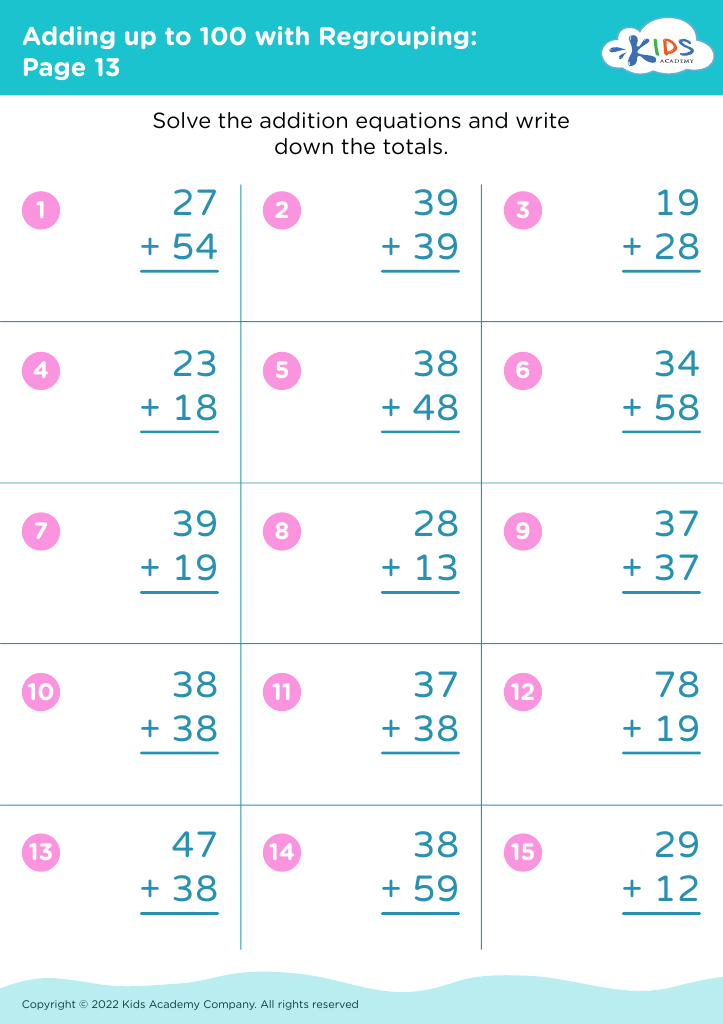
Adding up to 100 with Regrouping: Page 13
Worksheet
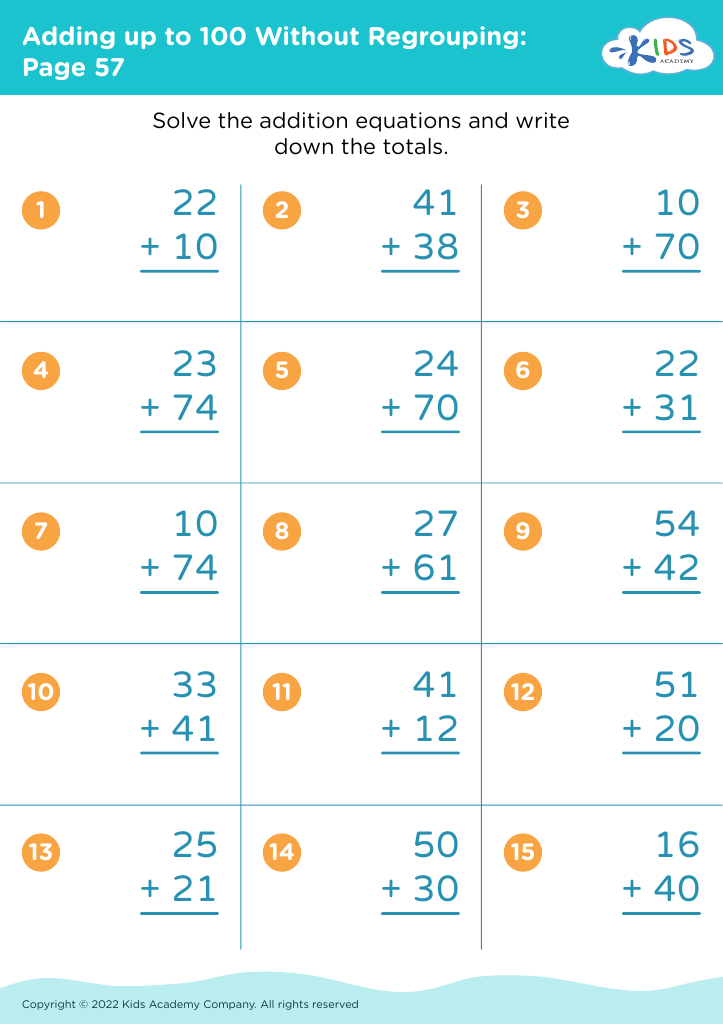
Adding up to 100 Without Regrouping: Page 57
Worksheet
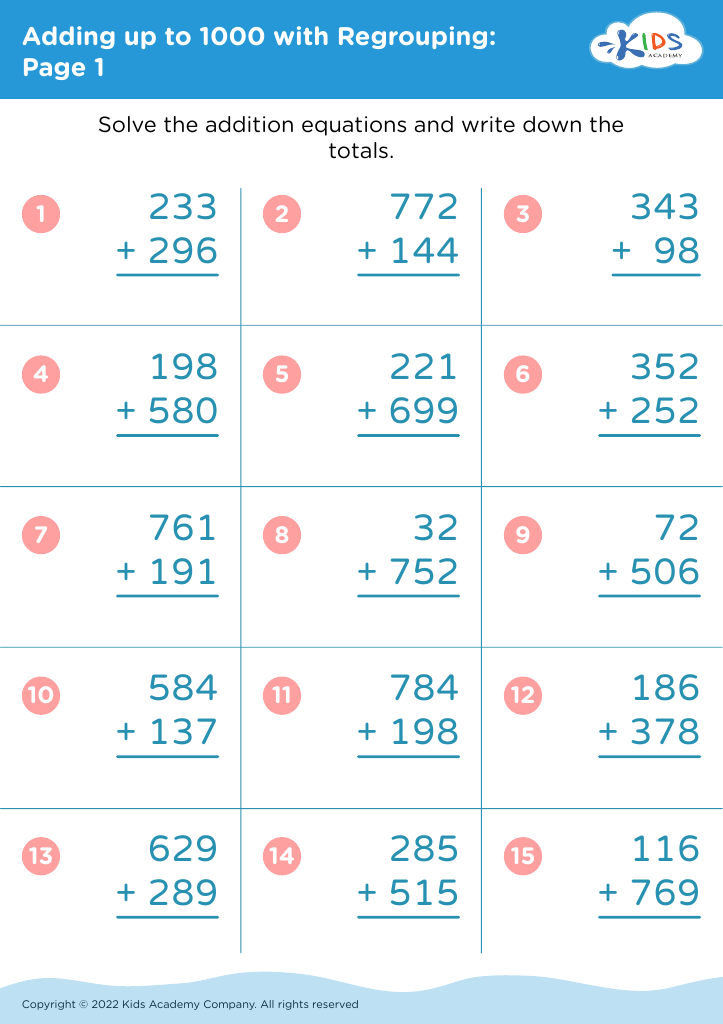
Adding up to 1000 with Regrouping: Page 1
Worksheet
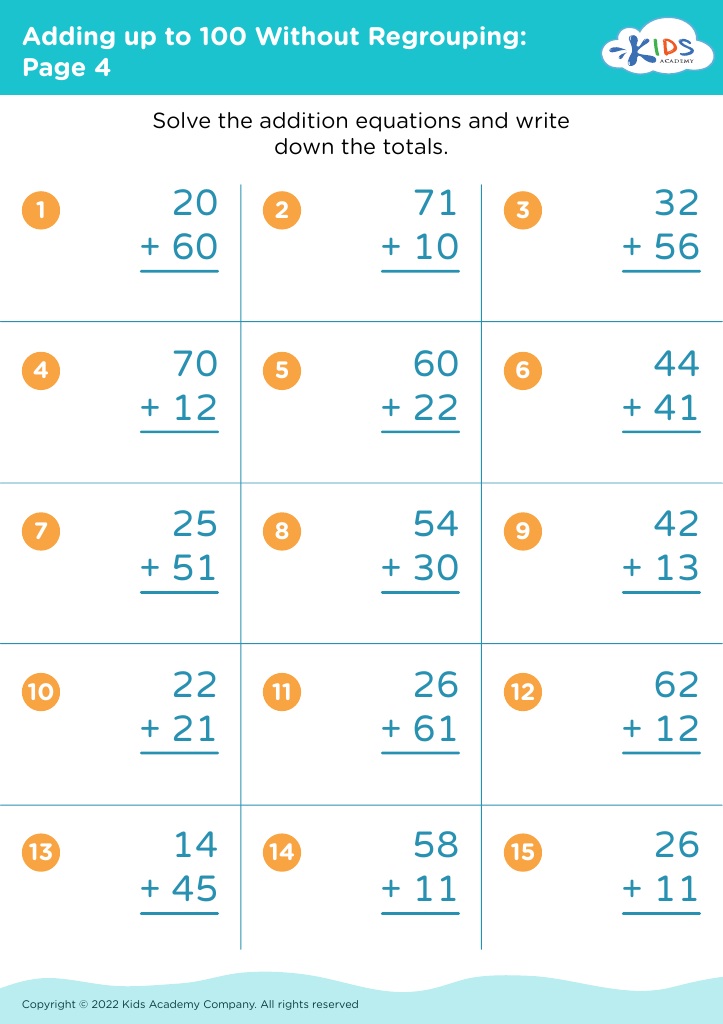
Adding up to 100 Without Regrouping: Page 4
Worksheet
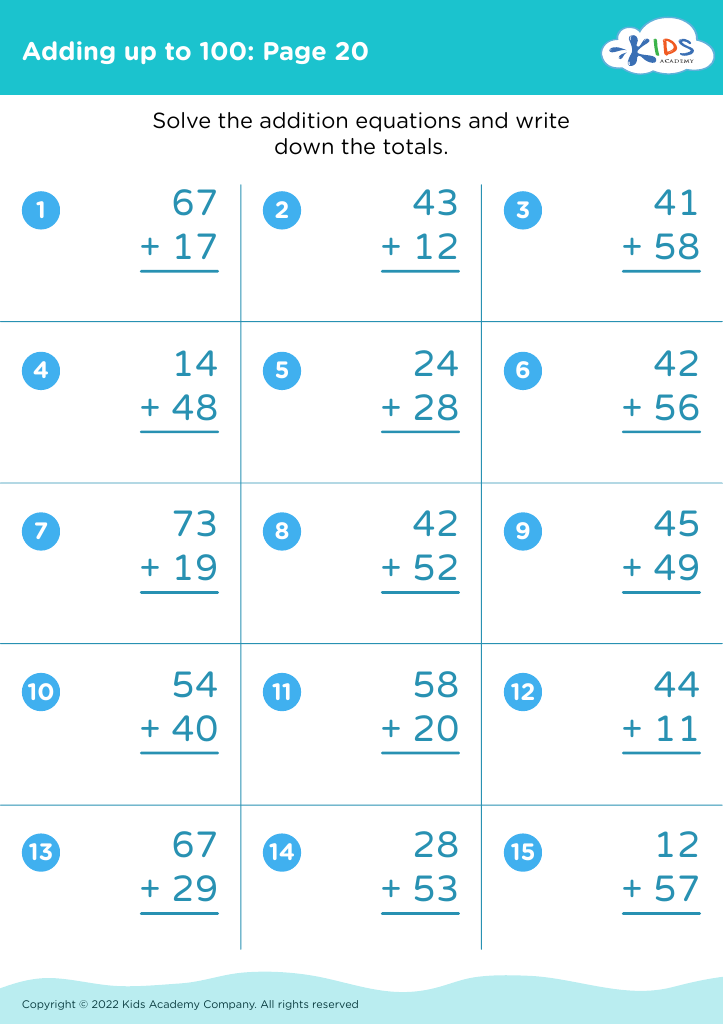
Adding up to 100: Page 20

Adding up to 100: Page 20

Adding up to 100: Page 20
Worksheet
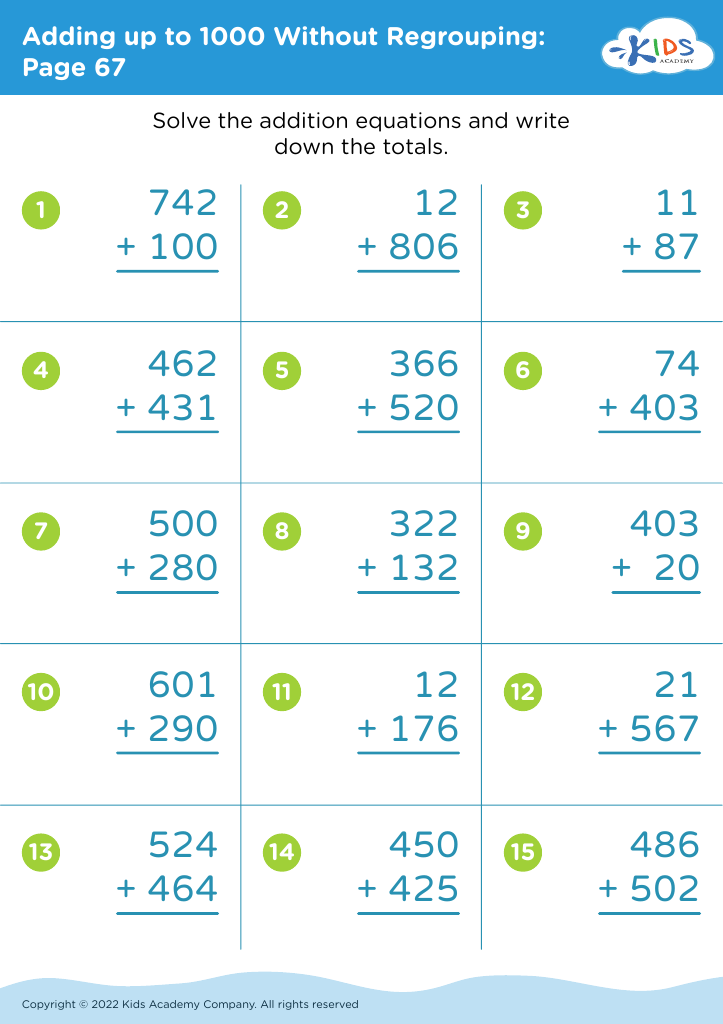
Adding up to 1000 Without Regrouping: Page 67
Worksheet
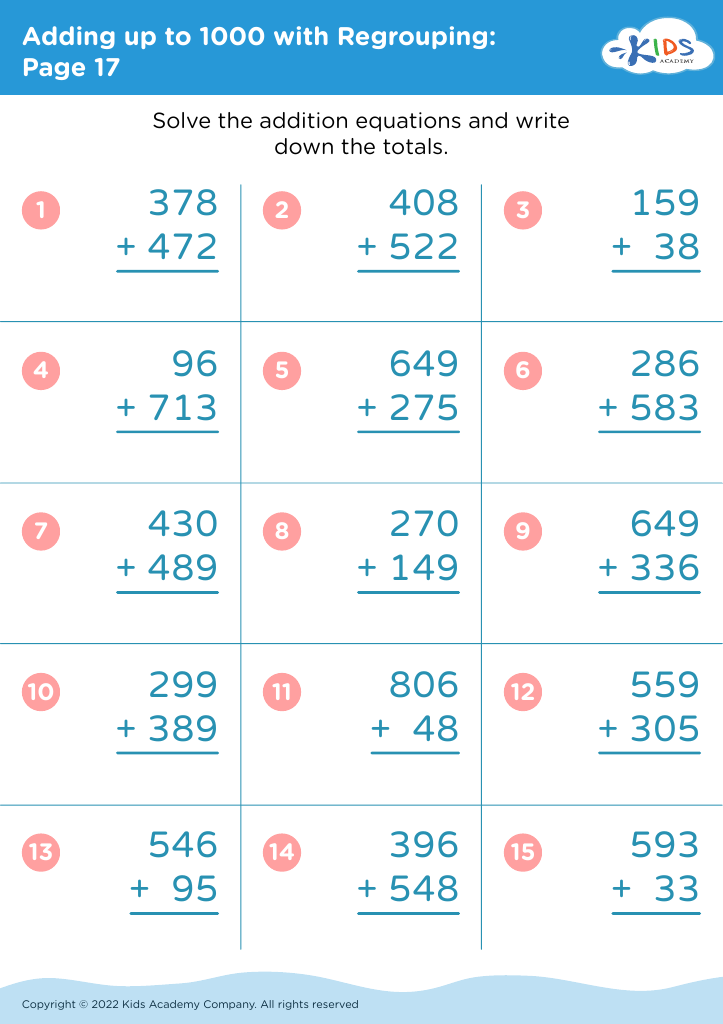
Adding up to 1000 with Regrouping: Page 17
Worksheet
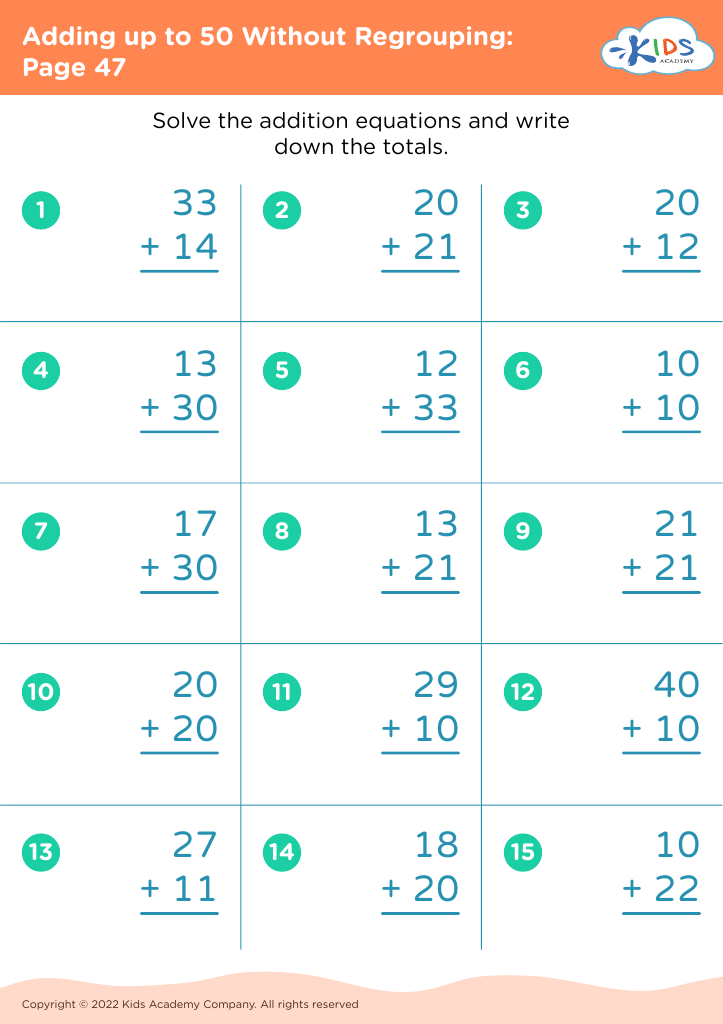
Adding up to 50 Without Regrouping: Page 47
Worksheet
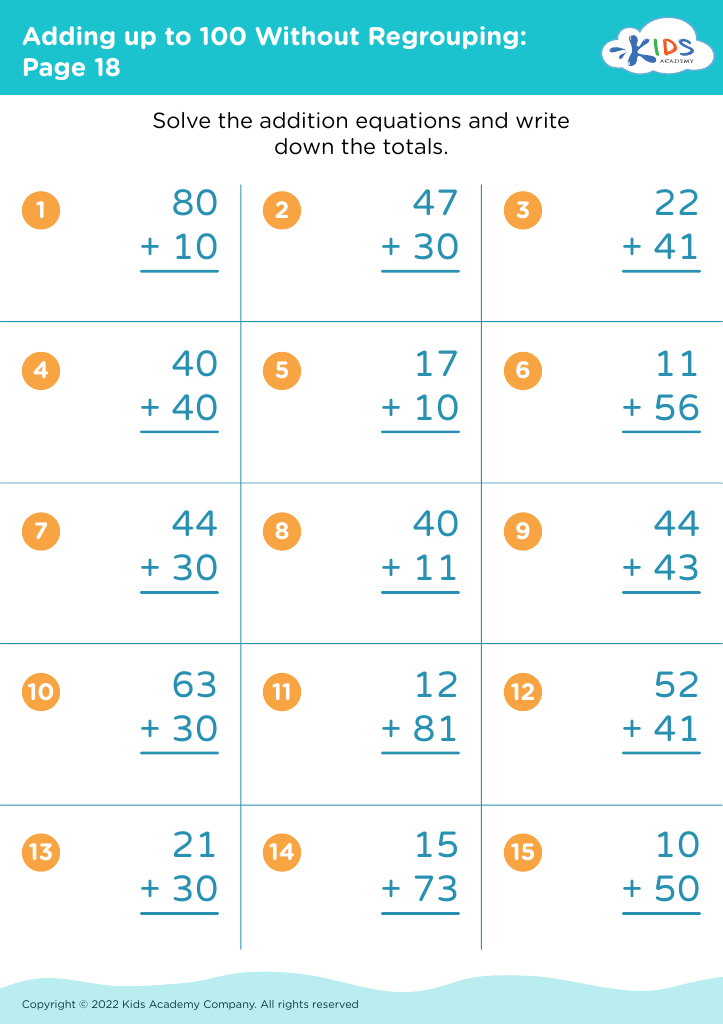
Adding up to 100 Without Regrouping: Page 18
Worksheet
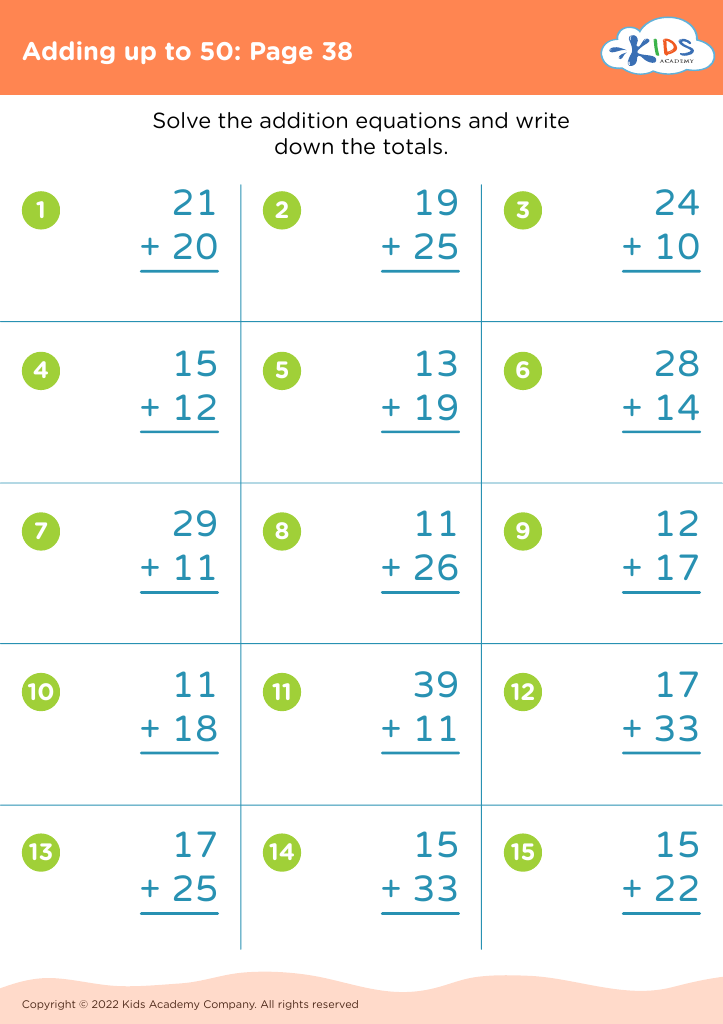
Adding up to 50: Page 38

Adding up to 50: Page 38

Adding up to 50: Page 38
Worksheet
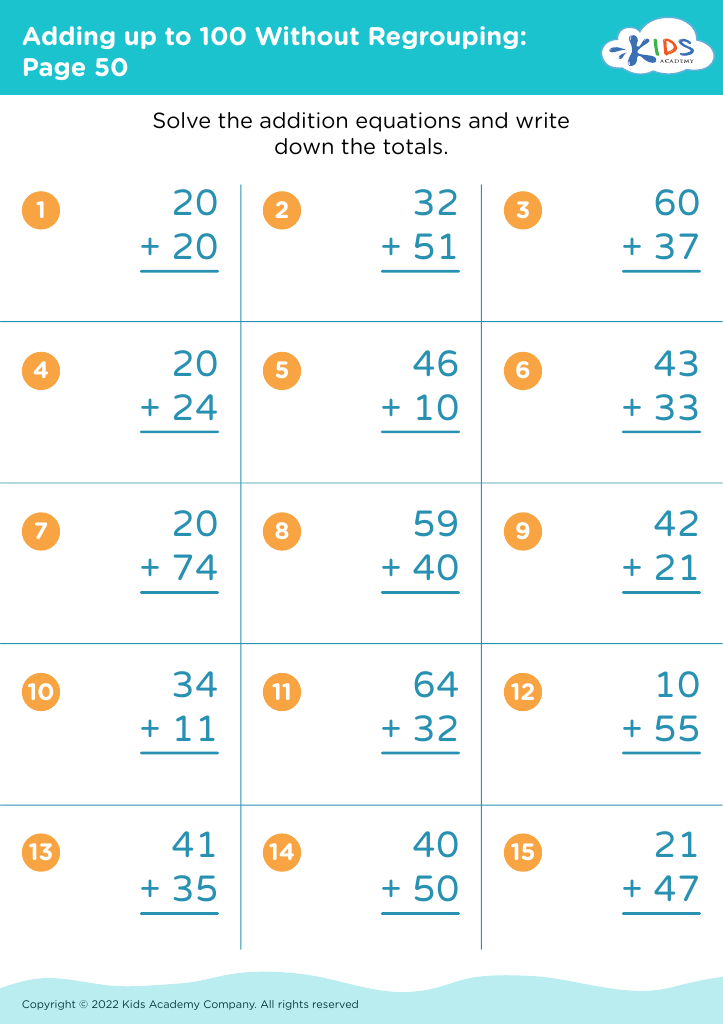
Adding up to 100 Without Regrouping: Page 50
Worksheet
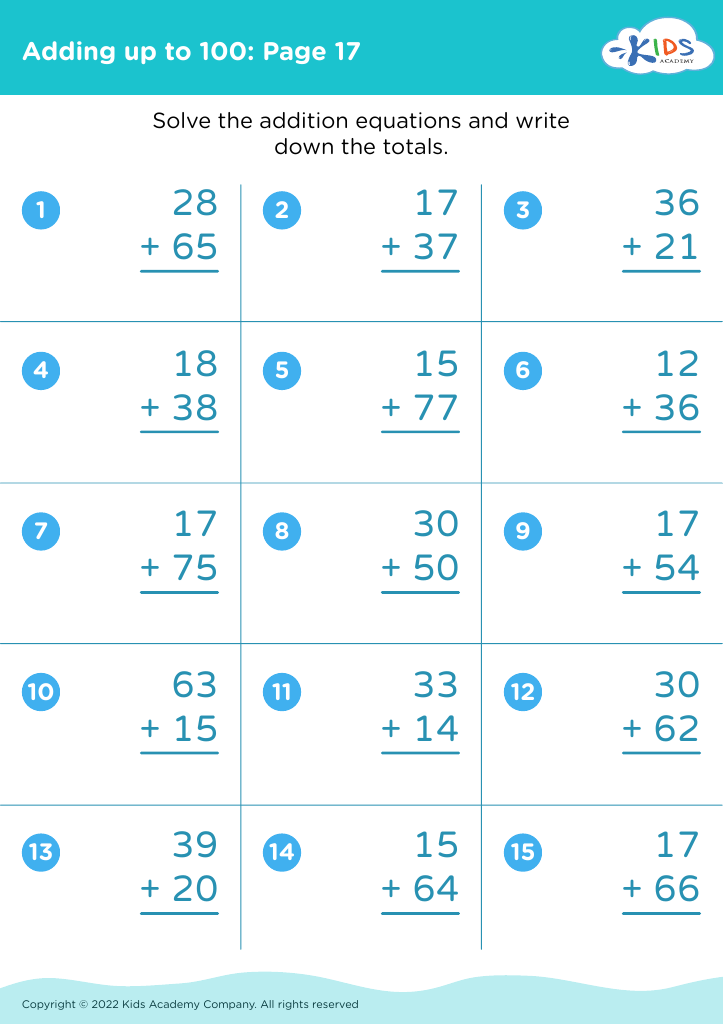
Adding up to 100: Page 17

Adding up to 100: Page 17

Adding up to 100: Page 17
Worksheet
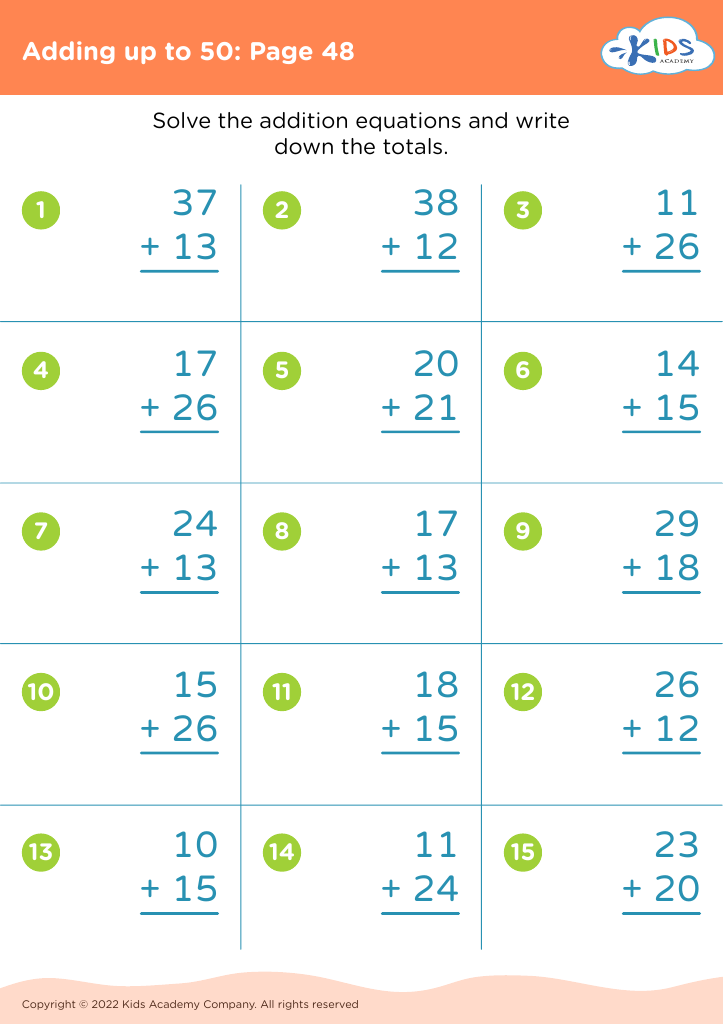
Adding up to 50: Page 48

Adding up to 50: Page 48

Adding up to 50: Page 48
Worksheet
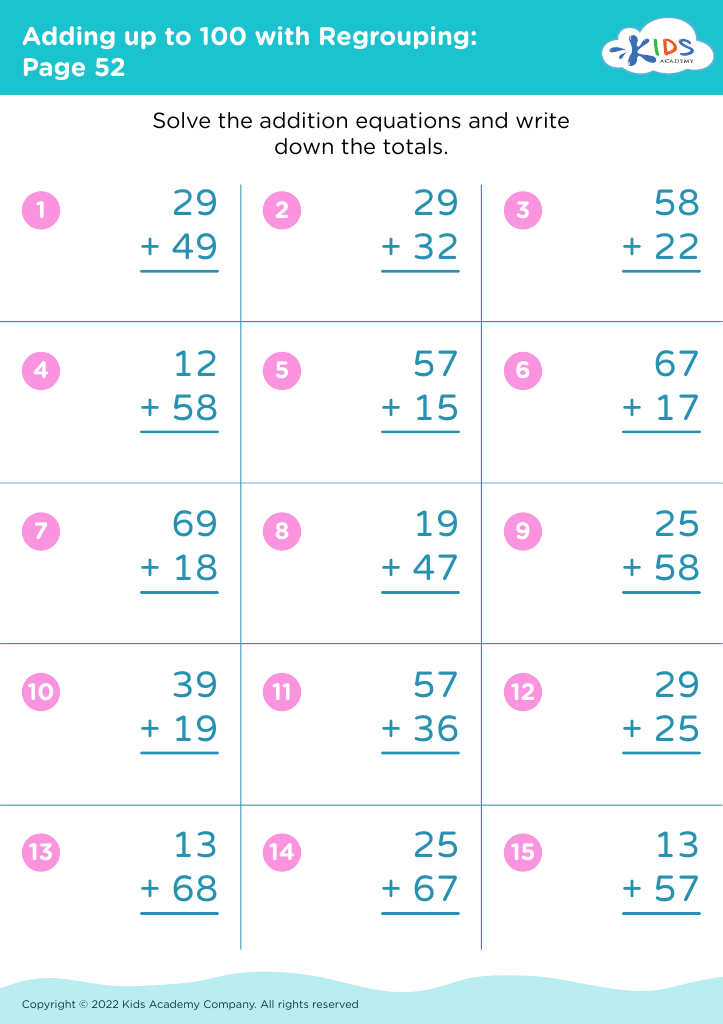
Adding up to 100 with Regrouping: Page 52
Worksheet
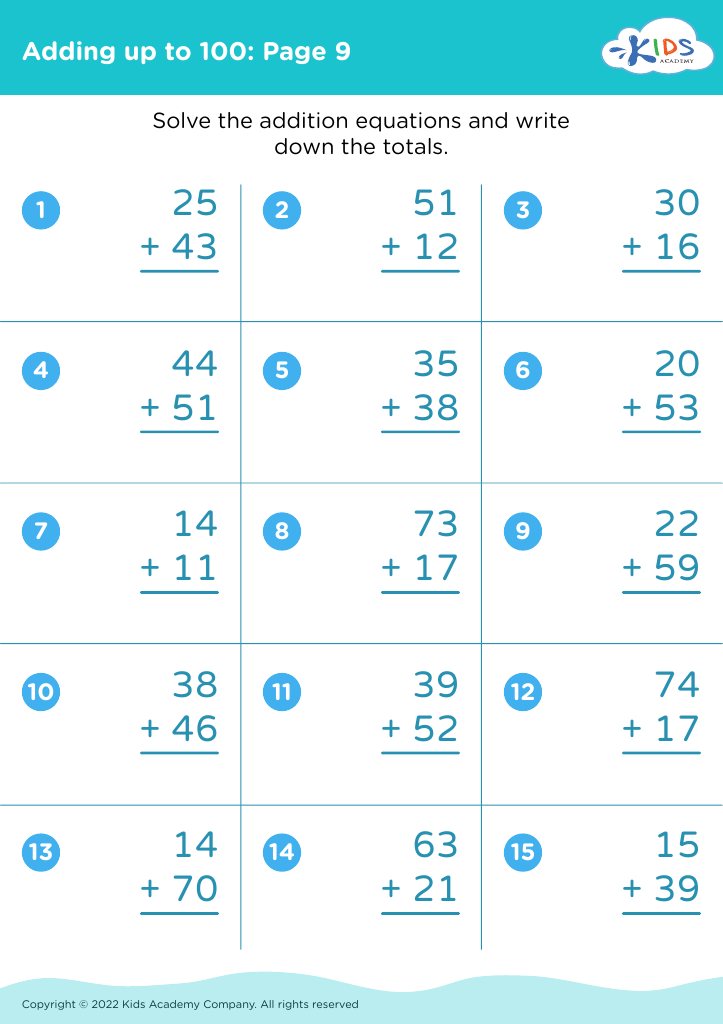
Adding up to 100: Page 9

Adding up to 100: Page 9

Adding up to 100: Page 9
Worksheet
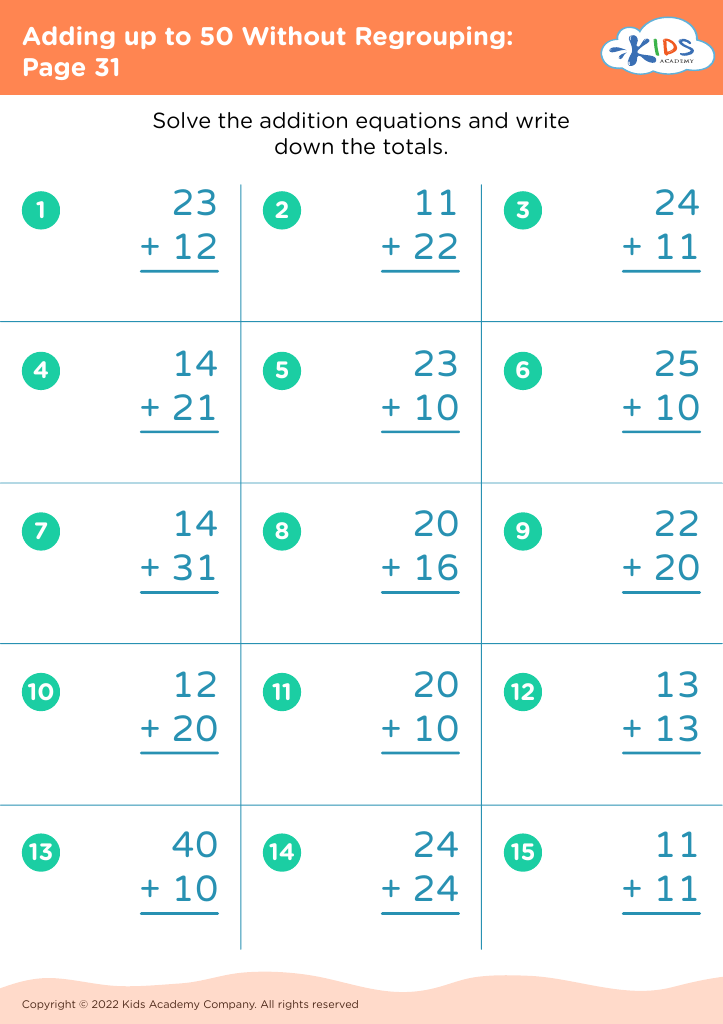
Adding up to 50 Without Regrouping: Page 31
Worksheet
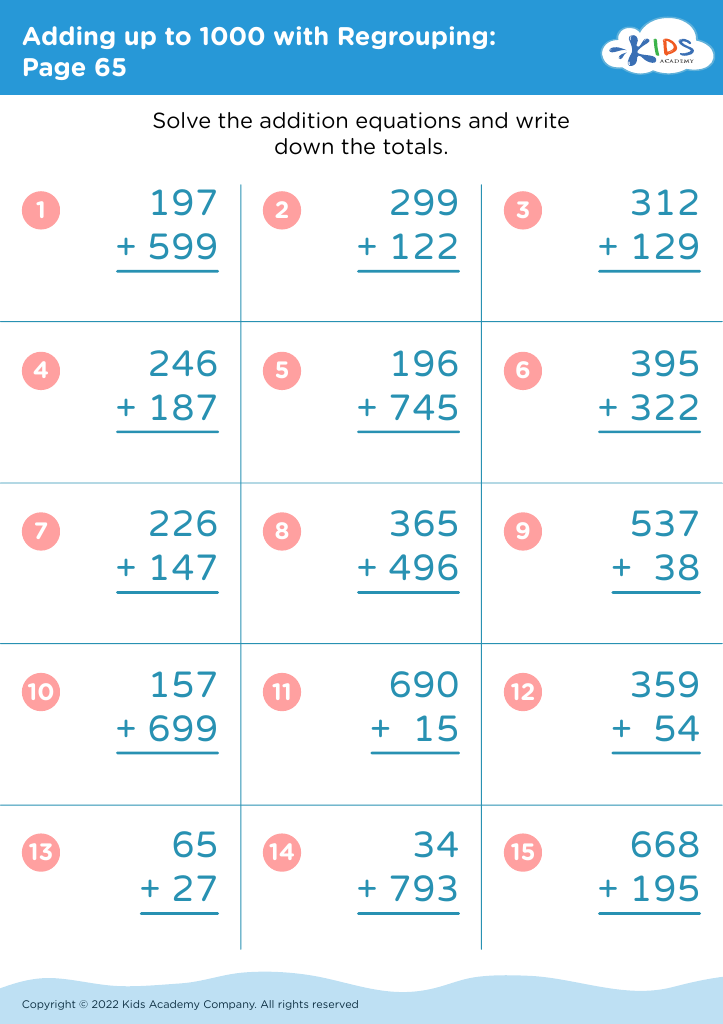
Adding up to 1000 with Regrouping: Page 65
Worksheet
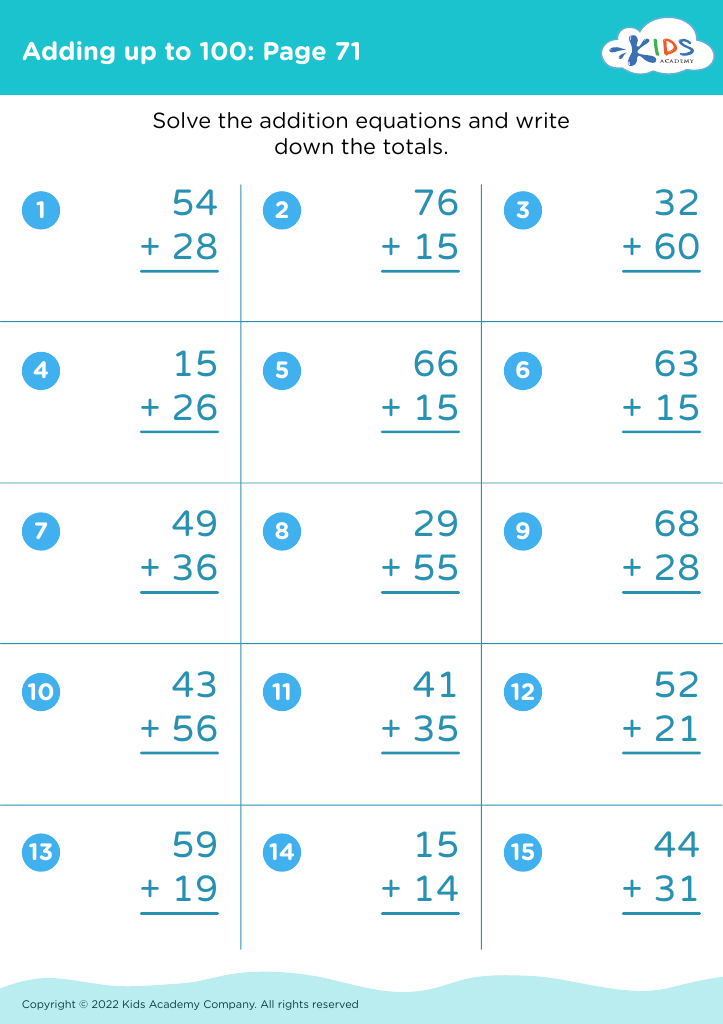
Adding up to 100: Page 71

Adding up to 100: Page 71

Adding up to 100: Page 71
Worksheet
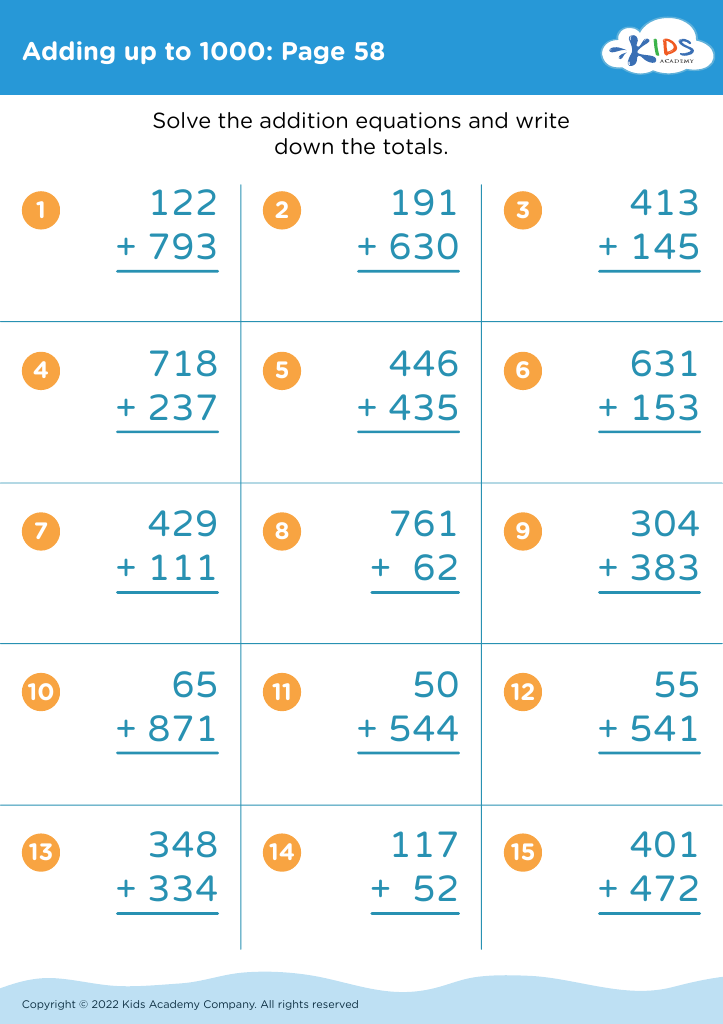
Adding up to 1000: Page 58

Adding up to 1000: Page 58

Adding up to 1000: Page 58
Worksheet
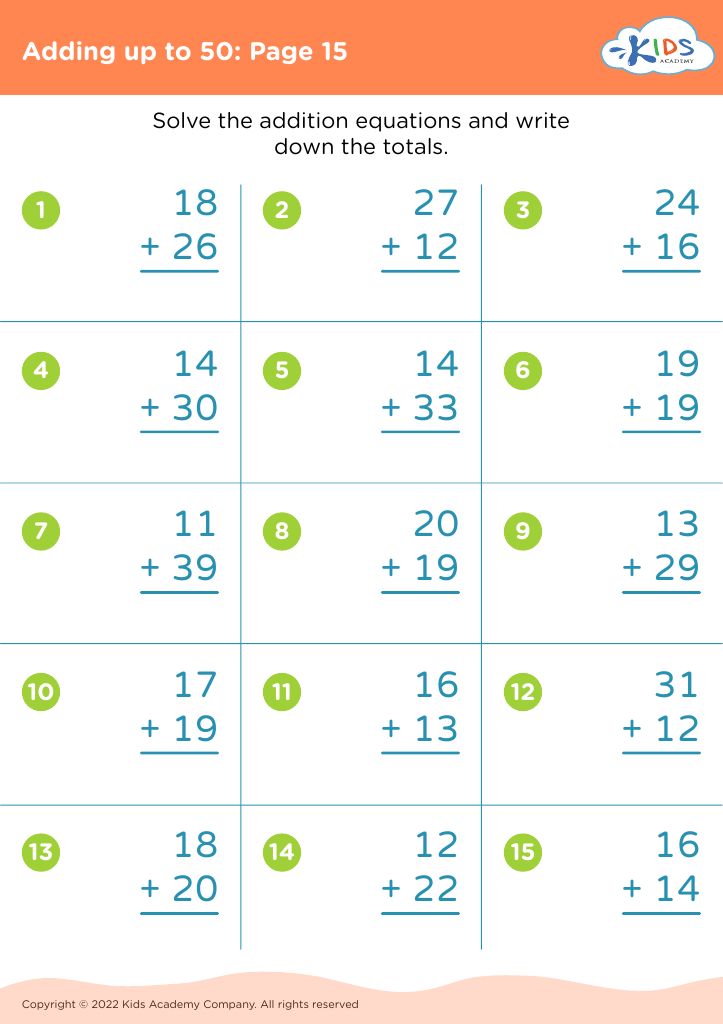
Adding up to 50: Page 15

Adding up to 50: Page 15

Adding up to 50: Page 15
Worksheet
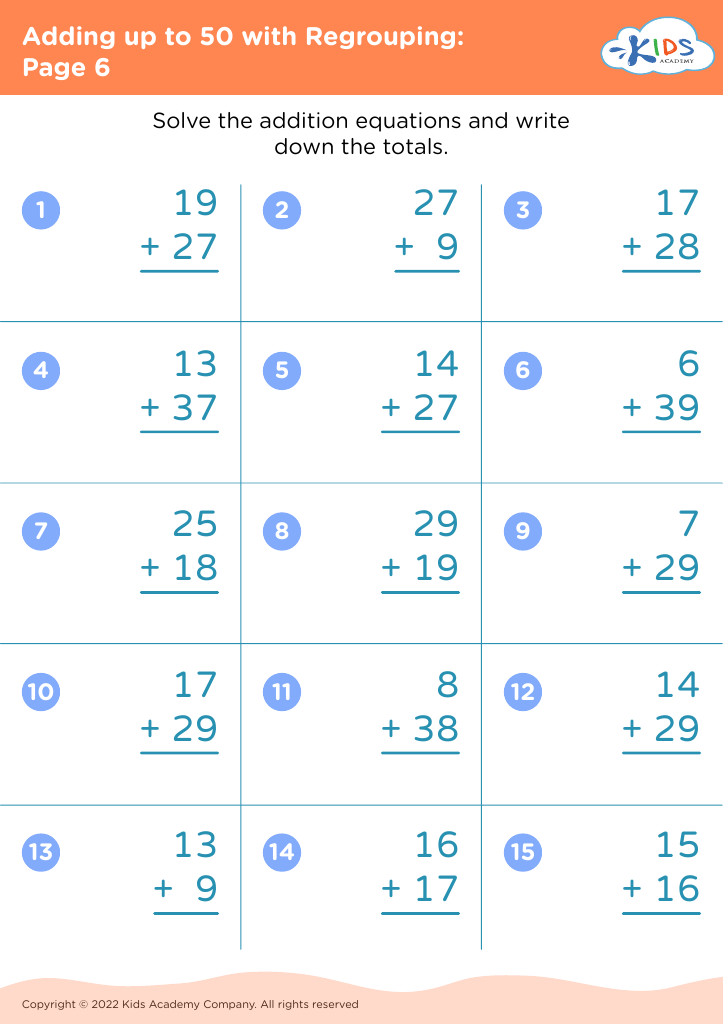
Adding up to 50 with Regrouping: Page 6
Worksheet
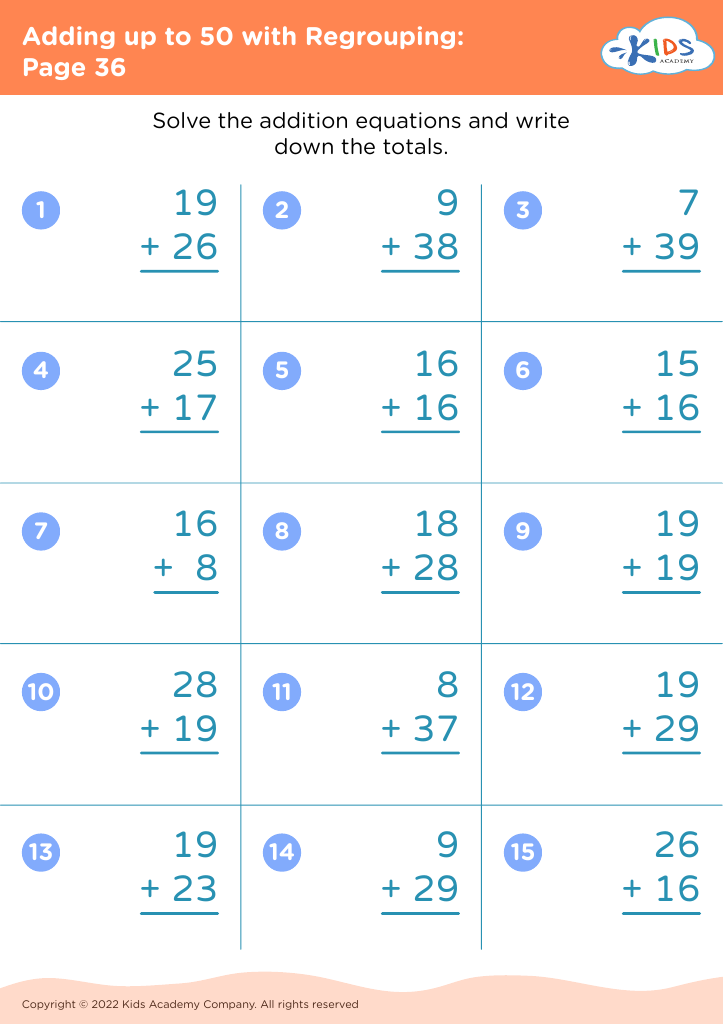
Adding up to 50 with Regrouping: Page 36
Worksheet
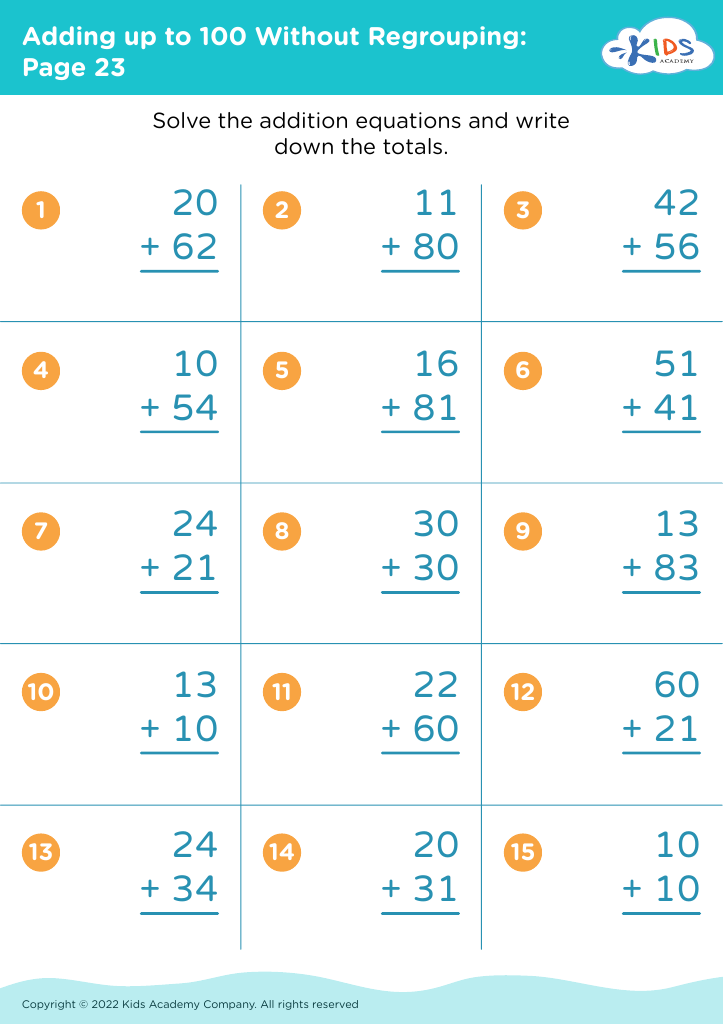
Adding up to 100 Without Regrouping: Page 23
Worksheet
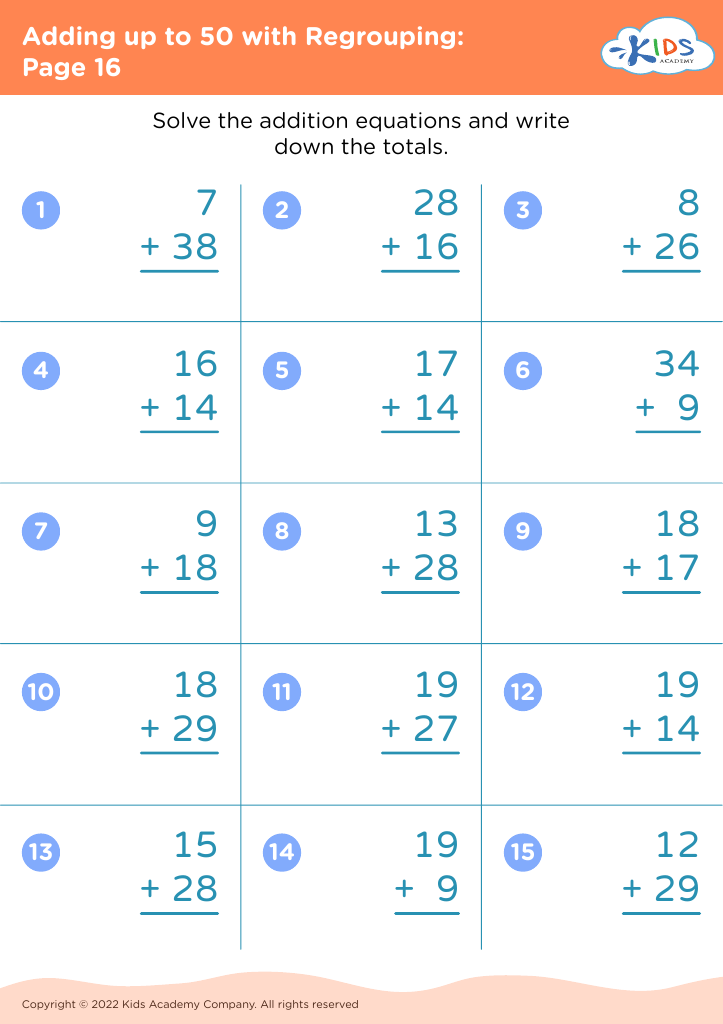
Adding up to 50 with Regrouping: Page 16
Worksheet


Understanding fraction addition and subtraction at a young age lays a critical foundation for advanced mathematical concepts. For 7-year-olds, this skill is not only crucial for their current math curriculum but also for developing logical reasoning and problem-solving skills. Comparing fractions introduces them to the notion of parts of a whole and helps them visually and conceptually grasp quantities, which is essential for everyday tasks and future academic endeavors.

Moreover, learning to add and subtract fractions enhances their numerical dexterity by requiring them to find common denominators, which reinforces multiplication and division skills. This process also instills a deep-rooted understanding of proportionality, which is fundamental in subjects like algebra, geometry, and even science.

For parents and teachers, it's about fostering an early appreciation and confidence in math. When 7-year-olds master such concepts, it boosts their confidence, making them more likely to engage and excel in more complex subjects as they grow. Additionally, problem-solving techniques learned now become invaluable life skills, from managing time and resources to making informed decisions.

Ultimately, caring about fraction addition and subtraction ensures that children do not feel lost in later stages of education and helps streamline their transition to higher learning with a more analytical and organized mindset.