Improving subtraction skills Addition & Subtraction Worksheets for 7-Year-Olds
3 filtered results
-
From - To
Help your 7-year-old enhance their subtraction abilities with our meticulously designed Addition & Subtraction Worksheets. Tailored for young learners, these worksheets focus on developing strong subtraction skills through engaging and fun exercises. Each worksheet includes various activities to boost math confidence while ensuring a thorough understanding of subtraction principles. By incorporating a mix of numerical problems and word problems, our worksheets aim to make learning subtraction enjoyable and effective. Perfect for both classroom and home use, these worksheets support continuous practice and skill improvement, laying a solid foundation for future math success. Download now to start transforming subtraction struggles into skills!
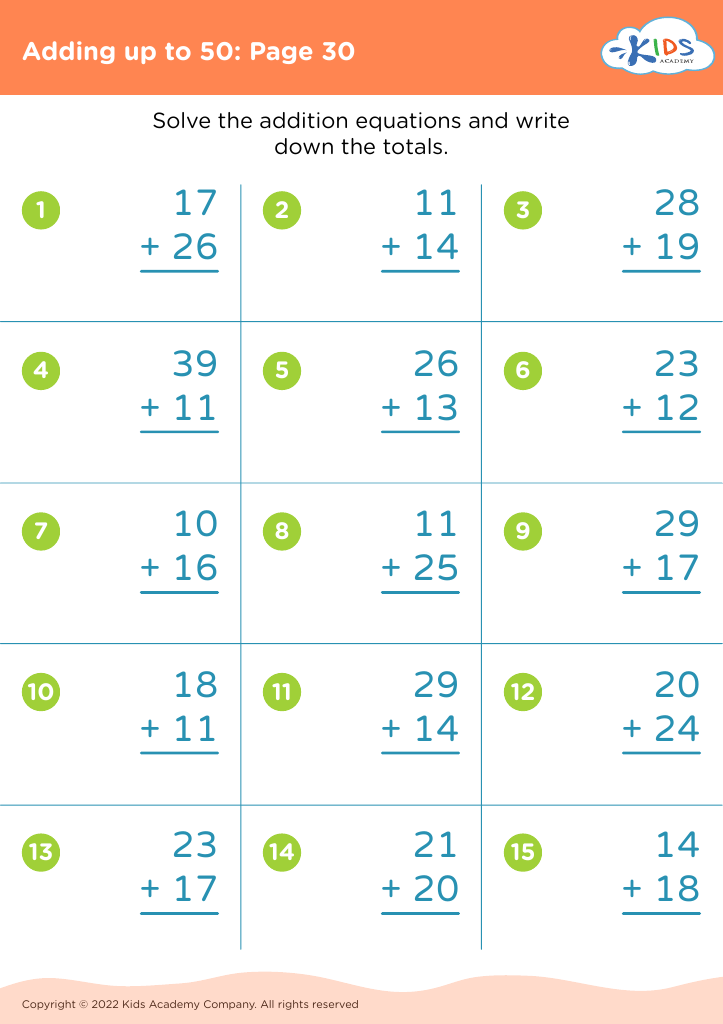
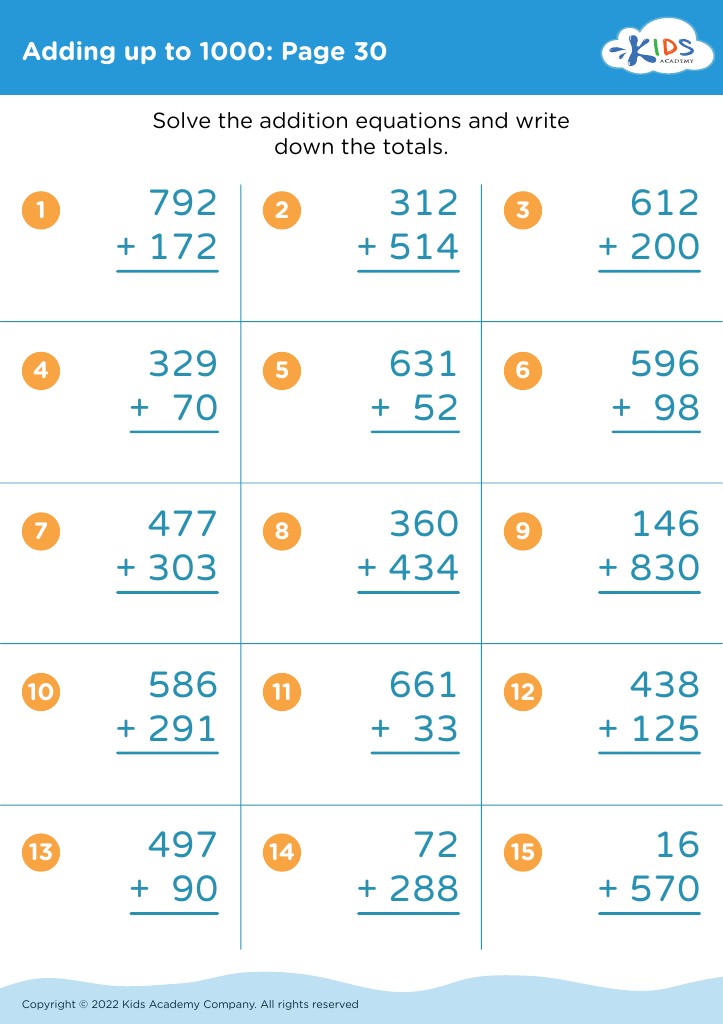
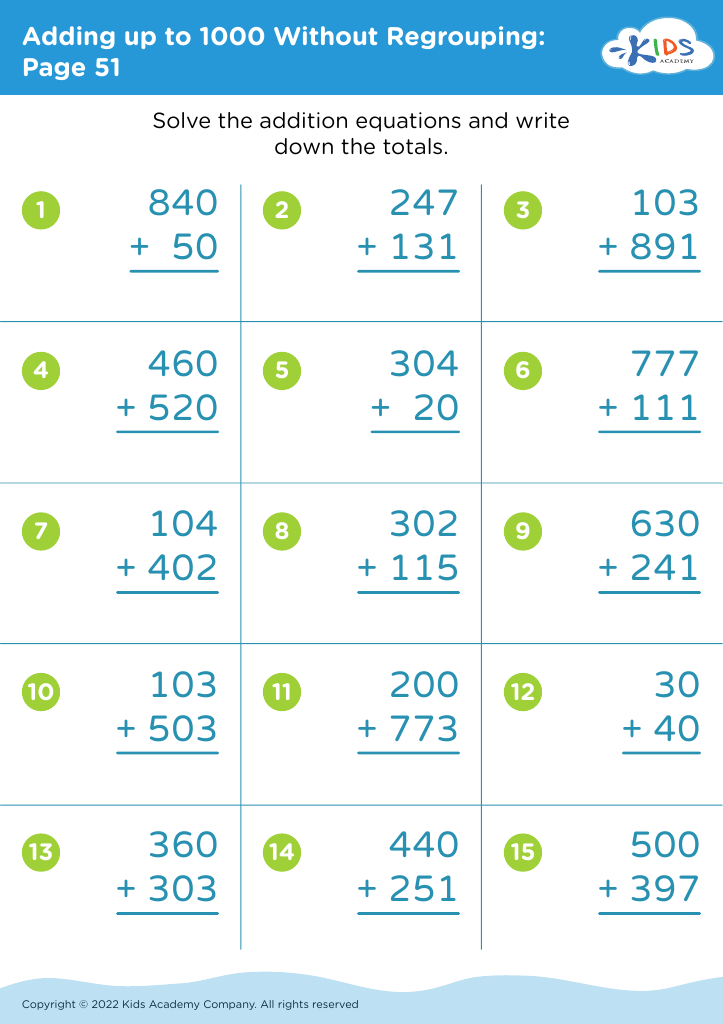








Improving subtraction skills, along with addition, is crucial for 7-year-olds as these foundational math skills are the building blocks for higher-level mathematics and daily problem-solving. At this age, children's brains are highly receptive and capable of grasping basic math concepts, which can set a positive trajectory for their future learning.
-
Confidence in Learning: Proficiency in subtraction boosts a child's confidence. If they face difficulties early on, they might develop math anxiety, which can hinder their academic journey. A solid understanding helps them tackle more complex problems later with assurance.
-
Critical Thinking: Subtraction enhances critical thinking and logical reasoning—skills necessary beyond math. It encourages children to analyze and break down problems, fostering mental agility.
-
Real-world Applications: Subtraction is used in daily activities like shopping, cooking, or even playing games. Understanding it helps children make sense of the world around them and manage real-life situations effectively.
-
Academic Success: Mastery of subtraction is imperative for success in more complex mathematical operations such as subtraction with borrowing, multiplication, division, and even algebra. Falling behind on these basics can make future lessons far more challenging.
Thus, parents and teachers should emphasize improving subtraction skills to ensure a solid mathematical foundation, fostering lifelong learning and practical skills.








