Practicing addition Addition & Subtraction Worksheets for 7-Year-Olds
4 filtered results
-
From - To
Unlock the potential of your 7-year-old's math skills with our engaging and educational Addition & Subtraction Worksheets. Designed to align with school curriculums and foster a love for learning, these worksheets help build a strong foundation in essential math concepts. Each worksheet is packed with fun, interactive exercises tailored to keep young minds actively engaged and challenged. Perfect for at-home practice or supplementary classroom material, these resources ensure steady progress through repetition and positive reinforcement. With clear instructions and visually captivating designs, your child will gain confidence and mastery in addition and subtraction. Start practicing today for math success tomorrow!
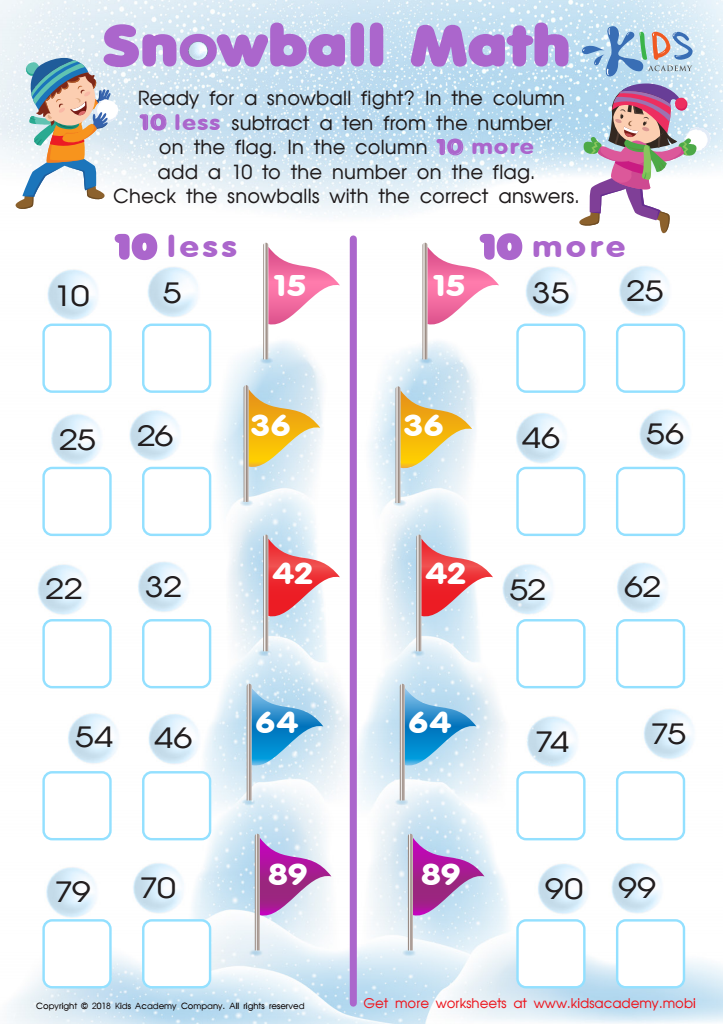
Snowball Math Worksheet
 Assign to My Students
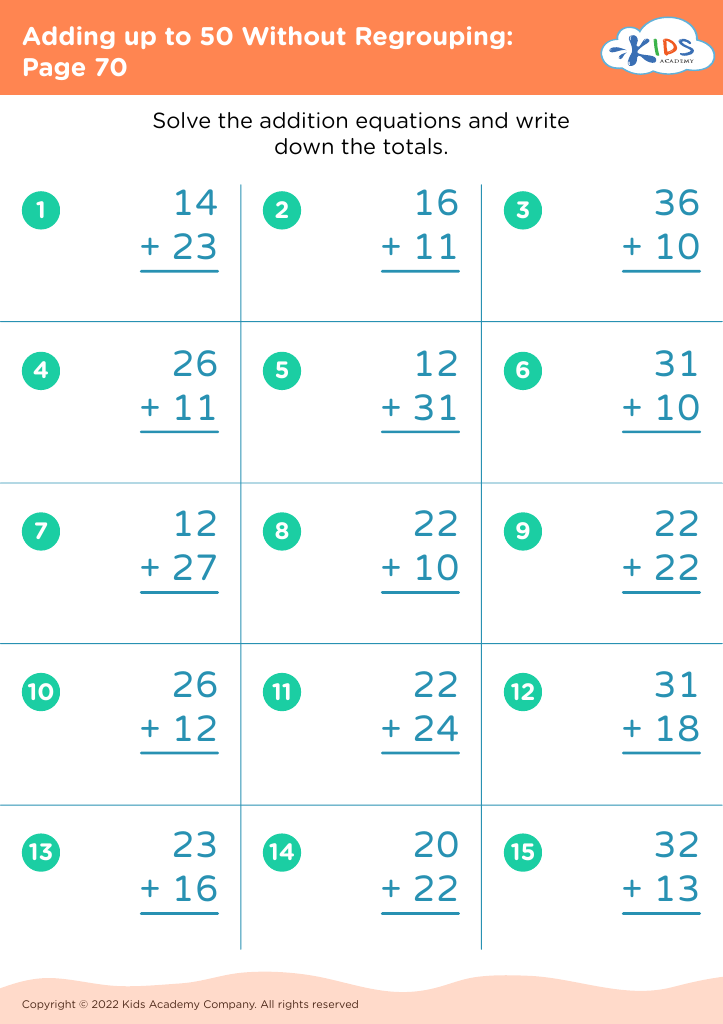
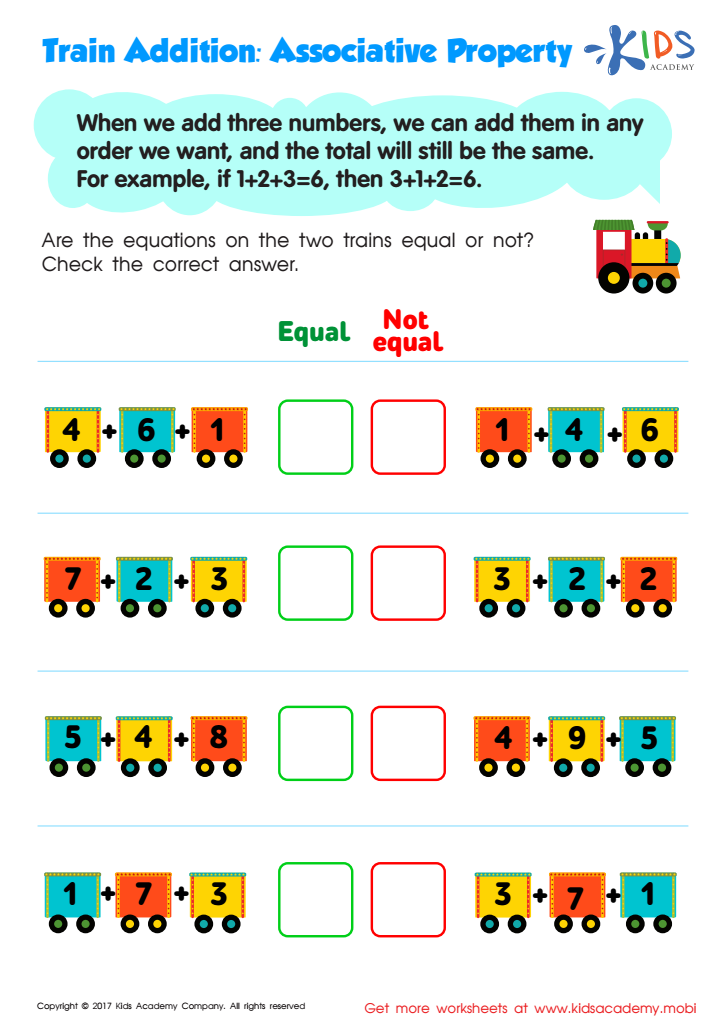
Train Addition: Associative Property Worksheet








At the age of seven, children are at a critical stage for cognitive development, and practicing addition and subtraction plays a vital role in their overall learning process. Both parents and teachers should prioritize these basic arithmetic skills as they form the foundation for all future math-related endeavors. First, mastering basic addition and subtraction fosters a child's number sense, an essential skill for understanding more complex mathematical concepts. It enhances their ability to think logically and solve problems, which are important lifelong skills.
Moreover, regular practice ensures fluency and accuracy, reducing the cognitive load on children when they encounter more advanced topics in later grades. This fluency can also boost their confidence, turning math from a daunting subject into an engaging and rewarding activity. For teachers, focusing on these skills in the classroom helps in maintaining a consistent standard of learning, ensuring that all students progress together.
For parents, practicing these skills at home provides an opportunity to be involved in their child's education, reinforcing what is learned in school and strengthening the parent-child bond through collaborative activities. Finally, solid arithmetic skills have practical benefits; they are used in everyday activities such as shopping, budgeting, and cooking, making these early lessons valuable for real-life situations. Therefore, sustained practice in addition and subtraction is not just about learning arithmetic but developing a well-rounded, confident, and capable individual.








