Practicing mental arithmetic Addition & Subtraction Worksheets for 7-Year-Olds
3 filtered results
-
From - To
Discover our engaging "Practicing Mental Arithmetic Addition & Subtraction Worksheets" designed specifically for 7-year-olds! These worksheets promote vital math skills by encouraging young learners to improve their mental calculation abilities. Perfect for both classroom and home learning, each activity focuses on enhancing addition and subtraction proficiency, building confidence, and fostering a love for math. Our colorful and interactive worksheets provide a fun way for children to practice essential math skills while progressing at their own pace. Equip your child with the tools they need to excel in arithmetic and make learning an enjoyable adventure! Explore our collection today!
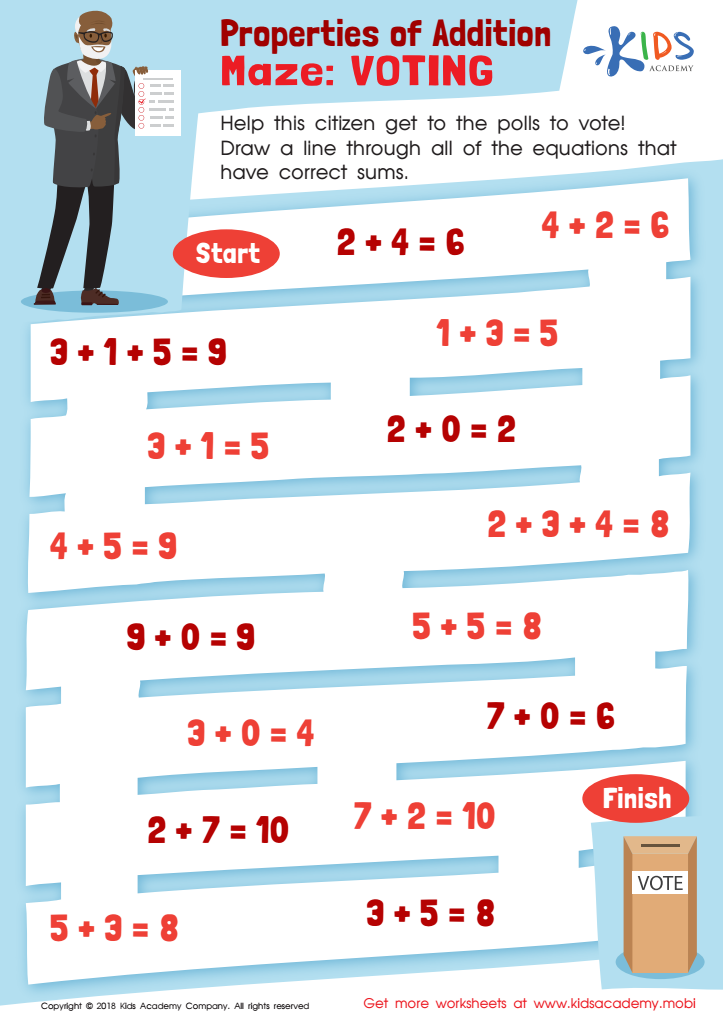
Properties of Addition Maze: Voting Worksheet
 Assign to My Students
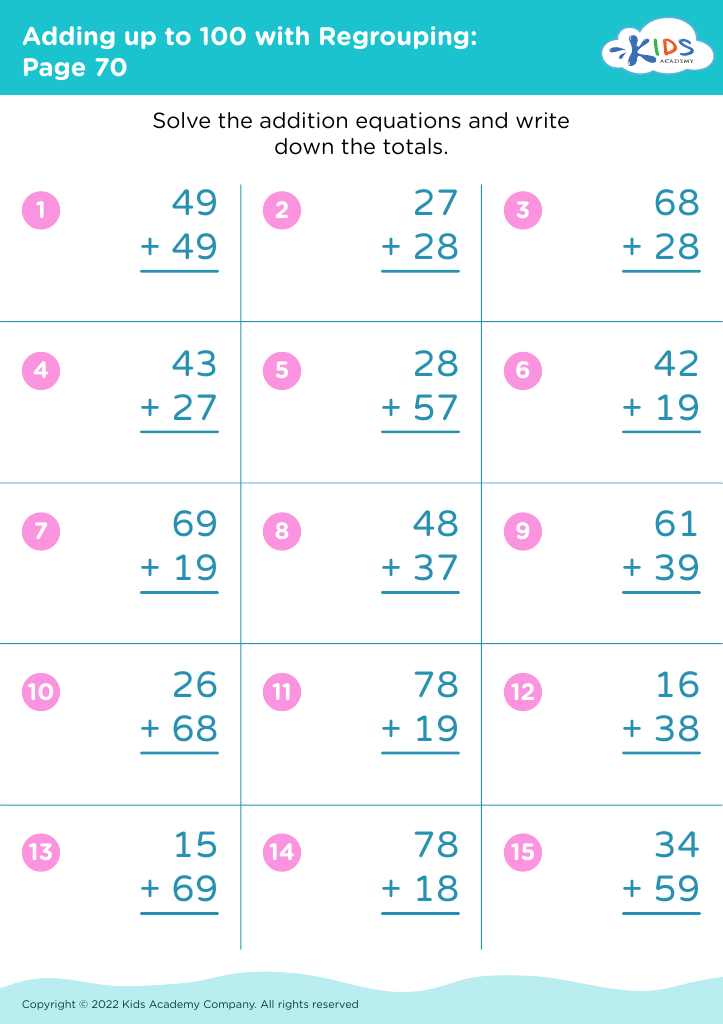
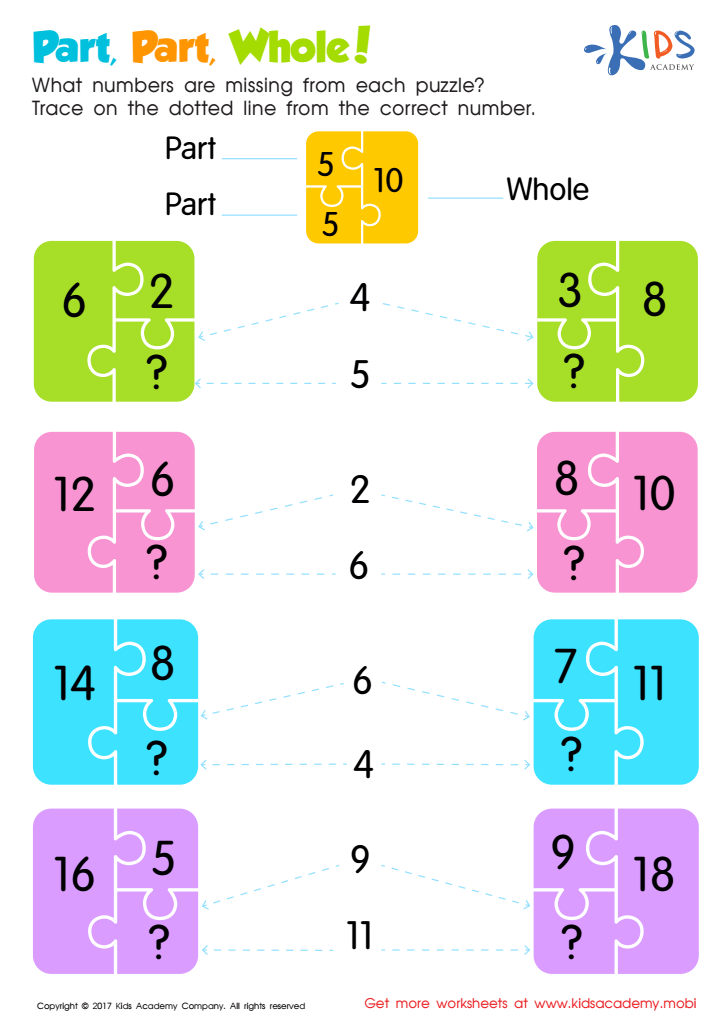
Part, Part, Whole Worksheet








Practicing mental arithmetic for addition and subtraction is crucial for 7-year-olds, as it establishes a solid foundation for their mathematical understanding and overall cognitive development. At this age, children are increasingly capable of grasping abstract concepts, making it an optimal time to enhance their arithmetic skills. Mastery of these fundamentals boosts their confidence and helps lay the groundwork for more complex mathematical operations encountered in later grades.
Additionally, mental arithmetic fosters critical thinking and problem-solving abilities. When children engage in practice, they develop strategies for quickly breaking down problems, which builds their analytical skills. This practice promotes mental agility, allowing children to process information faster both in math and other subjects.
Moreover, developing these skills can significantly impact a child’s academic performance as well as their attitude toward math. Children who excel in basic math are more likely to approach advanced topics with enthusiasm rather than anxiety. Furthermore, mental arithmetic has practical implications, helping children handle everyday situations involving money, time, and measurements.
Teachers and parents should prioritize mental arithmetic practice to cultivate a generation of confident, capable mathematicians ready to tackle future academic challenges.








