Filters

32 filtered results

Clear all filters
Favorites
With answer key
Interactive

32 filtered results

Difficulty Level

Grade


Discover our engaging Shape Recognition Addition & Subtraction Worksheets specially designed for 7-year-olds! These worksheets seamlessly blend math practice with shape recognition skills, promoting critical thinking and comprehension. Children will have fun identifying various shapes while honing their addition and subtraction abilities through interactive exercises. Our thoughtfully crafted worksheets cater to varying skill levels, ensuring that every child can build confidence in their math skills while exploring the fascinating world of shapes. Encourage your child’s love for learning with these colorful, educational resources that make math enjoyable and challenging. Join us in fostering a strong math foundation today!
Check out this FREE Trial Lesson on Addition & Subtraction for age 7!

D

Favorites
With answer key
Interactive
  • 7
  • Shape Recognition
  • Addition & Subtraction
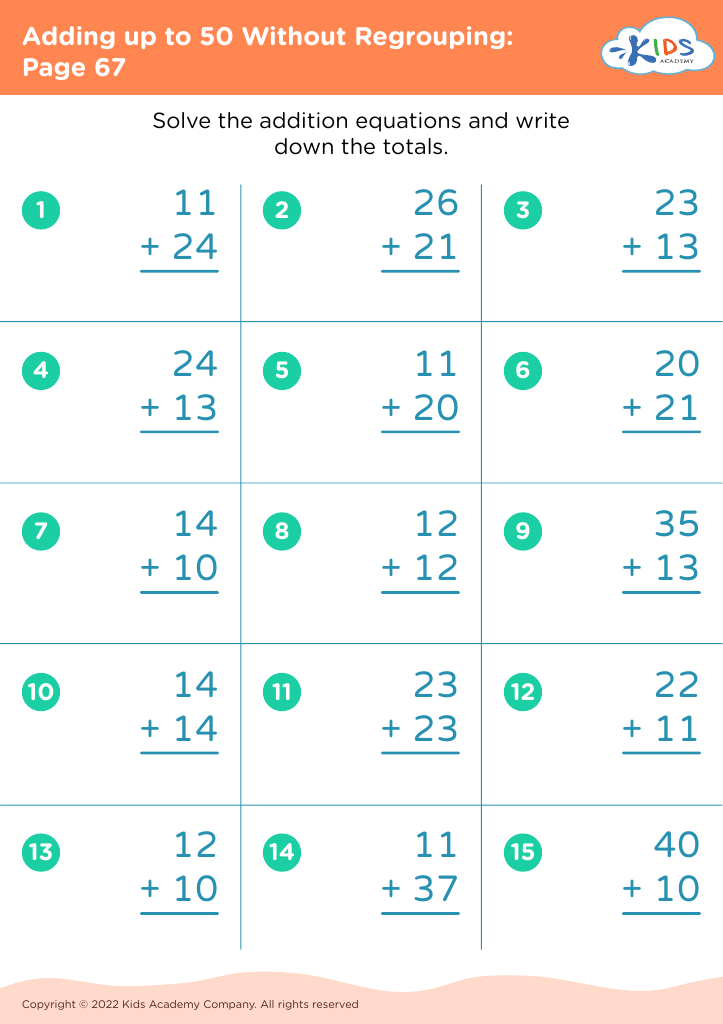
Adding up to 100 with Regrouping: Page 24
Worksheet
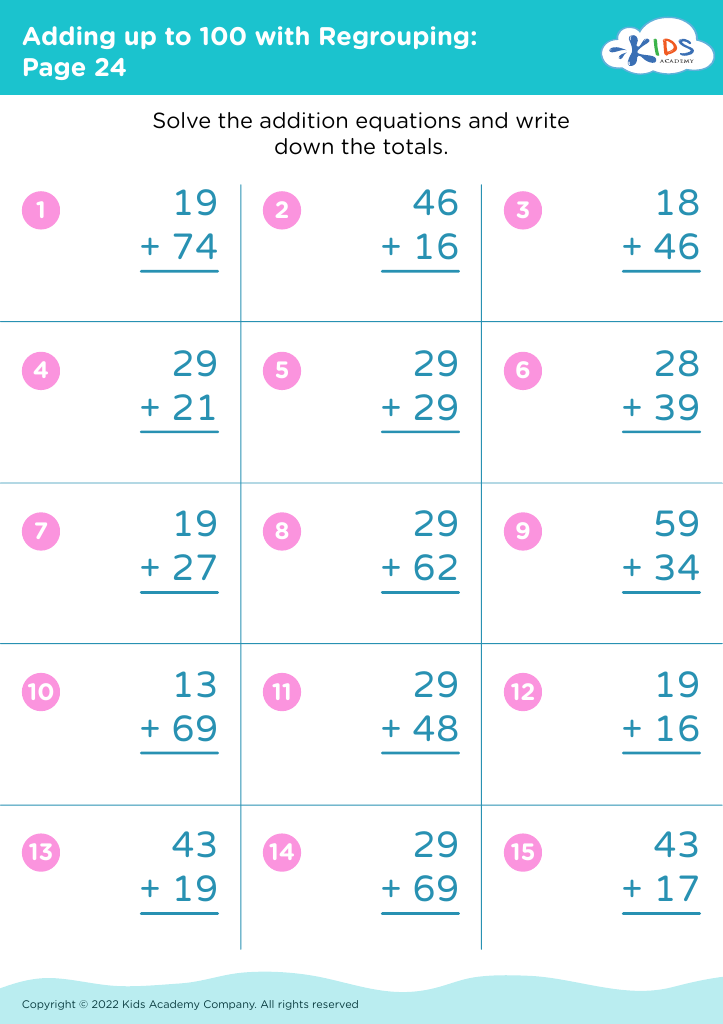
Adding up to 50 with Regrouping: Page 30
Worksheet
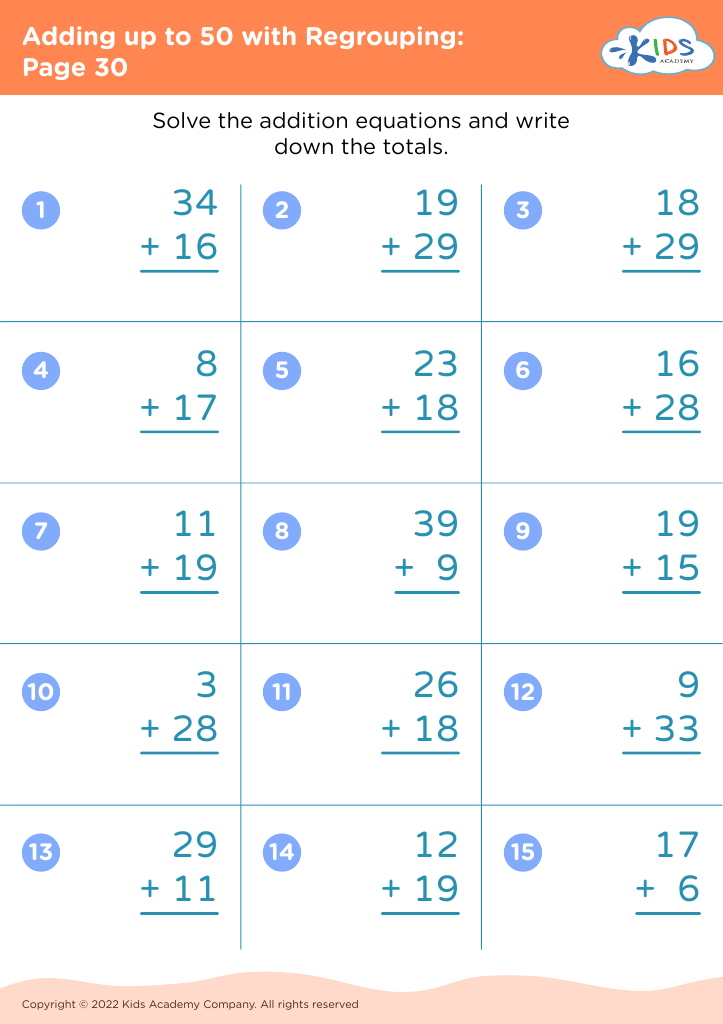
Adding up to 50 with Regrouping: Page 11
Worksheet
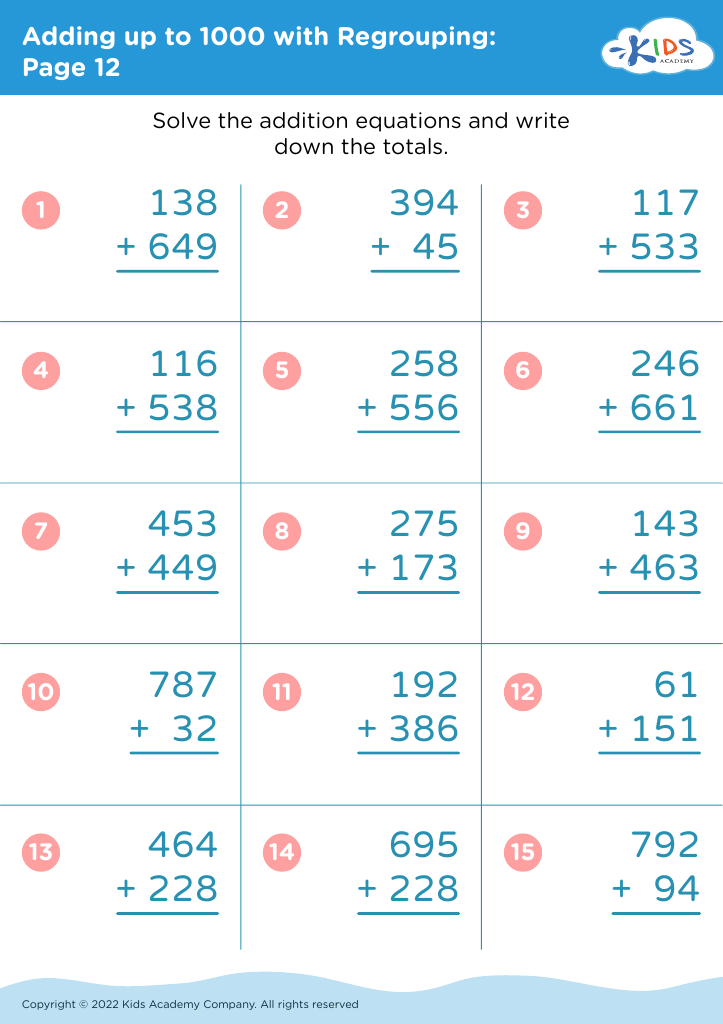
Adding up to 1000 with Regrouping: Page 12
Worksheet
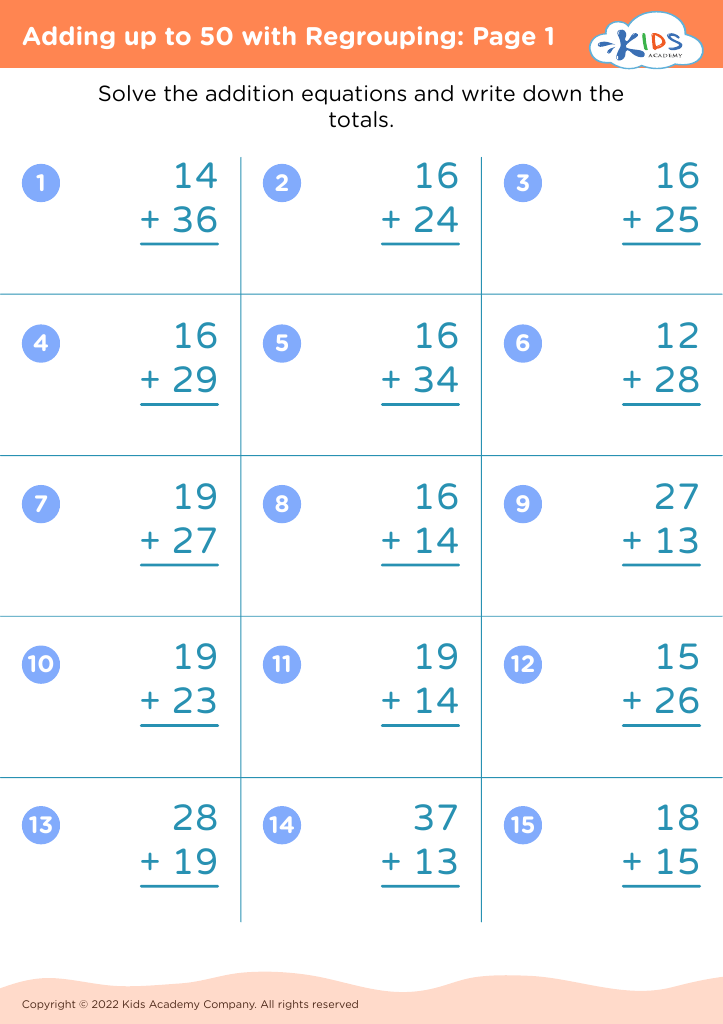
Adding up to 50 with Regrouping: Page 1
Worksheet
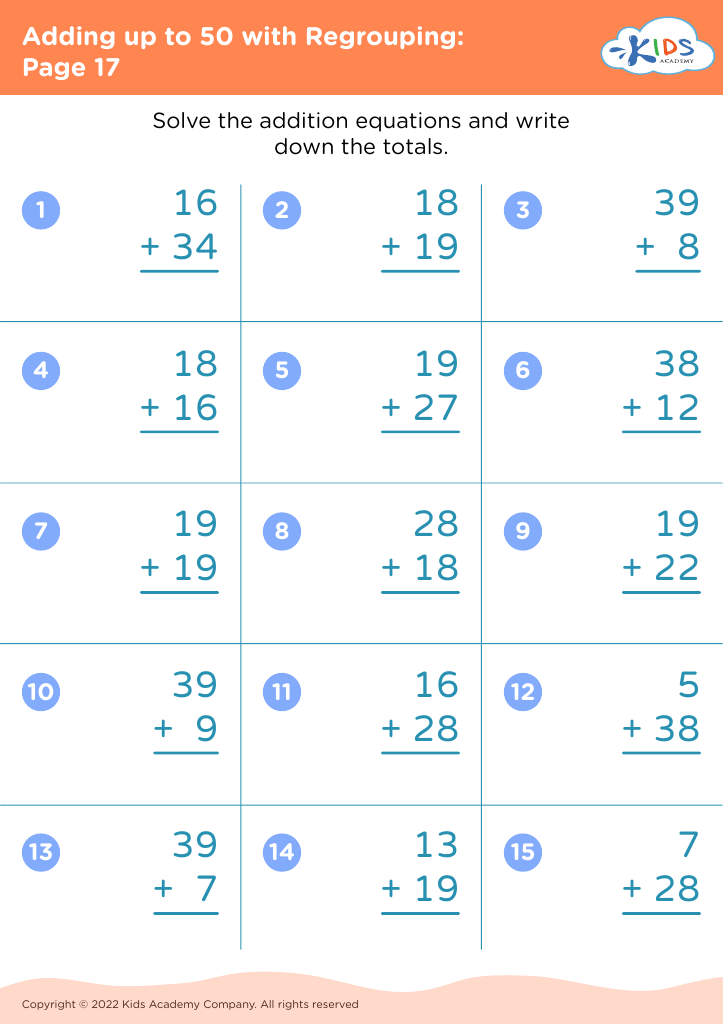
Adding up to 50 with Regrouping: Page 17
Worksheet
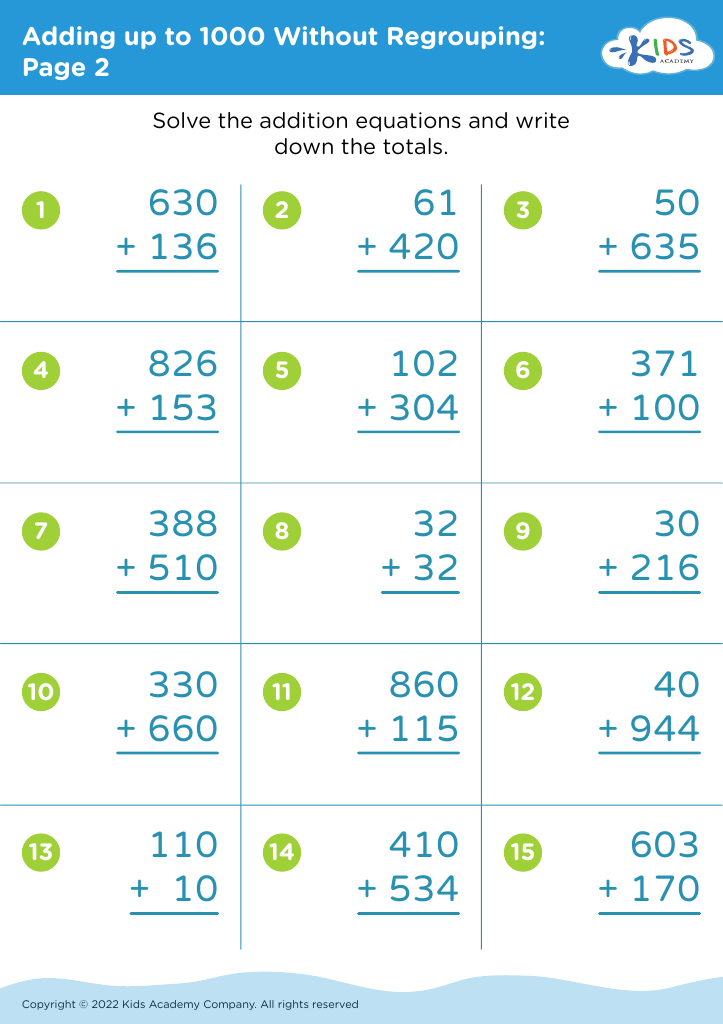
Adding up to 1000 Without Regrouping: Page 2
Worksheet
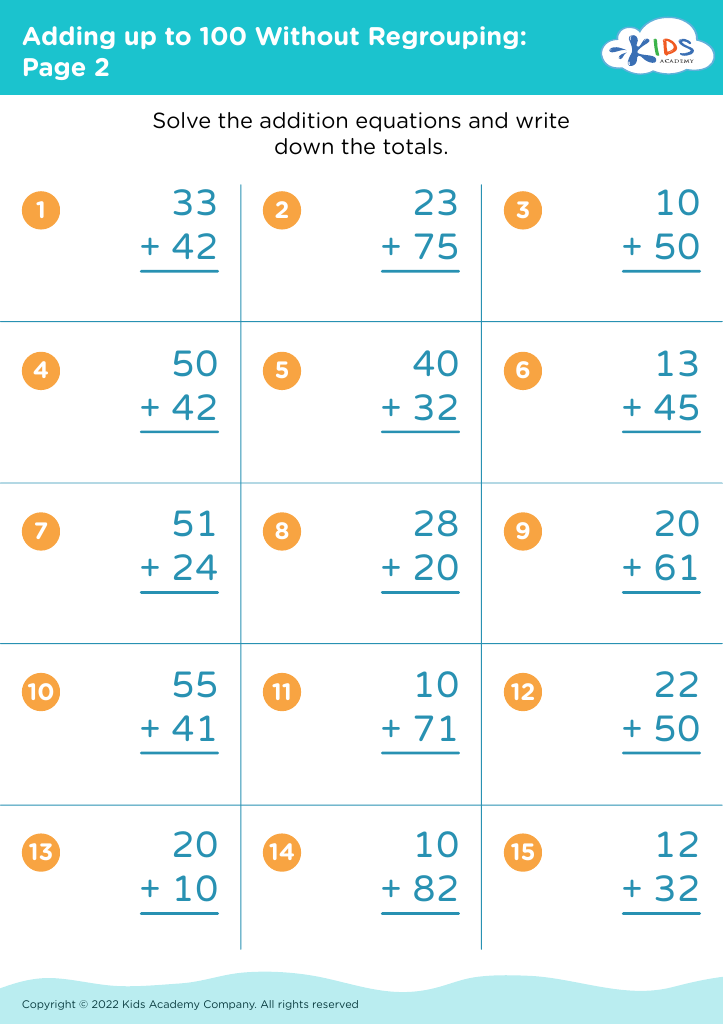
Adding up to 100 Without Regrouping: Page 2
Worksheet
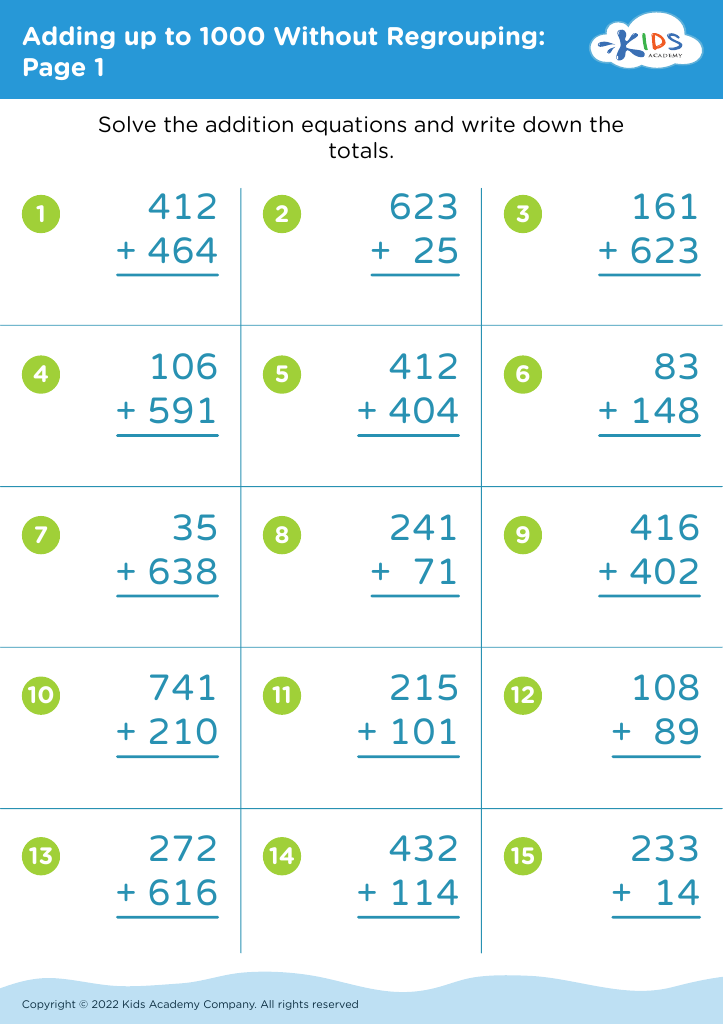
Adding up to 1000 Without Regrouping: Page 1
Worksheet
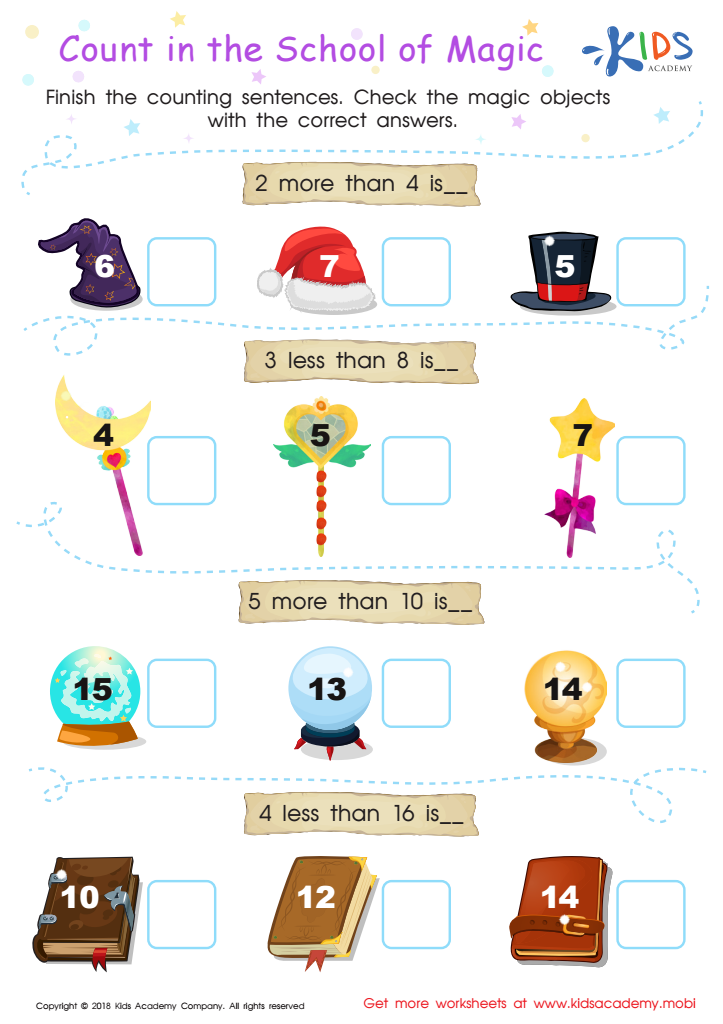
Count in the School of Magic Worksheet

Count in the School of Magic Worksheet

Your math learners can explore the School of Magic with this worksheet. They'll read equations with addition and subtraction numbers under 20, count back and forth to find the answer, then complete the counting sentences. Fun pictures and easy accuracy make it an enjoyable and successful learning experience.
Count in the School of Magic Worksheet
Worksheet
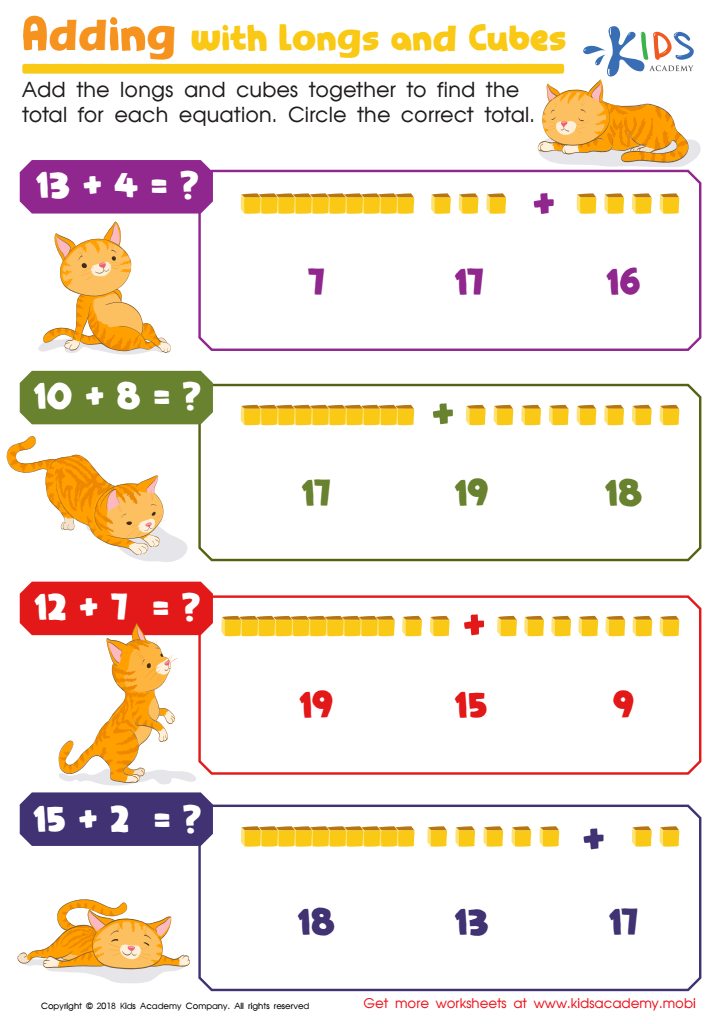
Adding With Longs and Cubes Worksheet
Adding With Longs and Cubes Worksheet
Math might not be your child's favorite, but they must master it to advance. If they're having difficulties or don't like it, use this worksheet to make it easier. Have them add longs and cubes together to find the total for each question, then circle the correct answer. This exercise can help make math experiences better.
Adding With Longs and Cubes Worksheet
Worksheet
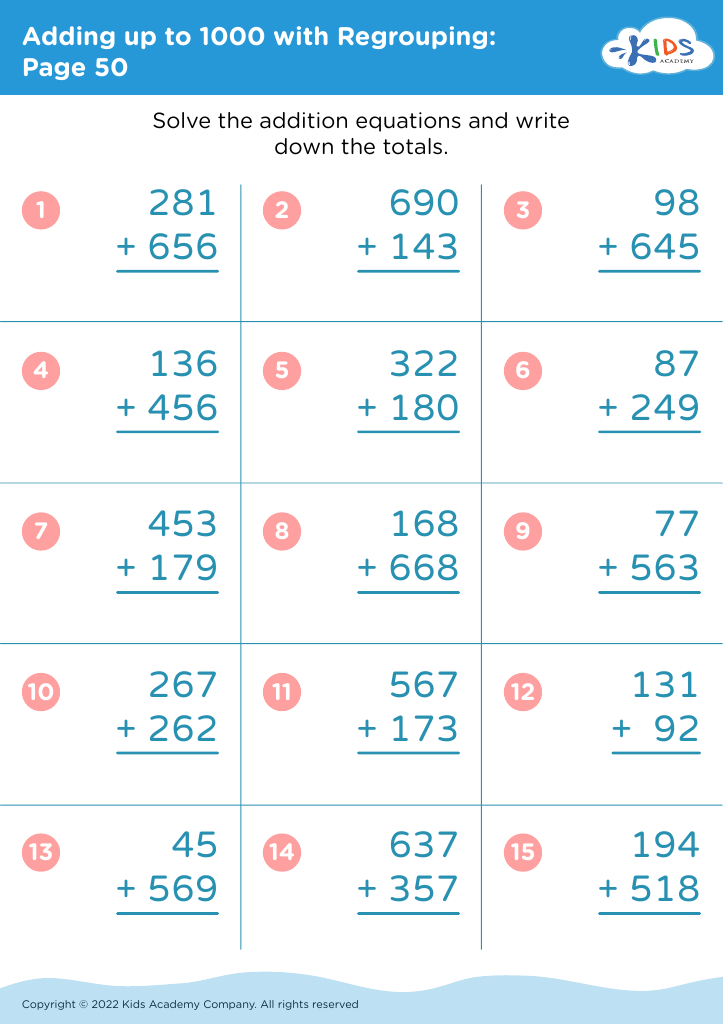
Adding up to 1000 with Regrouping: Page 50
Worksheet
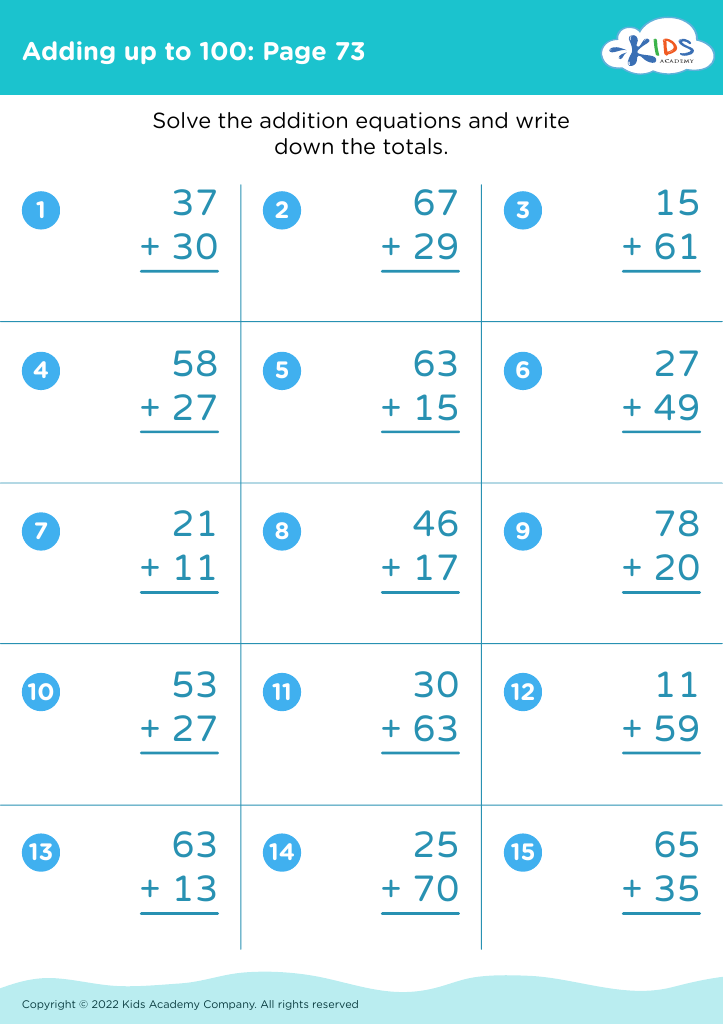
Adding up to 100: Page 73

Adding up to 100: Page 73

Adding up to 100: Page 73
Worksheet
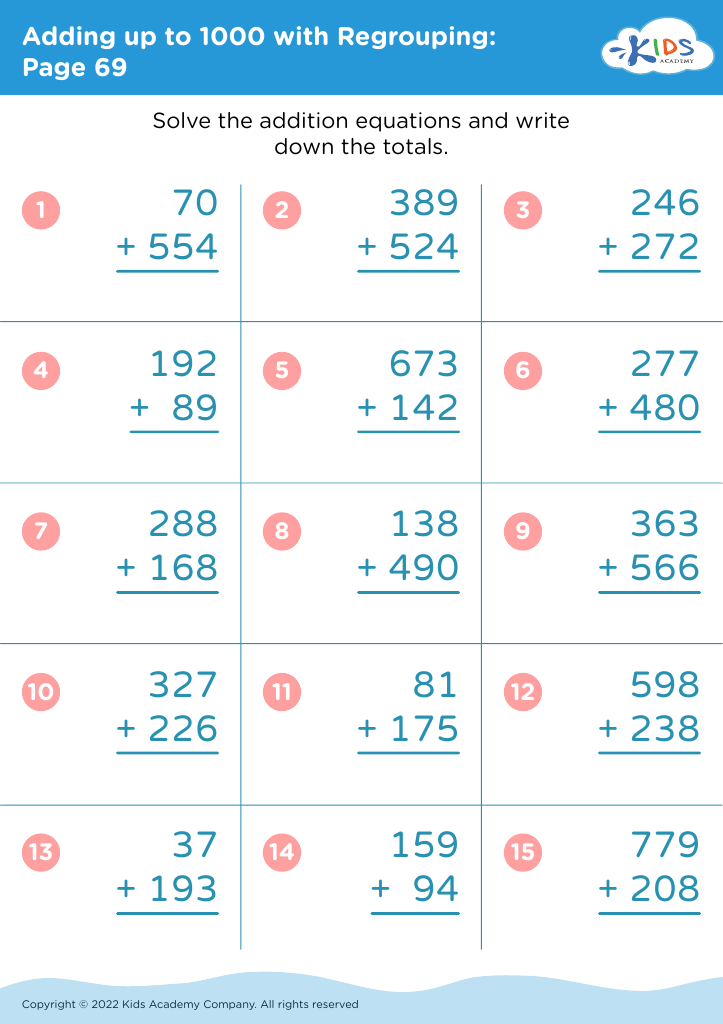
Adding up to 1000 with Regrouping: Page 69
Worksheet
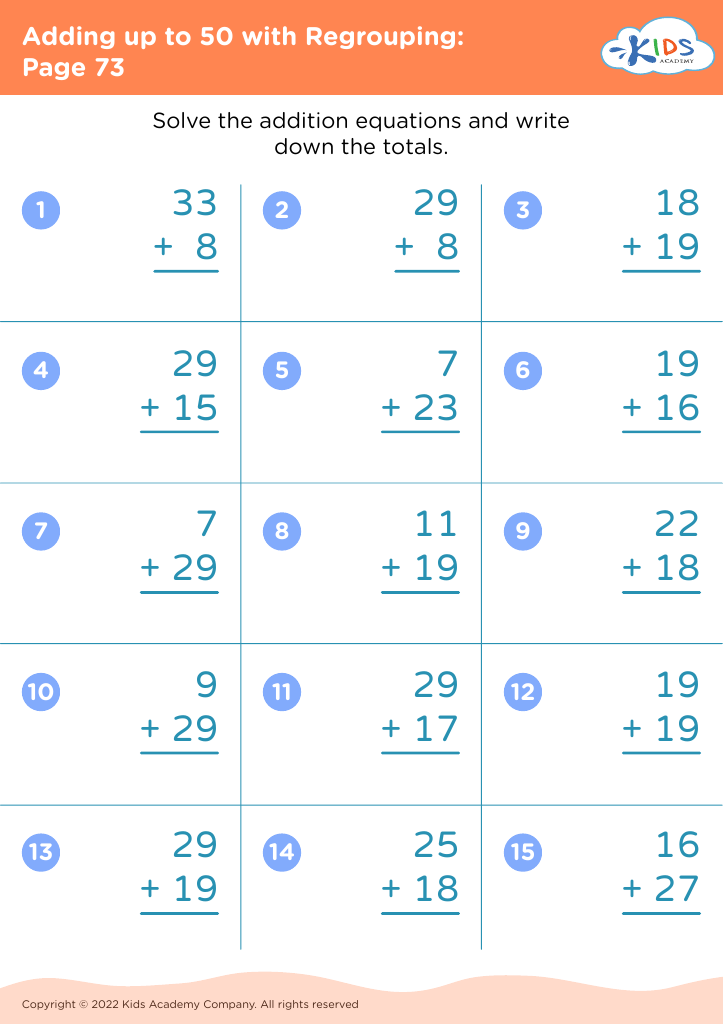
Adding up to 50 with Regrouping: Page 73
Worksheet
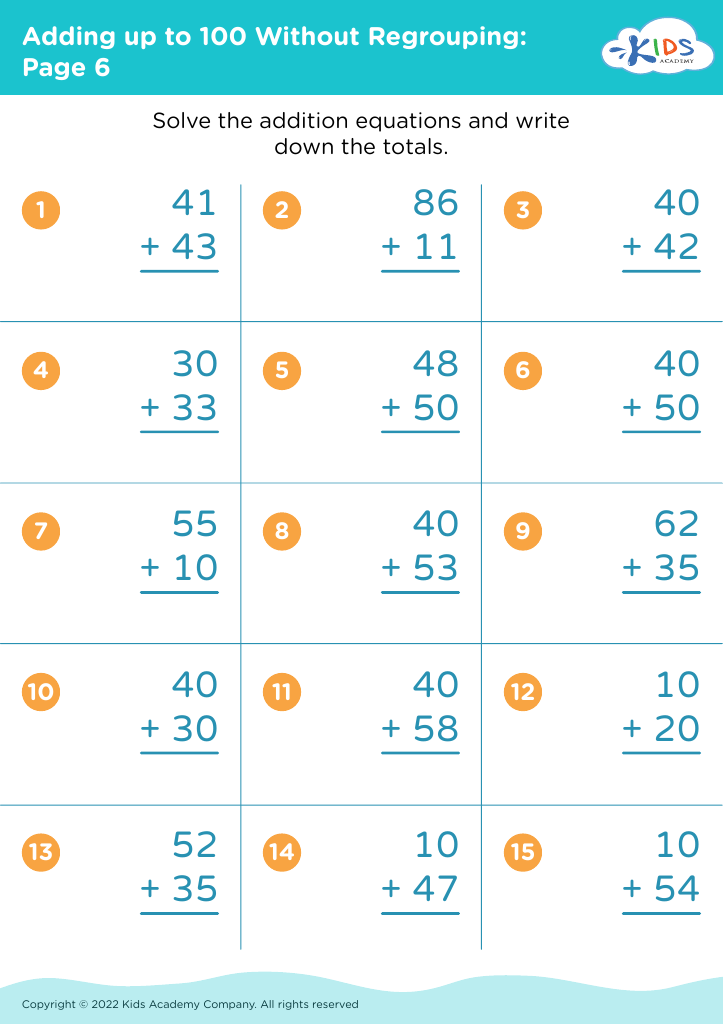
Adding up to 100 Without Regrouping: Page 6
Worksheet
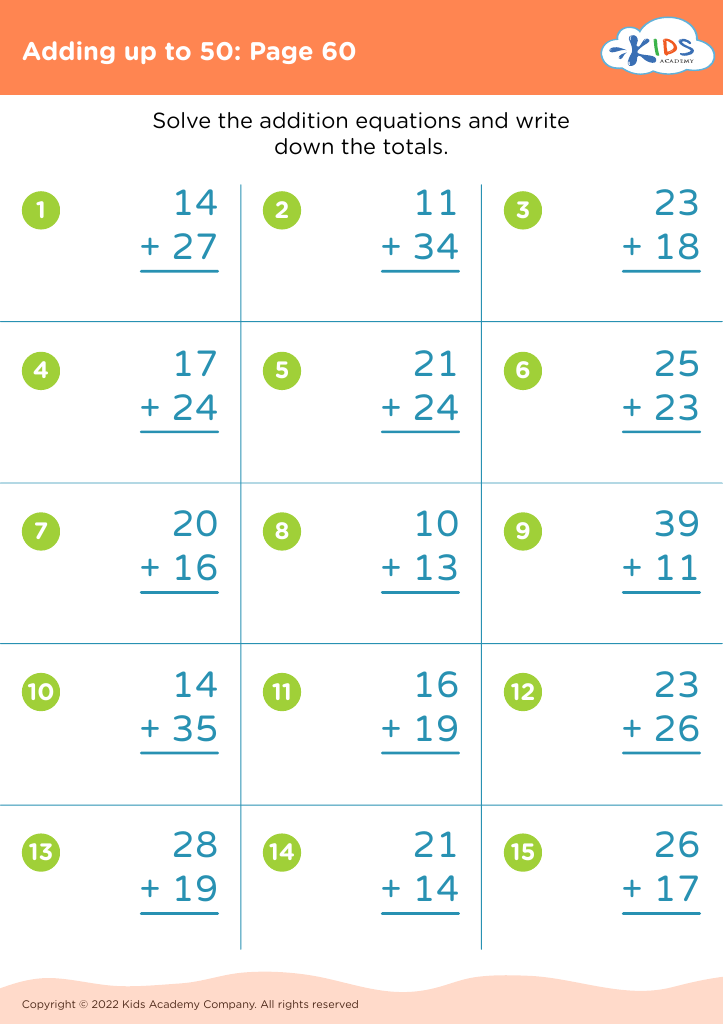
Adding up to 50: Page 60

Adding up to 50: Page 60

Adding up to 50: Page 60
Worksheet
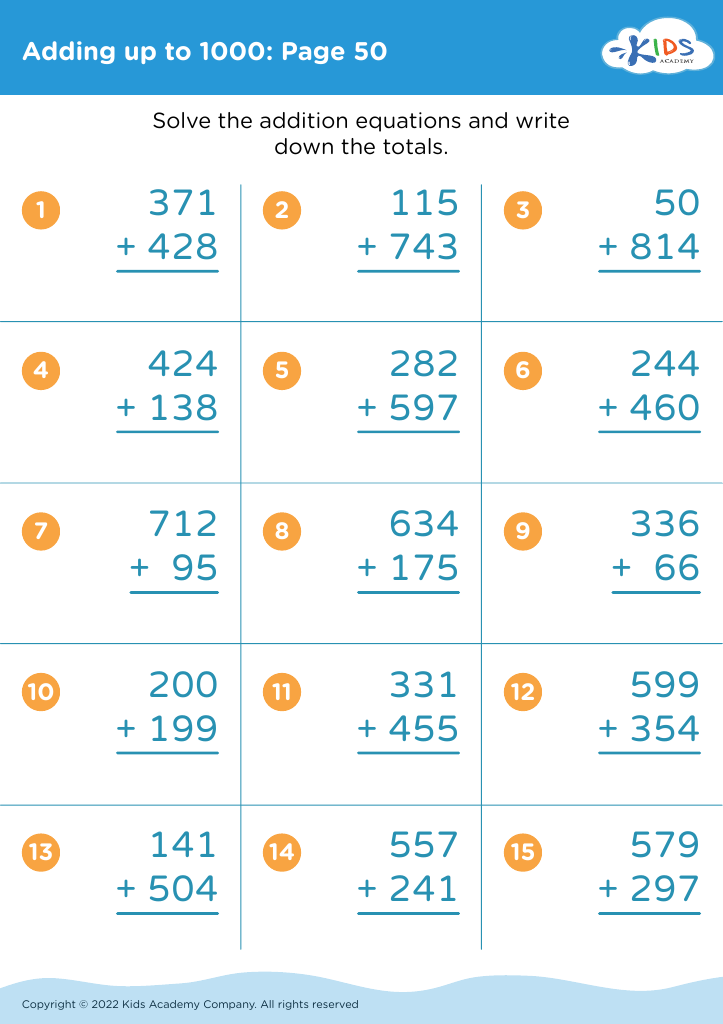
Adding up to 1000: Page 50

Adding up to 1000: Page 50

Adding up to 1000: Page 50
Worksheet
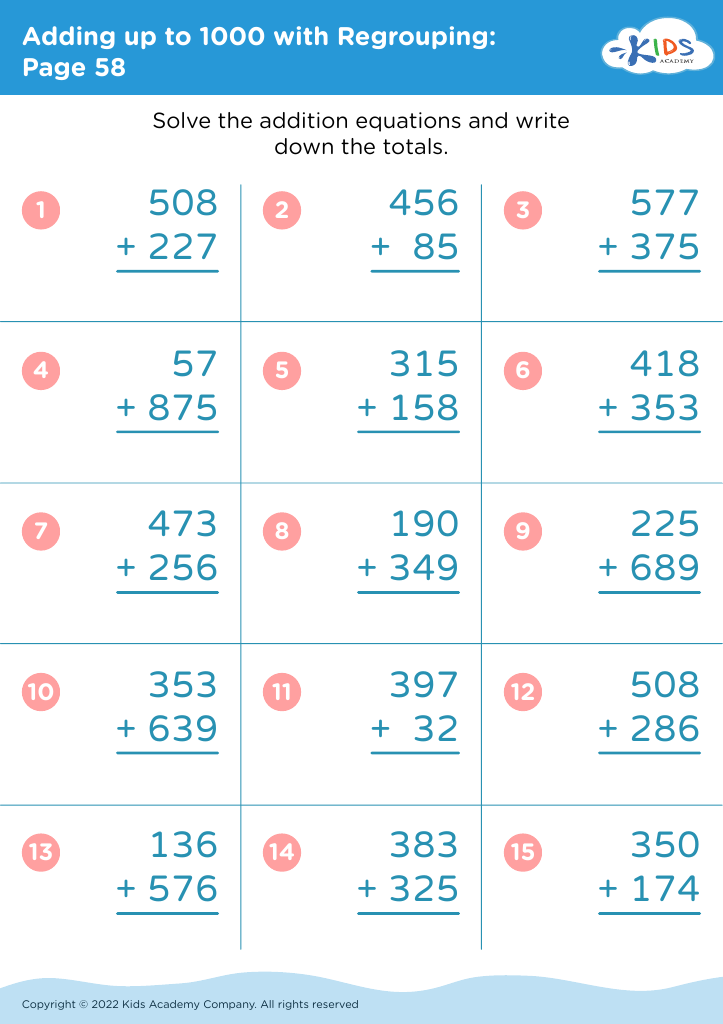
Adding up to 1000 with Regrouping: Page 58
Worksheet
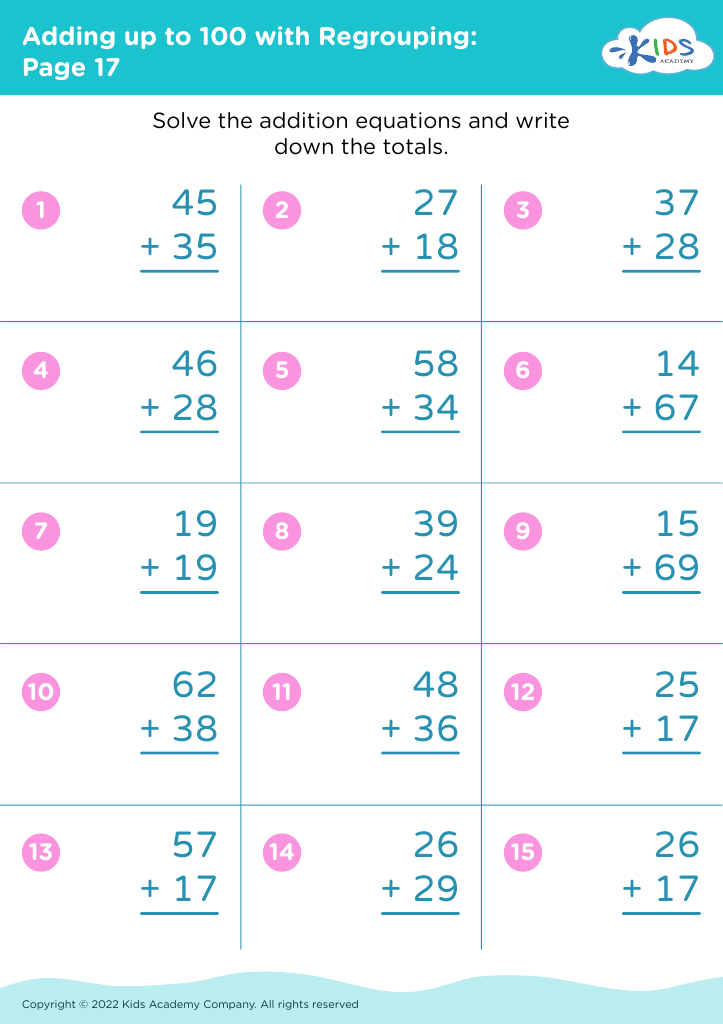
Adding up to 100 with Regrouping: Page 17
Worksheet
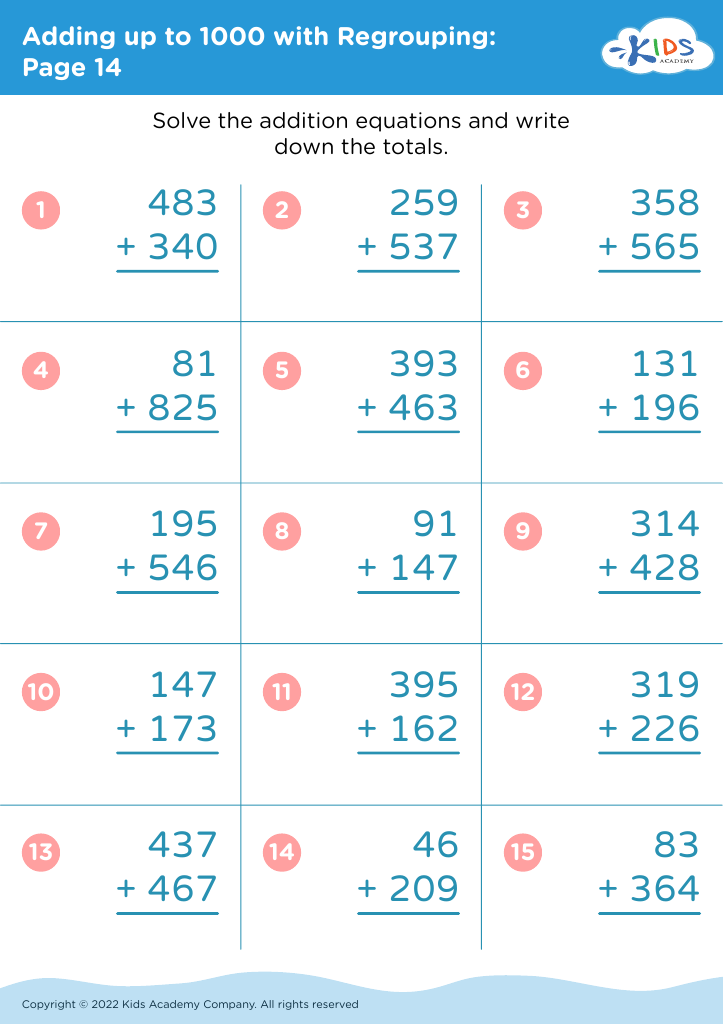
Adding up to 1000 with Regrouping: Page 14
Worksheet
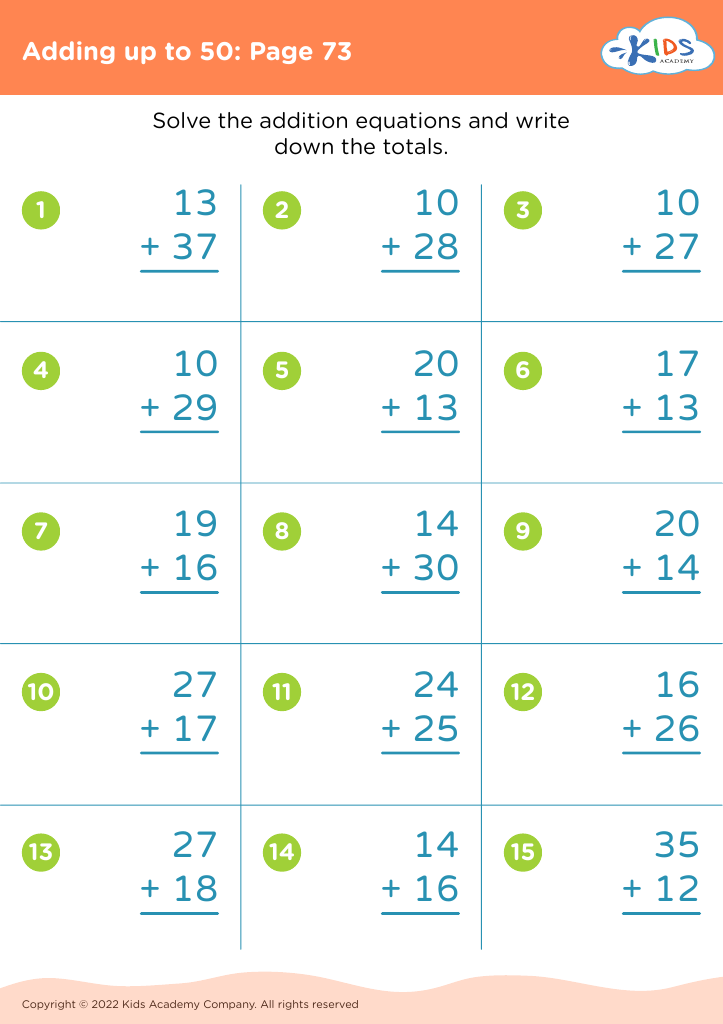
Adding up to 50: Page 73

Adding up to 50: Page 73

Adding up to 50: Page 73
Worksheet
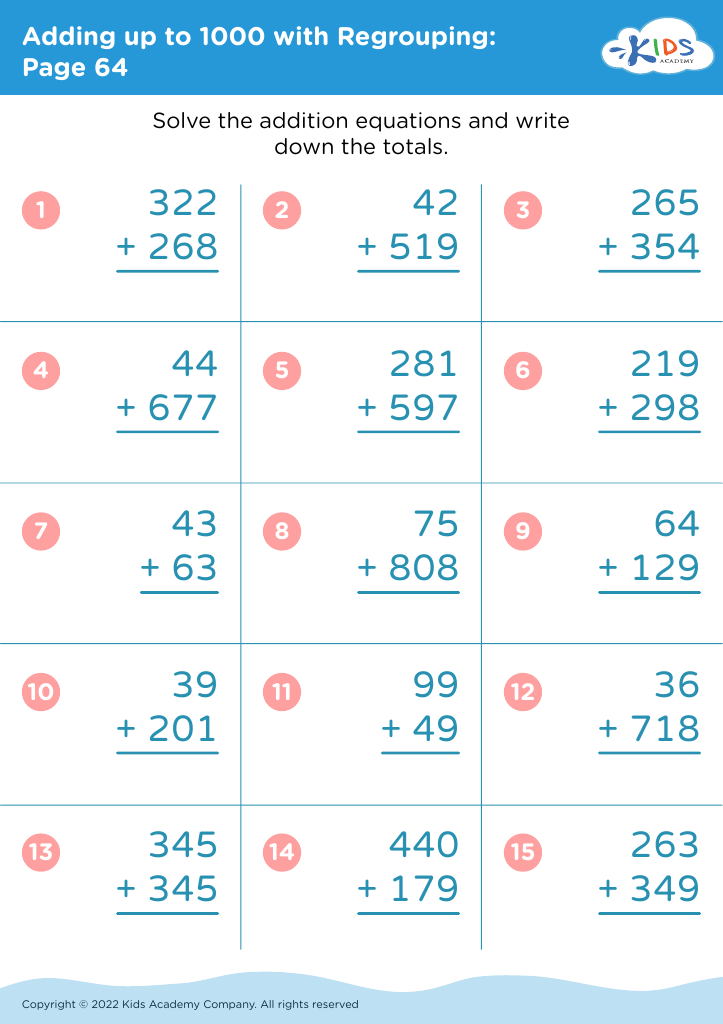
Adding up to 1000 with Regrouping: Page 64
Worksheet
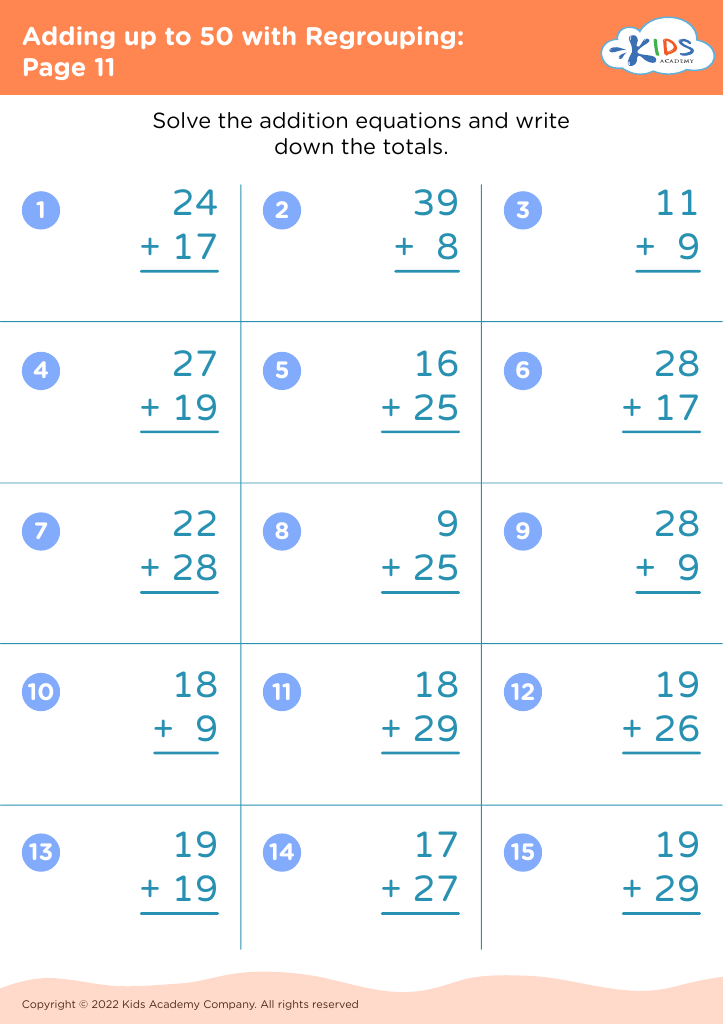
Adding up to 50 Without Regrouping: Page 67
Worksheet


Shape recognition, alongside addition and subtraction, plays a crucial role in the cognitive development of 7-year-olds. Understanding shapes enhances spatial awareness, which is fundamental for problem-solving in mathematics and everyday life. When children learn to identify and differentiate shapes, they not only solidify their mathematical vocabulary but also lay the groundwork for geometric concepts they'll encounter later in school.

Incorporating shape recognition into addition and subtraction exercises makes learning more engaging and interactive. For instance, by using shapes such as circles or triangles in math problems, children can visualize quantities and build their ability to make connections between numbers and physical forms. This can make abstract concepts more relatable and easier to grasp.

Additionally, learning to count and manipulate shapes helps young learners develop critical thinking and reasoning skills. When parents and teachers encourage practices integrating both shape recognition and fundamental math operations, they foster a holistic educational experience. Ultimately, this dual focus nurtures a love of learning, promotes analytical skills, and prepares children for more advanced mathematical concepts in the future. Thus, supporting children's growth in these areas is vital for their academic success and overall development.