Understand patterns Addition & Subtraction Worksheets for 7-Year-Olds
6 filtered results
-
From - To
Discover our engaging "Understand Patterns Addition & Subtraction Worksheets" designed specifically for 7-year-olds. These worksheets help young learners recognize numerical patterns, laying a strong foundation for their math skills. By incorporating visual aids and interactive exercises, children can easily grasp addition and subtraction concepts while developing critical thinking abilities. Each worksheet offers a variety of problems that make learning enjoyable and effective. Foster your child's mathematical confidence and enhance their ability to identify patterns with our educational resources. Perfect for classroom activities or at-home practice, these worksheets are a must-have for every parent and teacher aiming to support young learners in their math journey!
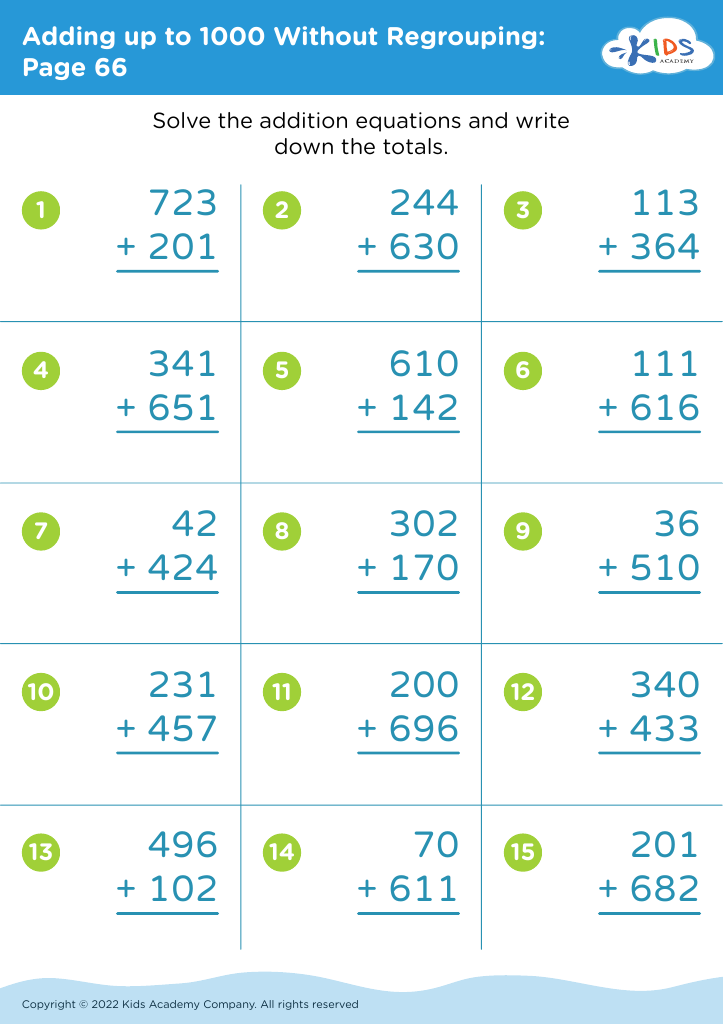
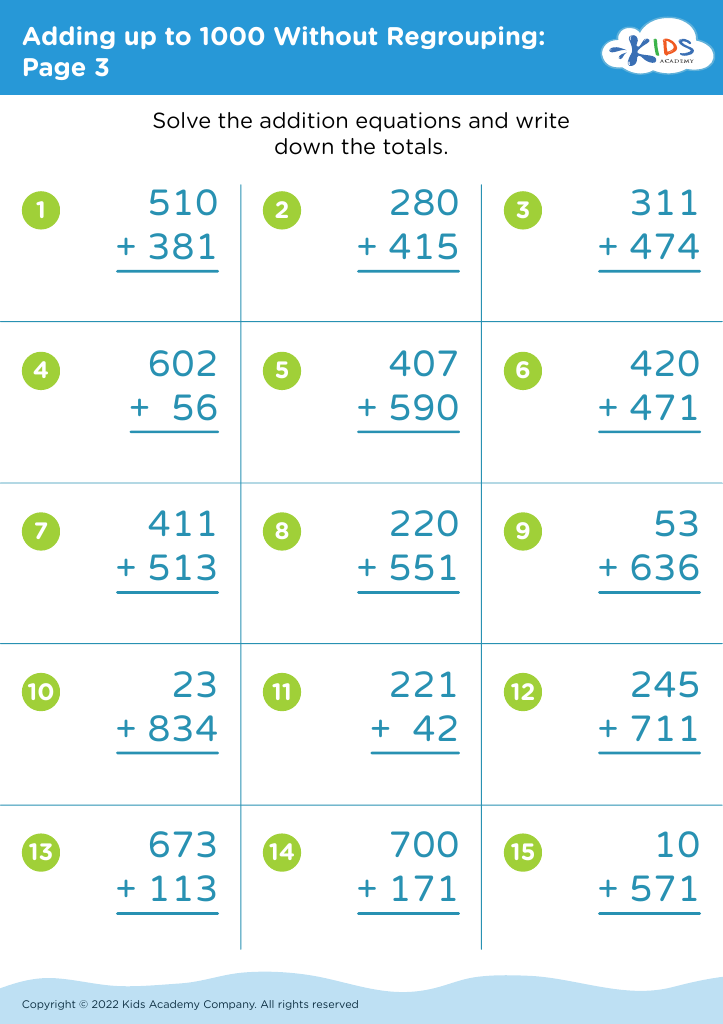
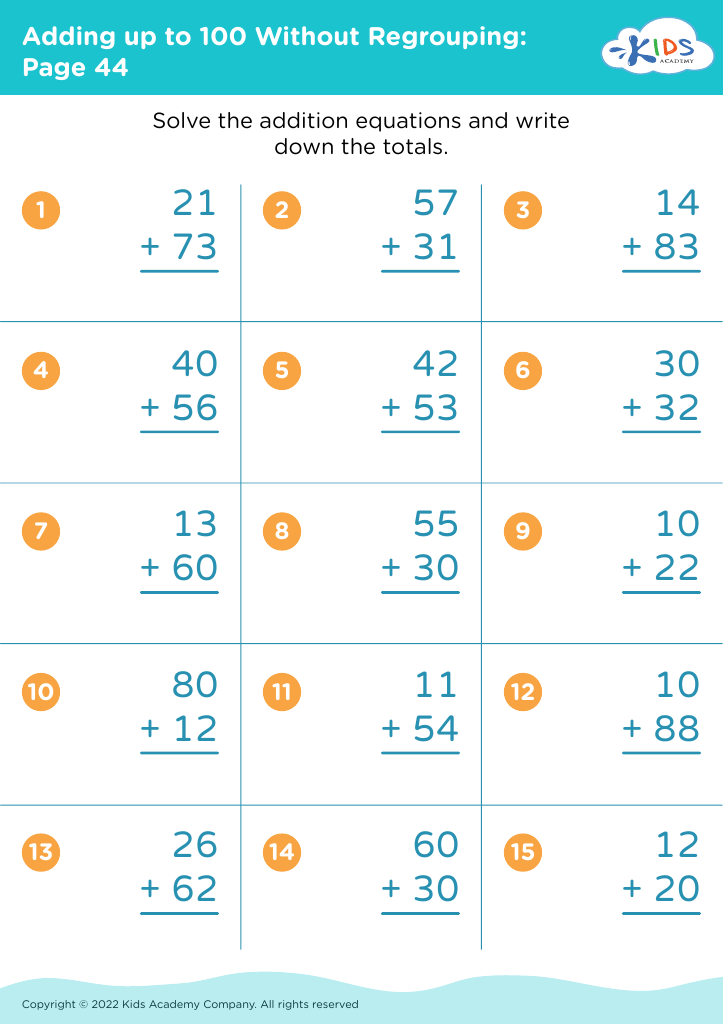
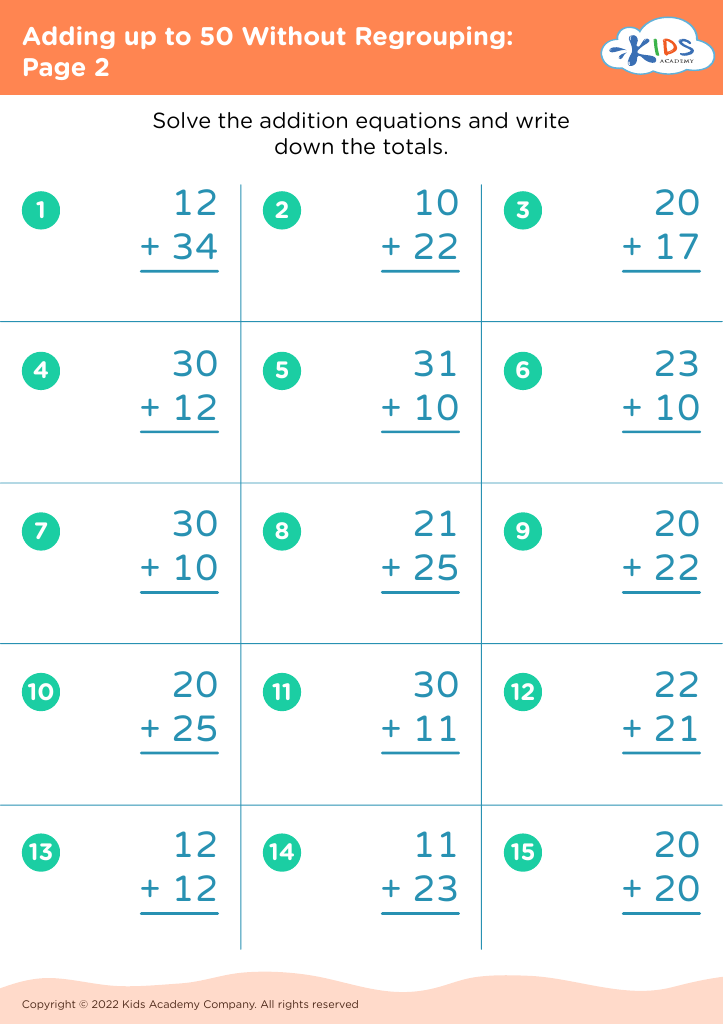
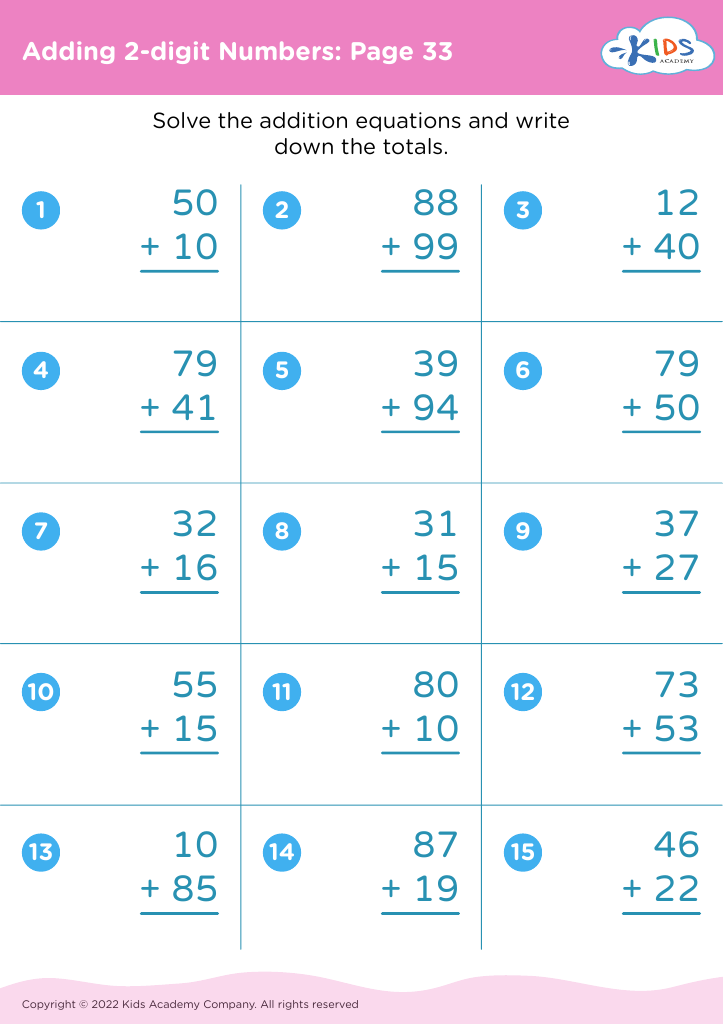
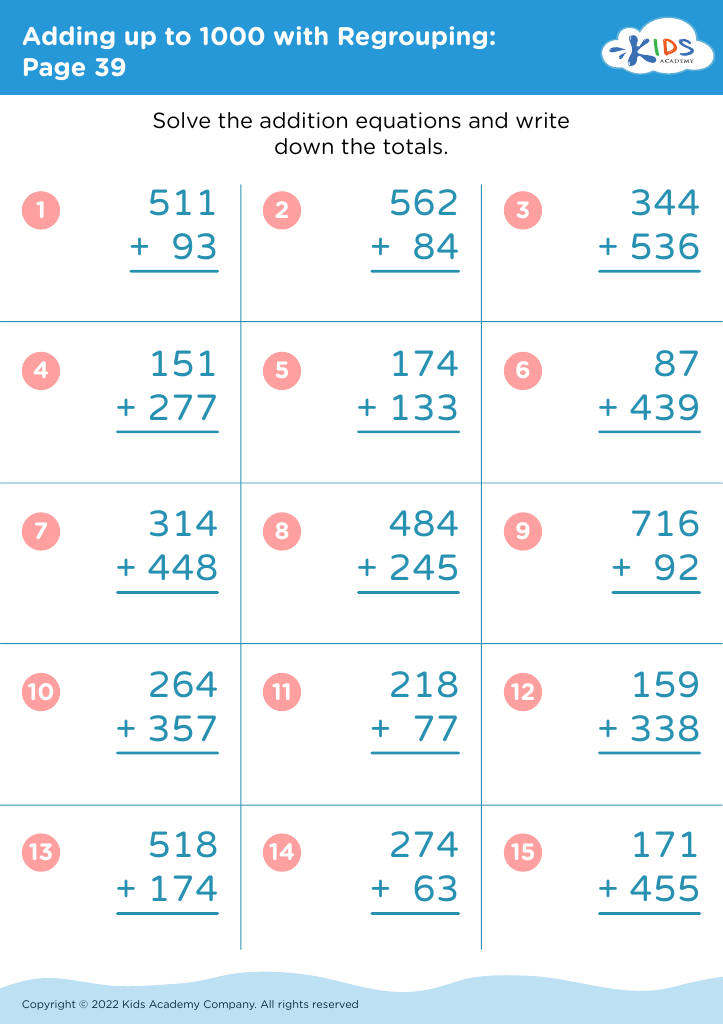








Understanding patterns in addition and subtraction is crucial for 7-year-olds as it forms a foundation for their mathematical learning and cognitive development. When children recognize patterns, they build a conceptual understanding of how numbers relate to each other, rather than merely memorizing facts. This skill enhances their ability to solve problems, make predictions, and understand mathematical operations at a deeper level.
Parents and teachers should care about this topic because it fosters critical thinking. By recognizing recurring patterns, children can devise strategies for efficiently solving calculations, leading to better performance in math. It also promotes engagement, as children discover the joy of finding and working with patterns, reinforcing their motivation to learn.
Furthermore, early mastery of these concepts sets the stage for more complex math, such as multiplication, division, and algebra, which they will encounter later in their education. Collaboratively, parents and teachers can create a supportive environment that encourages exploration and discussion around patterns, making learning interactive. By emphasizing pattern recognition in addition and subtraction, we empower children with essential skills that will serve them academically and in real-life situations, helping them grow into competent, confident learners.








