Understand sequences Addition & Subtraction Worksheets for 7-Year-Olds
5 filtered results
-
From - To
Welcome to our "Understand Sequences: Addition & Subtraction Worksheets for 7-Year-Olds" page! Here, young learners can enhance their math skills by exploring the concepts of number sequences while mastering addition and subtraction. Our carefully designed worksheets provide engaging activities that will help children understand patterns and relationships in numbers. With vibrant illustrations and varied exercises, students will strengthen their ability to recognize and create sequences, reinforcing their overall math comprehension. Perfect for homeschooling or classroom reinforcement, these worksheets make learning fun and effective. Dive in and support your child's mathematical journey today!
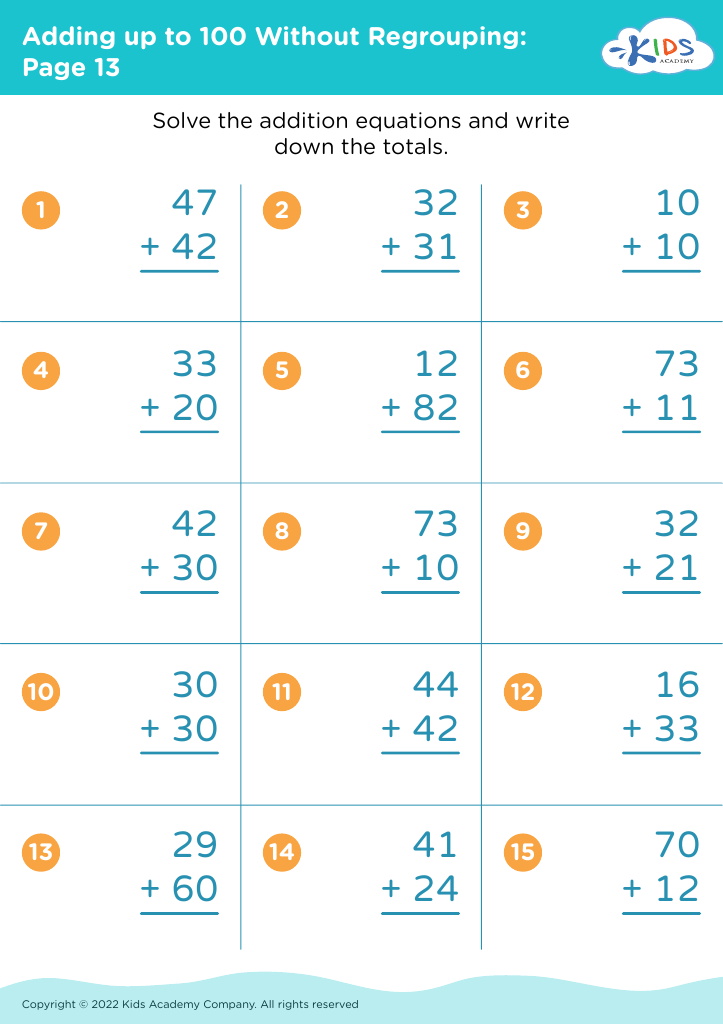
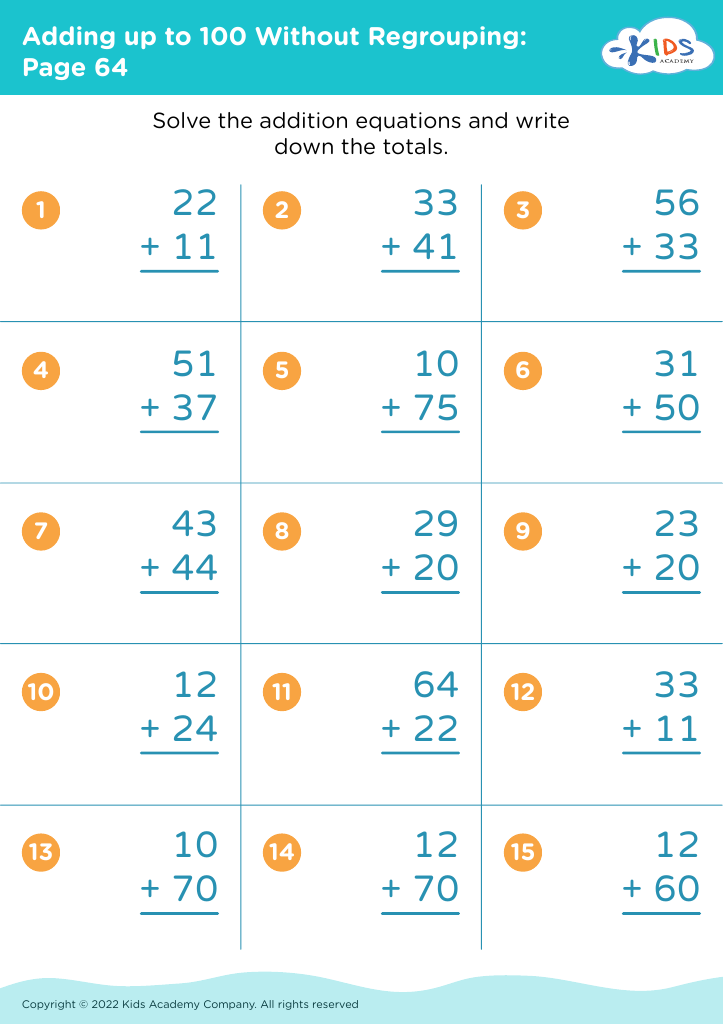
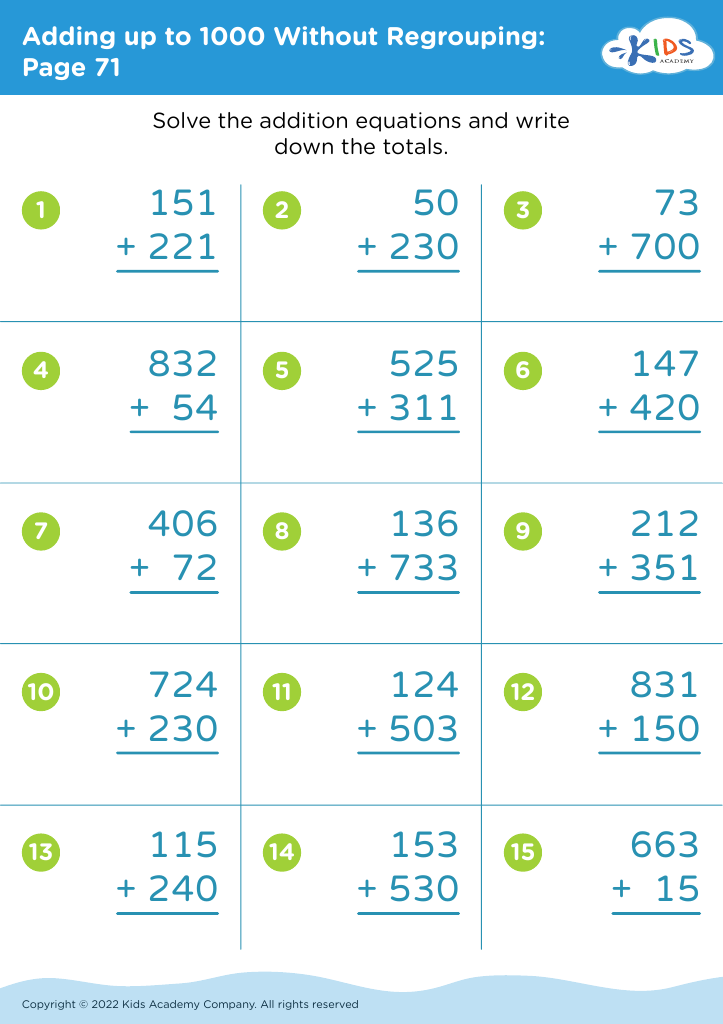
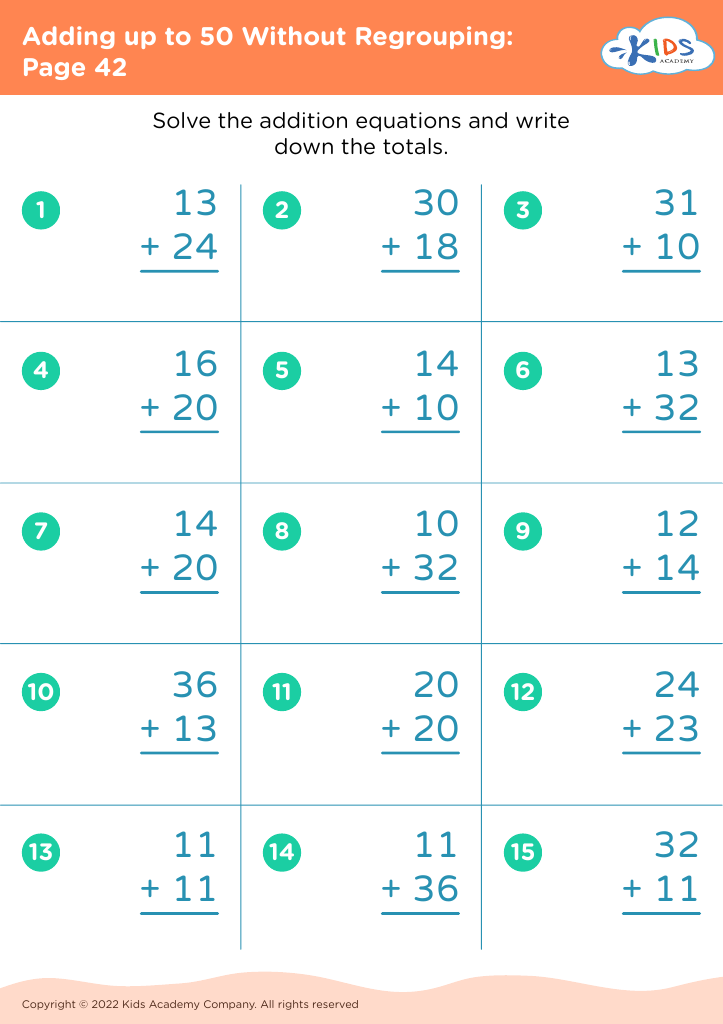
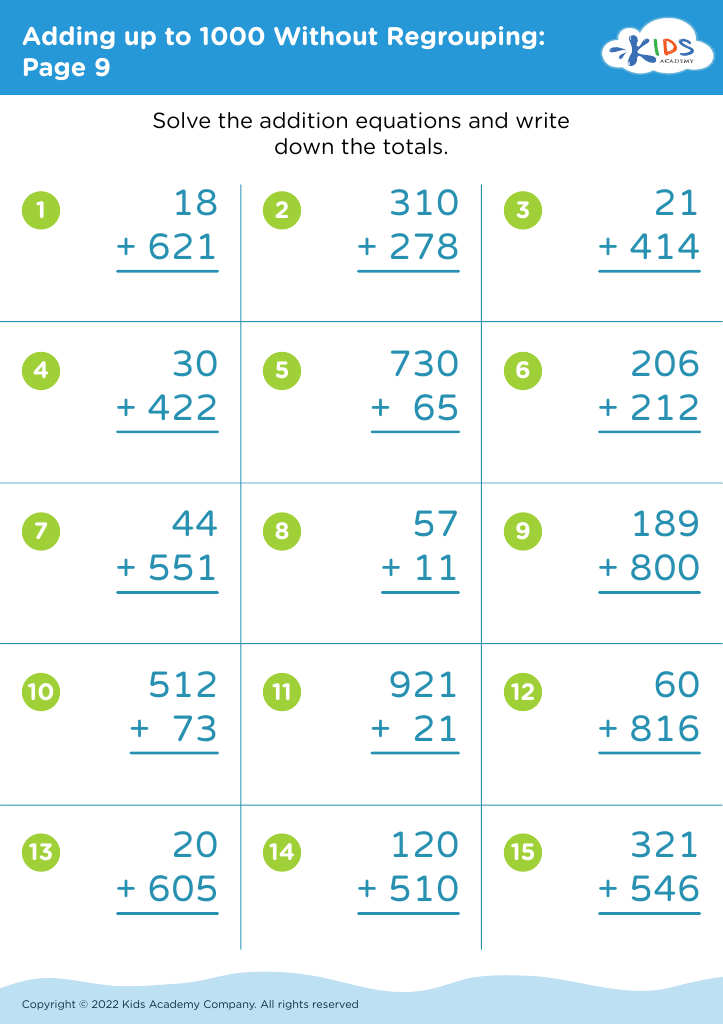








Understanding sequences in addition and subtraction is vital for 7-year-olds as it lays the groundwork for higher-order mathematical concepts. At this age, children transition from concrete operational thinking to more abstract understanding, crucial for their cognitive development. When they grasp sequences—such as patterns in numbers or steps in solving problems—they develop critical reasoning skills. This ability can lead to enhanced problem-solving competencies and better mathematical performance overall.
Moreover, mastering addition and subtraction sequences enables children to recognize relationships between numbers, helping them make predictions and solve complex problems later on. From practical life skills, like budgeting allowance and managing time, to academic success in future grades, these foundational elements are essential.
Parents and teachers must embrace these concepts, as children benefit from early engagement with math that is not solely about rote memorization, but also about conceptual understanding and application. Supporting children in recognizing numerical patterns nurtures their confidence and equips them for more abstract mathematical concepts down the road, including multiplication and division. Enthusiasm for sequences in math can cultivate a lifelong love of learning and an eagerness to tackle challenging concepts, essential traits for academic achievement.








