Understanding patterns Addition & Subtraction Worksheets for 7-Year-Olds - Page 2
31 filtered results
-
From - To
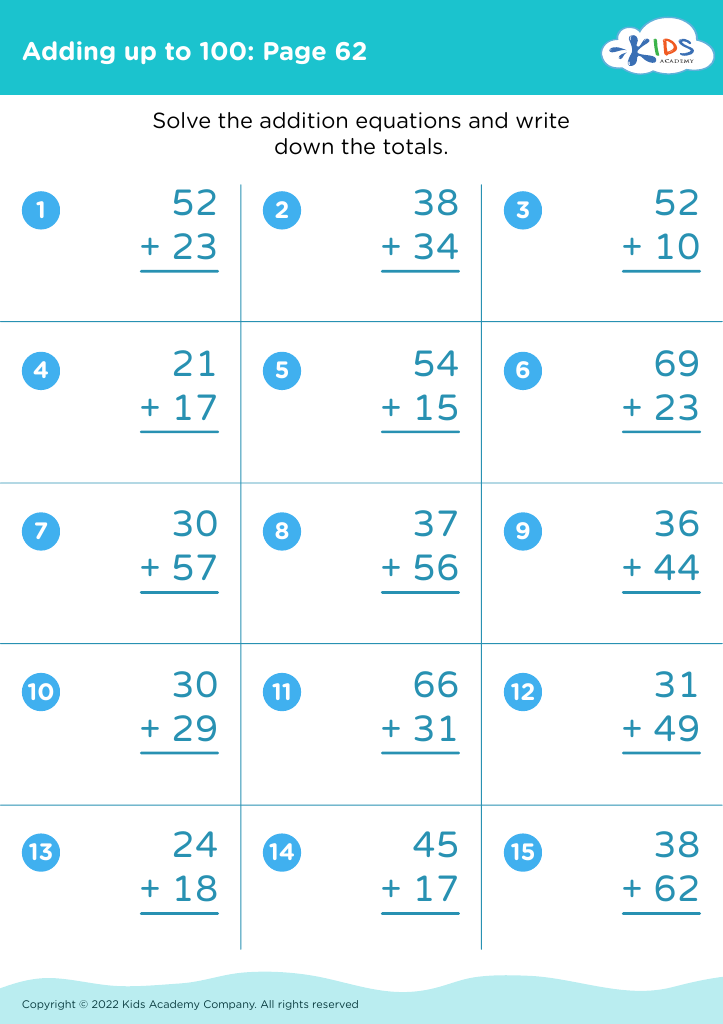
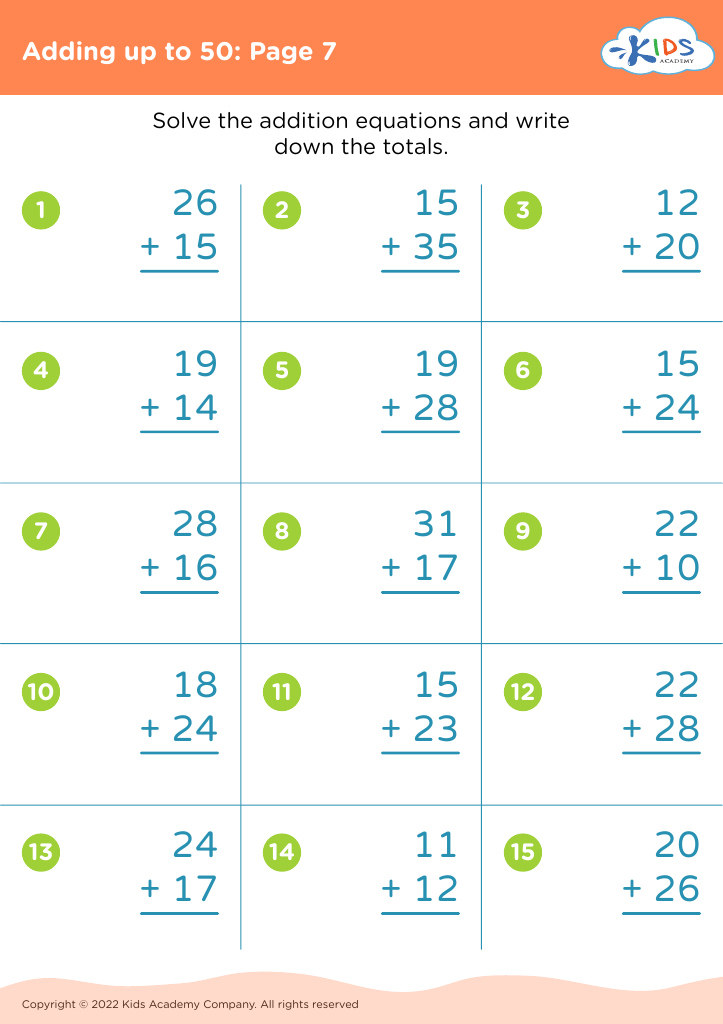
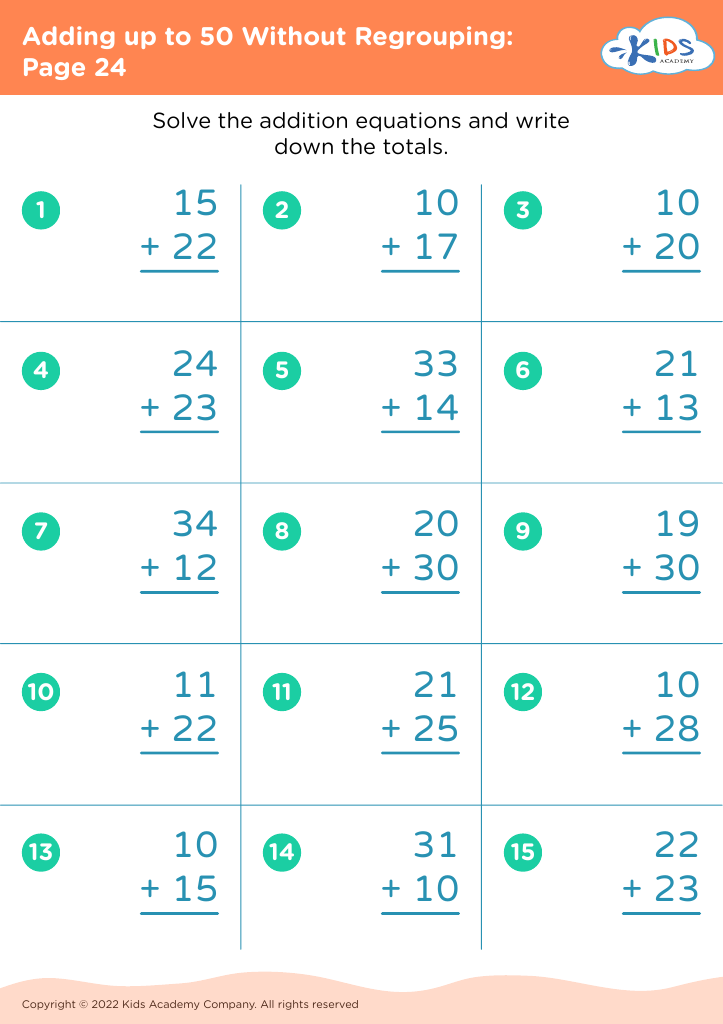
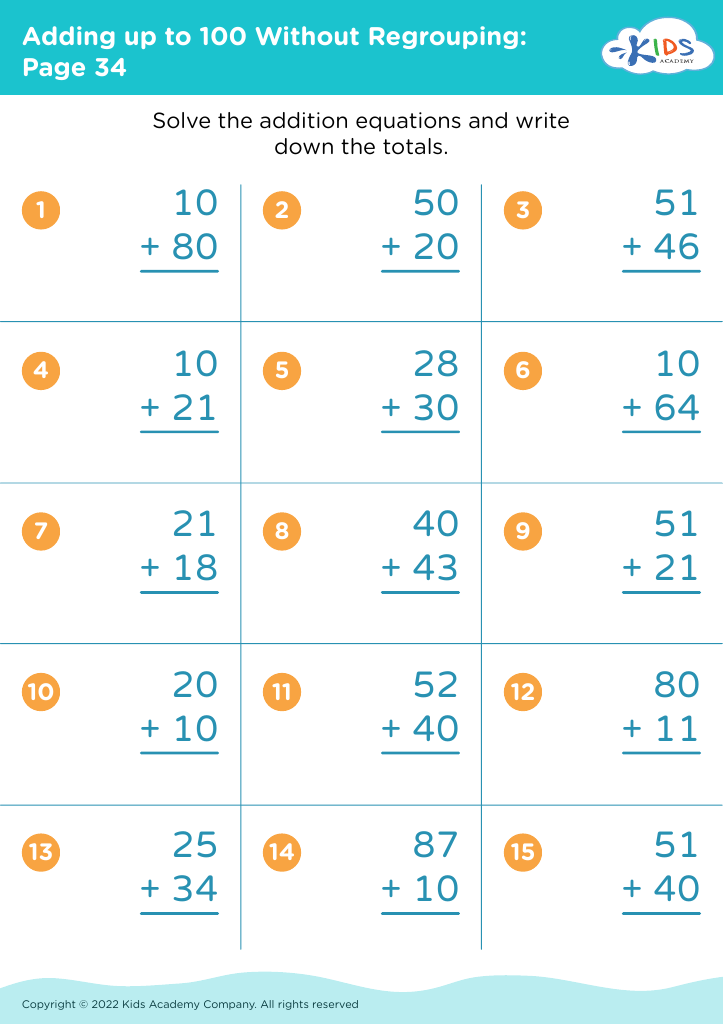
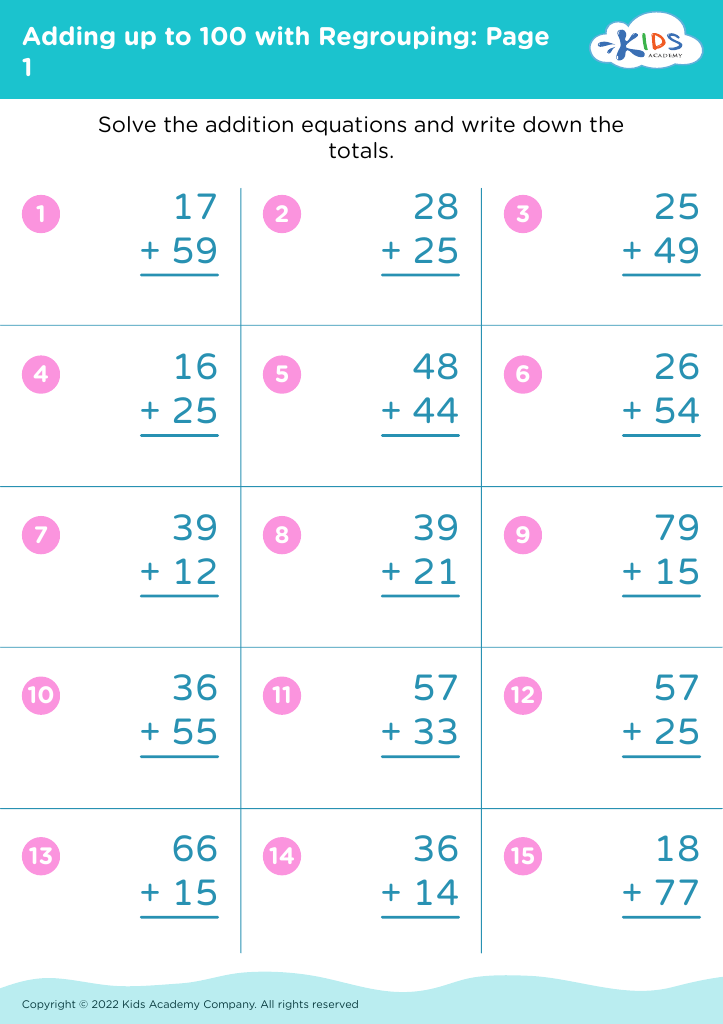
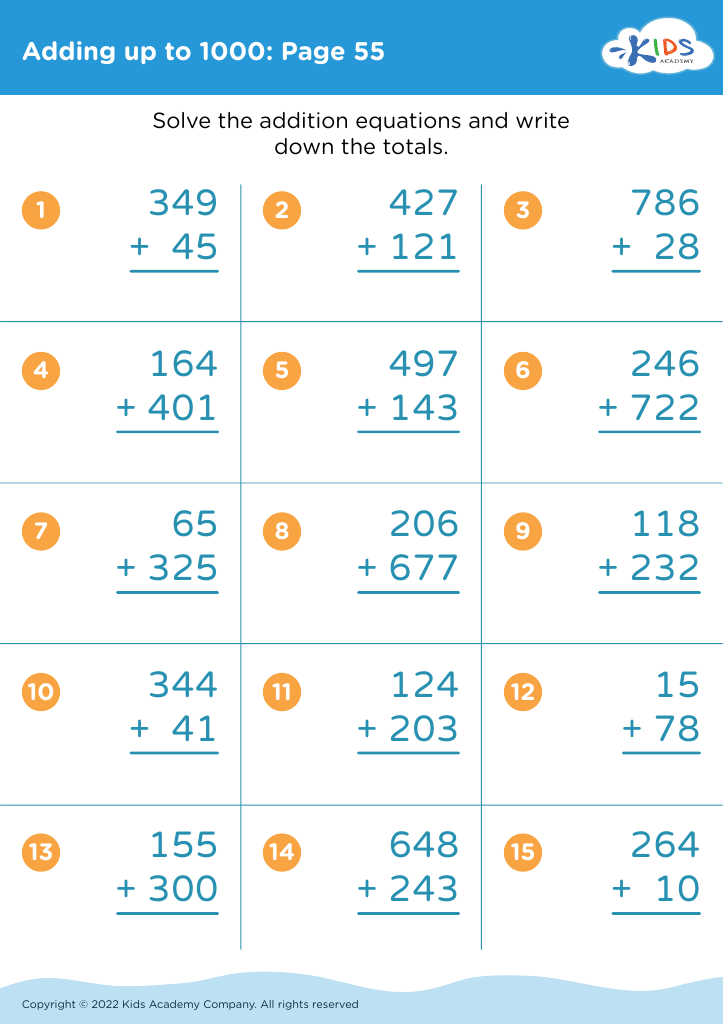
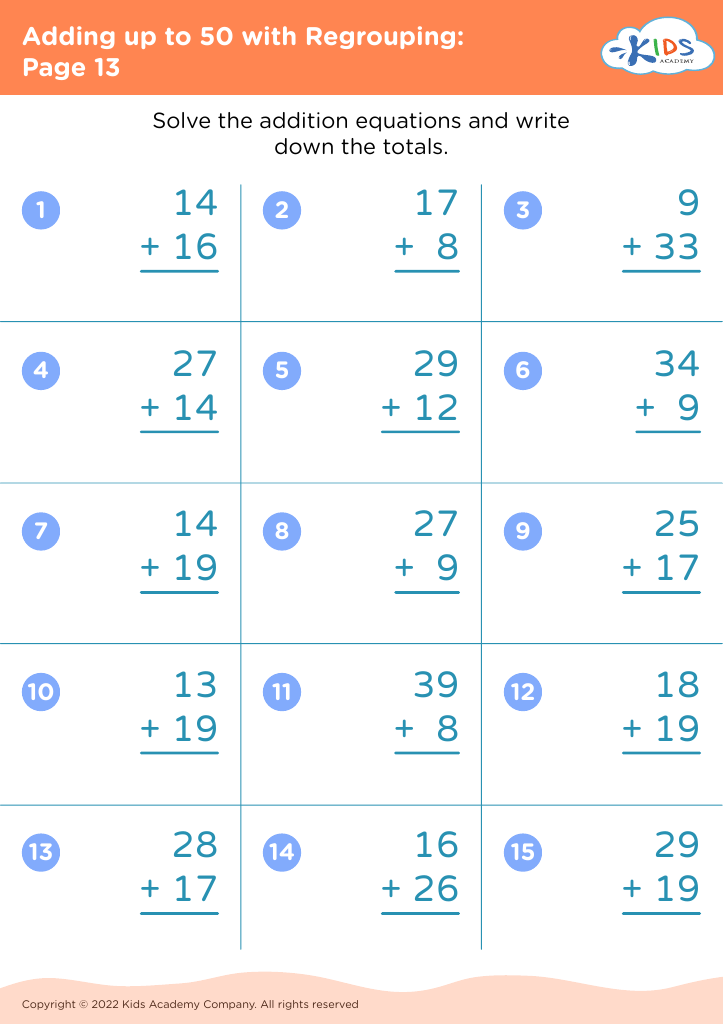








Understanding patterns in addition and subtraction is crucial for 7-year-olds because it lays the foundation for more complex mathematical concepts they will encounter later. At this age, children are developing critical thinking skills, and recognizing patterns enhances their ability to solve problems efficiently.
When children grasp patterns in math, they can identify relationships between numbers, making operations like addition and subtraction more intuitive. For example, noticing that adding 2 to an even number produces another even number helps them predict outcomes without relying solely on memorization. This skill not only boosts their confidence but also fosters a deeper understanding of arithmetic.
Moreover, engaging with patterns encourages a growth mindset. When children discover and create their own patterns in math, they become active learners rather than passive recipients of information. This active engagement sparks curiosity and motivation, traits that benefit learning across all subjects.
Furthermore, developing pattern recognition supports the transition to multiplication and division, which are often seen as extensions of addition and subtraction. By focusing on patterns now, parents and teachers set students on a successful path toward becoming proficient in math. Thus, investing time in understanding addition and subtraction patterns is an essential step in nurturing a child’s mathematical abilities.








