Understanding sequence Addition & Subtraction Worksheets for 7-Year-Olds
4 filtered results
-
From - To
Explore our engaging "Understanding Sequence Addition & Subtraction Worksheets" designed specifically for 7-year-olds! These worksheets help young learners grasp the fundamental concepts of addition and subtraction while fostering their ability to recognize and understand sequences. By working through varied exercises, children enhance their problem-solving skills and mathematical fluency in a fun, interactive way. Our carefully crafted activities encourage independent thinking and reinforce classroom learning at home. Perfect for parents and teachers seeking effective educational resources, these worksheets provide a valuable tool to support your child's math journey. Discover the joy of learning with sequences today!
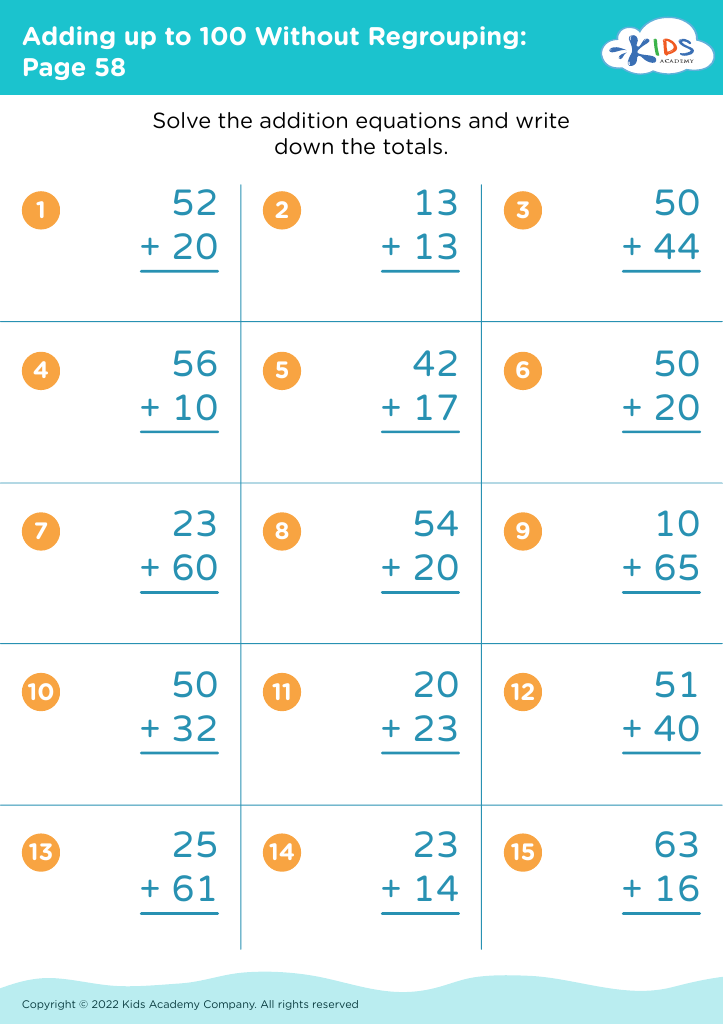
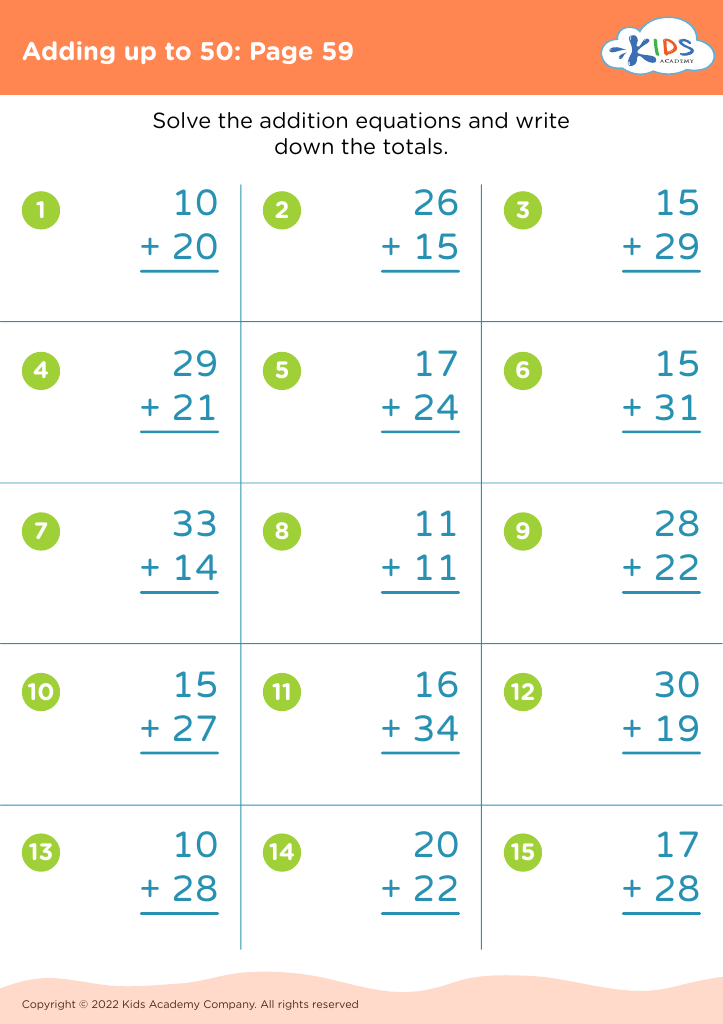
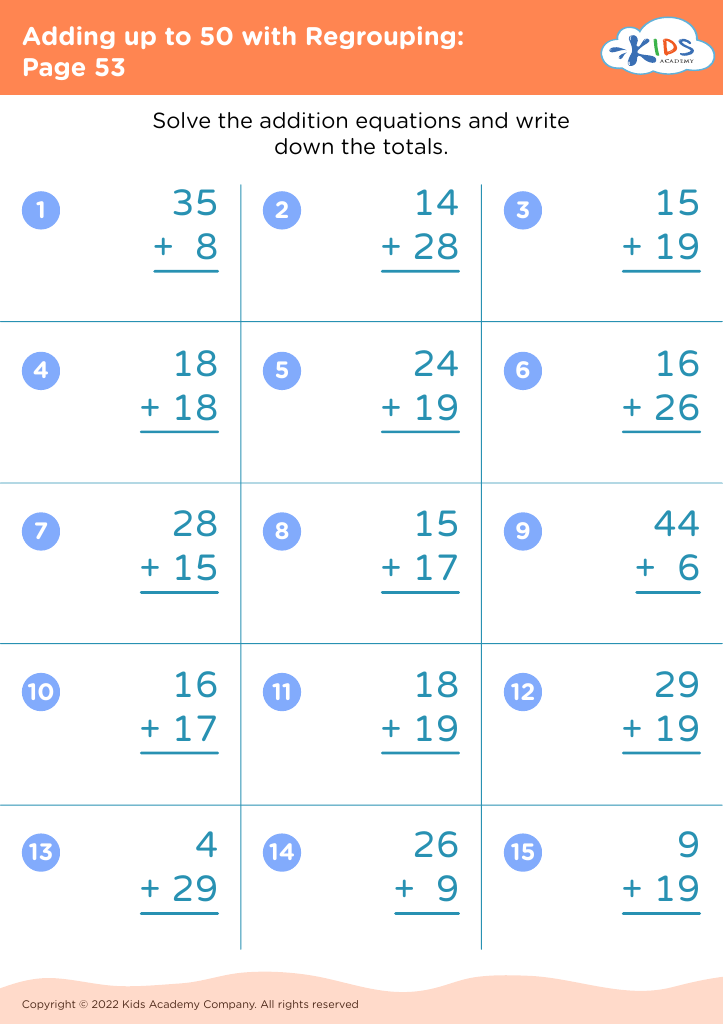
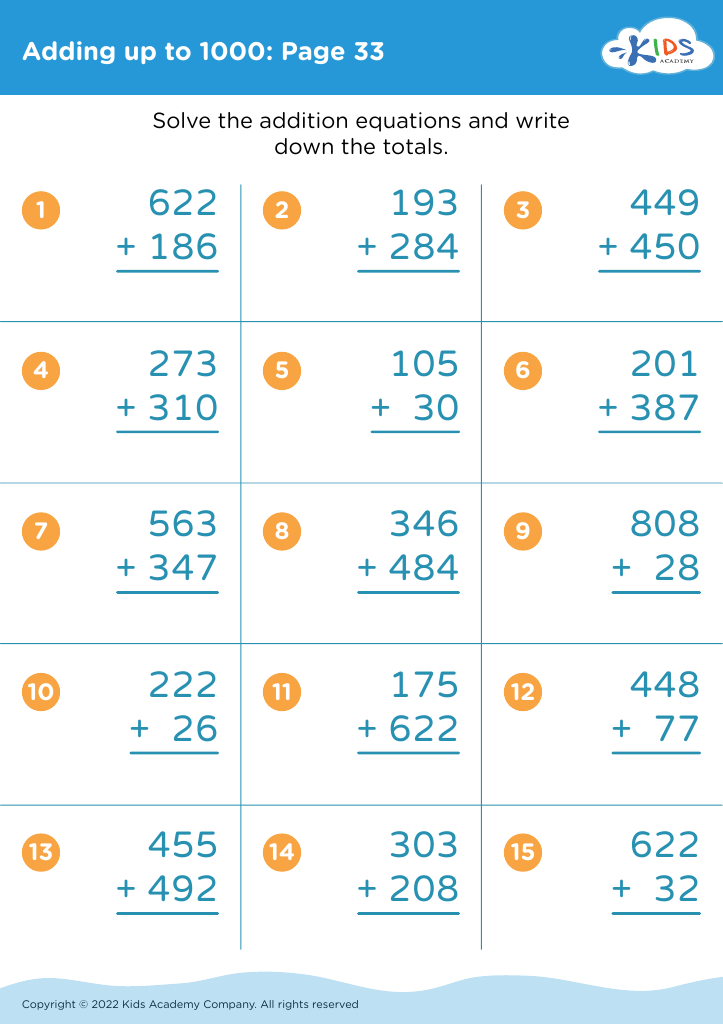








Understanding the sequence of addition and subtraction is crucial for 7-year-old learners, as it lays the foundation for their mathematical development. At this age, children begin to transition from concrete to more abstract thinking, making it essential for parents and teachers to foster a solid comprehension of these operations.
Firstly, mastering addition and subtraction in a sequenced manner helps young learners develop critical thinking and problem-solving skills. By understanding the order and relationships between numbers, children can tackle more complex mathematical concepts later, such as multiplication and division.
Furthermore, sequential learning encourages retention and fluency. When children grasp the steps involved in addition and subtraction, they are less likely to rely on memorization alone. This competency enhances their confidence and encourages a positive attitude toward math.
Moreover, practical applications of these skills appear in everyday life, such as managing money or telling time. Parents and teachers can motivate children by linking these skills to real-world scenarios. In essence, investing time in understanding the sequence of addition and subtraction equips children with essential tools for future academic challenges and everyday problem-solving, fostering lifelong learners who see math as not just numbers, but relevant and accessible.








