Understanding Sequences Addition & Subtraction Worksheets for 7-Year-Olds
13 filtered results
-
From - To
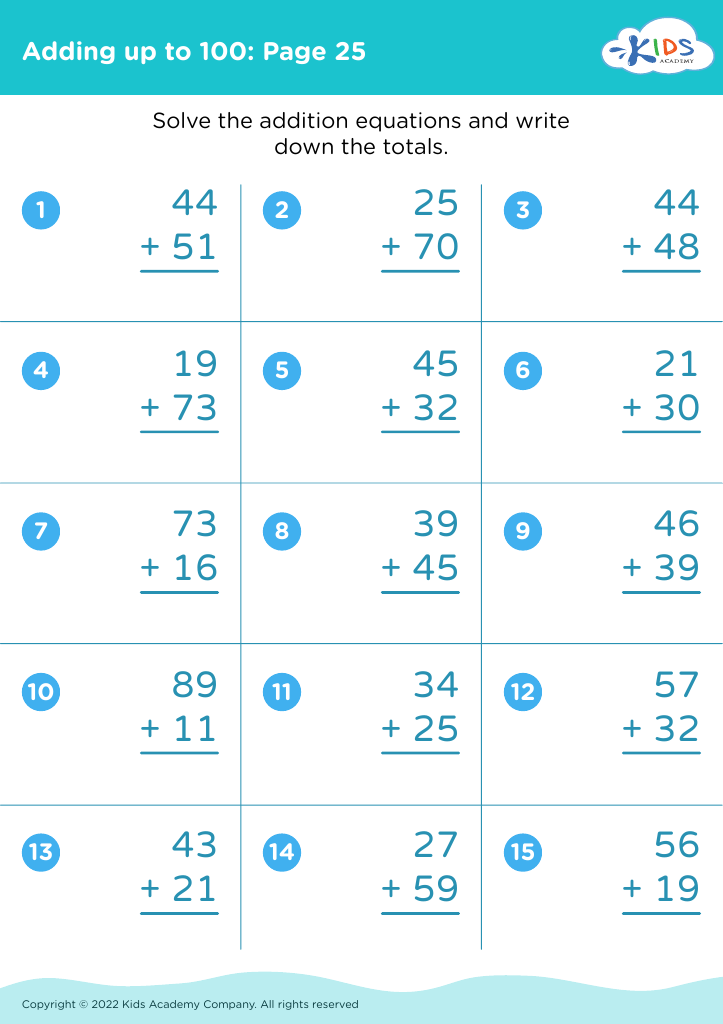
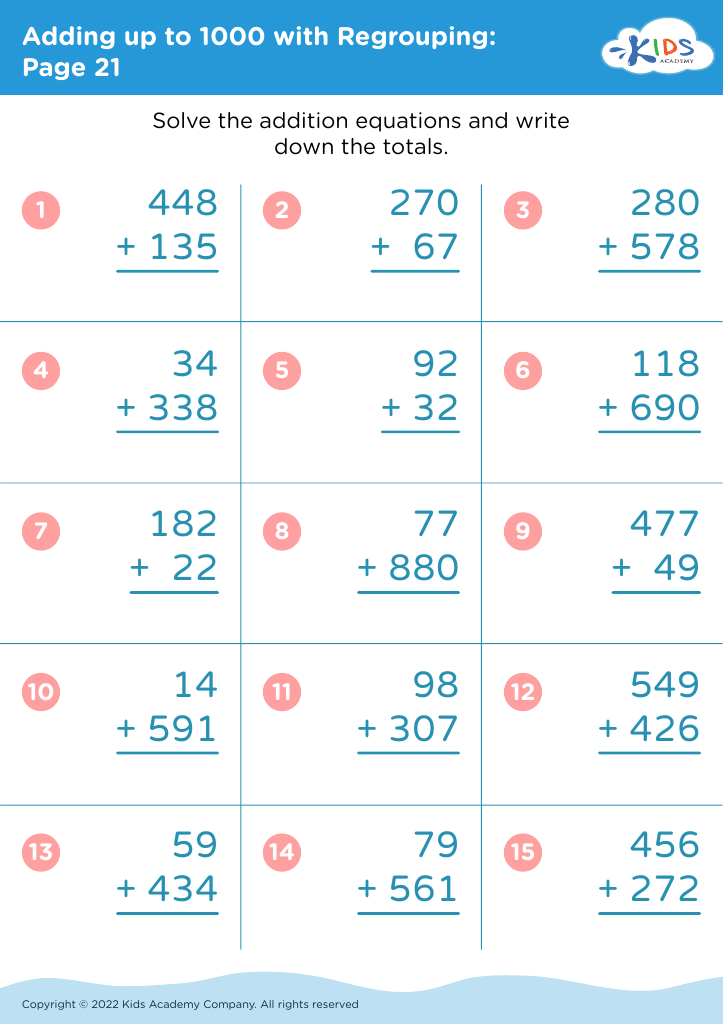
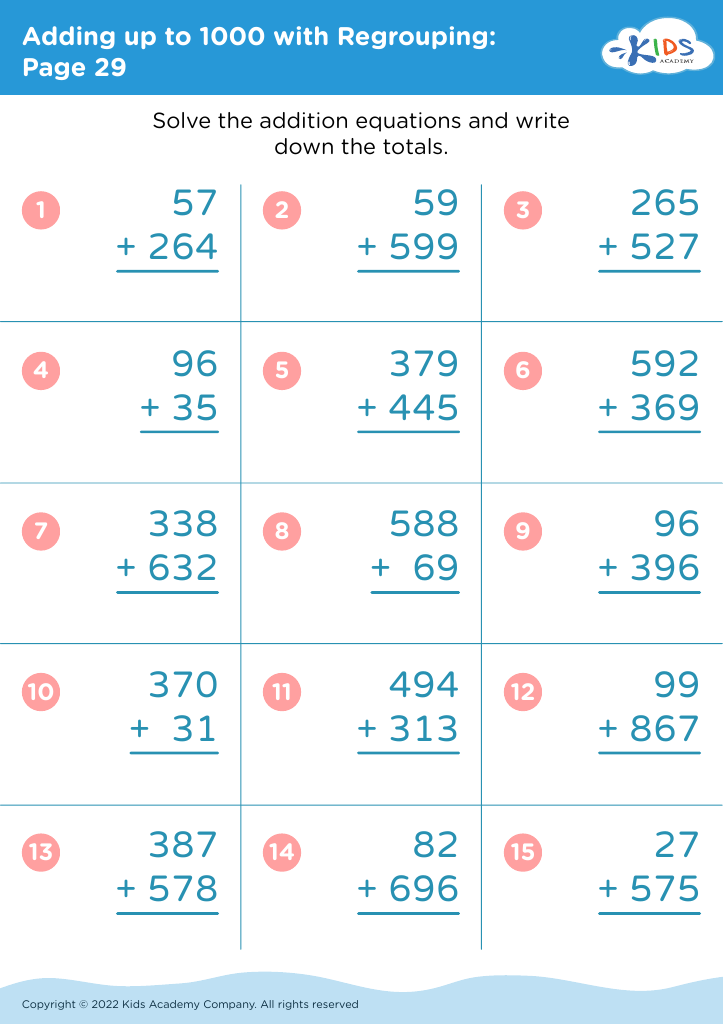
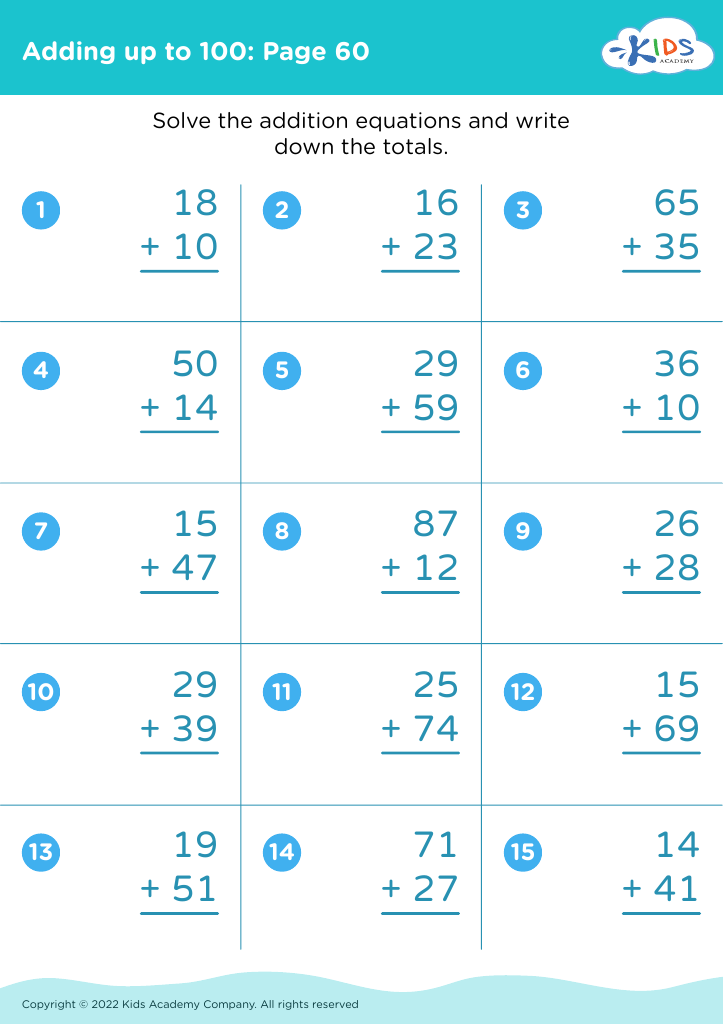
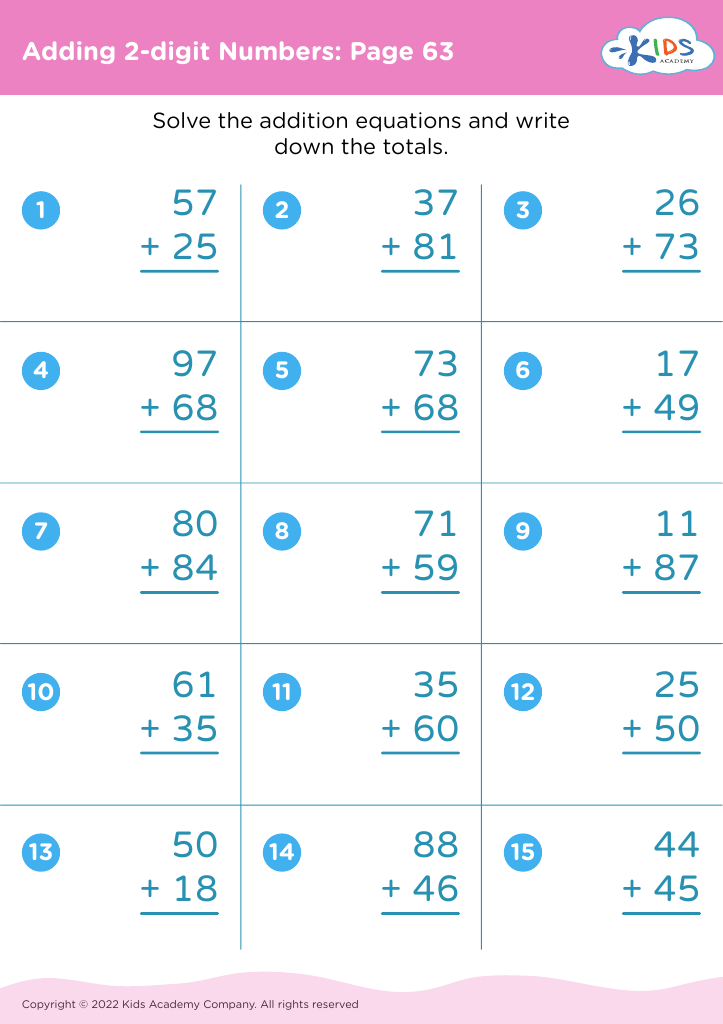
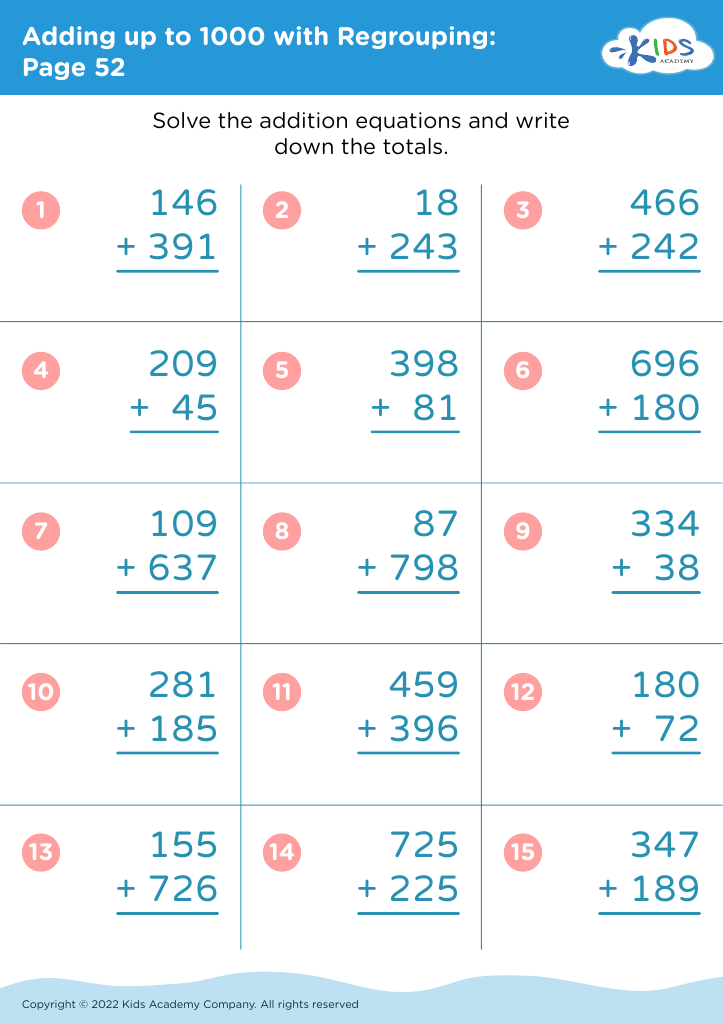
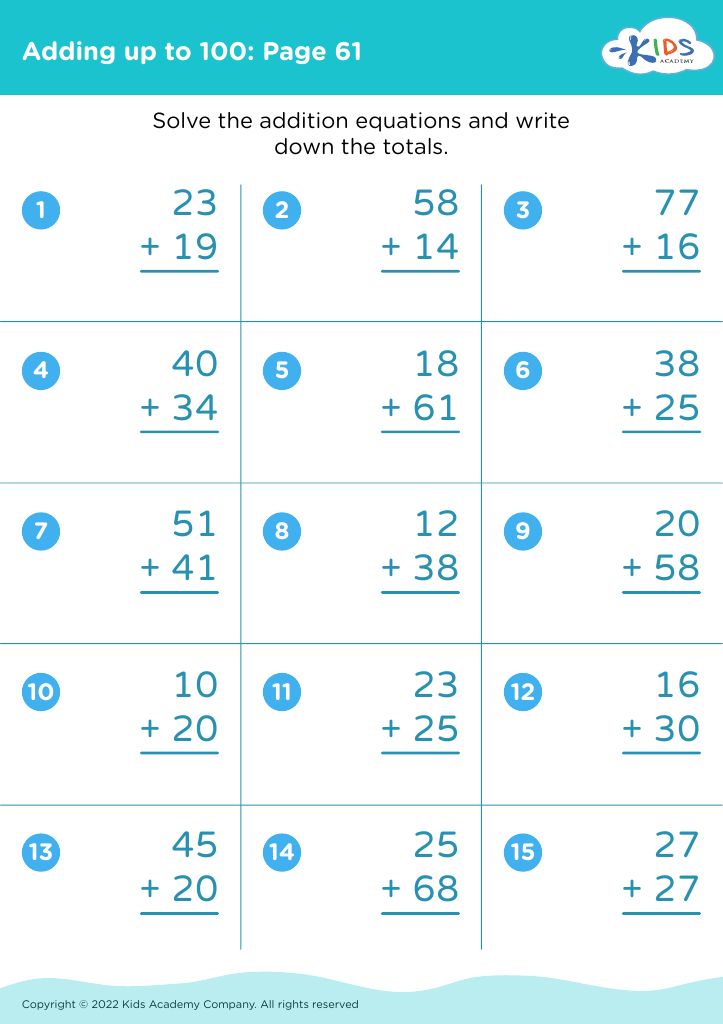
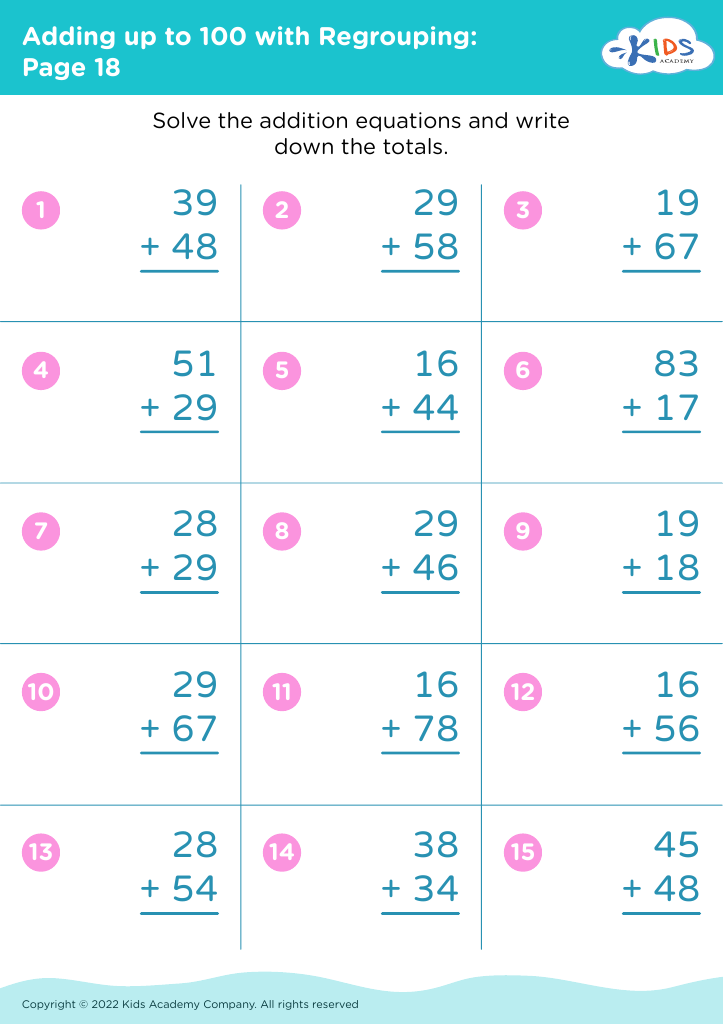
Welcome to our "Understanding Sequences: Addition & Subtraction Worksheets for 7-Year-Olds" page! Our engaging worksheets are designed to help young learners grasp fundamental math concepts by exploring sequences through addition and subtraction. These activities promote critical thinking skills as children identify and create number patterns, enhancing their mathematical understanding. Perfect for reinforcing classroom learning or providing at-home practice, our worksheets cater to various learning styles. Discover how sequences form the foundation for more advanced math concepts while making learning fun. Dive in today and watch your child gain confidence in their math skills with our creative exercises!
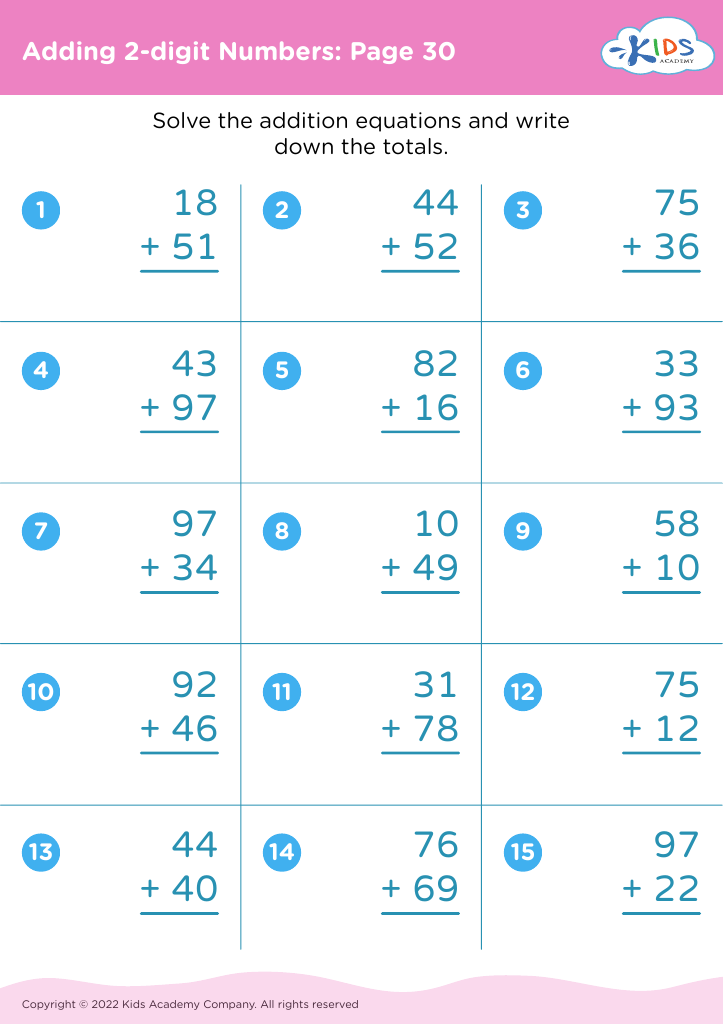
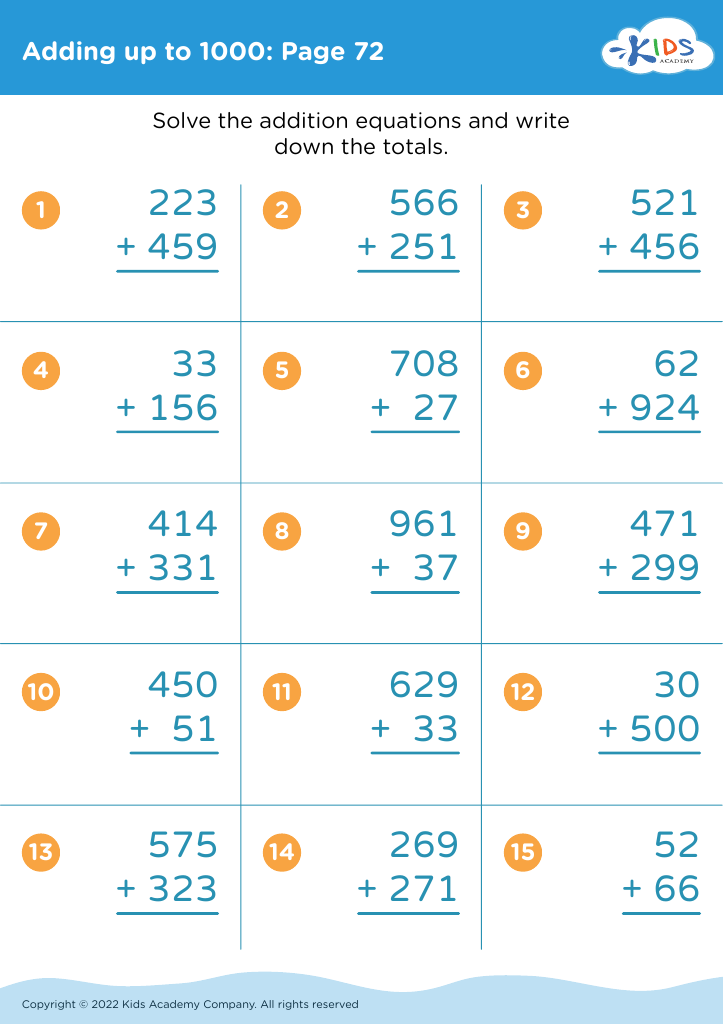
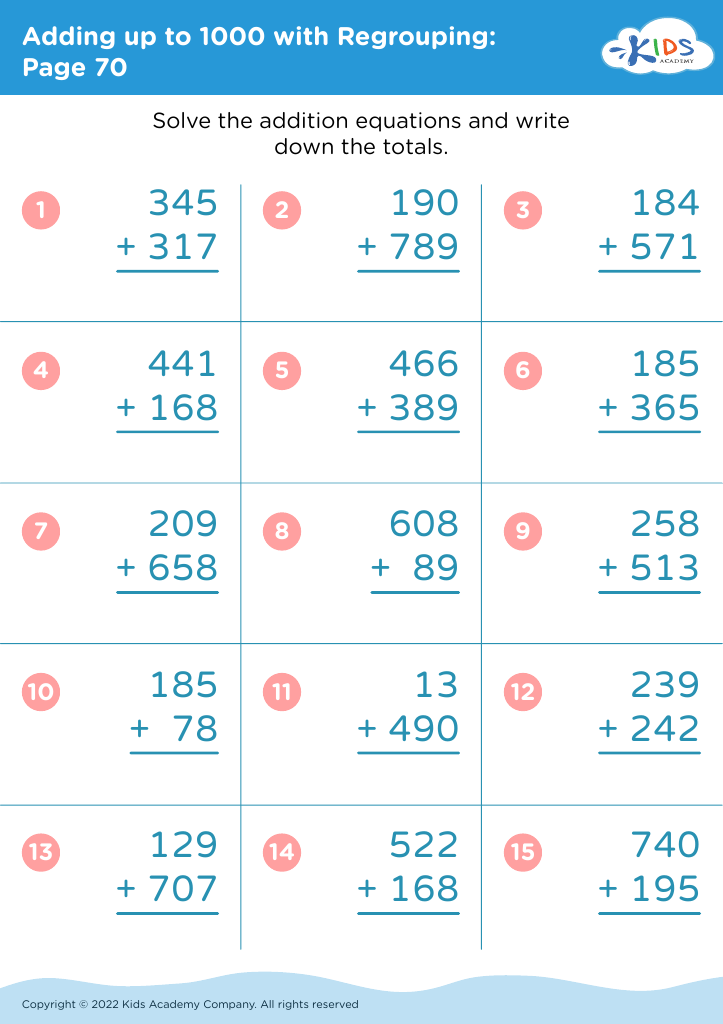
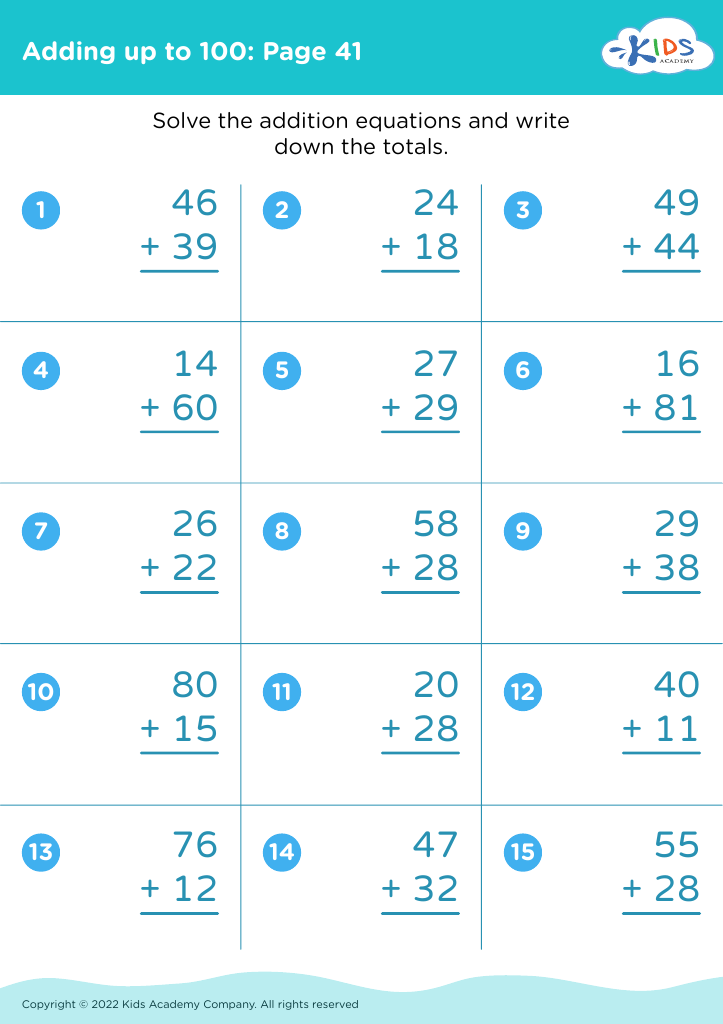
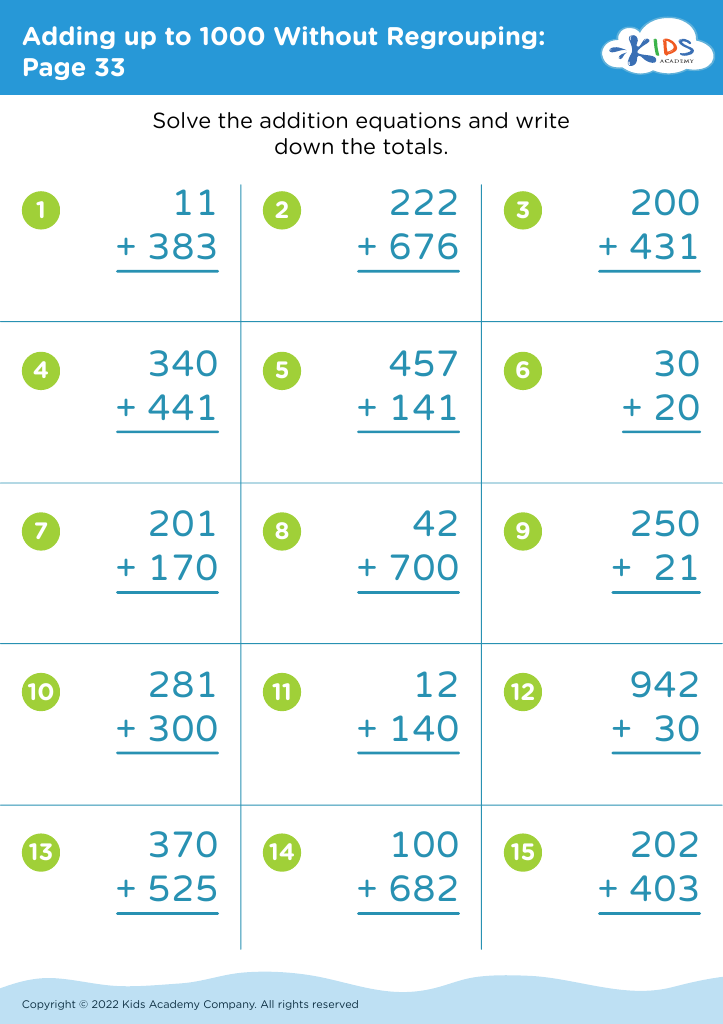








Understanding sequences in addition and subtraction is crucial for 7-year-olds, as it lays the foundation for their mathematical development. At this age, children begin to grasp the concept of patterns, which enhances their problem-solving skills and critical thinking. When they understand how numbers relate to one another through sequences, they can more easily tackle more complex math concepts, such as multiplication and division, as well as basic algebra in the future.
Parents and teachers should care about this because it cultivates mathematical fluency. By recognizing patterns, children become more confident in their abilities, fostering a positive attitude towards math. This confidence can translate into better learning outcomes, as children are more likely to engage with and enjoy math-related tasks.
Additionally, teaching sequences can help children make connections across various subjects. For example, patterns are used in science, art, and music, promoting a well-rounded education. Lastly, it provides an opportunity for meaningful parental involvement. When parents engage with their children on these topics, it enhances the learning experience and strengthens the school-home connection, ultimately contributing to a child’s overall academic success and enthusiasm for learning.








