Basic arithmetic practice Addition Worksheets for 7-Year-Olds
3 filtered results
-
From - To
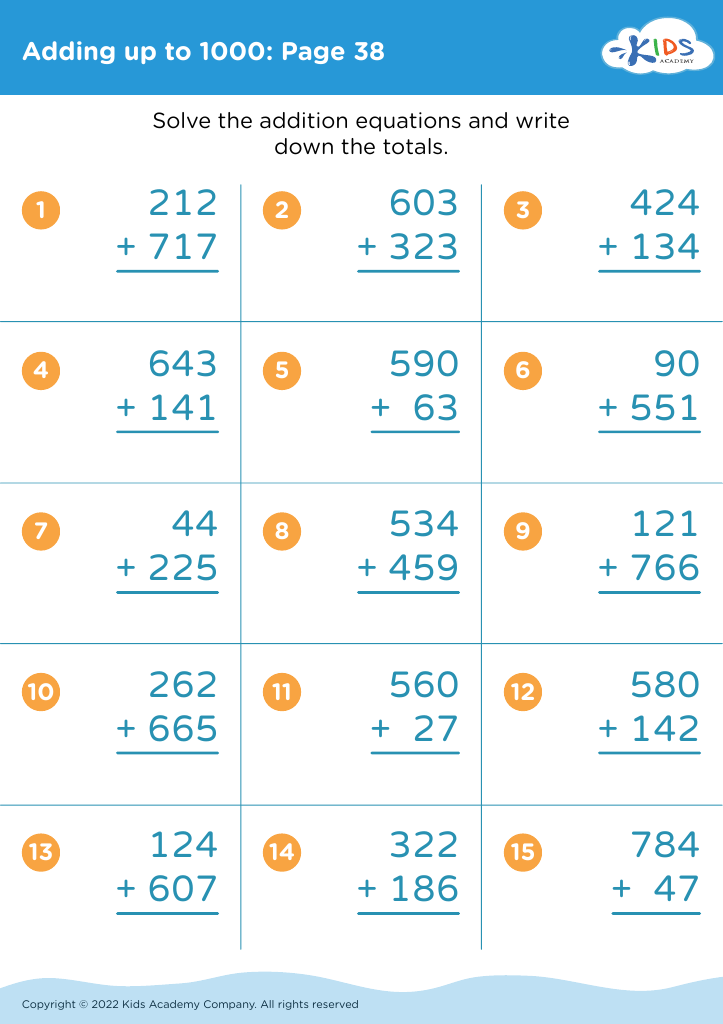
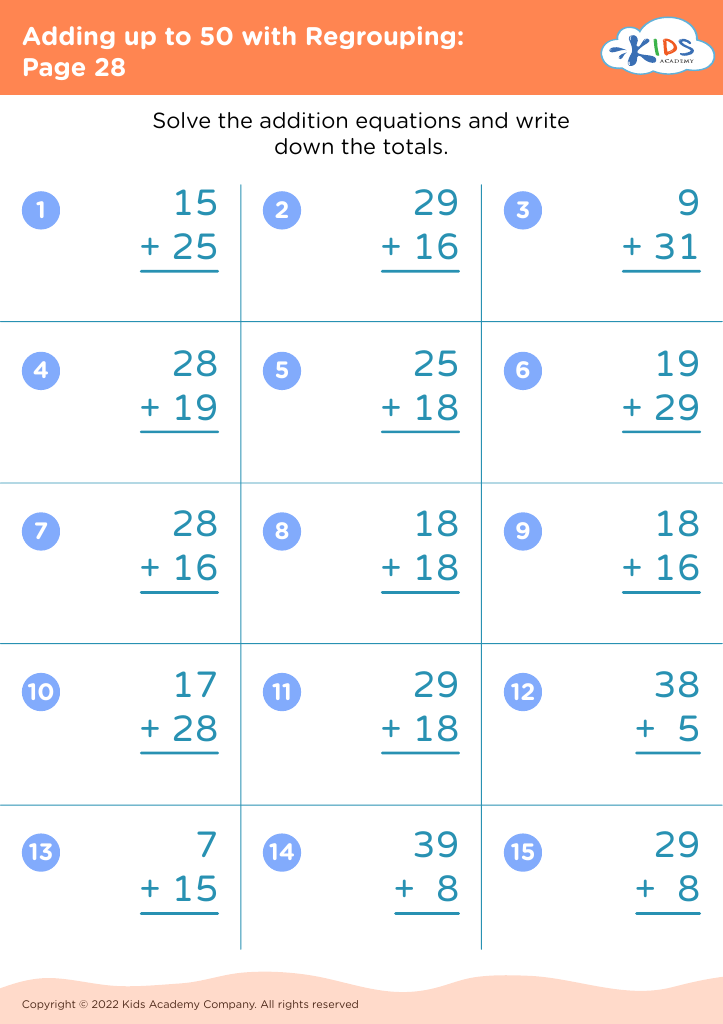
Discover our engaging Basic Arithmetic Practice Addition Worksheets designed specifically for 7-year-olds! These carefully crafted worksheets make learning addition fun and interactive. Each activity helps young learners build their confidence in basic math skills through colorful visuals and age-appropriate exercises. Our worksheets align with educational standards and cater to diverse learning styles, ensuring every child can excel in their arithmetic journey. From simple problems to more challenging scenarios, these resources encourage critical thinking and problem-solving. Perfect for teachers and parents, our addition worksheets are a great tool for home practice or classroom learning. Make math enjoyable—get started today!
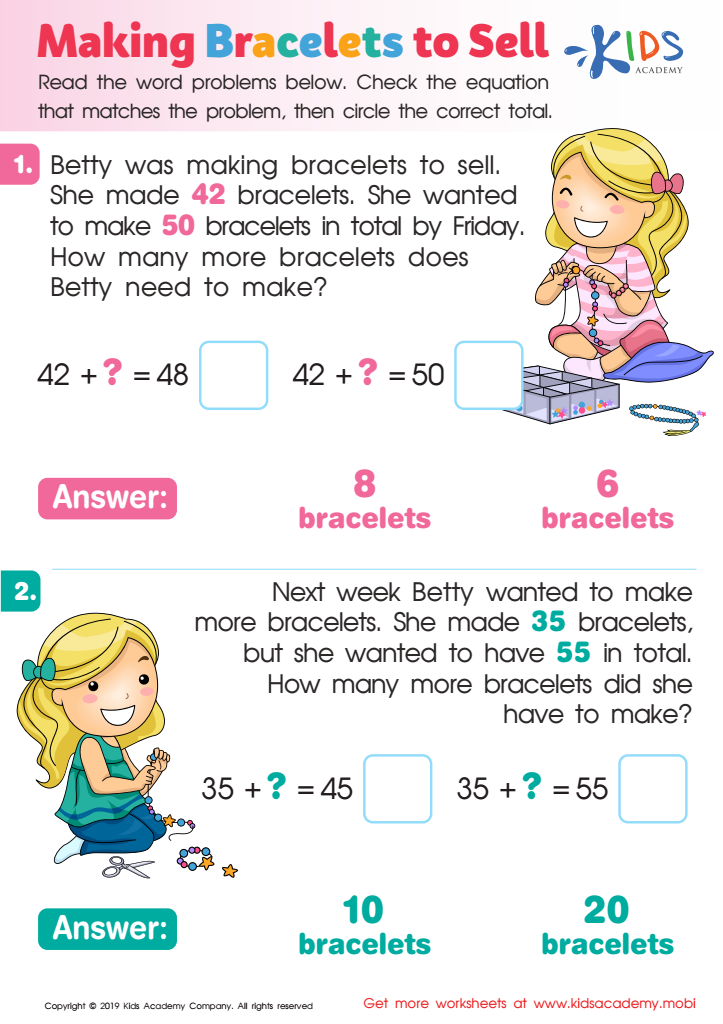
Making Bracelets to Sell Worksheet
 Assign to My Students








Basic arithmetic, particularly addition, forms the cornerstone of a child's mathematical understanding. For 7-year-olds, this foundation is crucial for several reasons. First, addition is not only a fundamental skill used in daily life but also a key building block for more advanced mathematical concepts, including subtraction, multiplication, and division. Mastering addition allows children to develop logical thinking and problem-solving abilities.
Moreover, practicing addition enhances cognitive skills such as memory, focus, and sequential thinking. As children engage with numbers, they sharpen their analytical skills, equipping them to tackle complex tasks later in life. Furthermore, consistent practice helps to build confidence and reduces math anxiety, fostering a positive attitude toward learning.
Parents and teachers should also understand that a child’s proficiency in addition can have long-term academic implications. As children progress through school, they will encounter increasingly challenging math problems, and a strong grasp of basic addition will support their success across all subjects.
Ultimately, nurturing this skill not only benefits a child's academic trajectory but also prepares them for everyday financial literacy, time management, and critical thinking situations in real life. In summary, promoting addition practice is vital for fostering a well-rounded and mathematically literate individual.








