Cognitive Development Addition Worksheets for 7-Year-Olds
13 filtered results
-
From - To
Enhance your child's mathematical ability with our expertly designed Cognitive Development Addition Worksheets for 7-Year-Olds! These engaging worksheets focus on fostering critical thinking and problem-solving skills through fun and interactive addition exercises. Each worksheet is crafted to align with educational standards, ensuring your child gains confidence in their addition skills while enhancing their overall cognitive development. Perfect for in-class or at-home practice, these worksheets are a valuable resource for both educators and parents seeking to support children's learning journeys. Unlock your child's potential and make math enjoyable with our comprehensive and specially designed addition worksheets today!
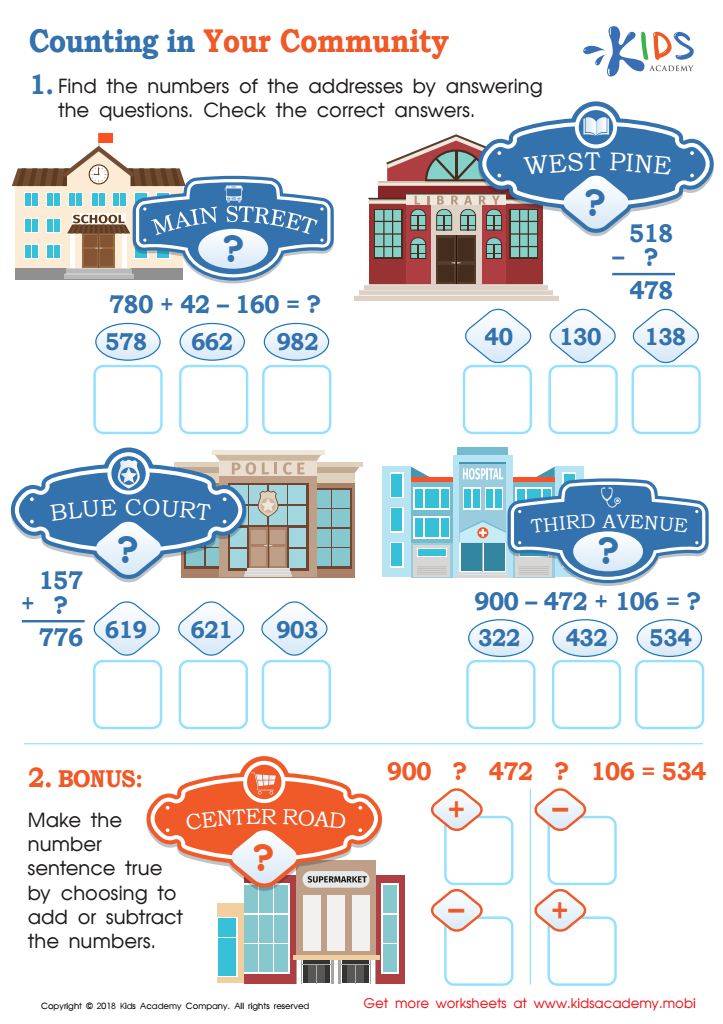
Counting in Your Community Worksheet
 Assign to My Students
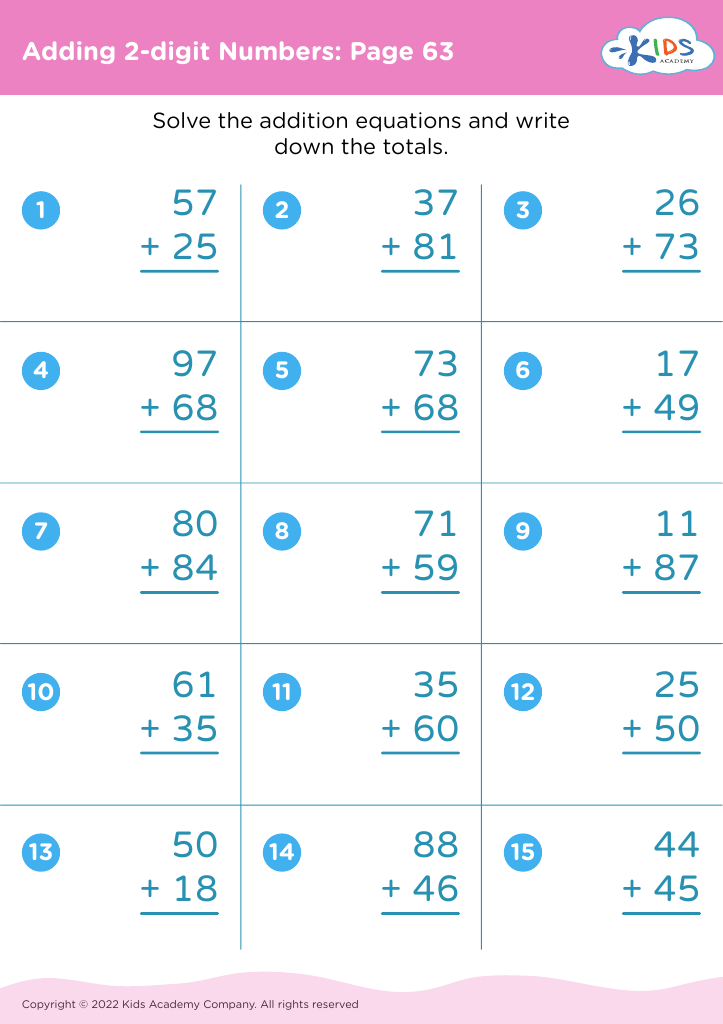
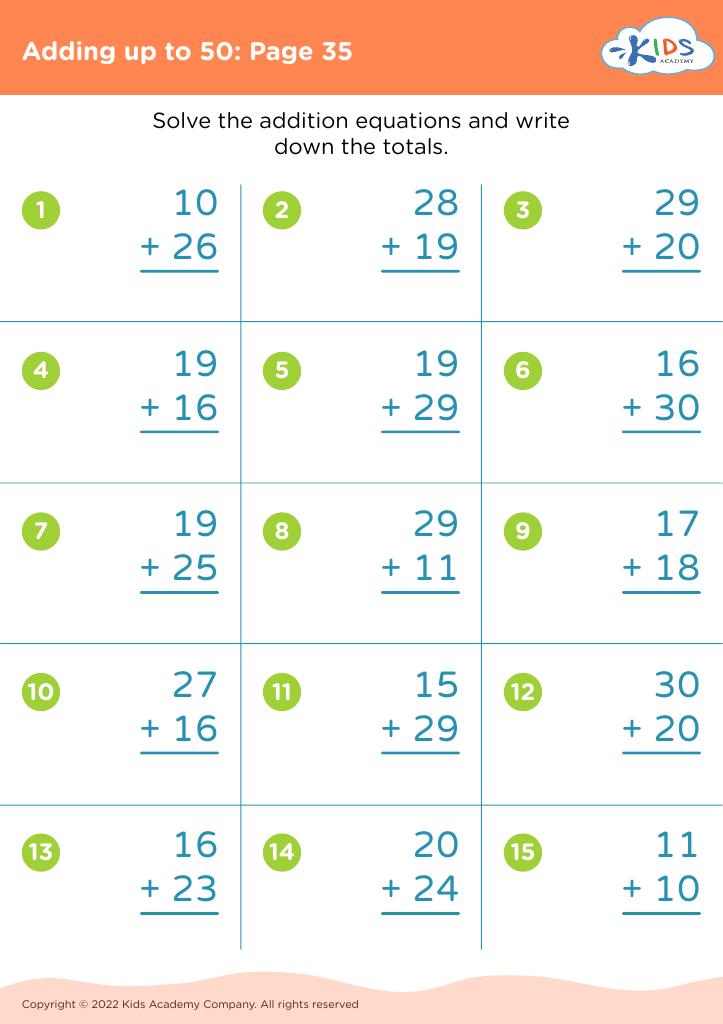
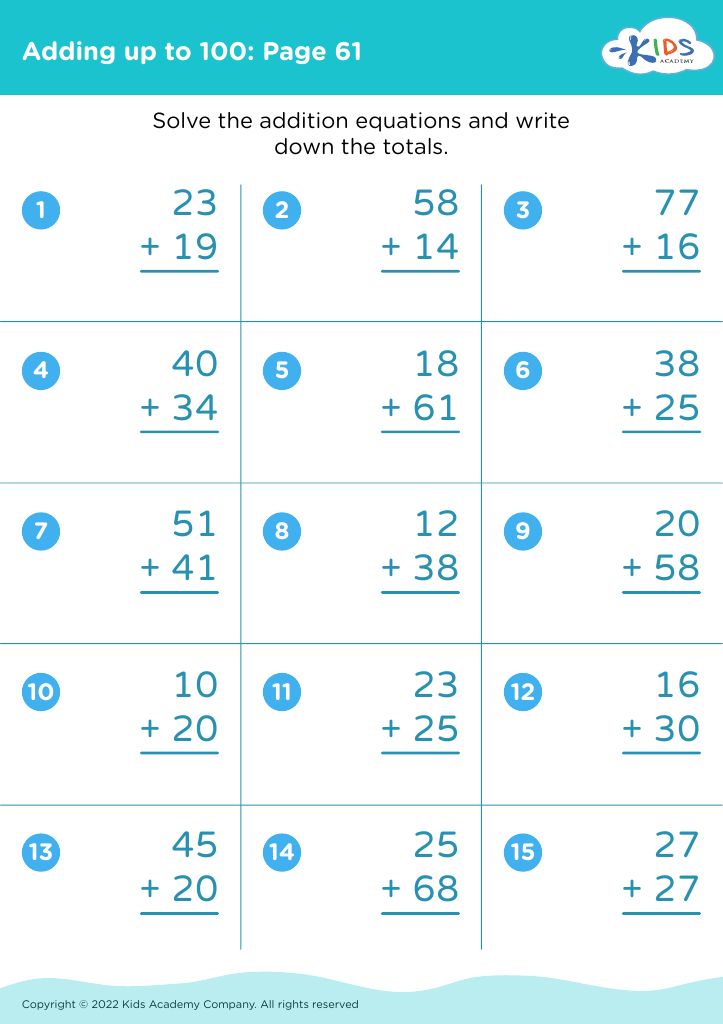
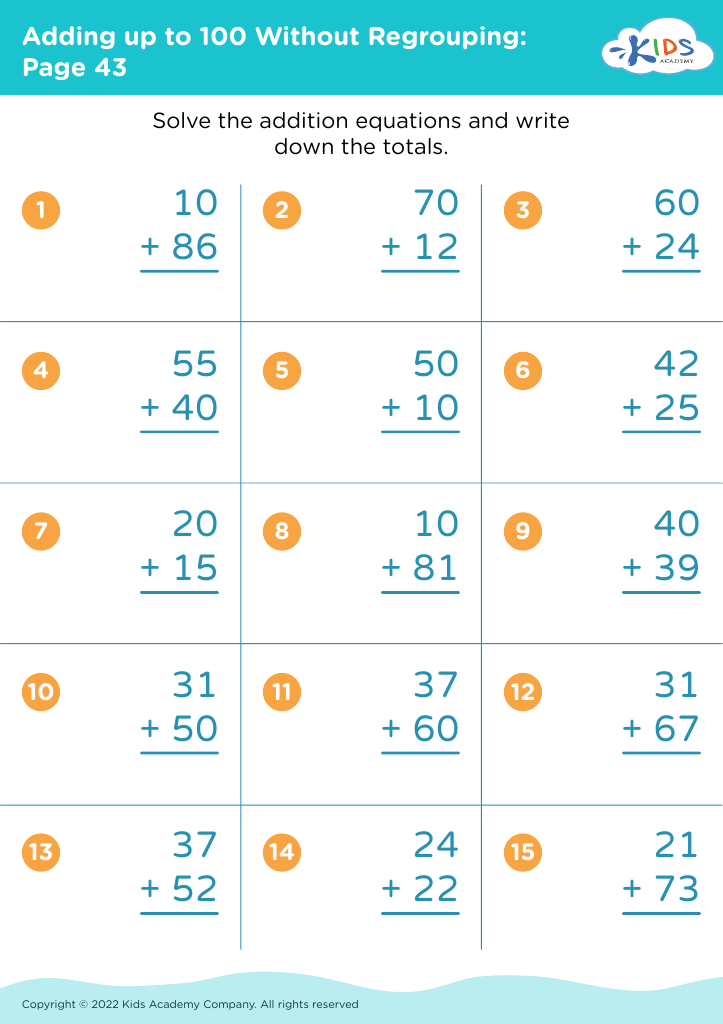
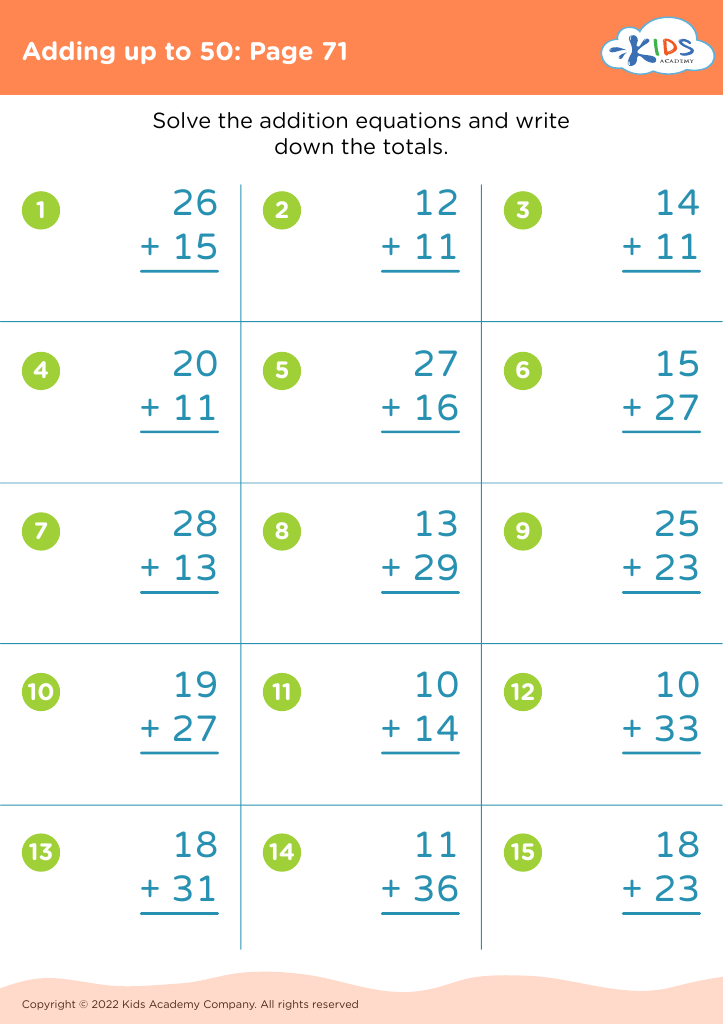
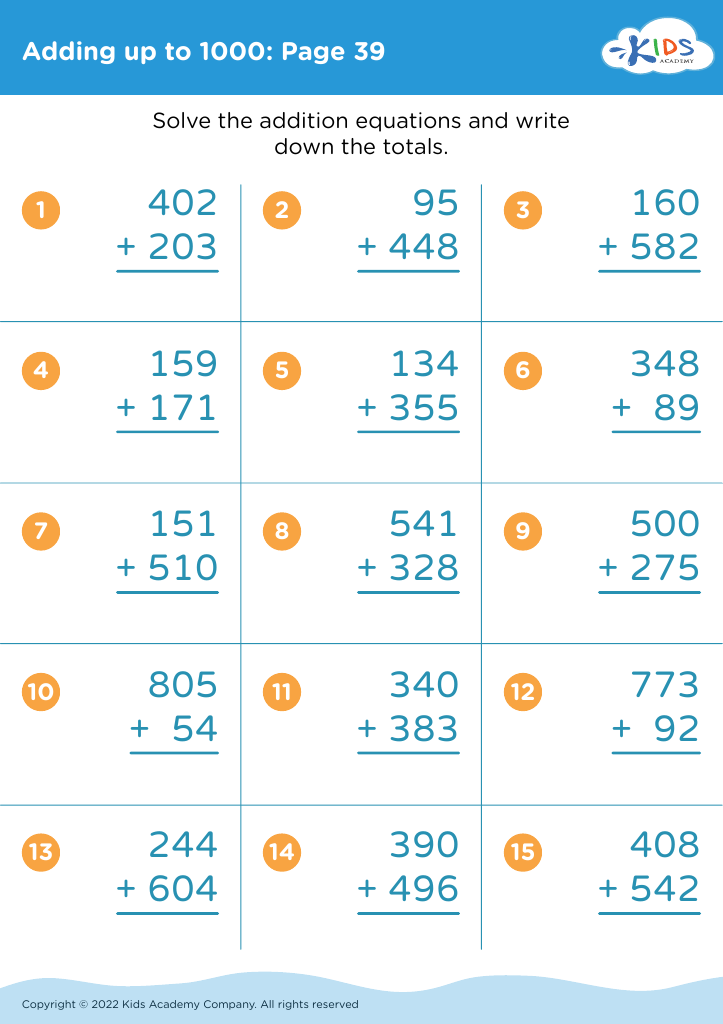
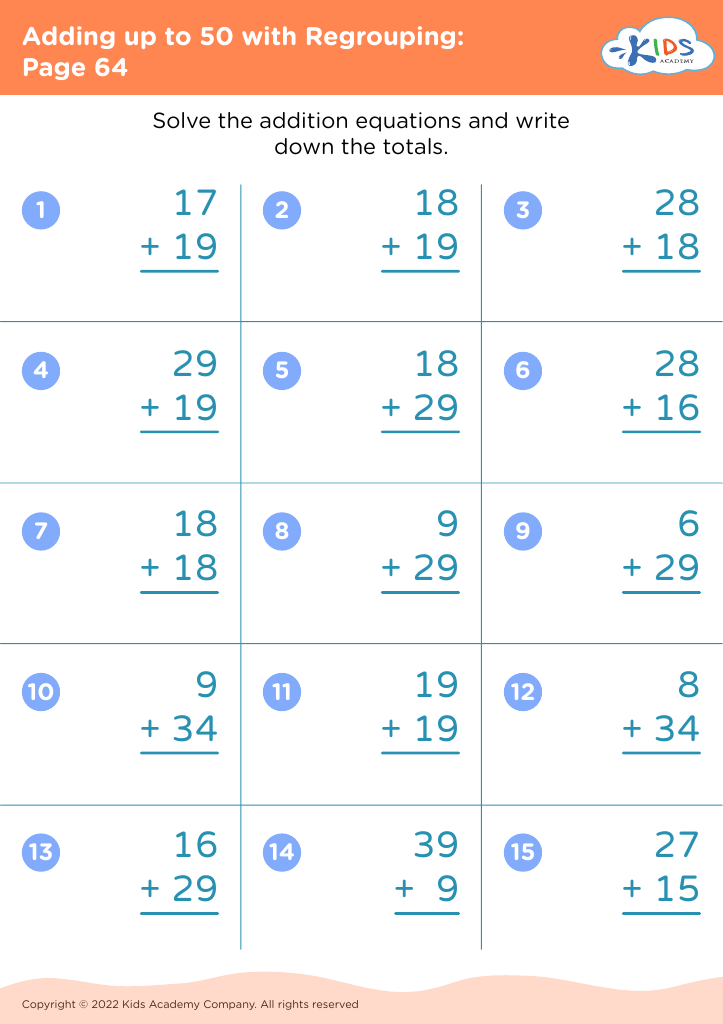
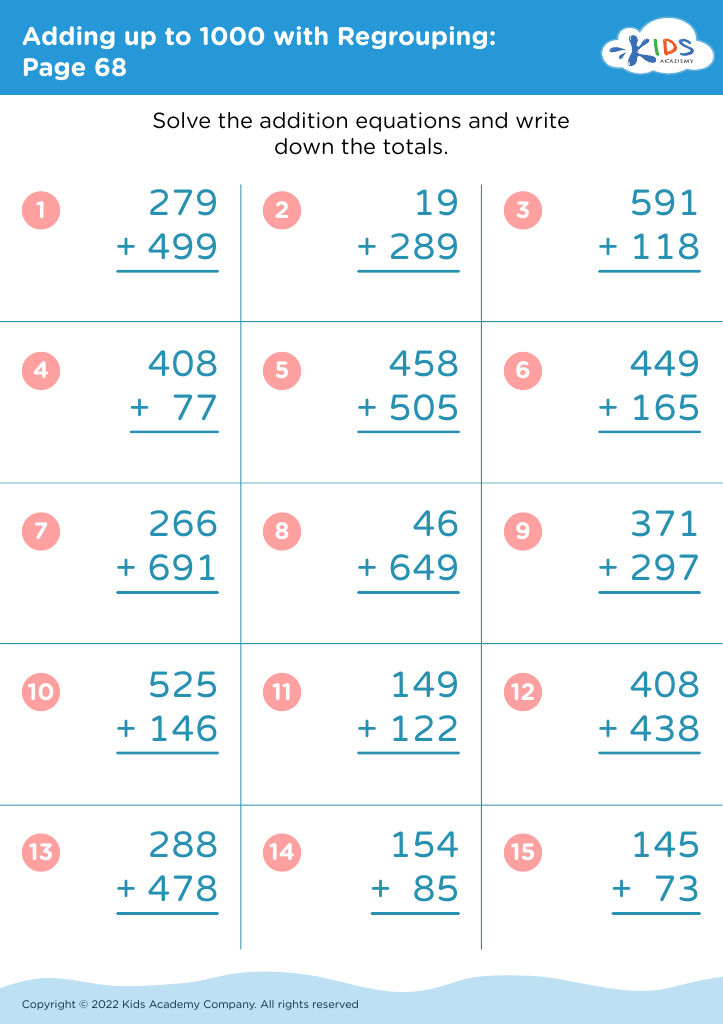
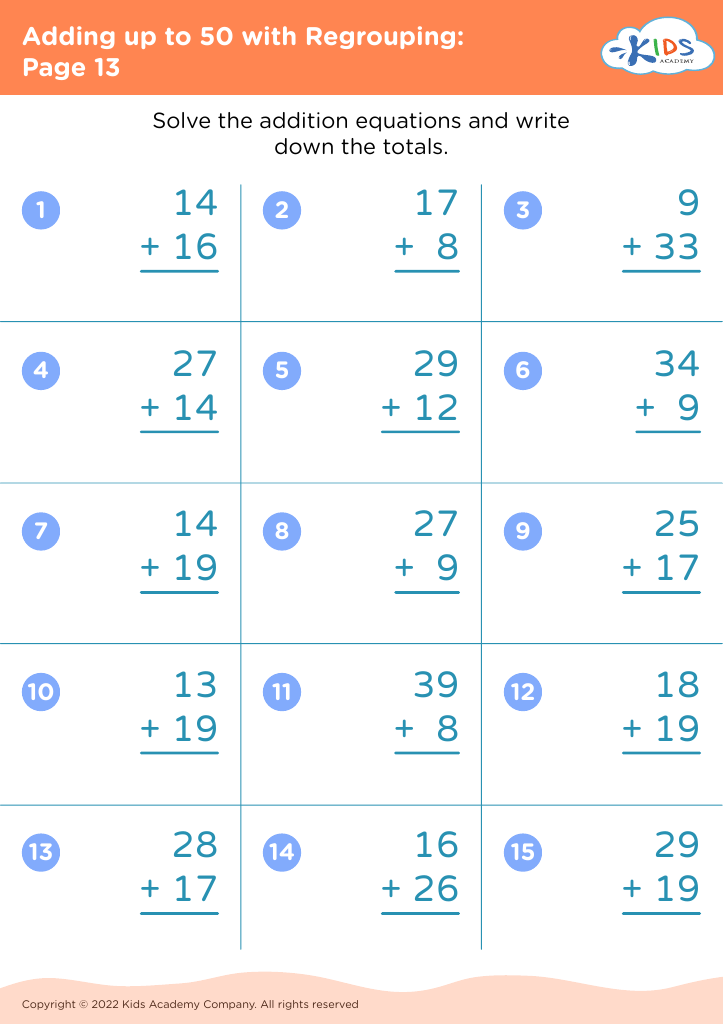








Cognitive development addition for 7-year-olds is crucial as it marks a key phase in a child's mental growth and mathematical proficiency. At this age, children shift from thinking concretely to being able to grasp more abstract concepts. Mastery of addition impacts their logical thinking, problem-solving skills, and overall academic success. When parents and teachers focus on cognitive development addition, they support the brain's capacity to handle more complex operations, which is foundational for future learning in mathematics and other subjects.
For teachers, emphasizing addition in the classroom ensures that students develop a solid grasp of number sense, paving the way for learning subtraction, multiplication, and division. Integrative and engaging activities help children enjoy and understand addition, thus promoting confidence and a positive attitude towards math.
Parents play a pivotal role by reinforcing these concepts at home. By engaging children with fun, everyday addition problems, they make learning feel relevant and practical. Activities like cooking, shopping, or playing board games incorporate addition in real-world contexts, which solidifies learning.
In summary, focusing on cognitive development addition helps 7-year-olds build essential skills not just in mathematics but in problem-solving and logical reasoning, setting the stage for lifelong learning and critical thinking abilities.








