Develop analytical thinking Addition Worksheets for 7-Year-Olds
3 filtered results
-
From - To
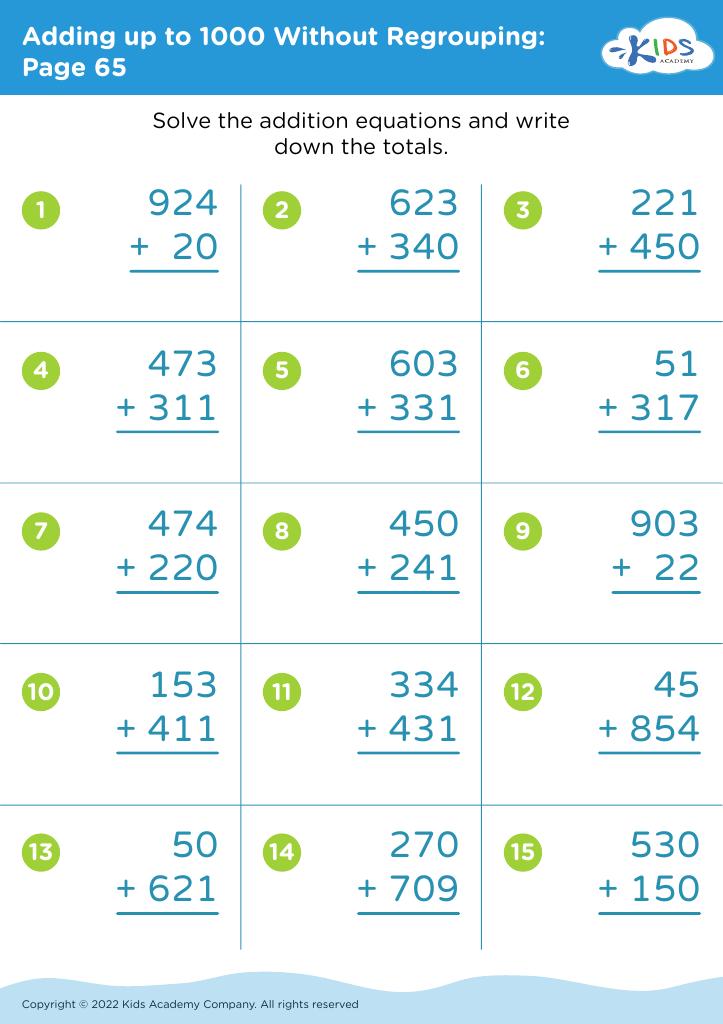
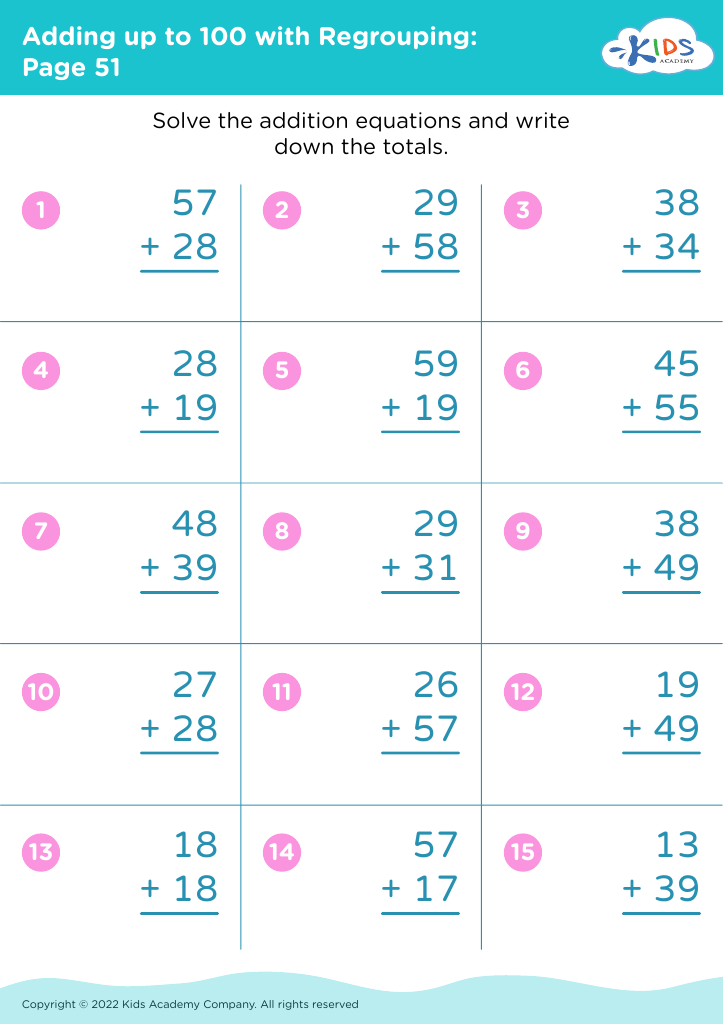
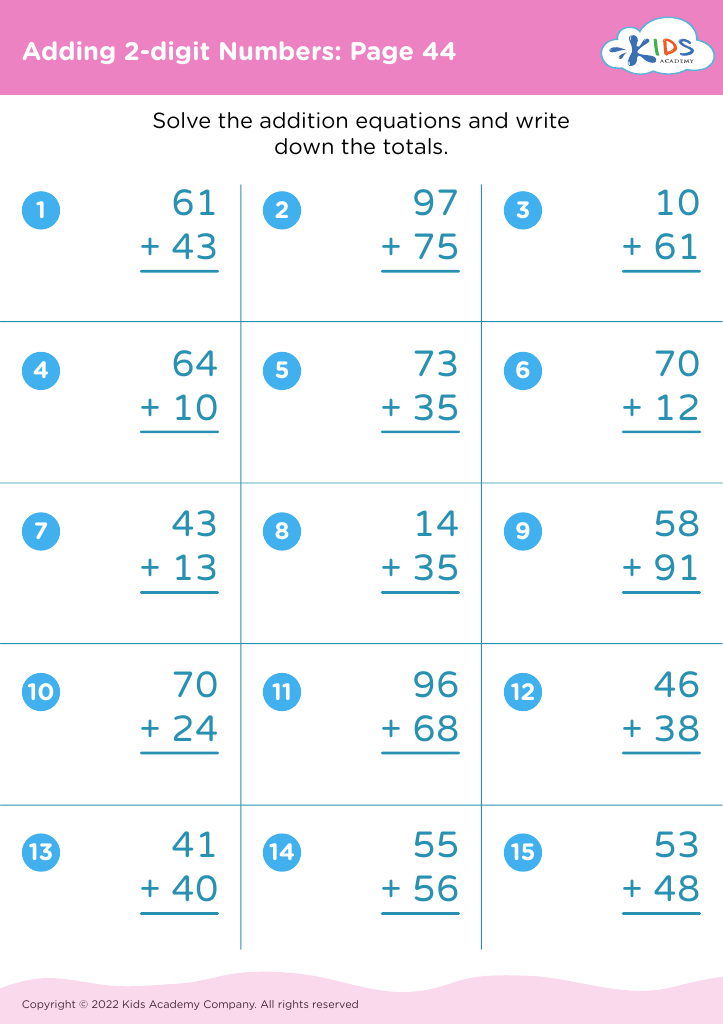
Unlock your child's potential with our engaging analytical thinking addition worksheets designed specifically for 7-year-olds. These worksheets enhance critical reasoning and problem-solving skills while reinforcing addition concepts. Through a variety of fun and challenging exercises, children will learn to analyze math problems, identify patterns, and make connections between concepts. Our thoughtfully crafted activities promote deeper understanding by encouraging kids to think independently and strategically about numbers. Perfect for home or classroom use, these worksheets make math enjoyable while building a strong foundation for future learning. Equip your child for success in mathematics and beyond with our expert-designed resources tailored for young learners!


.jpg)





Developing analytical thinking skills in 7-year-olds, especially in the context of addition, plays a crucial role in their overall cognitive development. At this age, children begin to transition from concrete to more abstract thinking. By encouraging analytical thinking, parents and teachers help children understand not just how to add, but why mathematical principles work. This deeper understanding fosters problem-solving abilities, enabling them to tackle more complex equations and real-world scenarios as they grow older.
Moreover, analytical thinking promotes persistence and resilience in learning. When children engage in reasoning processes, they learn to break down problems into smaller parts, identify patterns, and devise strategies. This computational mindset is foundational not only in mathematics but across all subjects. Additionally, these skills are transferable—benefiting children's critical thinking in science, reading comprehension, and everyday decision-making.
When parents and teachers support and nurture analytical thinking in addition, they cultivate confident learners who are willing to explore, ask questions, and seek solutions. Ultimately, this focus aids in developing a strong academic foundation, ensuring children are well-prepared for future educational challenges and can approach learning with curiosity and engagement. Thus, fostering these skills is essential for their long-term success and enjoyment of learning.








